Award-Winning Biochemistry Tutors
serving Sacramento, CA
Biochemistry
Tutors in Sacramento
Private 1-on-1 tutoring, weekly live classes for academic support, test prep & enrichment, practice tests and diagnostics, and more to elevate grades and test scores.
Based on 3.4M Learner Ratings
UniversitiesSchools & Universities
DeliveredHours Delivered
ProficiencyGrowth in Proficiency
Who needs tutoring?
No obligation. Takes ~1 minute.
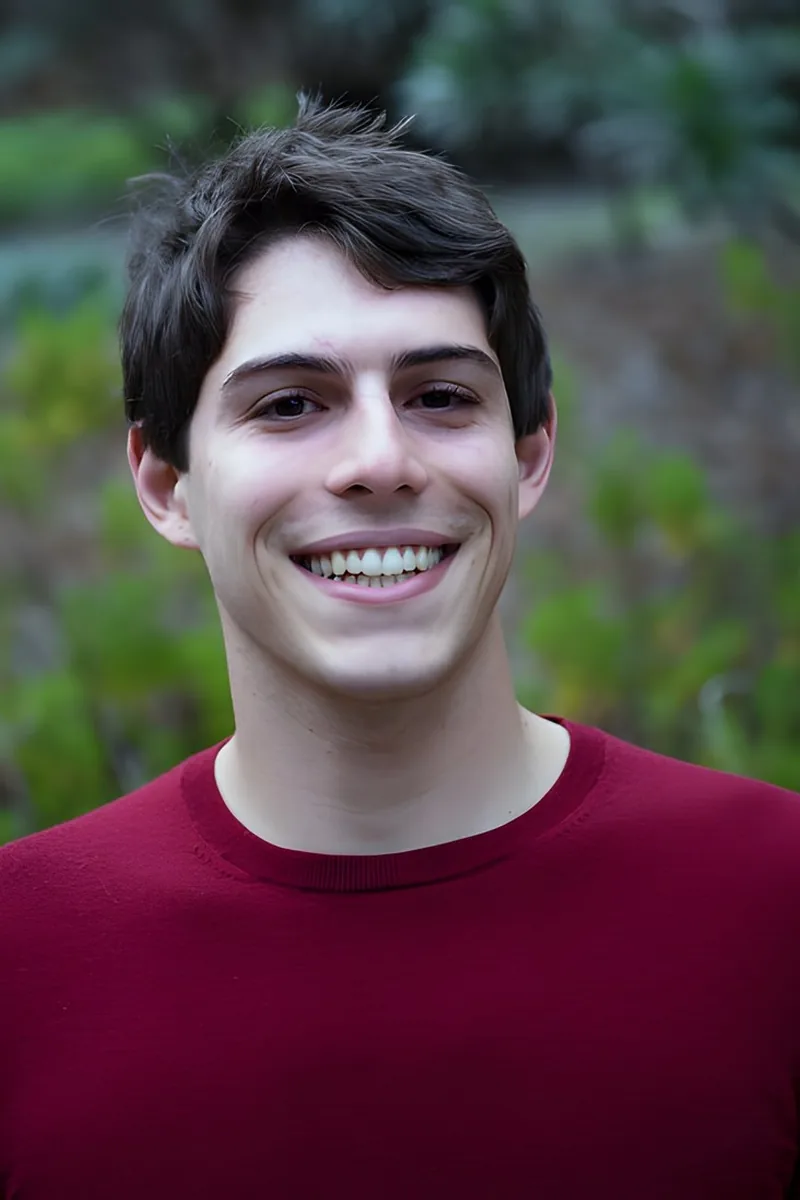
Physical chemistry PhD work at UC Berkeley means Jacob spent years quantifying the thermodynamic and kinetic principles that govern every biochemical process — from enzyme catalysis rates to the free energy changes driving metabolic pathways forward. He teaches biochemistry by unpacking the physical chemistry underneath it, so concepts like Michaelis-Menten kinetics or the energetics of oxidative phosphorylation feel like derivable logic rather than formulas to memorize. Rated 4.9 by students.

This is Gabriel's home turf. His Bachelor of Science in Biochemistry from Texas A&M means he spent years immersed in enzyme kinetics, metabolic pathways, protein structure, and molecular interactions — and he can explain the difference between competitive and noncompetitive inhibition as clearly as he can walk through the citric acid cycle. Students get someone who genuinely enjoys the subject and knows where the exam traps hide.
Lab research and patient care gave Sophie a dual perspective on biochemistry — she's traced metabolic pathways at the bench and seen what happens clinically when those pathways break down. Her biological and physical sciences degree means she teaches topics like enzyme mechanisms and pathway regulation by pulling in the organic chemistry and thermodynamics that explain *why* each step occurs, not just what comes next. Rated 4.9 by students.
Marc earned his bachelor's in biochemistry before entering an MD/PhD program, so enzyme kinetics, metabolic pathways, and protein structure aren't abstract topics for him — they're daily tools. He breaks down dense material like the citric acid cycle or amino acid chemistry into logical sequences that stick without brute-force memorization.
Enzyme kinetics, metabolic pathways, protein structure, nucleic acid chemistry — biochemistry demands that students hold molecular detail and big-picture logic in their heads simultaneously. Sugi graduated summa cum laude with a biochemistry degree from Rice and now applies that knowledge daily in medical school at Baylor. She teaches each pathway as a narrative with clear inputs, outputs, and regulatory checkpoints rather than a list to memorize.
Recent MCAT preparation gave Eric a sharp, up-to-date command of the biochemistry topics that trip students up most: enzyme kinetics, metabolic pathway regulation, and the interplay between protein structure and function. His graduate work in chemistry provides the molecular-level intuition that makes memorizing pathways feel less like brute force and more like following a logical story.
Cassandra's biology degree gives her the cellular and molecular grounding to teach biochemistry from the chemistry up — she walks through topics like enzyme regulation and metabolic intermediates by connecting each reaction to the organic chemistry driving it. Seven years of tutoring math and science across middle school through college means she's seen where students lose the thread, especially when pathways like gluconeogenesis start layering on exceptions and reversals. Rated 4.9 by students.
Two years as an Organic Chemistry Laboratory TA at the college level gave Maha the kind of mechanistic fluency that makes biochemistry's toughest material — reaction cascades in metabolic pathways, enzyme active-site chemistry, the logic behind cofactor requirements — click into place rather than blur together. Now a graduate student at Johns Hopkins Bloomberg School of Public Health with a dual background in chemistry and biology, she connects the organic chemistry driving each biochemical transformation to its broader physiological relevance. Rated 5.0 by students.
I am a PhD student at SUNY Downstate Medical Center studying Molecular & Cellular Biology. I graduated from Columbia University with a Bachelor of Arts in Biochemistry. I love to teach, mostly because of the impact of great teachers throughout my academic career. I think learning can be really fun, if teachers think outside the box and really challenge themselves to find novel ways of conveying concepts to students. Tried and true methods are always great in the classroom, but to work one-on-one with students requires a different approach. It's also critical that learning be something students want, not grudgingly sit through, so that their academic success is tied to their ability to understand and engage the material, not to what score they get on an arbitrary test.
Zachary earned both his BS in Biology and a master's in Molecular Biology, which means he's traced biochemical pathways from two different altitudes — the broad cellular view and the granular molecular detail. That dual training comes through when he unpacks topics like lipid metabolism or allosteric enzyme regulation, building each concept from its chemical logic so the bigger metabolic map starts to make sense on its own.
Enzyme kinetics, metabolic pathways, and protein structure all demand a student who can think across chemistry and biology simultaneously — which is exactly what Aleeza's biology degree and MCAT preparation trained her to do. She unpacks topics like Michaelis-Menten kinetics and amino acid chemistry by tying molecular details to the bigger biological picture. Students studying for upper-level biochemistry exams or the MCAT get someone who recently mastered this material herself.
Neuroscience majors don't just memorize biochemistry — they depend on it, and Janki's coursework at Kentucky meant tracing every concept from neurotransmitter metabolism to oxidative phosphorylation back to the underlying chemical logic. She teaches topics like enzyme regulation and pathway energetics by building each mechanism piece by piece, so students can predict what happens next in a pathway instead of relying on rote recall. Rated 4.8 by students.
Testimonials
Because the right Biochemistry tutor makes all the difference.
Average Session Rating – Based on 3.4M Learner Ratings
Practice Biochemistry
Free practice tests, flashcards, and AI tutoring for Biochemistry
Nearby Biochemistry Tutors
Other Sacramento Tutors
Related Science Tutors in Sacramento
Frequently Asked Questions
Biochemistry involves complex metabolic pathways and molecular structures that are easy to memorize without truly grasping how they work. Personalized 1-on-1 instruction helps you connect theoretical concepts to real-world applications—like understanding why enzyme kinetics matter in drug design or how cellular respiration actually produces energy. Tutors can break down abstract concepts through visualization, worked examples, and guided problem-solving, helping you develop the conceptual foundation needed for exams and advanced coursework.
Yes. Beyond lecture content, tutoring can strengthen your understanding of the scientific method, experimental design, and how to interpret lab results. Tutors can help you understand the reasoning behind lab protocols, troubleshoot unexpected results, and connect your hands-on work back to biochemical theory. This approach builds both technical competency and scientific thinking skills that extend far beyond individual experiments.
Common obstacles include balancing complex chemical equations, converting between different units and concentration scales, visualizing three-dimensional molecular structures, and tracking multi-step metabolic pathways. Many students also struggle with the integration required in biochemistry—connecting organic chemistry, physics, and biology into one coherent framework. Personalized tutoring addresses these specific pain points with targeted strategies and repeated practice in the areas where you need it most.
Your first session focuses on understanding your current level, identifying specific challenges, and building a personalized learning plan. Tutors will assess which concepts you grasp well and where you need reinforcement—whether that's enzyme mechanisms, protein synthesis, or metabolic regulation. From there, you'll work together on concrete problems, and your tutor will tailor future sessions to address your exact needs and learning style.
Varsity Tutors connects you with expert tutors who have deep knowledge of biochemistry and proven teaching ability. When you describe your specific needs—whether you're preparing for an exam, struggling with a particular unit, or working to strengthen your foundation—you'll get matched with a tutor whose expertise aligns with your goals. This personalized matching ensures you're learning from someone who understands both the subject matter and how to teach it effectively.
Tutors use multiple strategies to make invisible molecular processes concrete: drawing mechanisms step-by-step, using 3D molecular models, working through real examples from your textbook or class, and connecting structures to function. By repeatedly engaging with these concepts through different modalities—visual, kinesthetic, and verbal—you build mental models that make the abstract tangible. This deeper visualization also helps you retain information longer and apply it to new problems.
Sacramento has a strong educational community with 27 school districts and numerous schools offering advanced science coursework. Whether you're in high school AP Biology, community college biochemistry, or university-level coursework, tutors can tailor their instruction to your specific curriculum and academic goals. Local tutors are familiar with Sacramento's schools and can align their teaching with your particular course requirements and pacing.
The ideal timeline depends on your starting point and exam scope, but most students benefit from starting 4-6 weeks before a major exam with 1-2 sessions per week. This allows time to work through challenging concepts, practice problem-solving, and build confidence. For cumulative exams or comprehensive finals, more frequent sessions in the final weeks can help you synthesize connections across units and catch any remaining gaps.
Let’s find your perfect tutor
Answer a few quick questions. We’ll recommend the right plan and match you with a top 5% tutor.