Award-Winning AP Physics C: Mechanics Tutors
serving San Diego, CA
AP Physics C: Mechanics
Tutors in San Diego
Private 1-on-1 tutoring, weekly live classes for academic support, test prep & enrichment, practice tests and diagnostics, and more to elevate grades and test scores.
Based on 3.4M Learner Ratings
UniversitiesSchools & Universities
DeliveredHours Delivered
ProficiencyGrowth in Proficiency
Who needs tutoring?
No obligation. Takes ~1 minute.
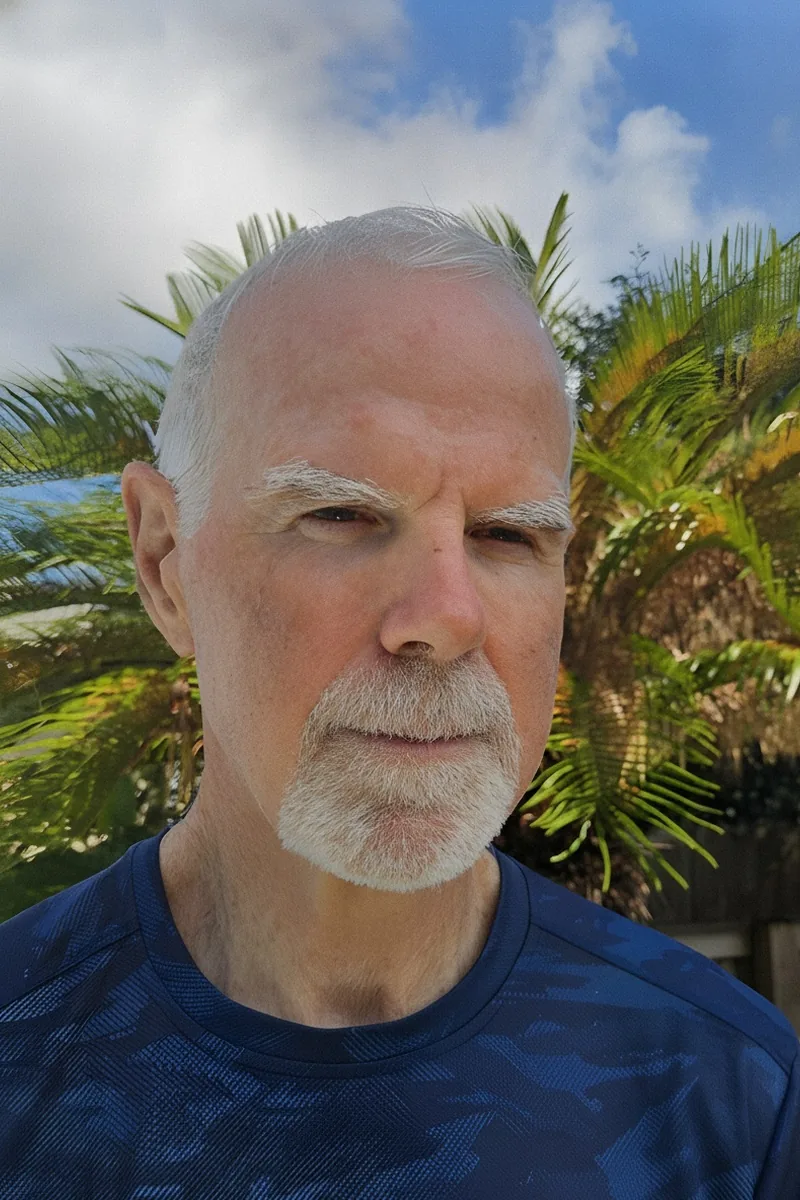
Decades of chemical engineering work gave Steven a particular fluency with the calculus-based mechanics that AP Physics C demands — he's applied Newton's laws, energy methods, and differential equations to real industrial systems, not just textbook scenarios. He explains each concept multiple ways, layering physical intuition with worked examples until the connection between the physics and the integral clicks. Rated 4.9 by students.
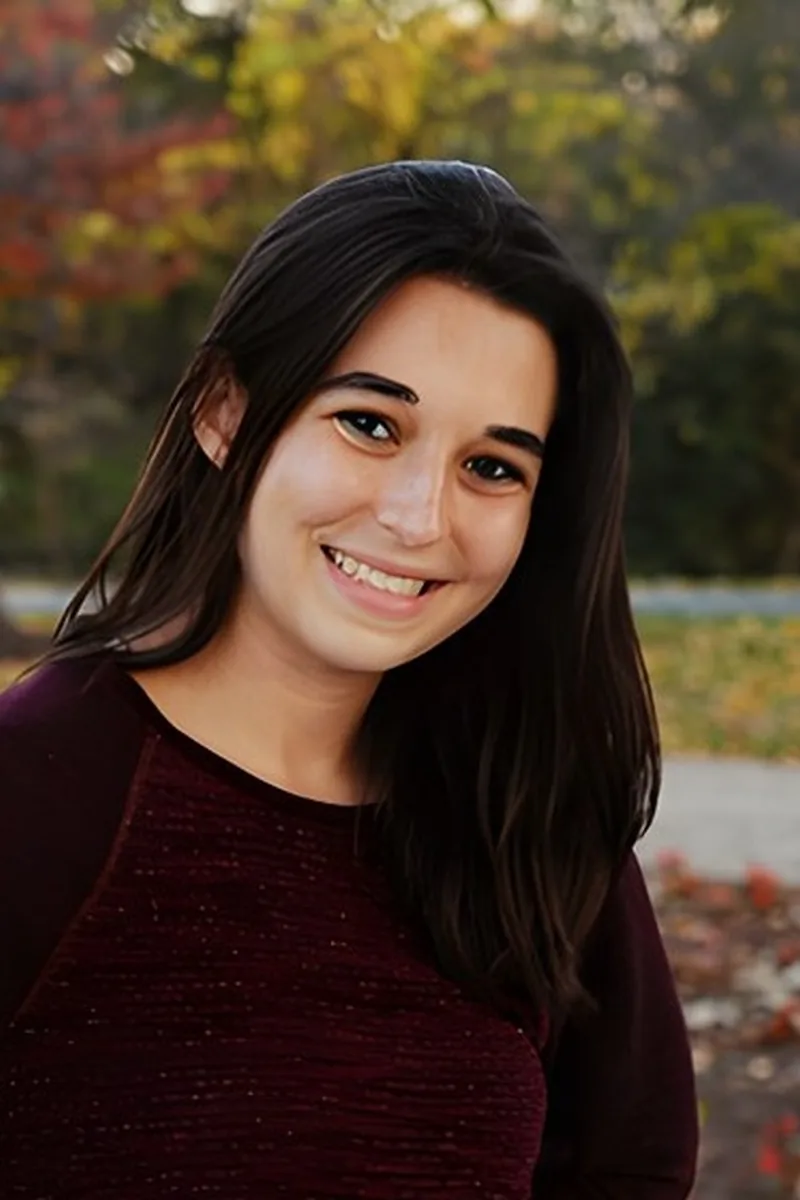
Engineering coursework at Notre Dame means Alexandra is solving calculus-based mechanics problems every week — free-body diagrams with variable forces, work-energy integrals, the full Newton's second law treatment that AP Physics C demands. Her 1530 SAT and 32 ACT point to the quantitative comfort that lets her explain the reasoning behind each setup rather than just walking through formulas. Rated 5.0 by students.
Designing control systems for Northwestern's solar car means Michael applies Newtonian mechanics, rotational dynamics, and energy conservation principles daily — the exact topics AP Physics C: Mechanics tests. He teaches students to translate word problems into free-body diagrams and then into the calculus-based equations that earn full marks on free-response questions.
Having TA'd multiple engineering courses at WashU while earning dual degrees in mechanical and energy engineering, Ava spent semesters breaking down the same calculus-based force analysis, work-energy theorems, and rotational dynamics that define the AP Physics C: Mechanics curriculum. Her 35 ACT speaks to the quantitative precision she brings to exam prep, and her current graduate work in environmental engineering keeps her fluent in the applied physics and differential equations students encounter on test day.
Biomedical engineering at Rice means Aurnab regularly applies calculus-based mechanics to biological systems — modeling forces on skeletal structures, analyzing motion in prosthetic designs — so the kinematics and Newton's laws on the AP Physics C exam map directly onto problems he's already solving in his coursework. His 36 ACT and 1590 SAT point to the mathematical precision that matters most when students need to cleanly set up a work-energy integral or differentiate a position function under exam time pressure. Rated 4.9 by students.
Studying Mechanical & Aerospace Engineering at Princeton, Nicolas solves calculus-based mechanics problems daily that go well beyond what the AP exam asks — rigid body dynamics, energy methods for complex systems, and the vector calculus behind rotational motion. That depth lets him quickly pinpoint whether a student's mistake lives in the physics reasoning or the integral setup, and fix the actual gap. Rated 5.0 by students.
Biophysics at Rice means Aadith solves mechanics problems where the calculus isn't optional — modeling forces on protein structures, analyzing torque in molecular motors, applying Newton's laws to systems most students never picture in a physics classroom. That cross-disciplinary lens gives him a knack for teaching students how to read a physical scenario and decide whether to reach for an energy integral or a force-based differential equation. His 1590 SAT underscores the mathematical precision he brings to every free-response setup.
Bettina didn't just study mechanics in a textbook — she earned a PhD in mechanical engineering, meaning she's derived equations of motion for real systems where assumptions about friction, constraints, and rigid-body approximations actually matter. That depth shows up when she teaches AP Physics C: Mechanics topics like rotational dynamics and gravitational potential energy, because she can explain not just how to set up the integral but why that particular model fits the physical situation.
Chemical engineering grad work at ASU Barrett means Alex solves calculus-based mechanics problems daily — from force balances on fluid systems to energy integrals across reactors — and that fluency translates directly to the kinematics, work-energy, and rotational dynamics on the AP Physics C: Mechanics exam. He also tutors AP Calculus BC and SAT Math (1560 SAT), so when a student's free-response answer falls apart, he can quickly isolate whether it's the physics reasoning or the integration technique that needs fixing. Rated 5.0 by students.
Double-majoring in physics and computer science at Stony Brook, Kiran lives in the calculus-based mechanics world daily — setting up work-energy integrals, deriving equations of motion, solving the same kinds of problems AP Physics C puts on the free-response section. His 34 ACT and physics coursework give him both the mathematical fluency and the physical intuition to explain why a particular integral applies to a given force scenario, not just how to evaluate it.
Darren is midway through his physics degree at Northwestern, which means he's actively taking the upper-division mechanics courses that build directly on everything AP Physics C tests — and he still remembers exactly where the conceptual jumps from kinematics to rotational dynamics tripped him up the first time. He zeroes in on free-body diagrams and getting the calculus setup right before students ever touch a number, treating each problem as a reasoning exercise rather than a formula hunt. Rated 5.0 by students.
Thirty years of teaching physics and holding a state certification means Michael has watched thousands of students hit the same stumbling blocks in calculus-based mechanics — the shift from memorizing kinematic equations to actually deriving motion from Newton's second law in integral form. His molecular biology graduate work gave him the quantitative rigor to teach across disciplines, and he uses that cross-training to connect force diagrams and energy methods to the kind of systematic reasoning that clicks on free-response problems.
Testimonials
Because the right AP Physics C: Mechanics tutor makes all the difference.
Average Session Rating – Based on 3.4M Learner Ratings
Practice AP Physics C: Mechanics
Free practice tests, flashcards, and AI tutoring for AP Physics C: Mechanics
Nearby AP Physics C: Mechanics Tutors
Other San Diego Tutors
Related Science Tutors in San Diego
Frequently Asked Questions
AP Physics C: Mechanics focuses on classical mechanics and includes kinematics, Newton's laws, work and energy, momentum, circular motion, oscillations, and gravitation. The course emphasizes calculus-based problem solving, so you'll need to apply derivatives and integrals to physics concepts. Mastering these foundational topics is essential for scoring well on the exam, which tests both conceptual understanding and mathematical application.
Score improvement depends on your starting point and consistency with practice. Students who work with tutors typically see gains of 1-2 points on the 5-point AP scale, though some improve more significantly by addressing specific weak areas like free-response problem solving or calculus applications. The key is identifying gaps early and practicing with actual AP exam questions under timed conditions. Regular tutoring sessions combined with structured practice tend to produce the most reliable improvements.
Many students struggle with the calculus component—particularly setting up and solving differential equations for motion problems. Free-response questions also trip up test-takers who can identify the right physics concept but struggle to show complete, organized work. Time management is another major issue; with only 90 minutes for the exam, pacing through both multiple-choice and free-response sections is critical. Expert tutors can help you develop systematic problem-solving approaches and practice working efficiently under time pressure.
Most students benefit from 3-4 months of focused preparation leading up to the May exam, though this varies based on your comfort with calculus and physics fundamentals. If you're starting in January or February, consistent weekly tutoring sessions combined with regular practice tests can help you cover all topics and build test-taking confidence. Starting earlier gives you more time to revisit challenging concepts and take multiple practice exams under realistic conditions.
Practice tests reveal which topics you've mastered and where you need more work—whether that's rotational motion, energy conservation, or free-response communication. Taking full-length, timed practice exams also builds stamina and helps you refine pacing strategies before test day. Tutors can review your practice test results with you to identify patterns in mistakes and target instruction on high-impact topics that will raise your score most effectively.
Free-response questions reward clear reasoning and organized work, not just correct answers. Start by identifying the physics principles at play, define your variables and coordinate system, write down relevant equations, and show all steps in your solution. Many students lose points by skipping steps or not justifying their approach. Tutors can teach you a systematic method for tackling these questions and give you feedback on how to present your work in ways that earn maximum credit from graders.
Yes—calculus is fundamental to AP Physics C: Mechanics. You'll need to work with derivatives (for velocity and acceleration) and integrals (for displacement and work). If calculus isn't your strong suit, it's worth reviewing derivatives and integrals before diving into physics applications. Tutors can help you bridge the gap between calculus concepts and physics problems, showing you exactly how to set up and solve the equations you'll encounter on the exam.
Your first session is typically an assessment and planning meeting. A tutor will review your current understanding of key mechanics topics, discuss your goals (score target, timeline), and identify your strongest and weakest areas. You might work through a sample problem together to see how you approach physics questions and where gaps appear. From there, the tutor will create a personalized study plan tailored to your needs and schedule regular sessions to build skills systematically.
Let’s find your perfect tutor
Answer a few quick questions. We’ll recommend the right plan and match you with a top 5% tutor.