Award-Winning Statistics
Tutors
Award-Winning
Statistics
Tutors
Private 1-on-1 tutoring, weekly live classes for academic support, test prep & enrichment, practice tests and diagnostics, and more to elevate grades and test scores.
Based on 3.4M Learner Ratings
UniversitiesSchools & Universities
DeliveredHours Delivered
ProficiencyGrowth in Proficiency
Who needs tutoring?
No obligation. Takes ~1 minute.

A PhD statistician who also holds a biomedical engineering degree, Sam teaches introductory and intermediate statistics with an unusual amount of real-world context. Whether the topic is hypothesis testing, confidence intervals, or regression, he unpacks the logic behind each method so students can interpret results critically, not just run calculations.
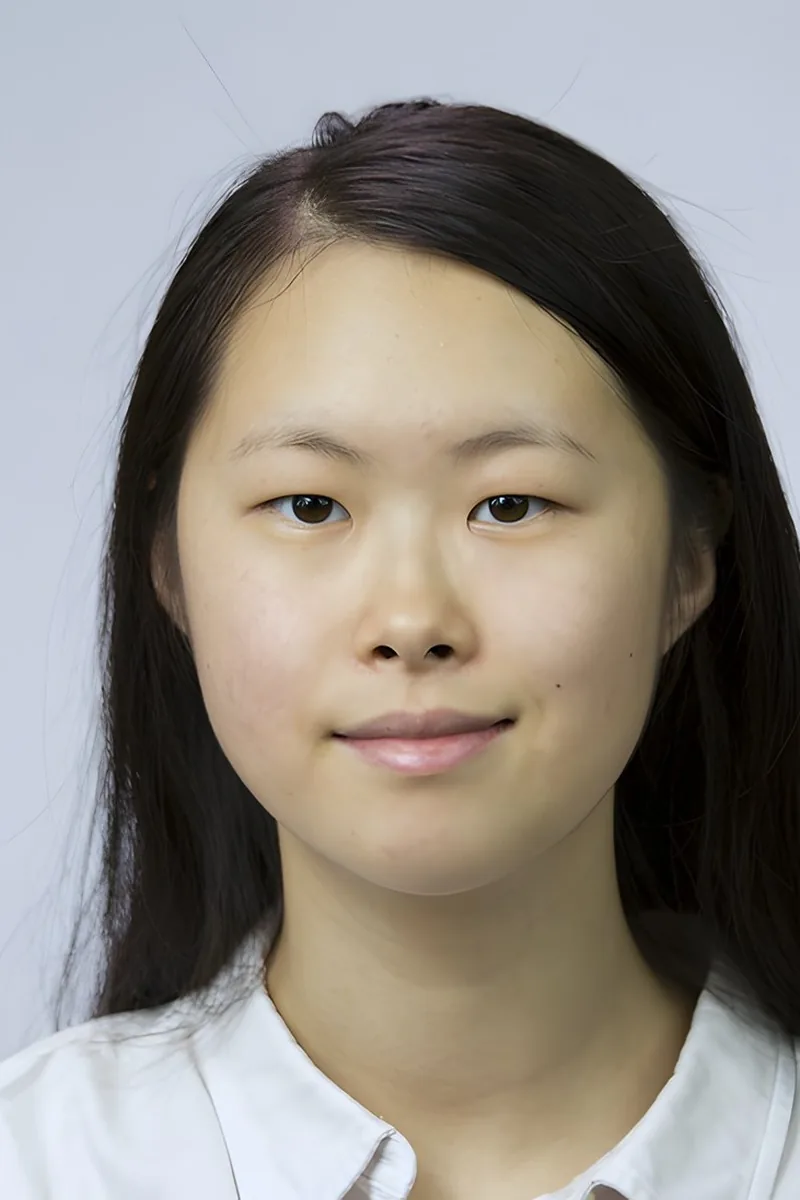
Emily's computational biology concentration at Cornell is essentially applied statistics — she uses probability distributions, confidence intervals, and regression analysis to interpret biological data every week. That hands-on context lets her explain statistical reasoning through concrete examples rather than abstract formulas.
Engineering at Dartmouth meant Rachel lived in data — running experiments, interpreting distributions, and making decisions based on probability and hypothesis testing. She brings that practical fluency to statistics tutoring, connecting concepts like standard deviation and confidence intervals to real scenarios instead of leaving them as abstract formulas.
Studying Philosophy, Politics, and Economics at Penn means Kevin encounters statistics not as an abstract math course but as a tool for answering real questions — polling reliability, economic trends, policy evaluation. He unpacks topics like probability distributions, hypothesis testing, and regression with that applied lens. Students come away understanding not just how to compute a standard deviation but what it actually tells them.
Understanding when to use a t-test versus a z-test, or why a sampling distribution behaves the way it does, requires more than formula sheets — it takes genuine statistical intuition. Brian built that intuition through his economics coursework at Caltech, where statistical analysis was a daily tool, and he walks students through each concept with concrete data examples.
Designing and optimizing light filters for optical multiplexers at Norfolk State required Dennis to apply statistical methods to real engineering data — fitting distributions, quantifying uncertainty, and interpreting experimental results. He teaches statistics with that practitioner's perspective, making topics like standard deviation, probability, and regression feel like problem-solving tools rather than abstract formulas.
Probability distributions, hypothesis testing, and regression analysis are central to both engineering and business — and Caroline has graduate-level training in both. Her mechanical engineering M.S. from WashU built her statistical modeling skills, while her current MBA at MIT Sloan sharpens how she interprets data for real-world decisions. She teaches the reasoning behind each method so formulas stop feeling like black boxes.
The hardest part of statistics for most students isn't the math — it's interpreting what a p-value or confidence interval actually means in context. Vy's training in cognitive studies at Vanderbilt, which is heavily research-methods driven, means she's spent real time designing studies and running analyses. She unpacks concepts like distributions, hypothesis testing, and regression by tying them to concrete research questions.
A Quantitative Methods minor at Vanderbilt means Heather spent semesters immersed in regression analysis, hypothesis testing, and probability — the exact material that trips up most statistics students. She teaches the reasoning behind each test so students can choose the right method on their own, not just follow a decision flowchart. Her 4.9 rating speaks to that approach.
Engineering Physics at Cornell requires serious statistical reasoning — error analysis, probability distributions, hypothesis testing — so Daniel brings a practical lens to statistics rather than a purely textbook one. He walks through concepts like standard deviation, regression, and confidence intervals by tying them to real data questions, which makes the logic behind each formula click.
As a Statistics major at Northwestern, Jake lives in this material daily — regression analysis, probability distributions, confidence intervals, and hypothesis testing are part of his coursework, not just something he once studied for a test. That proximity to the subject means he explains concepts with the kind of fluency that comes from constant use. He holds a 5.0 client rating.
Studying Comparative Human Development at the doctoral level means Gabriel has spent years designing studies, interpreting data sets, and running statistical analyses firsthand. He teaches statistics by grounding concepts like probability distributions, hypothesis testing, and regression in real research questions rather than abstract formulas. That practical lens makes the subject click for students who struggle with the textbook approach.
Testimonials
Because the right Statistics tutor makes all the difference.
Average Session Rating – Based on 3.4M Learner Ratings
Practice Statistics
Free practice tests, flashcards, and AI tutoring for Statistics
Top 20 Math Subjects


Top 20 Subjects
Frequently Asked Questions
Many students struggle with Statistics because it requires both computational skills and conceptual understanding. Common pain points include interpreting what statistical results actually mean (not just calculating them), understanding probability foundations, and applying the right test to real-world scenarios. Word problems in Statistics can also be particularly challenging since they require students to translate messy real-world situations into statistical questions. Personalized tutoring helps students move beyond memorizing formulas to truly understanding when and why to use each statistical method.
Hypothesis testing is abstract, and many students memorize the steps without grasping the underlying logic. A skilled tutor breaks down the reasoning—why we set up null and alternative hypotheses, what p-values actually represent, and how to avoid common misinterpretations. Through worked examples and guided practice, tutors help you see the pattern in different tests (t-tests, chi-square, ANOVA) so you understand they're solving the same fundamental question with different data types. This conceptual foundation makes it much easier to apply hypothesis testing to new problems rather than just plugging numbers into formulas.
Statistics courses can vary significantly in approach—some emphasize conceptual understanding and real-world applications, while others focus on mathematical rigor and theory. Some courses use simulation-based methods or focus heavily on R or Python, while traditional courses emphasize hand calculations. Tutors experienced in Statistics can adapt to your specific curriculum, whether you're using textbooks like those from OpenStax, Pearson, or others, and can help you understand how different approaches connect. They also recognize which concepts your course emphasizes most heavily and tailor their explanations accordingly.
Look for tutors who can explain the 'why' behind statistical methods, not just the 'how.' A great Statistics tutor can connect abstract concepts like sampling distributions to real applications, uses concrete examples to build intuition, and helps you develop problem-solving strategies for unfamiliar scenarios. They should also be comfortable working with your specific course format—whether that's traditional inferential statistics, data science-focused coursework, or applied statistics in a particular field. Varsity Tutors connects you with expert tutors whose background and teaching approach match your needs and learning style.
Personalized 1-on-1 instruction in Statistics addresses your specific gaps rather than generic review. Whether you need to catch up on probability foundations, master specific techniques like regression or confidence intervals, or develop strategies for tackling complex word problems, a tutor can customize the pace and depth. Research on 1-on-1 instruction shows students typically make significant gains because they receive immediate feedback on their reasoning—not just their answers—and tutors can identify whether struggles stem from computational errors, conceptual misunderstandings, or test-taking anxiety. Over time, this builds both competence and confidence.
Most introductory Statistics courses cover descriptive statistics (summarizing data), probability basics, sampling distributions, confidence intervals, hypothesis testing, and often linear regression. You'll typically learn how to choose appropriate methods based on your data type and research question, and how to interpret results in context. Many courses now include working with real data using software tools. Personalized tutoring ensures you move through these topics with genuine understanding—recognizing patterns across different statistical methods rather than treating each as an isolated technique.
Statistics anxiety often stems from feeling overwhelmed by new terminology, struggling to connect formulas to real meaning, or previous negative experiences with math. Working with a tutor in a low-pressure, personalized setting helps rebuild confidence by breaking complex topics into manageable pieces and celebrating small wins. Tutors can also teach problem-solving strategies and help you practice working through problems methodically—from understanding what the question asks, to choosing an approach, to interpreting your result. As you experience success and develop better intuition for statistical thinking, anxiety typically decreases significantly.
Let’s find your perfect tutor
Answer a few quick questions. We’ll recommend the right plan and match you with a top 5% tutor.