Award-Winning SAT Math Tutors
serving Portland, OR
SAT Math
Tutors in Portland
Private 1-on-1 tutoring, weekly live classes for academic support, test prep & enrichment, practice tests and diagnostics, and more to elevate grades and test scores.
Based on 3.4M Learner Ratings
UniversitiesSchools & Universities
DeliveredHours Delivered
ProficiencyGrowth in Proficiency
Who will be getting tutoring?
No obligation. Takes ~1 minute.
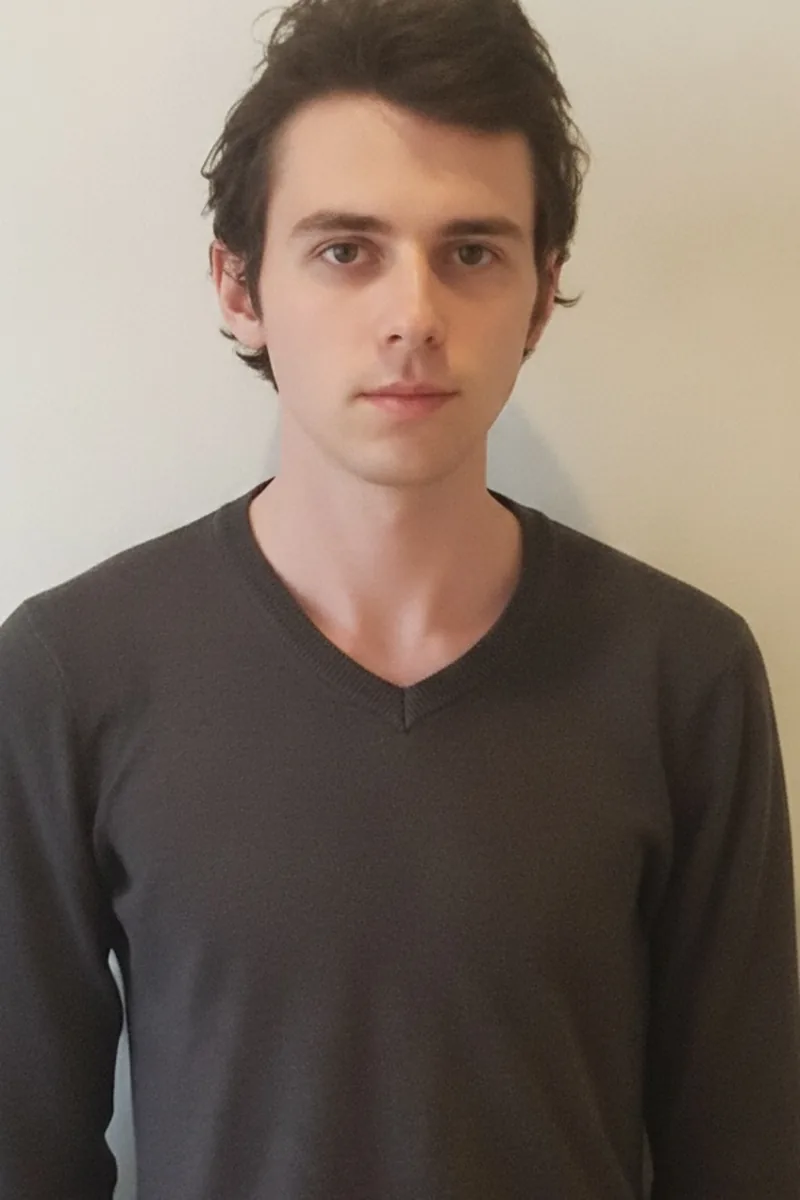
Philosophy trains you to spot logical structure hiding inside messy language — which is exactly what the SAT Math section demands when it buries a straightforward quadratic or system of equations inside a paragraph of real-world context. Ezra scored a perfect 1600 and approaches every problem by teaching students to strip the question down to its formal skeleton before solving. Rated 4.8 by students.

Most people don't associate a Comparative Literature degree with SAT Math — but Jacob's 1550 SAT means he clearly commands the quantitative side of the test, and his literary training gives him an unusual edge when it comes to unpacking the section's notoriously tricky word problems. He teaches students to read SAT Math prompts the way a close reader dissects a passage: isolate the key information, ignore the misdirection, and translate what's left into a clean equation before solving.
Scoring a 1560 on the SAT gave Michael firsthand insight into the traps the math section sets — problems that look like they need complex algebra but actually hinge on one geometric shortcut, or word problems designed to waste time if you don't set up the equation correctly from the start. He teaches a triage system: categorize the problem, pick the fastest path, and move on. Students who already know the math but lose points to pacing or careless errors tend to see the biggest jumps working with him.
I am particularly interested in helping people strengthen their writing skills. Whether you're working on your first high school essay or whether you're refining your undergraduate honors thesis, I can help!
Every SAT Math question has a fast path and a slow path — Gray's job is teaching students to see the fast one. After scoring a 1590 on the SAT himself, he developed a systematic approach to the no-calculator and calculator sections that prioritizes recognizing problem types within seconds. Students leave sessions with concrete strategies for passport-to-advanced-math questions, which is where most points are lost.
From quadratic modeling to advanced coordinate geometry, the SAT Math section tests whether students can apply algebra and pre-calc concepts in unfamiliar contexts. Dylan's background spans the full math curriculum — he tutors everything from pre-algebra through calculus — which means he can pinpoint exactly where a gap in understanding is causing errors on test day. He scored a 1470 SAT composite and builds each session around the specific question types a student keeps missing.
I'm a strong believer that education can be fun, and address learning with a sense of humor and a positive attitude. My approach to learning tends to be very communication-based, and often driven by how the client I'm working with feels they learn best. As a result, I tend to provide structure and guidance in a more flexible learning environment.
I am a recent graduate of Haverford College with a reverence for education. I aim to help students grow as both students and learners in the broader sense. My aim is to help the student progress as much as possible through being simultaneously supportive and rigorous. In my past experience, I have found that the best mode of education is dependent upon the particular student, and thus strive to accommodate a wide variety of personalities and learning styles. Through a comprehensive approach, I attempt to instill in students both knowledge and a love for learning.
I am not teaching, I write fiction (my debut book, From the Caves, won several national awards) and my shorter works have appeared in Poets & Writers, Longreads, The Kenyon Review, CRAFT Literary Magazine, New Orleans Review, and elsewhere. Learn more at theaprieto.com.
Shannon earned a 1550 on the SAT and treats the math section as a strategy game — knowing when to set up an equation versus when to backsolve or plug in answer choices can save minutes that add up across the test. She digs into the specific algebra and data-analysis concepts the SAT leans on hardest, so students walk in knowing exactly what to expect.
I am excited to see what the West Coast has to offer. I love learning and teaching, and I am excited to share what I know of standardized tests, the English language, and of writing overall.
Hi, I'm Nic :) I have a Masters in philosophy and a Bachelors in computer science. I've worked as an educator for over a decade, thoroughly enjoy tutoring high school students, and can't wait to start working with you (or your student) towards persistent academic success! Feel free to reach out with any questions, https://linktr.ee/nickhh
I'm Heather, a social worker in Portland, OR. I graduated summa cum laude in 2018 from Willamette University, a liberal arts college on the West Coast, with a 4.0 GPA. I share this to let you know that I am passionate and committed to lifelong learning, and enjoy helping others along the same journey.
I'm teaching is as important as understanding the subject itself.
The SAT math section rewards efficiency as much as accuracy, and Rohan teaches both — showing students when to set up an equation, when to backsolve, and when to estimate. His own 1510 SAT score and his background teaching college math at Oregon give him a clear read on which algebra and data-analysis concepts the test leans on hardest. He builds each session around timed practice so speed becomes second nature.
I am prepared to work with my students, at their own pace, to ensure that they aren't just completing the work, but fully understanding and internalizing the material.
Philosophy majors spend their days pulling apart arguments to find hidden assumptions — and Daniel applies that same dissection to SAT Math questions, especially the wordy "Heart of Algebra" setups where the real challenge is figuring out what's being asked before any computation starts. His 1550 SAT means he's already cracked the test at a high level, and his Socratic teaching style (lots of pointed questions, few handed-over answers) pushes students to internalize problem-solving instincts rather than memorize steps.
Classics majors spend their days translating dense, layered texts into precise meaning — and Marilyn applies that same careful parsing to the SAT Math section's notoriously wordy algebra and data problems, teaching students to strip a question down to its actual mathematical ask before picking up a pencil. Her 1510 SAT confirms she knows the test inside out, and her strength in geometry and calculus means she can build genuine number sense behind the formulas rather than just drilling shortcuts. Rated 4.8 by students.
I am currently an undergraduate at the University of Southern California. I am majoring in Health and Human Sciences and minoring in Spanish, and am also on the pre-medical track. Growing up, I had difficulty in school understanding concepts in science, which originally dissuaded me from pursuing career in science. However, when I eventually found the right tutors, everything began to make sense to me and I realized how much I enjoyed learning when I could understand the material. It was empowering and I felt proud and confident in myself when the concepts started clicking. Because of my experiences, I decided to start tutoring to help others experience that feeling of finally understanding a tough concept. While I tutor a variety of different subjects, I've always been most passionate about concepts concering the NREMT, English, Spanish, and basic level mathematics. For the last four years, I've been tutoring a wide range of students, from elementary school kids to college students, and I absolutely love watching their level of understanding grow as they discover new concepts. I know firsthand how difficult it can be to seek tutoring, and I try to be as approachable as possible while continuing to emphasize the power of learning and the confidence that accompanies it. I also firmly believe that learning should not only be educational, but fun as well!
I am a third-year Psychology major at Reed College in Portland, OR. I work as a researcher in a cognitive neuroscience lab studying human perception, and I am interested in pursuing a graduate degree in neuroscience. I have always been drawn to tutoring and mentorship roles, beginning when I joined my high school's Advancement Via Individual Determination (AVID) program as a peer tutor. Currently, I tutor other students at my college in Writing and Humanities through my college's Academic Support Center.
I am a TEFL certified English language teacher, with multiple years of experience teaching English overseas, having lived in both Thailand and Laos, and worked with students of all ages and skill levels. My lessons have ranged from language activation and phonics in kindergarten, to grammar instruction with teens, to conversational business English with adults.
I am a science communicator with a background in English, biology, and environmental education. I have worked previously on a citizen science initiative, The American Kestrel Partnership, and recently graduated from the University of Oregon with M.S. degrees in Environmental Studies and Multimedia Journalism. In my free time, I play competitive roller derby for Portland's Wheels of Justice.
I am so excited to teach online this year. For the last seven years, I taught all over the country (Charleston, SC, Nashville, TN, Portland, OR, and Vancouver, WA) and also earned a master's degree in education from Johns Hopkins University along the way.
I am a recent college graduate with an interdisciplinary degree in History-Literature from Reed College. I graduated with academic commendations my last two years and won an award for my Senior thesis on artistic and literary resistance under Pinochet's dictatorial regime in Chile from 1973 to 1990. I have experience in essay editing, and am qualified to tutor in Humanities, English, and most areas of Western and Latin American History. I also competed nationally in high school as a policy debater, which makes me a good candidate for working with students on public speaking skills.
I'm applying for MAT programs and aspire to be a high school Literature and Social Studies teacher. In 2014, I spent more than 2,000 hours teaching English to Korean students. This experience showed me not only that I love teaching, but also how to work with students to achieve their goals. I tutor students in English, TOEFL preparation, SAT Verbal and Critical Reading preparation, and essay writing. My favorite subject to teach is English, because I love watching someone progress from knowing just a few words of a language to speaking it with confidence. When I tutor, I focus on presenting information to students as clearly as possible so that they can apply it to assignments after our lesson. Further, I strive to understand each individual student's learning style and tailor my lessons accordingly. Outside of helping students achieve academic success, I love to play all kinds of sports, spend time hiking, skiing, fishing and backpacking in Oregon's beautiful wilderness, learn languages and play the guitar.
Scoring well on SAT Math isn't about knowing advanced topics — it's about executing algebra, data analysis, and problem setup quickly and without careless errors. Maya earned a 1490 SAT and knows exactly where the test tries to create confusion, from percent-change traps to systems-of-equations shortcuts. She teaches students to identify what each question is really asking before picking up a pencil.
I'm a fourth year medical student who will graduate from Georgetown University School of Medicine in May 2025. I have been tutoring since high school in a wide variety of subjects at all levels of education from elementary school to the graduate level. My tutoring philosophy is to identify where and how students are struggling and to use each student's learning style to break down concepts and learn in smaller steps. While I have a wide breadth of subjects in I am comfortable tutoring, I am most experience in the maths and sciences
Scoring a 1550 on the SAT wasn't just about knowing formulas — Sam developed a triage strategy for the math section that prioritizes which problems to solve first and which to revisit. She digs into the specific question types that cost students the most points, from quadratic modeling to systems of inequalities, and builds speed without sacrificing accuracy.
I am back in the area to coach rowing and tutor before beginning my postgraduate studies in the fall.
I am now in my third year at a small elementary school where I oversee all curriculum and provide instruction in 3rd-6th grade math, Latin, and English composition.
Scoring a 1530 on the SAT, Daniel knows how the math section tests familiar concepts in unfamiliar ways — especially with multi-step word problems and data interpretation questions that punish rushing. He teaches students to identify what each problem is actually asking before touching their calculator, a habit that cuts down on careless errors and builds real confidence under time pressure.
I'm in a good position to talk about how certain concepts are used in the real world. I'm also a huge bookworm and offer SAT Critical Reading prep as well as general tutoring for writing. My hobby is creative writing and I'm currently writing up parts of my dissertation for publication, so I can help with writing from literary analysis to history research papers to the writing aspect of lab reports. When I'm not reading or writing, I'm playing the hammered dulcimer and teaching myself to code in new languages.
I am an Occupational Therapist with a background and interests in psychology, english, and math. I studied Psychology and Foreign Affairs at the University of Virginia and have a Masters of Science in Occupational Therapy from Tufts University.
Scoring an 800 on the Math II Subject Test and a 1530 SAT composite, Rei knows the SAT Math section inside out — from heart-of-algebra fundamentals to the trickier quadratic and exponential modeling questions that separate good scores from great ones. He teaches students to recognize problem archetypes so they spend less time figuring out what to do and more time doing it.
I am currently a senior attending the University of Notre Dame, and I am pursuing a degree in the Program of Liberal Studies (PLS). PLS is a renowned Great Books program that aims to perfect the student's ability to think critically in a variety of disciplines, such as literature, philosophy, and history. In PLS, great emphasis is placed on formulating deep and effective arguments and presenting them clearly in a technically correct manner, both in class and through my written work. Consequently, I have had much practice writing and editing my own work as well as editing that of my classmates. I am also pursuing a minor in education and am seriously considering pursuing a career in the educational field after graduating. I am passionate about helping others learn to the fullest extent of their abilities while enjoying the subject at the same time!
I am eager to help you grow in your knowledge and appreciation of French and German - my hope is that you will not only become proficient in your foreign language of choice, but that you will come to love it as well. To this end, my lessons engage all of your capacities to communicate: reading, listening, writing and speaking. As a continuing language-learner myself, I value trust and encouragement highly. I look forward to meeting with you!
Gabby's background is in writing and communication, not advanced math — so she's upfront that SAT Math isn't her primary lane. That said, her experience prepping hundreds of students for the SAT means she knows the test's structure cold, including how to manage pacing and avoid the reading-comprehension traps buried in the math section's wordiest problems.
Scoring well on SAT Math means knowing when a problem wants algebra and when it wants a shortcut — the difference between grinding through a system of equations and recognizing a ratio pattern that solves it in seconds. Ben earned a 1530 SAT composite and teaches students to read problems strategically, especially on the no-calculator section where efficiency matters most. He zeroes in on the high-frequency topics like linear functions, quadratics, and proportional reasoning that drive score gains.
Two mechanical engineering degrees mean Tammy has solved thousands of algebra, geometry, and modeling problems under exam conditions — the same core skills the SAT Math section tests, just dressed up in standardized-test language. She teaches students to treat the section's wordy "Additional Topics" and passport-to-advanced-math questions like engineering problems: sketch it, identify what's known, write one clean equation, then solve. Her 1490 SAT confirms she knows how the test actually works, not just the math behind it.
Karl earned a 1500 SAT and applies a methodical, science-minded approach to the math section — particularly the no-calculator portion, where algebraic fluency and number sense matter most. He digs into the concepts behind quadratic modeling, complex numbers, and ratio reasoning so students can solve problems flexibly rather than relying on a single memorized method.
Testimonials
Because the right SAT Math tutor makes all the difference.
Average Session Rating – Based on 3.4M Learner Ratings
Practice SAT Math
Free practice tests, flashcards, and AI tutoring for SAT Math
Nearby SAT Math Tutors
Other Portland Tutors
Related Test Prep Tutors in Portland
Frequently Asked Questions
Score improvement depends on your starting point and commitment level, but most students see meaningful gains within 8-12 weeks of consistent practice. Students typically improve by 50-100+ points when they work with a tutor to identify weak areas, master test-specific strategies, and practice with real SAT questions. The key is targeted practice on the exact question types and concepts that challenge you most.
Your first session focuses on understanding your current strengths and weaknesses. A tutor will likely review your practice test results, discuss which math concepts feel shaky, and assess your test-taking pace and strategy. From there, they'll create a personalized study plan that targets your specific gaps—whether that's algebra, geometry, data analysis, or managing time pressure on test day.
Pacing is one of the biggest challenges students face, and it's very coachable. A tutor can help you identify which question types slow you down, teach you when to skip and come back, and show you time-saving strategies for calculations. Regular timed practice with feedback is essential—you'll learn to recognize patterns in harder questions and build confidence so you're not second-guessing yourself under pressure.
The best way is to take a full practice test under timed conditions, then review your wrong answers by topic. You'll quickly see patterns—maybe you struggle with quadratic equations, word problems, or geometry. A tutor can dive deeper into your practice tests to identify not just which topics trip you up, but why: Is it a conceptual gap, a careless mistake, or a timing issue? That diagnosis guides your study plan.
Absolutely. Test anxiety often stems from feeling unprepared or unsure of your strategy, and both of those improve dramatically with personalized tutoring. As you practice with a tutor and see yourself solving problems correctly, your confidence grows. You'll also learn concrete strategies like how to manage difficult questions without panicking and how to pace yourself so you're not rushed at the end.
Look for tutors who have strong math backgrounds and specific experience teaching SAT prep. Ideally, they've taken the SAT themselves, understand the test format deeply, and can explain why College Board includes certain questions. They should also be skilled at diagnosing what's really holding you back—not every student who struggles with algebra has the same gap—and adjusting their teaching to match how you learn best.
Most students benefit from taking 3-5 full practice tests during their prep—enough to get comfortable with the format and build stamina, but not so many that you run out of quality materials. The real value isn't just taking tests; it's reviewing every single wrong answer with your tutor to understand why you missed it. Space them out over several weeks so you have time to practice weak areas between tests.
For students starting 8-12 weeks before test day, aim for 3-5 hours per week of focused study, including tutoring sessions and independent practice. If you're starting further out or have significant gaps, you might go longer. The quality of study time matters more than quantity—consistent, targeted practice on your weak areas beats random cramming. Your tutor can help you build a realistic schedule that fits your school and extracurricular commitments.
Let’s find your perfect tutor
Answer a few quick questions. We’ll recommend the right plan and match you with a top 5% tutor.