Award-Winning College Physics Tutors
serving Portland, OR
College Physics
Tutors in Portland
Private 1-on-1 tutoring, weekly live classes for academic support, test prep & enrichment, practice tests and diagnostics, and more to elevate grades and test scores.
Based on 3.4M Learner Ratings
UniversitiesSchools & Universities
DeliveredHours Delivered
ProficiencyGrowth in Proficiency
Who needs tutoring?
No obligation. Takes ~1 minute.
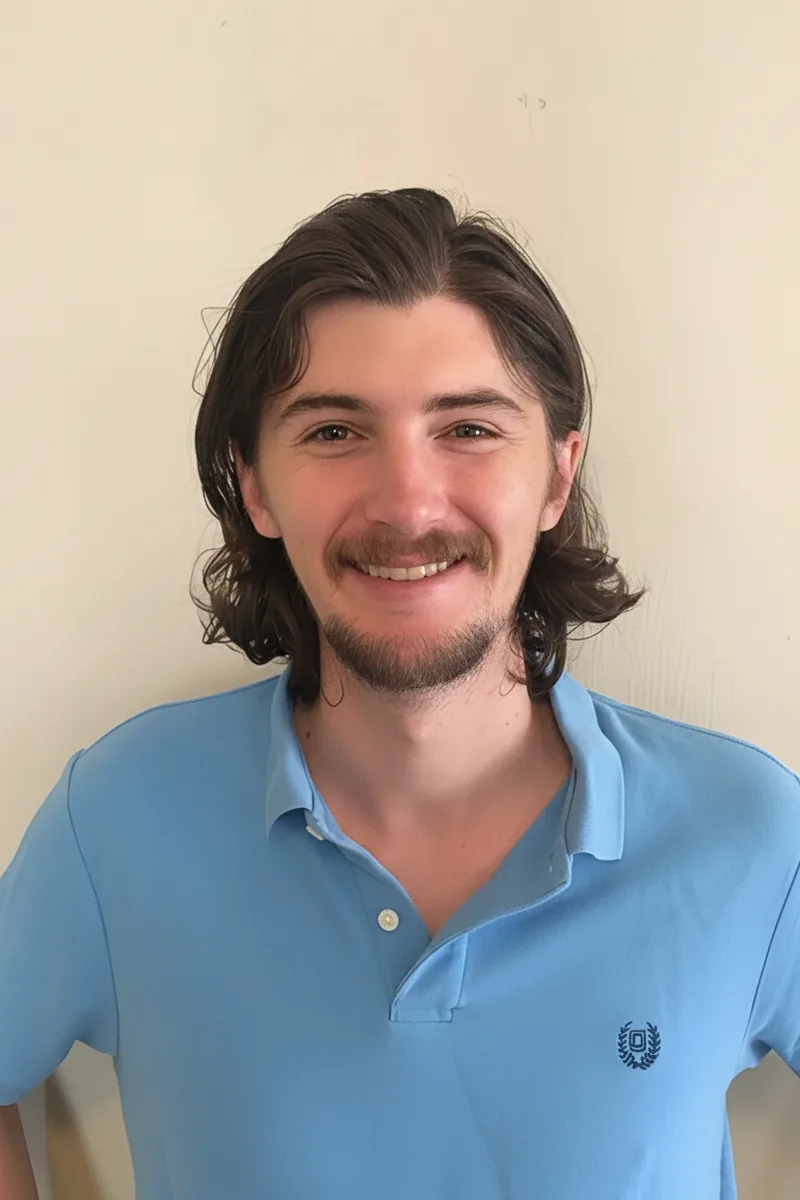
A computer science degree from UCLA means Michael spent semesters deep in the physics that underpins simulation and graphics — kinematics, force modeling, energy systems — and his 1560 SAT confirms the quantitative chops to handle calculus-based problem solving. He teaches students to treat each physics problem like debugging code: isolate what you know, identify the governing principle, then execute step by step until the answer falls out.
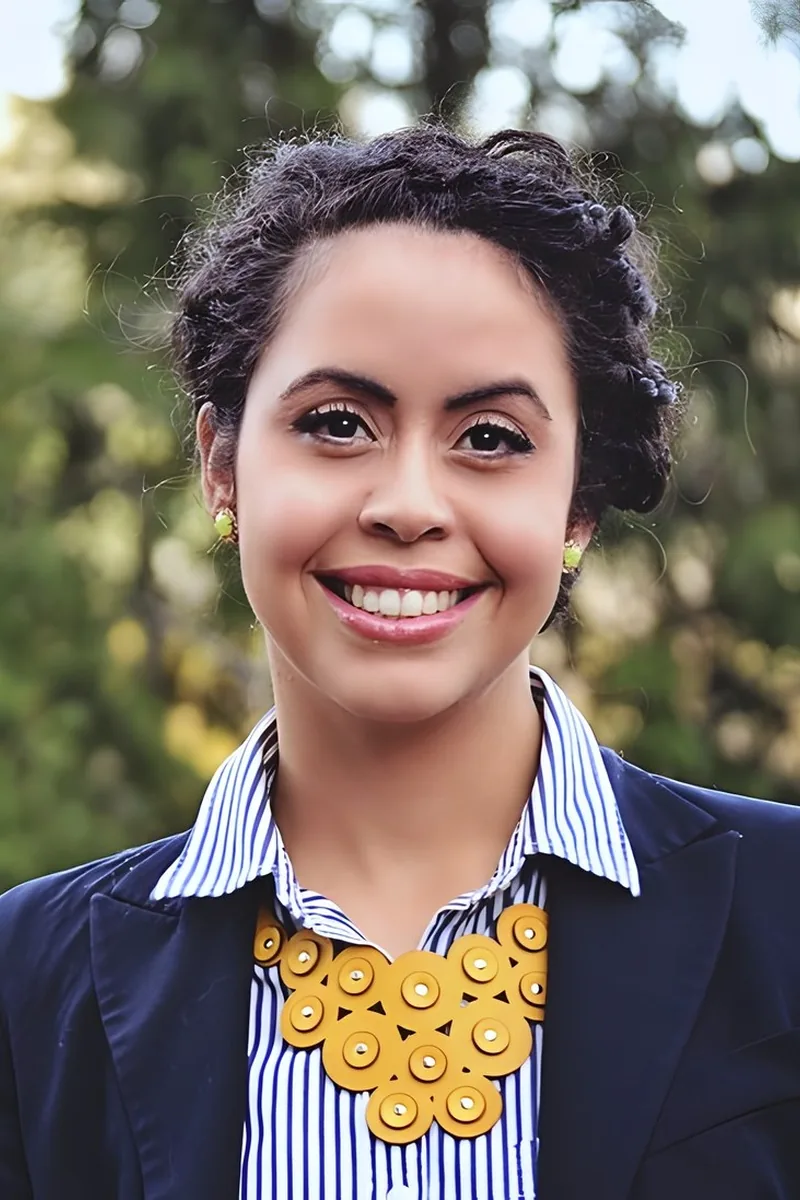
Five years teaching physical science courses at the collegiate level — rooted in a geophysics master's — means Mariela has walked students through the exact spots where college physics gets treacherous: setting up free-body diagrams for multi-force problems, applying conservation laws to unfamiliar scenarios, and translating between vector math and physical intuition. Her geology fieldwork adds a layer most physics tutors lack, since geophysics is essentially mechanics and wave theory applied to real, messy systems underground. She breaks problems down by identifying the governing principle first, then building the math around it.
College physics ramps up fast — suddenly you're integrating to find work done by a variable force or applying Gauss's law to non-trivial charge distributions. Rohan's experience teaching college math at Oregon means he can tackle the calculus and vector algebra alongside the physics concepts, rather than treating them as separate hurdles. His 5.0 rating speaks to how well that integrated approach lands with students.
An electrical engineering degree means Andrew didn't just take college physics — he relied on it daily, applying Maxwell's equations, circuit analysis, and electromagnetism to real engineering problems. That applied perspective makes him especially effective at unpacking topics like Gauss's law, Kirchhoff's rules, and rotational dynamics in ways that connect theory to tangible systems. Rated 5.0 by students.
Free-body diagrams, torque calculations, thermal expansion in constrained systems — Tammy didn't just study these in a textbook; she solved them repeatedly across two mechanical engineering degrees where getting the physics wrong meant the design failed. That depth means she can walk through the reasoning behind a problem setup in mechanics or thermodynamics and show exactly where students' intuition tends to break down. Her 1490 SAT underscores the quantitative precision she brings to calculus-based problem solving.
Biomedical engineering at Purdue means Sam solves physics problems with biological constraints every week — modeling forces on prosthetic joints, calculating fluid flow through artificial vessels, analyzing the electrical behavior of biosensors. That daily practice with mechanics, fluid dynamics, and circuits gives her a practical fluency with college physics concepts that makes abstract problem sets feel like engineering design challenges with the context stripped away.
Vaccine development work — Karl's reason for moving to New York — required understanding biophysics at the molecular level: how proteins fold under thermodynamic constraints, how electromagnetic forces govern molecular interactions, and how fluid dynamics shapes delivery systems. That hands-on research background, paired with his cellular and molecular biology degree, means he tackles college physics problems by connecting abstract equations to the physical phenomena they actually describe. He's particularly strong where physics and biology intersect, like optics, pressure, and energy transfer in biological systems.
Three science-focused bachelor's degrees — including biology — meant Garrett sat through the full calculus-based physics sequence and kept coming back to it in physiology and physical chemistry, where concepts like fluid dynamics, pressure gradients, and energy transfer show up again and again. That repeated exposure across disciplines gives him an intuitive feel for when to apply conservation of energy versus momentum, or how to reason through a thermodynamics problem without getting lost in the formalism. His 1530 SAT speaks to the quantitative sharpness he brings to each session.
Chemical engineering at Georgia Tech means Aimee's spent years solving problems that blend thermodynamics, fluid mechanics, and energy balances — the same physics concepts that make college-level courses demanding, except she's applied them to reactor design and process optimization. Her biosystems engineering graduate work adds another layer, connecting classical mechanics and heat transfer to biological systems in ways that make abstract problem sets feel more concrete. Rated 4.9 by students.
A PhD in biomedical engineering means Andrew has spent years applying physics to biological systems — modeling forces on joints, analyzing fluid flow through tissues, understanding how electromagnetic fields interact with the body. That depth in mechanics, thermodynamics, and E&M carries directly into the calculus-based problem solving college physics courses demand. Rated 4.9 by students.
Engineering physics at Cornell means Daniel is taking the most mathematically demanding version of every physics course — mechanics, E&M, waves, thermo — and building the intuition to move fluidly between physical reasoning and formal derivation. He's particularly strong at teaching students how to set up problems from scratch, translating a word problem into a free-body diagram or energy equation before any numbers appear. Rated 5.0 by students.
As a senior physics major at Yale, Ian tackles college-level topics like electromagnetism, rotational dynamics, and wave optics with the fluency of someone who uses them daily. He breaks intimidating derivations into logical steps, connecting the math to physical intuition so that concepts like Gauss's Law or Lagrangian mechanics actually make sense rather than feeling like symbol-pushing.
Studying applied mathematics at Caltech means Samuel encounters physics constantly — from classical mechanics and energy conservation to electromagnetism and wave behavior. He breaks down the math behind physical systems so that equations like Maxwell's or Newton's second law feel like tools rather than obstacles.
College-level physics demands more mathematical rigor than high school — suddenly, problems involve calculus-based derivations and vector analysis alongside conceptual reasoning. As a Johns Hopkins biomedical engineering and applied math student, Nicholas lives in that intersection of advanced math and physical modeling every semester. He walks through topics like rotational dynamics, electric fields, and wave optics with the precision college courses require.
Biomedical engineering at Yale means Ellie applies physics daily — from fluid dynamics in circulatory models to electromagnetic principles in medical imaging. She breaks down topics like torque, wave optics, and circuit analysis by connecting them to real systems she encounters in her coursework and research. Rated 5.0 by students.
Three physics-related bachelor's degrees give Avram an unusually deep undergraduate perspective on the subject — he's worked through mechanics, electromagnetism, and modern physics multiple times across different programs, which means he knows exactly where the conceptual gaps tend to hide. He breaks down wave phenomena and optics problems by connecting the math back to physical intuition, so equations feel like descriptions of real behavior rather than symbols to manipulate. His 1520 SAT reflects the quantitative precision he brings to problem solving.
Thermodynamics is where Rahul lights up — it was his favorite corner of Cornell's chemical engineering program, and that enthusiasm shows when he's walking someone through heat engines, entropy, or the first and second laws in a college physics context. His engineering training means he treats every problem as a physical system first and an equation second, pushing for the conceptual reasoning behind each step rather than formula-matching. Rated 4.9 by students.
Pursuing an MD at Stanford after a double major in economics and molecular/cellular biology, Maggie brings a pre-med perspective to college physics that makes topics like optics, fluid dynamics, and wave mechanics feel immediately relevant rather than abstract. She's especially sharp at teaching students to set up problems cleanly — translating a physical scenario into the right free-body diagram or energy equation before doing any math. Rated 5.0 by students.
Having served as a teaching assistant for Differential Equations and Mechanics at Notre Dame, Jeffrey has already spent time explaining the exact concepts — torque, oscillations, coupled systems — that trip up students in university physics courses. His mechanical engineering PhD work at Rice deepens that fluency, especially in thermodynamics and rotational dynamics where the math gets dense fast. He's rated 4.9 by students.
Testimonials
Because the right College Physics tutor makes all the difference.
Average Session Rating – Based on 3.4M Learner Ratings
Nearby College Physics Tutors
Other Portland Tutors
Related Science Tutors in Portland
Frequently Asked Questions
College Physics typically covers mechanics (motion, forces, energy), waves and sound, electricity and magnetism, and often includes introductory modern physics. The course emphasizes both theoretical understanding and practical problem-solving, with lab work designed to reinforce concepts through hands-on experimentation. Since many Portland-area students take this course as a prerequisite for engineering, health sciences, or advanced physics, tutoring can help you master both the conceptual foundations and the mathematical skills needed for success.
Many students struggle with connecting abstract concepts like forces and fields to real-world phenomena, as well as with the mathematical skills required—particularly unit conversions and free-body diagrams. Lab work can also be challenging when students aren't sure how to design experiments or interpret data. Personalized 1-on-1 instruction helps you build both conceptual understanding and problem-solving confidence, so you can tackle complex physics reasoning rather than just memorizing formulas.
Yes. Tutors can help you understand the scientific method, design experiments, analyze data, and write lab reports. They can also help you prepare for lab sessions by reviewing relevant theory and walking through what to expect. Understanding the 'why' behind experiments—not just the procedure—makes lab work more meaningful and helps you retain concepts longer.
Strong College Physics tutoring addresses both. Tutors help you visualize abstract concepts (like electric fields or momentum) and understand the physics principles first, then connect that understanding to the equations and calculations. This approach prevents the common trap of memorizing formulas without knowing when or why to use them—which leads to better performance on exams and in future science courses.
Your first session is about understanding your specific needs. The tutor will likely assess which topics you find most challenging, review your course syllabus and recent assignments, and identify whether you need help with conceptual understanding, problem-solving strategies, lab skills, or exam preparation. From there, you'll build a personalized plan to address your goals and get you on track.
Varsity Tutors connects you with expert tutors for College Physics for students in Portland who have strong backgrounds in physics and experience helping students master challenging concepts. When you connect with a tutor, you can discuss their experience with your specific course or textbook, and make sure their teaching style matches your learning preferences.
Absolutely. Tutors can help you review key concepts, practice problem-solving under timed conditions, identify gaps in your understanding, and develop test-taking strategies. They can also help you learn to read physics problems carefully and extract the relevant information—a critical skill that separates strong performers from those who struggle with exams.
Many College Physics students need to refresh their algebra, trigonometry, or calculus skills. Tutors can help you strengthen these foundational math skills while you're learning physics, so you're not held back by gaps in your mathematical background. This targeted support often makes a significant difference in your overall confidence and performance.
Let’s find your perfect tutor
Answer a few quick questions. We’ll recommend the right plan and match you with a top 5% tutor.