Award-Winning College Chemistry Tutors
serving Portland, OR
College Chemistry
Tutors in Portland
Private 1-on-1 tutoring, weekly live classes for academic support, test prep & enrichment, practice tests and diagnostics, and more to elevate grades and test scores.
Based on 3.4M Learner Ratings
UniversitiesSchools & Universities
DeliveredHours Delivered
ProficiencyGrowth in Proficiency
Who needs tutoring?
No obligation. Takes ~1 minute.

Organic reaction mechanisms, thermodynamics, and kinetics all demand a different kind of thinking than general chemistry, and that transition catches a lot of college students off guard. Rohan completed a chemistry minor at Oregon while immersed in biology coursework, so he understands how to bridge the conceptual gap between memorizing functional groups and actually predicting how molecules behave. He's rated 5.0 by students for making that leap manageable.
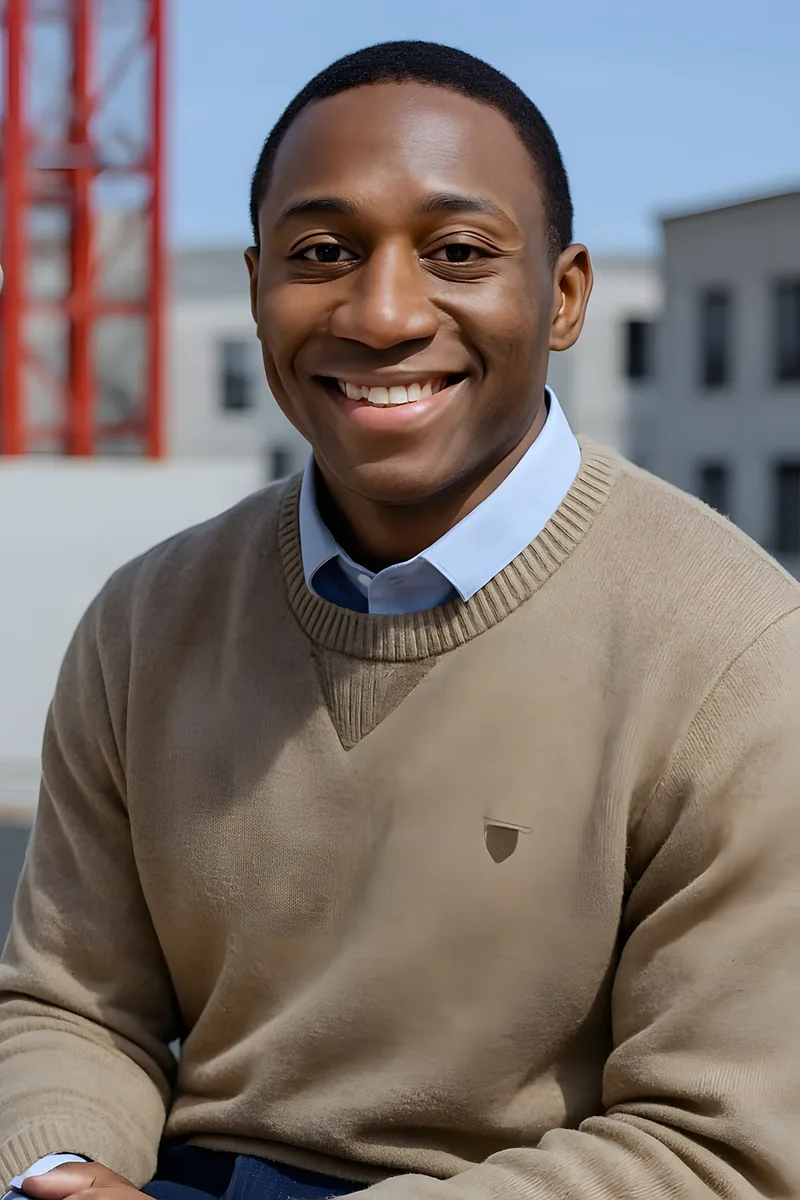
Most college chemistry struggles Channing sees trace back to math gaps hiding underneath the science — a shaky grasp of logarithms derailing pH calculations, or algebra mistakes disguised as conceptual confusion during equilibrium problems. With a deep math background spanning calculus through statistics and experience teaching high school chemistry, he pinpoints whether a student is stuck on the chemistry itself or on the quantitative machinery driving it, then fixes the actual weak spot.
As a passionate educator with a Doctorate in Biochemistry, Biophysics, and Structural Biology from the University of California, Berkeley, I bring over 25 years of dedicated tutoring and classroom experience to the table. My expertise spans subjects such as Algebra, Chemistry (including Organic and General Chemistry), and Statistics. I believe in fostering a supportive learning environment where students feel empowered to engage with complex concepts. By employing a hands-on approach, I connect theoretical ideas to real-world applications, making learning not only relevant but also enjoyable. My commitment to academic success drives me to inspire students to embrace their studies with confidence. Outside of teaching, I enjoy exploring scientific advancements and innovative educational methodologies, continually seeking ways to integrate my business acumen in biotech and education. - Charles Olea, MBA, PhD
I am passionate to help people learn about science, and have 35 years of real world experience and a Ph.D in physical chemistry, which seeks to explain physically observable phenomena in terms of atomic/molecular behavior.
Two mechanical engineering degrees mean Tammy spent years applying gen chem principles — gas laws in thermodynamic systems, reaction energetics in materials science, molecular bonding in metallurgy — long after most people closed their gen chem textbook. She tackles calculation-heavy topics like stoichiometry and calorimetry with an engineer's discipline around unit tracking and significant figures, catching the small errors that snowball into wrong answers on exams.
I am applying to medical schools to attend Fall 2016 and I like to play basketball, go backpacking and volunteer with youth in my free time.
Thermodynamics, reaction kinetics, and molecular orbital theory all demand a level of mathematical fluency that many students don't expect from a chemistry course. As a biomedical engineering major at Purdue, Sam regularly uses these principles in her own coursework and can explain the quantitative side of chemistry without losing sight of the underlying concepts.
HIV vaccine research in New York gave Karl hands-on experience with the biochemistry that underpins college chemistry — reaction energetics, solution behavior, and molecular interactions aren't abstract textbook topics when you've worked with them at the bench. His cellular and molecular biology degree means he tackles gen chem from the molecular level up, connecting ideas like electron configuration and bonding theory to the larger chemical behavior students are expected to predict on exams.
Having TAed Chemistry, Biology, and Fluid Mechanics during her chemical and biological engineering degree at CU Boulder, Niki has explained gen chem concepts like reaction stoichiometry, thermodynamics, and equilibrium to students across multiple STEM disciplines — not just chemistry majors. That engineering lens means she teaches college chemistry with an eye toward how the math and the physical intuition need to work together, especially in calculation-heavy topics like enthalpy, gas laws, and solution concentration. Rated 4.7 by students.
Having scored 1580 on the SAT and completed AP Chemistry coursework, Kendall brings sharp quantitative instincts to the trickiest parts of gen chem — the unit conversions buried inside equilibrium problems, the logarithmic reasoning behind pH calculations, the algebra hiding inside rate law expressions. She also knows that college chemistry often overwhelms students not because the concepts are impossibly hard, but because the pace is relentless, so she zeroes in on the specific spots where understanding broke down rather than re-teaching entire chapters. Rated 4.9 by students.
Cognitive Studies at Vanderbilt gave Vy an unusual angle on college chemistry — she understands how students actually learn and retain dense, concept-heavy material like electron configurations, equilibrium shifts, and thermodynamic laws, not just the content itself. She uses that awareness to structure explanations around how the brain organizes new information, which makes a real difference when a student is drowning in a fast-paced gen chem course. Holds a 5.0 rating.
Neuroscience at Yale meant David couldn't just skim gen chem — he needed concepts like electrochemistry, molecular bonding, and reaction thermodynamics to stick, because they showed up again in every neurobiology and biochemistry course that followed. Now pursuing graduate work in bioethics, he teaches college chemistry by linking each topic to the bigger scientific picture, so students see why mastering something like intermolecular forces or acid-base equilibria pays off well beyond the final exam. Rated 5.0 by students.
Between a biochemistry degree and ongoing work in biochemical laboratories, Andrew has used gen chem concepts like reaction thermodynamics, molecular bonding, and acid-base chemistry as everyday tools — not just exam material he learned and forgot. He teaches college chemistry by grounding abstract ideas in the lab contexts where they actually behave, so topics like equilibrium constants and enthalpy changes carry physical meaning rather than just numerical answers. Rated 4.9 by students.
Decades of work as a PhD chemical engineer mean Steven has used gen chem concepts like reaction thermodynamics, equilibrium, and stoichiometry as professional tools — not exam topics he learned once and moved on from. He tackles tough problems by explaining the idea one way, then reframing it from a different angle, and grounding it with a practical example so the concept sticks from multiple directions. Rated 4.9 by students.
Studying chemistry at Harvard while preparing for Columbia Medical School means James has taken college chemistry far past the introductory level — he knows which early concepts like electron configurations, VSEPR theory, and reaction stoichiometry quietly become load-bearing walls for everything from organic mechanisms to biochemical pathways. He teaches gen chem by flagging those high-stakes fundamentals early, so students aren't blindsided when later courses assume fluency. Rated 4.9 by students.
Sung earned his B.S. in Chemistry, which means he can unpack topics like thermodynamics, equilibrium constants, and molecular orbital theory with real depth rather than surface-level definitions. He connects abstract concepts — like why Gibbs free energy determines spontaneity — to concrete problem-solving strategies that stick. Rated 5.0 by students.
Working in a Yale research lab with tools like CRISPR-Cas9 means Matthew encounters gen chem principles — reaction kinetics, molecular interactions, buffer systems — in live experimental contexts, which sharpens how he explains them back at the introductory level. His biochemistry and molecular biology coursework built fluency with the bridge between general chemistry and its applications, so he can show students exactly why mastering something like equilibrium or thermochemistry pays off two courses down the road. Holds a 5.0 rating.
Chemical and biomolecular engineering at MIT means Natasha uses general chemistry concepts — equilibrium, kinetics, electrochemistry — as daily tools, not just exam topics. She talks through reaction mechanisms and stoichiometry problems out loud with students, treating each session more like a collaborative lab meeting than a lecture. Rated 4.9 by students.
Working in Duke's Bilbo lab on neuroimmune interactions means Lauren applies gen chem principles — reaction kinetics, molecular polarity, acid-base behavior — in a research setting where getting the chemistry wrong has real consequences for experimental design. That hands-on context, paired with her neuroscience and chemistry coursework, gives her a practical read on which concepts students need to truly internalize versus which ones they're just memorizing long enough to pass the exam. Rated 4.8 by students.
Studying chemistry at MIT means Max has tackled the same problem sets, lab reports, and conceptual leaps that trip up college chemistry students — quantum mechanical models, thermodynamic cycles, molecular orbital theory. He approaches each session by identifying the specific concept a student is stuck on and building understanding from the ground up, not just drilling practice problems. His 5.0 rating speaks to how well that method works at the college level.
Having TA'd general chemistry at Cornell — running problem-solving sessions and later training other TAs in teaching techniques — Alec knows exactly which concepts derail students: electron configurations that don't match periodic trends, buffer problems where the Henderson-Hasselbalch equation gets misapplied, or enthalpy calculations where sign conventions silently flip answers. His genetics and pre-med coursework means he's also seen how gen chem principles resurface in biochemistry and organic chemistry, so he teaches each topic with an eye toward where it's headed. Rated 4.8 by students.
Testimonials
Because the right College Chemistry tutor makes all the difference.
Average Session Rating – Based on 3.4M Learner Ratings
Nearby College Chemistry Tutors
Other Portland Tutors
Related Science Tutors in Portland
Frequently Asked Questions
College Chemistry introduces abstract concepts like molecular bonding, thermodynamics, and equilibrium that require both mathematical skill and conceptual understanding. Students often struggle with balancing equations, unit conversions, and connecting theoretical principles to real-world applications. Many also find it challenging to visualize molecular structures and predict how atoms interact—skills that are essential for success in the course.
Personalized 1-on-1 instruction allows tutors to focus on your specific weak points, whether that's stoichiometry, acid-base chemistry, or organic mechanisms. A tutor can break down abstract concepts into visual, step-by-step explanations and help you develop problem-solving strategies for exams. They can also guide you through lab reports and help you understand the scientific reasoning behind experiments, not just memorize procedures.
During your first session, a tutor will assess your current understanding of College Chemistry fundamentals, identify specific topics causing difficulty, and learn about your learning style and goals. They'll ask about your course syllabus, upcoming exams, and lab requirements to create a personalized plan. This foundation helps them tailor future sessions to address your exact needs, whether you need help with concepts, problem-solving, or exam preparation.
Yes. Tutors can help you understand the theory behind experiments, prepare for lab sessions, and work through data analysis and lab report writing. They can explain why certain procedures are used, help you interpret results, and connect your observations to the underlying chemistry concepts. This support strengthens both your experimental skills and your conceptual understanding of the material.
No—College Chemistry is fundamentally about understanding how atoms, molecules, and reactions work. While you'll need to know some key formulas and periodic table trends, the real focus is on developing problem-solving skills and scientific reasoning. Tutors help you move beyond memorization by teaching you how to apply concepts to new problems, predict outcomes, and think like a chemist rather than just recalling facts.
College Chemistry typically builds on high school chemistry and algebra skills. If you're rusty on topics like balancing equations, scientific notation, or solving algebraic equations, a tutor can help refresh those fundamentals quickly. Many students benefit from a brief review session to strengthen prerequisite skills before diving into college-level material, which sets them up for success in the course.
Varsity Tutors connects students in Portland with tutors who have strong backgrounds in chemistry and experience teaching college-level material. You can share your specific needs—whether it's general chemistry, organic chemistry, or lab support—and get matched with someone who fits your learning style and schedule. The matching process ensures you work with a tutor who can explain complex concepts clearly and help you build genuine understanding.
Many students see noticeable improvement in their understanding within a few sessions, especially if they're working on specific problem areas like equilibrium or acid-base chemistry. Grade improvements typically follow as your conceptual foundation strengthens and you develop better problem-solving strategies. The timeline depends on your starting point and how frequently you meet, but consistent tutoring focused on your weak spots can make a significant difference before midterms and finals.
Let’s find your perfect tutor
Answer a few quick questions. We’ll recommend the right plan and match you with a top 5% tutor.