Award-Winning Geometry Tutors
serving Portland, OR
Geometry
Tutors in Portland
Private 1-on-1 tutoring, weekly live classes for academic support, test prep & enrichment, practice tests and diagnostics, and more to elevate grades and test scores.
Based on 3.4M Learner Ratings
UniversitiesSchools & Universities
DeliveredHours Delivered
ProficiencyGrowth in Proficiency
Who needs tutoring?
No obligation. Takes ~1 minute.
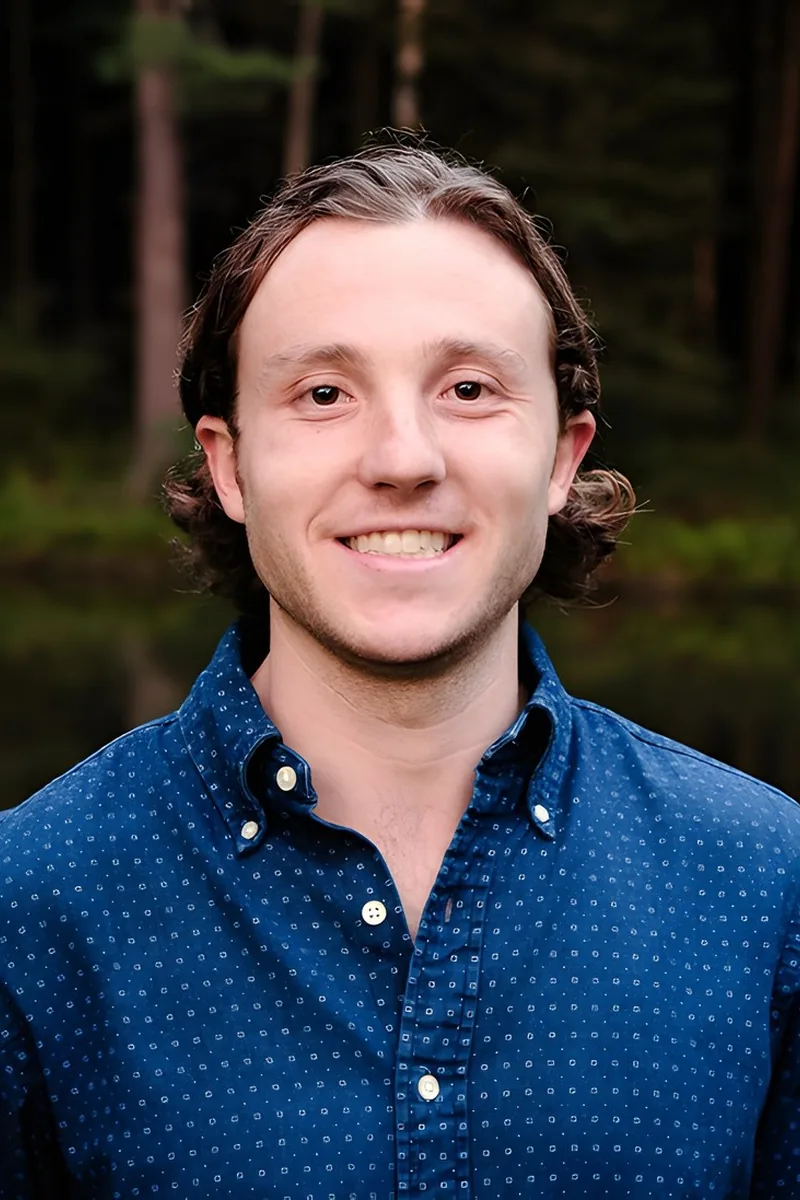
Proofs are where most geometry students hit a wall — suddenly math requires structured logical arguments instead of calculations. Dylan leans into that challenge, teaching students to build two-column and paragraph proofs by identifying given information, spotting congruence relationships, and reasoning step by step. His education background means he knows how to make that shift in thinking feel achievable.
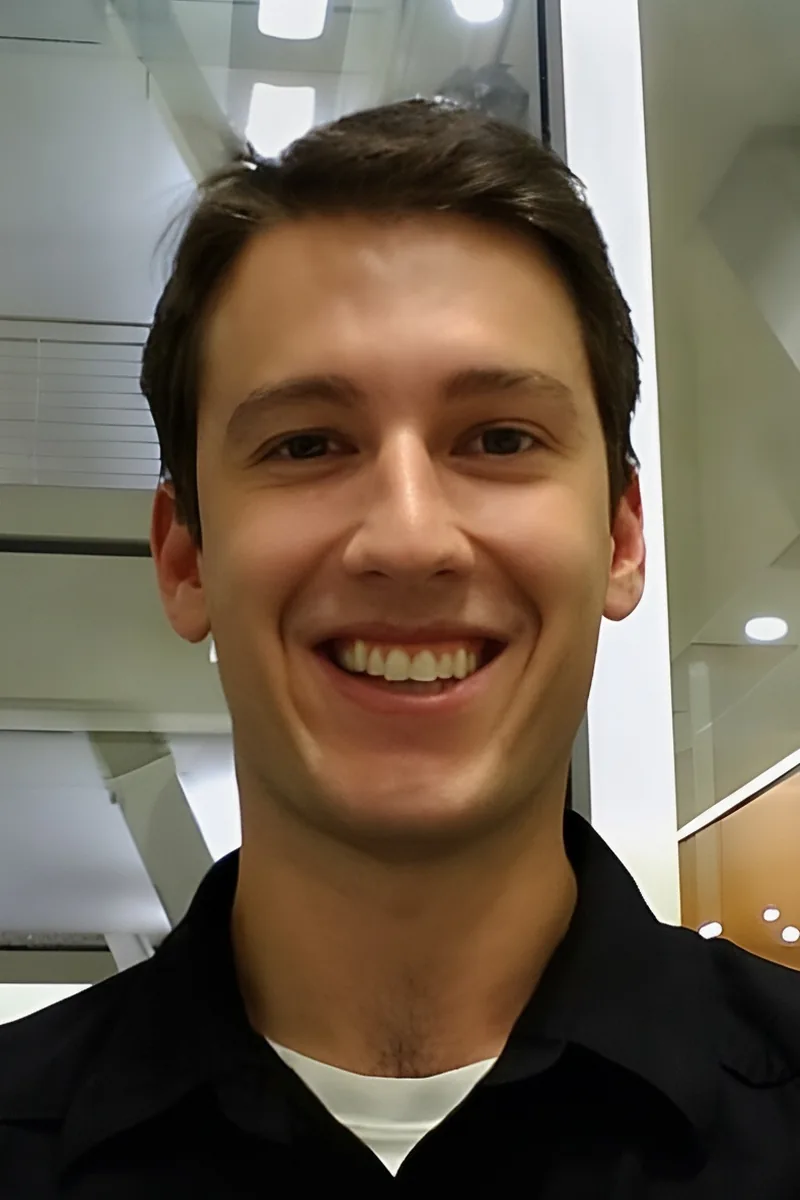
Designing physical products at Nike — where every component has to fit precisely within a casing, withstand stress at specific angles, and maintain exact tolerances — meant Andrew was doing geometry daily before he ever tutored it. His Stanford mechanical engineering work in design and manufacturing keeps that spatial fluency sharp, and he channels it into teaching students how to reason through problems involving angle relationships, congruence, and properties of solids. He's especially effective at showing why a geometric relationship holds, not just how to apply it on a worksheet.
Having tutored the full calculus series and differential equations since 2013, Danny brings an unusually strong sense of how geometric concepts — similarity, transformations, triangle properties — feed directly into the math students will encounter next. He teaches students to visualize problems before formalizing them, connecting area and volume reasoning to the spatial thinking that makes later courses click. His MS Statistics work at Portland State also means he can show where geometric probability and data visualization tie back to the shapes on the page.
Proofs are the part of geometry that trips up even strong math students — suddenly they're asked to build arguments, not just compute answers. Ezra's philosophy degree trained him in exactly this kind of structured logical reasoning, and he applies it directly to two-column proofs, triangle congruence, and parallel line theorems. He teaches students to read a geometric diagram the way a philosopher reads a premise: looking for what necessarily follows.
A math degree from Michigan State means Jordan didn't just pass through geometry — he spent semesters building on it in courses where Euclidean reasoning, transformations, and spatial logic kept showing up as prerequisites for more advanced work. His jazz studies background also gives him an unusual edge: reading music is fundamentally about recognizing patterns and structures, which is exactly the mental habit that makes geometric proofs and constructions click.
Proofs are usually the first time a math student has to construct a logical argument instead of just computing an answer, and that shift throws a lot of people off. Rohan walks through each proof type — two-column, paragraph, indirect — by focusing on the reasoning strategy before worrying about formal notation. His science training at Oregon reinforces that logical-thinking approach, and his 5.0 student rating speaks to the results.
After earning his math degree, Tyler spent a year in MN Math Corps learning research-based methods for reaching students who were falling behind — and geometry, where a single shaky concept like angle relationships can quietly undermine everything from triangle proofs to circle theorems, is exactly the kind of subject where that diagnostic instinct pays off. He breaks problems into visual and logical pieces, making sure students actually grasp why a theorem works before applying it. Rated 5.0 by students.
Proofs are usually the first place geometry students feel lost, because the subject suddenly asks them to justify every step instead of just computing an answer. Timothy teaches proof structure as a logical argument — claim, evidence, reasoning — which clicks especially well for students who think verbally. He also covers the computational side, from triangle congruence shortcuts to circle theorems, with an emphasis on drawing and labeling diagrams effectively.
Transitioning into software development means Shannon spends her days building logical structures in code — and geometric proofs run on the same kind of sequential, if-then reasoning that makes a program work. She breaks down problems involving parallel lines, transversals, and triangle properties by treating each theorem like a function: clear inputs, clear outputs, no ambiguity. Her 1550 SAT score speaks to the mathematical fluency backing up that approach.
A Classics degree from Reed College might seem unrelated to geometry, but Marilyn's training in Latin and Greek texts — where every argument follows strict logical structure — maps directly onto the deductive reasoning behind geometric proofs. She approaches each theorem the way a classicist approaches a passage: identify what you know, apply the rules precisely, and build toward a conclusion that holds up under scrutiny. Rated 4.8 by students.
Proofs are where most geometry students panic — the leap from calculating angles to constructing a logical argument feels completely foreign. Daniel, who studies philosophy at Reed College, treats geometric proofs the same way he treats philosophical arguments: premise by premise, with each step justified before moving to the next. He's unusually comfortable in that logical space, and he makes congruence theorems and parallel-line reasoning feel like structured conversations rather than mysterious rituals.
Proofs are usually the first time a math student has to construct a logical argument rather than just compute an answer, and that shift throws a lot of people off. Nick walks through each proof type — two-column, paragraph, indirect — by emphasizing the reasoning chain rather than rote structure. His engineering background also means he can show how geometric principles like congruence, similarity, and angle relationships apply in real design contexts.
Proofs are where most geometry students freeze — not because the logic is too hard, but because nobody taught them how to organize what they already see. Channing breaks proof-writing into a visual process, connecting angle relationships and congruence theorems to diagrams before anything hits the page. That approach turns abstract reasoning into something students can actually replicate on their own.
A literature and English graduate might seem like an unusual fit for geometry, but Aidan's strength is in constructing and evaluating arguments — which is exactly what proof-based geometry demands. He treats two-column proofs the way he'd treat a close reading: identifying what's given, building a logical chain, and making sure every claim is supported before moving on. Rated 5.0 by students.
A PhD in Psychological and Brain Sciences might not scream geometry, but Tashina's research relies heavily on statistics and spatial data visualization — skills that translate directly to interpreting diagrams, reasoning through transformations, and building logical arguments in proofs. She approaches geometric proof-writing the way she approaches academic writing: as a structured argument where every claim needs evidence, making the two-column format feel less foreign to students who think of themselves as "words people."
I am a full time college professor teaching Mathematics and engineering courses.
Proofs are usually the first place Geometry students hit a wall, because suddenly math requires written logical arguments instead of calculations. June approaches each proof as a puzzle — teaching students to identify what they know, what they need to show, and which theorems bridge the gap. Her science training at Georgetown reinforced exactly this kind of structured, step-by-step reasoning.
Proofs are usually the first time geometry students have to build a logical argument instead of just computing an answer, and that transition can feel overwhelming. Malaika's approach treats each proof as a puzzle — identifying given information, selecting the right postulates, and constructing a chain of reasoning step by step. Her math and education degrees give her both the content knowledge and the teaching instincts to make that shift manageable.
Proofs are usually the first time a math student is asked to argue logically rather than just compute, and that shift trips up a lot of people. Sam walks through geometric proofs step by step, teaching students how to identify given information, select the right theorem, and build a chain of reasoning about congruence, similarity, or parallel lines. Her engineering training at Purdue sharpened exactly this kind of structured, logical thinking.
Training in bilingual elementary education means Alicia has spent serious time thinking about how to make abstract ideas concrete — a skill that pays off in geometry, where students often struggle to connect a diagram on the page to the theorem they're supposed to apply. She breaks down problems involving angle relationships and triangle properties by building up from the visual first, making sure students can describe what they see before translating it into formal steps.
Proofs are where most Geometry students panic — the leap from calculating angles to constructing logical arguments feels completely different from earlier math. Ben eases that transition by teaching students to identify what they know, what they need, and which theorems connect the two, turning each proof into a puzzle rather than a mystery. His emphasis on active problem-solving means students practice reasoning through congruence, similarity, and circle theorems until the structure feels natural.
Years of molecular biology work — visualizing protein structures, mapping cellular architectures, thinking in three dimensions about things you can't see — trained Karl to approach geometric reasoning as something tangible rather than abstract. He unpacks problems involving parallel lines, congruence, and circle properties by sketching everything out and building the logic visually before formalizing it into a proof or calculation.
I am currently working on earning my Medical Assistant certification and studying for the MCAT in anticipation of applying to medical school.
Proofs are usually the first place geometry students get stuck, because suddenly math requires structured argumentation instead of computation. Sami approaches geometric reasoning the way he learned to build logical arguments in computer science at Duke — step by step, with each claim justified before moving to the next. He covers everything from triangle congruence to circle theorems with that same emphasis on clear, connected thinking.
Proofs are usually where geometry students panic, so Samantha teaches them as structured arguments rather than mysterious rituals — each statement earns its place with a reason. She also digs into the spatial reasoning behind congruence, similarity, and circle theorems, connecting diagrams to the algebra students already know. Her Duke science background means she's comfortable making abstract relationships concrete.
Three years of tutoring math across elementary through high school gave Talia a clear picture of where geometry trips students up — and it's almost always the transition from calculating answers to constructing logical arguments in proofs. Her approach leans on breaking down each proof into plain-language reasoning first, then translating that thinking into formal geometric statements about congruence, angle relationships, or parallel lines. Rated 5.0 by students.
Proofs are usually where geometry students panic, but they're really just structured arguments — and Dane approaches them that way. Studying engineering at Duke sharpened his spatial reasoning across topics like congruence, similarity, and coordinate geometry, and he teaches students to visualize relationships before translating them into formal logic.
Proofs are where most geometry students panic — the logic feels nothing like the arithmetic they're used to. Pinelopi breaks two-column and paragraph proofs into small reasoning steps, treating each one like a mini-argument rather than a memorization exercise. Her Duke psychology training actually lends itself well to teaching logical structure.
Proofs are usually where geometry stops feeling like math and starts feeling like a foreign language. Ava tackles that disconnect by teaching students to read diagrams actively — identifying congruent triangles, parallel line relationships, and angle pairs before ever writing a formal statement. Her engineering background means spatial reasoning is second nature to her.
Mechanical and aerospace engineering at Princeton means Matthew lives in a world of geometric constraints — fitting components into tight spaces, calculating load-bearing angles, reasoning about three-dimensional shapes on paper before they ever get built. He brings that same step-by-step precision to teaching triangle properties, angle relationships, and the logic behind constructions, typically demonstrating a technique and then handing students progressively harder problems until the reasoning becomes automatic.
Competition math taught Tracy to look at a geometry figure and immediately spot the relationships that matter — which triangles are similar, where auxiliary lines unlock a problem, how a single angle chase can crack open a complicated diagram. That instinct, sharpened through years of math competitions and a 36 ACT, carries over directly when she teaches students to approach proofs and problem-solving with strategy instead of panic. Rated 4.9 by students.
Most geometry struggles come down to proofs: students can identify that two triangles look congruent but can't articulate why in a logical chain. Sam's engineering and statistics background trained him in rigorous argumentation, and he applies that same structured thinking to walk through two-column and paragraph proofs until the reasoning clicks.
A political science degree from the University of Chicago means Asta spent four years constructing airtight arguments from premises to conclusions — exactly the skill that makes geometric proofs click. She applies that structured reasoning to two-column proofs and logical chains involving congruence, triangle properties, and circle theorems, treating each one like a case to be built rather than a formula to memorize. Rated 5.0 by students.
Jackie scored a 36 on the math section of the ACT, and her coursework through AP Calculus BC and Multivariable Calculus means she's deeply fluent in the reasoning skills that underpin geometry. She breaks down topics like angle relationships, area formulas, and coordinate geometry by tying them back to the algebraic thinking students already have — making new concepts feel like extensions, not mysteries. Rated 5.0 by students.
Proofs are where most geometry students get stuck — the leap from calculating angles to constructing logical arguments feels like a different subject entirely. Jonathan breaks that transition down by teaching students to identify given information, spot congruence relationships, and build each proof step by step. His 4.9 rating speaks to how well that structured approach clicks.
Testimonials
Because the right Geometry tutor makes all the difference.
Average Session Rating – Based on 3.4M Learner Ratings
Practice Geometry
Free practice tests, flashcards, and AI tutoring for Geometry
Nearby Geometry Tutors
Other Portland Tutors
Related Math Tutors in Portland
Frequently Asked Questions
Geometry requires a shift from the procedural, formula-based thinking of algebra to understanding spatial relationships and logical reasoning. Many students struggle with proofs—learning to construct logical arguments and justify each step—as well as visualizing 3D shapes and applying geometric concepts to word problems. Additionally, students often find it difficult to connect abstract theorems to real-world applications, which can make the material feel disconnected from what they already know.
In your first session, a tutor will assess your current understanding of geometric concepts, identify specific areas where you're struggling (whether it's proofs, coordinate geometry, or spatial reasoning), and discuss your learning goals. This helps create a personalized plan focused on building both conceptual understanding and problem-solving confidence, rather than just memorizing formulas and procedures.
Proofs intimidate many students because they require logical thinking and clear communication—skills that go beyond calculation. A tutor can break down the proof-writing process into manageable steps, help you recognize patterns in theorems, and teach strategies for approaching different proof types (two-column, paragraph, flow proofs). With guided practice and feedback, students develop the confidence to construct their own logical arguments.
Yes—many students are visual learners who benefit from drawing, manipulating shapes, and exploring geometric concepts hands-on rather than just reading definitions. Tutors can use diagrams, coordinate planes, and real-world examples to help you see how geometric principles work in practice. This builds intuition and makes abstract concepts like transformations, symmetry, and 3D geometry much more concrete and understandable.
Word problems require translating real-world scenarios into geometric diagrams and equations—a skill that takes practice. Tutors teach strategies for breaking down complex problems, identifying relevant information, and choosing the right geometric tools to solve them. By working through problems step-by-step and discussing your reasoning, you'll develop problem-solving patterns that apply across different scenarios.
Math anxiety often stems from feeling lost or making mistakes without understanding why. Personalized tutoring creates a low-pressure environment where you can ask questions, work through problems at your own pace, and see that mistakes are learning opportunities. As you develop deeper understanding of geometric concepts and see your problem-solving improve, confidence naturally builds—transforming Geometry from intimidating to manageable.
Yes. Portland-area schools use different geometry programs and approaches, and tutors are experienced working with various curricula and teaching methods. Whether your school uses a traditional textbook, an integrated approach, or a specific curriculum framework, a tutor can align their instruction with what you're learning in class while also reinforcing conceptual understanding beyond just following the textbook.
Many students notice improved understanding and problem-solving confidence within a few sessions, especially when tutoring targets specific weak areas. However, deeper mastery—particularly with proofs and complex multi-step problems—develops over time with consistent practice and feedback. The key is regular tutoring combined with your own effort; most students see meaningful grade improvement within 4-6 weeks of consistent work.
Let’s find your perfect tutor
Answer a few quick questions. We’ll recommend the right plan and match you with a top 5% tutor.