Award-Winning OLSAT
Tutors
Who needs tutoring?
FEATURED BY


TUTORS FROM
- YaleUniversity
- PrincetonUniversity
- StanfordUniversity
- CornellUniversity
Award-Winning OLSAT Tutors
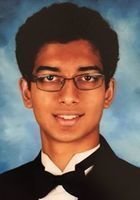
Certified Tutor
9+ years
Vansh
I am currently pursuing a Bachelors of Science in Aerospace Engineering at the Georgia Institute of Technology. I am also a graduate of the high school International Baccalaureate Program. I have informal experience tutoring high school physics, but am most passionate about tutoring students for the...
Georgia Institute of Technology-Main Campus
Bachelor of Science, Aerospace Engineering
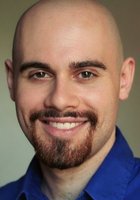
Certified Tutor
16+ years
John
I'm a huge Red Sox fan and love watching detective shows when I have free time.
University of St Thomas
Bachelor of Fine Arts, English/Drama
American Academy of Dramatic Arts
Associates, Acting
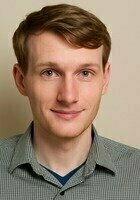
Certified Tutor
Max
I am in the process now of applying for PhD programs in Computational Biology. I have done research in the field of freshwater ecology and am anticipating the publication of a paper I co-authored in the next several months.
Ball State University
Bachelors, Biology, General

Certified Tutor
5+ years
Arthur
I am available to tutor in a broad range of subjects, though I am most passionate about Economics, History, and Civics. Please feel free to contact me and I would be happy to arrange a session.
Middlebury College
Bachelor in Arts, Economics

Certified Tutor
9+ years
Conor
I am currently a medical student in Philadelphia, and have a degree in Biomedical Engineering from Stony Brook University. I have several years of experience tutoring SAT students, but thanks to my mixed background I have proficiency in a wide range of subjects including mathematics, biological scie...
Stony Brook University
Bachelor of Engineering, Biomedical Engineering
Drexel University
Doctor of Medicine, Biomedical Sciences
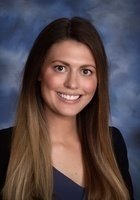
Certified Tutor
8+ years
Emily
I am currently a fourth year medical student in Indianapolis. I completed my undergraduate education at Indiana University Bloomington, where I majored in Biology and Spanish. I also completed two minors in Mathematics and Chemistry. While at IU, I worked for the Department of Mathematics and Depart...
Indiana University-Bloomington
Bachelor of Science, Biology, General
Indiana University-Purdue University-Indianapolis
Doctor of Medicine, Community Health and Preventive Medicine

Certified Tutor
Julia
I am a recent college graduate currently pursuing a career in publishing in New York City. My interest in tutoring and the publishing industry stem from the same source: I want to help instill in others the same love of learning I have felt throughout my life. Whether it's getting lost in a good boo...
The College of William & Mary
Bachelors, English & Linguistics
Certified Tutor
6+ years
Rhea
I am a current student at the University of Chicago. I am working towards a Bachelor of Science in Biological Sciences, and I am on the pre-medical track. I am extremely passionate about tutoring, and I have several years of experience tutoring students in my high school's learning center in various...
University of Chicago
Bachelor of Science, Biology, General
Certified Tutor
5+ years
Alex
I'm a junior in chemical engineering at ASU Barrett and I specialize in math and physics tutoring. If you need help with any of your math subjects or have trouble with physics and chemistry I'm the one to call. I love working with students and each and everybody's success is my top priority.
Arizona State University
Bachelor of Engineering, Chemical and Biomolecular Engineering
Arizona State University
Current Grad Student, Chemical and Biomolecular Engineering
Certified Tutor
10+ years
Samantha
I'm a first-year medical student and recent graduate from Duke University, where I studied Global Health Determinants, Behaviors, and Interventions. From running a piano program at a nonprofit children's theatre to private tutoring in math, science, and standardized test prep, I enjoy helping my stu...
Duke University
Bachelors in Global Health Determinants, Behaviors, and Interventions
Harvard Medical School
Current Grad Student, MD
Top 20 Test Prep Subjects


Meet Our Expert Tutors
Connect with highly-rated educators ready to help you succeed.
Satvik
AP Statistics Tutor • +68 Subjects
I am an incoming college sophomoore studying Aerospace Engineering at the Georgia Institute of Technology. I was one of the top scholars at Carmel High School in Indiana and have various experiences teaching and tutoring through leading the Carmel High School Science Olympiad team to Nationals for two years in a row. Many of my friends consistently come to me for help with various subjects because of my willingness to help and teach in a way that makes sense to everyone. My specialities are physics, chemistry, math, and economics but I am comfortable tutoring any STEM subject, the SAT, and the ACT. Some of my accomplishments include a perfect 36 ACT score, 800 on the Physics, Math Level 2, and Chemistry SAT subject tests, and a 5 on all the physics, Calculus BC, Chemistry, Macroeconomics, Computer Science, etc. AP exams. When teaching, I focus on making sure that not only do students understand different concepts, but also that students understand why and practical applications of the different concepts. As a recent high school graduate, I have a deep understanding of how high-schoolers think, what is covered in various courses now, and can connect with my students a lot more. Additionally, as an undergraduate teaching assistant at the College of Computing at Georgia Tech, I taught weekly recitation sections of 30 students and held weekly office hours. Therefore, I have lots of experience teaching and working with students.
Suzanne
Calculus Tutor • +24 Subjects
I am currently working on a Master of Arts in Philosophy at Georgia State University, where I serve as a teaching assistant and writing consultant. I currently tutor in the areas of test preparation, government, philosophy, and religious studies. My passion for education stems from the joy I find in helping students achieve their goals. My teaching style involves asking lots of strategic questions to help students discover answers for themselves, a process which my students typically find quite empowering. Still, I recognize that each student has unique needs, questions, and learning styles, so I strive to listen first and then craft individualized plans to meet each student's particular objectives. In my spare time I like to get outside hiking, playing soccer, or volunteering at my church's community garden. I also enjoy reading, watching football, and cooking.
Elena
Calculus Tutor • +23 Subjects
I am a second year law student at the University of Chicago who hails from the San Francisco Bay Area! I tutor the SAT, ESL, and Spanish. I was an AVID tutor in high school, and after college I taught an ESL class and tutored a high school student in Spanish. In law school, I am involved with the Lawyers in the Classroom program. My tutoring philosophy is based on listening to students work through problems and helping them to spot their confusions or incorrect assumptions. I believe students learn much better when they aren't simply told the right answer or right reasoning; they need to get there on their own.
Ethan
AP Statistics Tutor • +66 Subjects
I am not teaching or grading papers, I can usually be found playing some brass instrument or another, umpiring baseball, trying out a new recipe in the kitchen, or spending far too much time on Netflix.
Min
AP Calculus BC Tutor • +24 Subjects
I'm a motivated and enthusiastic engineer with a drive to always continue learning, share knowledge with others and inspire. Hobbies: writing, reading, cooking, music, art, books
Ken
Pre-Algebra Tutor • +34 Subjects
I am a Wake Forest University graduate with a degree in Psychology, and I am currently pursuing a career as a physical therapist.
Chelain
Calculus Tutor • +14 Subjects
I am currently a resident physician at Northwestern Hospital.
Anya
Middle School Math Tutor • +24 Subjects
I am a graduate of the MA Fashion Studies program at Parsons The New School for Design in New York, having previously studied linguistics and foreign languages (concentrating in Russian and French) at the University of New Mexico in Albuquerque and at McGill University in Montreal. I currently serve as adjunct faculty in the Art and Design History and Theory department at Parsons, where I specialize in courses which combine numerous disciplines within the humanities, such as a course about the relationship between fashion and language and a graduate seminar about writing for fashion publications. I have also led elementary summer art camp workshops in my hometown of Los Alamos, New Mexico. My teaching methods, which are interactive, engaging, and tailored to a range of learning styles, have consistently been described by my students as motivational and encouraging. I tutor a wide range of subjects, from Middle School Math to PSAT and SAT test preparation, but I am most passionate about Critical Reading and Writing and Essay Editing. These are areas in which my students make remarkable progress in short periods of time and also find great pleasure in relating the themes of their writing to their own outside interests and passions. I also enjoy helping students prepare to take standardized tests by addressing, in an understanding and accommodating way, the common anxieties and stresses that can accompany test-taking. Outside of school and tutoring, I enjoy traveling, reading, visiting museums, cooking, and snowboarding.
Anna
Calculus Tutor • +34 Subjects
I'm Anna! I'm currently a student in the MD/MBA program between Northwestern University's Feinberg School of Medicine and the Kellogg School of Management, and graduated from Northwestern University as part of the Honors Program in Medical Education. I attended the Bergen County Academies in New Jersey, a selective, application-based magnet school, for high school.
Kate
AP Calculus BC Tutor • +53 Subjects
I'm available to tutor biology, chemistry, physics, math from Algebra up through AP Calculus, SAT test prep, and French. I've been tutoring students in science and math for 7 years. I also spent 8 months working and studying in France, and have tutored high school and adult students in French. When I'm not working or studying, I love playing volleyball (indoors or on the beach!) and spending time outside, canoeing or hiking with my dog. I look forward to meeting and working with you!
Top 20 Subjects
Frequently Asked Questions
Score improvement depends on your child's starting point and how consistently they engage with tutoring. Many students see meaningful gains within 8-12 weeks of regular practice, particularly when working with a tutor who identifies specific weak areas—whether that's verbal reasoning, nonverbal problem-solving, or figuring out patterns. The key is targeted practice on question types your child finds most challenging, combined with test-taking strategies that build confidence.
The OLSAT measures reasoning abilities across verbal, nonverbal, and figural sections—no reading or math knowledge is required. Your child will encounter pattern recognition, analogies, classification questions, and spatial reasoning problems. Understanding the format beforehand reduces anxiety significantly. A tutor can walk your child through sample questions, timing expectations for each section, and strategies for approaching unfamiliar question types so test day feels familiar rather than surprising.
A practice test is your best starting point—it shows exactly which question types and reasoning skills challenge your child most. Some students struggle with visual pattern completion or spatial reasoning, while others find verbal analogies and classifications trickier. Once a tutor reviews your child's practice test results, they can focus on those specific weak areas rather than broad, generic review. This targeted approach makes tutoring time much more efficient and effective.
Many students rush through questions or freeze when they see something unfamiliar. Tutors teach practical strategies like skipping difficult questions and returning to them, recognizing time limits for each section, and using educated guessing when stuck. Building familiarity with question types through repeated practice testing also reduces anxiety—when your child has seen similar problems before, they're more confident and less likely to panic. Role-playing the testing experience during tutoring sessions can help too.
An excellent OLSAT tutor understands how the test measures reasoning and can explain the 'why' behind answers, not just correct responses. They diagnose your child's specific reasoning gaps, adapt their teaching style to how your child learns best, and use a mix of strategy instruction and targeted practice. They also help students build test confidence by demystifying question formats and teaching them to approach unfamiliar problems systematically rather than panicking.
A typical OLSAT prep timeline is 6-12 weeks, depending on your child's starting level and how frequently you meet. If your child struggles with reasoning concepts, starting 10-12 weeks out allows time to build foundational skills before moving into intensive practice testing. If your child just needs strategy refinement and confidence building, 6-8 weeks may be sufficient. A tutor can recommend a personalized timeline after reviewing a practice test and understanding your child's learning pace.
Practice tests serve two critical purposes: they reveal exactly which question types and reasoning skills need work, and they help your child get comfortable with the test format, timing, and question styles. Taking multiple practice tests under timed conditions also builds test stamina and reduces anxiety—when your child has solved dozens of similar problems before, the real test feels far less intimidating. A tutor uses practice test results to create a focused study plan rather than reviewing material your child already understands.
Connect with OLSAT Tutors
Get matched with expert tutors in your subject