Award-Winning CLEP Introductory Psychology
Tutors
Who needs tutoring?
FEATURED BY


TUTORS FROM
- YaleUniversity
- PrincetonUniversity
- StanfordUniversity
- CornellUniversity
Award-Winning CLEP Introductory Psychology Tutors
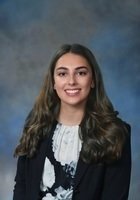
Certified Tutor
8+ years
Amanda
Medical school training gave Amanda a deep grounding in the psychology topics that dominate the CLEP exam — classical and operant conditioning, neurotransmitter function, developmental stages, and abnormal psychology classifications. She breaks each domain into high-yield concepts and teaches studen...
The University of Alabama
Bachelor of Science, Biology, General
Baylor College of Medicine
Doctor of Medicine, Public Health

Certified Tutor
Alex
Between a psychology major and a neuroscience minor at the University of Minnesota, Alex covered the biological bases of behavior in far more depth than most CLEP prep demands — making the exam's questions on brain structures, neurotransmitters, and sensation feel like familiar territory. Now pursui...
Washington University in St. Louis
Masters, Occupational Therapy Doctorate Program
University of Minnesota-Twin Cities
Bachelors, Psychology
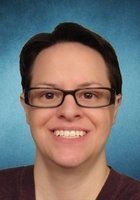
Certified Tutor
Danelle
Danelle holds a PhD in cognitive psychology, which means the CLEP Introductory Psychology material — from classical conditioning and memory models to social psychology and abnormal behavior — is territory she knows deeply, not just from a textbook. She pinpoints which content areas carry the most we...
Ohio State University-Main Campus
PHD, Cognitive Psychology
Denison University
Bachelor in Arts, Psychology
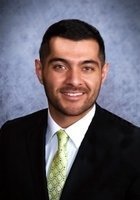
Certified Tutor
5+ years
Manuel
The CLEP Introductory Psychology exam spans everything from biological bases of behavior to social psychology and developmental theory — a wide net that rewards strategic study. Manuel's training in introductory psychology and sociology gives him a clear map of which concepts (classical conditioning...
Princeton University
Bachelor in Arts

Certified Tutor
16+ years
John
Most CLEP Introductory Psychology prep leans on tutors with psychology degrees — John's angle is different. His 36 ACT and strong analytical background mean he tackles the exam's trickiest question types, like scenario-based items on research design and statistical interpretation, with the structure...
University of St Thomas
Bachelor of Fine Arts, English/Drama
American Academy of Dramatic Arts
Associates, Acting
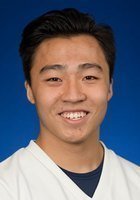
Certified Tutor
6+ years
Jack
Studying Biopsychology, Cognition, and Neuroscience at the University of Michigan means Jack lives in the material the CLEP Introductory Psychology exam tests — from classical conditioning paradigms to the biological bases of behavior. He breaks the exam into its weighted categories so students spen...
University of Michigan-Ann Arbor
Bachelor of Science, Biopsychology
Certified Tutor
9+ years
Samantha
Samantha is literally studying this material right now — she's pursuing a neuropsychology degree at Princeton, which means topics like classical conditioning, cognitive development, and abnormal psychology are part of her daily coursework. She knows which concepts the CLEP Introductory Psychology ex...
Princeton University
Current Undergrad Student, Psychology
Certified Tutor
7+ years
Jasmine
Jasmine earned her bachelor's in psychology from UT Austin, which means the CLEP Introductory Psychology content — from classical conditioning and cognitive development to research methods and statistical concepts — is material she studied in depth, not just reviewed from a prep book. She knows whic...
The University of Texas at Austin
Bachelor in Arts, Psychology
University of North Texas Health Science Center
Doctor of Medicine, Osteopathic Medicine (DO)

Certified Tutor
10+ years
Sahar
Sahar is currently completing a psychology major at Emory, which means the CLEP Introductory Psychology material — from classical conditioning paradigms to the stages of cognitive development — is content she's actively studying and applying. She unpacks the trickiest exam areas, like distinguishing...
Emory University
Current Undergrad, Political Science and Psychology
Certified Tutor
6+ years
Carey earned her psychology degree and knows the CLEP Introductory Psychology exam inside and out — from classical conditioning and cognitive development to the trickier questions on research methods and statistical concepts. She breaks each content area into testable patterns so students can walk i...
Carleton College
Bachelor in Arts, Psychology
Top 20 Test Prep Subjects


Meet Our Expert Tutors
Connect with highly-rated educators ready to help you succeed.
Stephanie
Pre-Algebra Tutor • +54 Subjects
I am a senior at Yale studyung Neuroscience and History of Science, Medicine, and Public Health. I am a graduate of the International Baccalaureate (IB) Diploma Programme and a recipient of the IB Diploma. My academic background includes extensive experience in rigorous college level classes at the IB and Advanced Placement (AP) level. As a member of my school's math honor society, Mu Alpha Theta, I have volunteered my time at a local middle school to tutor students in different math levels from pre-Algebra to Geometry. I also absolutely love languages. Aside from being a native Spanish speaker, I have been studying Italian for the last four years and feel confident tutoring in these subjects. Another subject I enjoy tutoring is Standardized Testing, where I help high school students prepare for exams like the SAT, PSAT, and ACT. Preparing for these exams is crucial in order to achieve a good score, and I always make sure that my students are comfortable with both the format and the material on each exam. As a student, I know how important tutoring is, not only to improve grades but also to gain a better understanding of the material. Whenever I dedicate time to tutoring, I try to keep things engaging and fun. Motivation is definitely a key to success, and I believe that with the right encouragement and guidance any student can achieve their goals. Hobbies: books, writing, reading, traveling, music, art, travel
Arianna
12th Grade math Tutor • +277 Subjects
I am a Dartmouth graduate. I am currently working on my med and business endeavors. I have not only an interest, but a motivation to help others. I have helped students get into Ivy League schools as well as other top universities across the country with top scholarships. I tutor in all subjects from French to Essay Writing and Algebra to Chemistry! I want my students and tutees to see the value in themselves and know that they can accomplish anything with determination and hard work! Realizing you can do it is half the battle and working hard to bring that dream to fruition is the other half! Hobbies: reading, music, writing, painting, art, books, photography
Ariana
Calculus Tutor • +112 Subjects
I am a former middle-school English teacher (and former high-school French teacher). I am certified to teach English (grades 6-12), History/Government/Social Studies (grades 6-12), Psychology (grades 6-12), Health (grades PreK-12), General Music (grades PreK-12), and French (grades PreK-12). I have also taught AP French and college-level French.
Kaitlyn
6th Grade math Tutor • +173 Subjects
I am a medical student committed to helping your student succeed. I have been a tutor for 5+ years, and have experience teaching Math, Science, Spanish and Test Prep to students of all ages and ability. I believe every child has the potential to learn with positive one on one attention and I am committing to helping you student learn how they study best, and become a more independent learner. I look forward to meeting you, and helping you achieve your goals! Hobbies: writing, reading, music, art, books
Rebecca
12th Grade math Tutor • +70 Subjects
I am a firm believer of this and, as such, I do not spoon feed students during sessions but rather guide them to figure out how to answer their own questions and solve their own problems. Thus, I focus not only on what to do, but how and why to do it. One of the most significant drivers of independent learning is curiosity, and this is one of the primary traits I aim to cultivate in students.
Sally
Applied Mathematics Tutor • +64 Subjects
I am an undergraduate student at the Georgia Institute of Technology. I am majoring in both Mathematics and Literature, Media, & Communication (LMC). My LMC concentration is in Science, Technology, & Culture, as well as Literature. I have been tutoring since high school, and have gained a lot of experience with the ups and downs of learning. I initially started out tutoring math, but over time I have grown to love tutoring literature as well.
Virginia
Middle School Math Tutor • +26 Subjects
I am VERY good with College Applications "Cracking the Code to College Applications", Executive Functioning, Strategic Planning, Screenwriting, Photography, Managing Professional Athletes.
Zoe
3rd Grade math Tutor • +42 Subjects
I am an English and essay writing tutor available to help with English and language arts assignments, grammar, essay writing, literary analysis, and ACT and SAT writing and reading. In 2011, I earned a Bachelor of Arts degree from Macalester College in English language and Literature. Before tutoring with Varsity Tutors, I tutored for another private company. I am an excellent tutor because I remember distinctly what it was like to be a student and can both empathize with their frustrations and help them to move past those blocks and toward a greater understanding of the material. I believe in my students and genuinely care about their success, which shows in my work. My patience and willingness to adjust my approach to help different learning styles has also been a useful asset in the past.
Jennifer
5th Grade math Tutor • +116 Subjects
I am available throughout the week, including summer! Let me help you help yourself! Hobbies: art, books, travel, reading, music, writing, painting
Ardis
Calculus Tutor • +32 Subjects
I am a published novelist and a graduate of one of the most prestigious law schools in California. I have been a staff member on a presidential campaign, and I have been around the world. I am enthusiastic about learning, and about communicating my knowledge. I get along with almost everyone and I have outstanding morals, ethics and values.
Top 20 Subjects
Frequently Asked Questions
Students typically find research methods, statistics, and experimental design most challenging because they require both conceptual understanding and the ability to apply methodology to real scenarios. Memory systems, neurobiology, and the distinction between different therapeutic approaches also trip up many test-takers. A tutor can help you move beyond memorizing definitions to actually understanding how these concepts connect—for example, linking neurotransmitter function to both normal behavior and psychological disorders.
The exam mixes straightforward recall questions with scenario-based items that require you to apply psychological concepts to real situations. You might see a question describing a patient's symptoms and need to identify the disorder and appropriate treatment approach, or analyze a study design to spot methodological flaws. Tutors experienced with CLEP Introductory Psychology focus on building both foundational knowledge and the critical thinking skills needed to handle application questions, which make up a significant portion of the exam.
With 100 questions in 90 minutes, you have less than a minute per question, so strategic pacing is crucial. Many students benefit from flagging conceptually dense questions (like those on neurobiology or research design) to revisit later, and tackling more straightforward definition and application questions first to build confidence. A tutor can help you practice this strategy through timed practice tests, identifying which question types slow you down, and developing techniques to quickly recognize what a question is really asking before diving into the answer choices.
Diagnostic practice tests are your best tool—they reveal which content areas and question types consistently trip you up, whether that's distinguishing between similar disorders, understanding statistical concepts, or recognizing therapeutic techniques. Once you identify patterns (e.g., "I always miss questions about classical vs. operant conditioning" or "I struggle with neurotransmitter effects"), a tutor can target those specific gaps with focused explanations and targeted practice rather than reviewing everything. This targeted approach is far more efficient than re-reading textbook chapters.
Most students benefit from 4-8 weeks of consistent preparation, depending on their psychology background. Tutoring works best when paired with your own practice—a tutor can clarify confusing concepts, explain why you're missing certain question types, and teach you to think like the test makers, while you reinforce learning through practice tests and spaced repetition of difficult topics. Weekly sessions allow your tutor to track your progress on practice exams and adjust focus as you get closer to test day.
Much of test anxiety stems from uncertainty about whether you truly understand the material or just think you do. Working through challenging questions with a tutor—especially those involving research methods or disorder diagnosis—builds genuine confidence because you're practicing the exact skills the exam tests. Tutors can also help you develop a pre-test routine, teach you how to manage time pressure so you're not rushing through questions, and give you honest feedback on your readiness so you approach test day with realistic confidence rather than fear.
The exam frequently presents case scenarios where you need to identify a disorder and select appropriate treatment, so rote memorization of symptoms isn't enough—you need to understand the underlying logic. A tutor can teach you to organize disorders by their key distinguishing features (e.g., what makes panic disorder different from generalized anxiety disorder), connect symptoms to neurobiology, and match treatments to specific disorders based on evidence. Practice with realistic case questions, rather than isolated symptom lists, helps you develop the pattern recognition skills the exam actually tests.
Research methods questions require you to understand experimental design, validity, reliability, and statistical concepts—and then apply that understanding to unfamiliar studies. Students often memorize definitions but freeze when asked to spot a confounding variable in a new scenario or explain why a study's conclusions are limited. A tutor helps by teaching you the underlying logic of research design (why random assignment matters, what correlation doesn't prove, how sample size affects reliability) and giving you practice analyzing real and hypothetical studies so you can confidently handle any research question the exam throws at you.
Connect with CLEP Introductory Psychology Tutors
Get matched with expert tutors in your subject