Award-Winning Life Sciences
Tutors
Who needs tutoring?
FEATURED BY


TUTORS FROM
- YaleUniversity
- PrincetonUniversity
- StanfordUniversity
- CornellUniversity
Award-Winning Life Sciences Tutors
Certified Tutor
Matthew
Studying bioinformatics and stem cell science at Stanford meant Matthew had to trace biological questions across scales — from gene expression data and computational models down to how stem cells actually differentiate into specialized tissues. That cross-disciplinary training makes him especially e...
Stanford University
Bachelors in Human Biology (concentration in Bioinformatics and Stem Cell Science)
Certified Tutor
10+ years
Zachary
Biochemistry and biophysics training means Zachary learned biology at the molecular level first — protein folding, enzyme kinetics, membrane dynamics — before scaling up to how those processes drive cell function and organism-level physiology. That bottom-up perspective is particularly useful when s...
Yale University
Bachelors, Biochemistry and Biophysics

Certified Tutor
9+ years
Annie
Medical school builds on every corner of life sciences — Annie spent her undergrad at UCLA studying physiological sciences, then deepened her molecular and cellular knowledge through research before starting her MD. That trajectory means she can trace a concept like membrane transport from the prote...
University of California Los Angeles
Bachelors, Physiological Sciences
Drexel University College of Medicine
Current Grad Student, MD
Certified Tutor
Eric
Eric's degree in Ecology & Evolutionary Biology means he studied life sciences the way they actually play out — tracking how natural selection shapes populations, how species interactions structure communities, and how ecosystems respond to environmental change over time. That evolutionary lens is e...
Princeton University
Bachelor in Arts
Certified Tutor
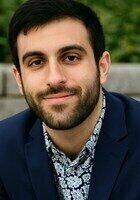
James
Heading to Columbia Medical School after completing his chemistry degree at Harvard, James brings a molecular-level understanding to life sciences topics like cell biology, genetics, and metabolic pathways. He's especially effective at connecting biochemical mechanisms to bigger biological concepts,...
Harvard University
Bachelor in Arts, Chemistry
Certified Tutor
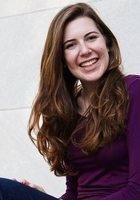
Shayan
Studying biology at Penn and now pursuing pre-health graduate work, Shayan has taken the full sweep of life sciences coursework — but his real strength is teaching through concrete examples, turning something like a hormone signaling cascade into a step-by-step story students can actually follow. Hi...
University at Buffalo
Bachelors, Biology, General
University of Pennsylvania
Current Grad Student, Pre-Health
Certified Tutor
9+ years
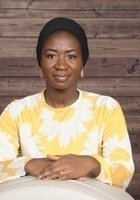
Emily
Between her molecular biology degree and her epidemiology graduate work, Emily has spent years immersed in life sciences at every scale — from DNA replication and protein synthesis up to ecology and population dynamics. She teaches students to trace cause-and-effect chains through biological systems...
Yale University
Master of Public Health (MPH), concentration in Epidemiology and Global Health
Yale School of Public Health
Master in Public Health, Public Health
Yale University
Bachelor of Science (B.S.), double major in Molecular, Cellular, and Developmental Biology and French
Certified Tutor
5+ years
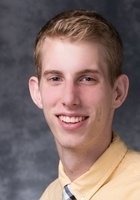
Rashida
Rashida's PhD in Cellular and Molecular Biology means she's spent years teaching the exact topics that anchor life sciences courses — Mendelian genetics, cell biology, and biochemistry — through leading discussion sections and building practice materials that zero in on where students actually get s...
Alexandria university
Bachelor of Science, Plant Genetics
University of Illinois at Chicago
Doctor of Philosophy, Cellular and Molecular Biology
Certified Tutor
6+ years
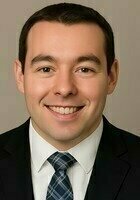
Daniel
Ecology, organismal physiology, and cellular energetics all fall under the life sciences umbrella, and Daniel approaches each by tying molecular-level detail to big-picture biological systems. His biology degree and four years of medical training at Penn give him a layered understanding of how livin...
Wheaton College (Illinois)
Bachelor of Science, Biology, General
Perelman School of Medicine at the University of Pennsylvania
Doctor of Medicine, Premedicine
Certified Tutor
Timothy
Currently in medical school with a political science undergraduate degree, Timothy took a less conventional path into the life sciences — which means he knows exactly where the conceptual gaps form when students are building biological knowledge without years of prior science coursework. He's especi...
Drexel University College of Medicine
Current Grad Student, M.D.
University of California Los Angeles
Bachelors, Political Science and Government
Top 20 Science Subjects


Meet Our Expert Tutors
Connect with highly-rated educators ready to help you succeed.
Connor
Calculus Tutor • +32 Subjects
I am taking time to explore my lifelong interest in teaching. I began tutoring at the University of Notre Dame, where I worked for three years as a teaching assistant in a Cell Biology laboratory course. There, I enjoyed helping my peers understand the larger picture developing through our weekly experiments. At Loyola University Chicago, I continued to tutor a variety of subjects while earning a Master of Arts in Medical Sciences.
Kristin
Calculus Tutor • +32 Subjects
I am a current Bachelor of Science in Nursing and Master of Science in Nursing accelerated student at the University of Pennsylvania School of Nursing. I graduated from the University of Chicago in 2016 with a BA in Biological Sciences and minor in Philosophy. I have always had a deep and lifelong love of learning that I wish to impart to other students. My goal is to help students achieve their learning needs by utilizing a passionate, creative, and fun teaching approach. I have extensive experience in the subjects of Biology, Life Science, U.S. History, and the Social Sciences.
Vinay
Pre-Algebra Tutor • +41 Subjects
I am a 2nd year medical student at Northeast Ohio Medical University and have tutored K-12 and college students over the past 10 years in various subjects ranging from math and science to SAT prep and language arts. My educational background includes an MPA in Development Practice from Columbia University's School of International and Public Affairs, a B.S. in Molecular, Cell, & Developmental Biology, and a B.S. in Mathematics-Economics (both from UCLA). In addition, I have scored in the 99th percentile on the SAT, ACT, and GMAT exams and scored in the 95th percentile on the MCAT. I really enjoy working with students of all ages and backgrounds and believe all students are capable of learning and being successful with the right approach to education. I would love the chance to discuss in more detail what kind of tutoring you or your student is interested in and thank you for your consideration! Hobbies: art, books, writing, reading, music
Todd
Pre-Algebra Tutor • +64 Subjects
I'm passionate about learning. I was fortunate to have great teachers at the University of Chicago in my graduate education, and at University of Illinois at Urbana-Champaign in my undergraduate education.
Paul
Calculus Tutor • +44 Subjects
I am a graduate of Brown University, where I completed a double major in biology and public health, and received honors in the biological sciences.
Nova
Pre-Algebra Tutor • +65 Subjects
I'm an undergraduate at Brown University with a planned concentration in Health and Human Biology and Visual Art. I have had extensive experience working as a summer camp counselor, teaching at a Mandarin School, working as an SAT Tutor, and tutoring Physics, Biology, and Math at a local high school. I am more than happy to offer college advice and SAT II and AP prep given my experience with the application process!
Simon
Middle School Math Tutor • +29 Subjects
I am an avid rower and bicyclist. I also greatly enjoy growing vegetables and playing basketball. Hobbies: reading, gardening, music, art, outdoors, books, writing
Kevin
Pre-Algebra Tutor • +30 Subjects
I am very invested in my students' success, and nothing makes me happier than helping them to finally grasp a difficult concept. I know that every student learns differently, so I always start my tutoring sessions by first trying to learn what the student's strengths and weaknesses are. After allowing them to work through and explain a few problems in front of me, I try to tailor an individualized teaching method to best suit each student's specific needs. While my methods may not be the perfect match for every student out there, I can promise that I will always be a patient, diligent, and understanding tutor, and I will be genuinely dedicated to helping each of my students achieve their goals. Hobbies: writing, books, music, art, reading
Gabriel
Pre-Algebra Tutor • +47 Subjects
I'm a rising Junior at the University of Chicago studying Computational Neurosciences and Fundamentals: Literature & Philosophy. I've tutored 7th and 8th graders in Basic Algebra and essay construction and taught undergraduates Biostatistics and the literature of Valdimir Nabokov, so I'm prepared to work with any age or skill level. When I'm not tutoring this summer, I'll be doing electrophysiological research at NYU's Center for Neural Science and preparing to write my BA on James Joyce's Ulysses. I'm extremely versatile with expertise in a range of subjects and really enjoy helping students learn. I also excel at standardized testing and am excited to share the strategies that made me successful. In my free time, some of my favorite things to do are act, play guitar, and bike along the river. Hobbies: reading, writing, art, books, music
Jhonatan
AP Calculus AB Tutor • +42 Subjects
I am a firm believer in the idea that there is no better feeling than that "aha!" moment.
Top 20 Subjects
Frequently Asked Questions
Students often find cellular and molecular biology challenging—particularly understanding how DNA replication, protein synthesis, and cellular respiration work at a mechanistic level rather than just memorizing steps. Ecology concepts like energy flow through ecosystems, population dynamics, and evolutionary mechanisms also require strong systems thinking that doesn't come naturally to everyone. Additionally, anatomy and physiology demand both memorization of structures and understanding of how those structures enable function, which is a different cognitive skill than most students develop on their own.
The key is connecting structures to functions and mechanisms—rather than memorizing that mitochondria produce ATP, you should understand *why* the inner membrane's cristae structure enables efficient electron transport. Tutors help by asking probing questions that force you to explain the 'why' behind processes, using diagrams and models to visualize what's happening at the cellular level, and applying concepts to real scenarios (like how altitude affects oxygen availability and cellular respiration). This approach builds genuine understanding that transfers to new problems instead of rote recall that fails on application questions.
Tutors can help you understand the scientific reasoning behind lab procedures—not just follow steps, but grasp why you're using specific techniques, what controls and variables matter, and how to interpret unexpected results. They can also strengthen your ability to design your own experiments by teaching you to identify testable hypotheses, predict outcomes based on biological principles, and troubleshoot when results don't match expectations. This builds the experimental thinking skills that are just as important as content knowledge in Life Sciences.
Many Life Sciences concepts are invisible to the naked eye—protein folding, enzyme-substrate interactions, or how action potentials propagate along neurons. Tutors use multiple strategies to make these concrete: drawing detailed diagrams, using physical or digital models, breaking down processes into step-by-step animations, and relating abstract mechanisms to observable phenomena you can connect to. For example, understanding that hemoglobin's shape change enables oxygen binding becomes clearer when you see the actual conformational shift rather than just reading about it.
Strong Life Sciences tutors need deep subject knowledge—ideally a background in biology, biochemistry, or a related field—so they can explain not just what happens but why at a mechanistic level. They should also be skilled at translating complex processes into clear explanations, using visuals and analogies effectively, and asking questions that push students toward understanding rather than memorization. Experience with lab work or research is valuable because it means they understand the experimental side of Life Sciences, not just the textbook concepts.
Introductory courses (like general biology) focus on building foundational understanding of core systems—cells, genetics, evolution, ecology—and establishing strong study habits and conceptual frameworks. Advanced courses (like biochemistry, molecular biology, or physiology) assume that foundation and dive deeper into mechanisms and quantitative problem-solving, so tutoring emphasizes connecting concepts across units, working through complex multi-step problems, and developing the analytical thinking required for research or professional work. The tutor's role shifts from building basics to refining mastery and helping you think like a scientist.
Effective preparation requires two types of practice: first, making sure you can explain mechanisms and processes in your own words (not just recognize them), and second, applying those concepts to novel scenarios you haven't seen before. Tutors help by creating practice questions that mirror exam difficulty, identifying gaps in your understanding before the exam, and teaching you to break down complex questions into manageable parts. They also help you distinguish between questions testing recall versus reasoning, so you develop strategies for each type.
Understanding photosynthesis or immune response becomes more meaningful when you see how those processes relate to agriculture, disease, medicine, or environmental challenges. Tutors can ground abstract concepts in real examples—like explaining natural selection through antibiotic resistance in bacteria, or enzyme kinetics through how your body metabolizes drugs—which both deepens understanding and shows why these concepts matter beyond the exam. This approach also helps you retain information longer because it's connected to meaningful context rather than isolated facts.
Connect with Life Sciences Tutors
Get matched with expert tutors in your subject