Award-Winning Art History
Tutors
Art History
Tutors
Private 1-on-1 tutoring, weekly live classes for academic support, test prep & enrichment, practice tests and diagnostics, and more to elevate grades and test scores.
Based on 3.4M Learner Ratings
UniversitiesSchools & Universities
DeliveredHours Delivered
ProficiencyGrowth in Proficiency
Who needs tutoring?
No obligation. Takes ~1 minute.

A double concentration in Literary Arts and Visual Arts at Brown means Hasan doesn't just know art movements by name — he can unpack how formal choices in a painting connect to the philosophical, religious, and political currents of its era. He walks students through visual analysis techniques that turn a daunting slide identification into a structured, confident reading of any work.
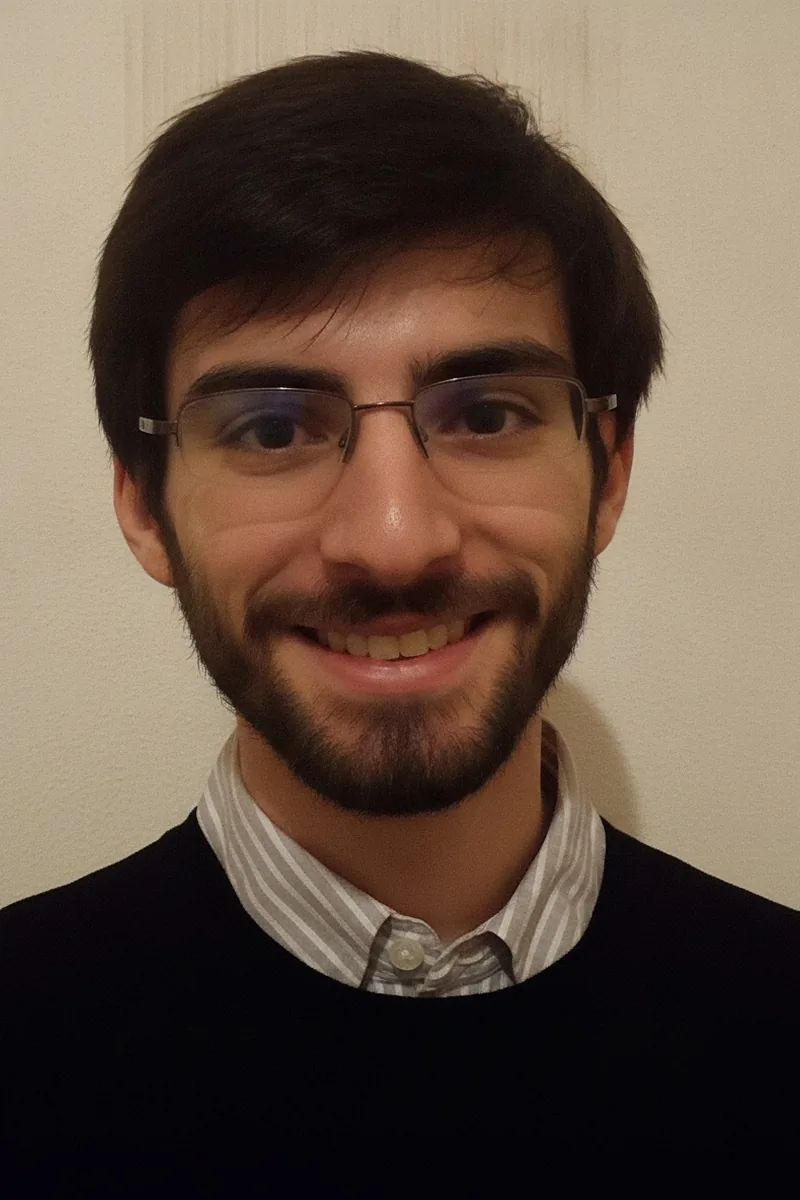
Connecting a Baroque painting to its political moment or explaining why Impressionism broke every academic rule requires more than memorization — it requires analytical writing and close visual reading. David's liberal arts education bridges those skills, walking students through formal analysis techniques and the cultural contexts that give artworks their meaning.
Analyzing a Caravaggio painting or a Bauhaus building requires a specific kind of close reading — one that connects formal choices to cultural context. Daniel's graduate training in the humanities at the University of Chicago, combined with his grounding in philosophy and religious studies, gives him a framework for unpacking iconography, patronage, and the intellectual movements behind artistic production. He teaches students to build visual analyses that are as rigorous as any written argument.
Studying architecture at Columbia means Andrew doesn't just talk about visual analysis in the abstract — he's trained to read buildings, spaces, and design movements as historical documents. He walks students through formal analysis techniques and contextual framing, whether they're tackling Romanesque cathedrals or Bauhaus furniture. Rated 4.9 by students.
Few art history tutors can talk about a Baroque altarpiece as both a visual composition and a tool of colonial power — Sarah can, thanks to her dual training in anthropology and visual art. She teaches students to build formal analyses that link technique (brushwork, perspective, use of light) to the broader social and political worlds that shaped each work.
Studying both Child Development and Art History at Vanderbilt means Elena lives in two disciplines that are all about close observation — reading a child's behavior or reading a Caravaggio use surprisingly similar analytical muscles. She brings that dual lens to teaching students how to connect visual details like brushwork, spatial composition, and iconographic choices to the broader cultural moments that produced them. Rated 5.0 by students.
Analyzing a work of art means reading it as a historical document — understanding patronage, religious context, political propaganda, and material culture all at once. Iris's anthropology degree from the University of Chicago gave her deep practice in exactly this kind of object-based analysis, from Paleolithic cave paintings to twentieth-century installations. She's particularly effective at teaching students to write the comparative essays and contextual analyses that AP and college art history courses require.
Few tutors bring Anneliza's combination of a BA in Art and a Master's in Landscape Architecture to art history. She connects movements like Baroque, Impressionism, and Modernism to the built environments and design philosophies that shaped them, making visual analysis and period identification click in ways a textbook alone can't.
Having studied architecture through both a bachelor's and master's program, Christianna approaches art history from the built environment outward — connecting painting, sculpture, and decorative arts to the architectural spaces they were made for. She's especially strong on European movements from the Renaissance through Postmodernism, informed by nearly a year living among the collections and monuments of Paris. Rated 4.8 by students.
Philosophy trains you to trace how ideas move through history — and art history is where those ideas become visible, from the Neoplatonic ideals embedded in Renaissance painting to the existential ruptures of Abstract Expressionism. Adam's philosophy degree gives him a distinctive lens for teaching students to connect aesthetic movements to the intellectual currents that shaped them. He's especially useful for students who need to build interpretive arguments rather than just memorize slides.
Stephanie's dual degrees in English and History from Cornell, plus her current master's work in History at Penn, give her a sharp eye for the kind of cross-disciplinary reading art history demands — interpreting a work as both an aesthetic object and a product of its political and social moment. She's especially strong on helping students craft the written analyses that make or break art history courses, since she's spent years building arguments from primary sources across multiple humanities disciplines.
Mat's history minor at NYU and his extensive travel across cultures give him a useful angle on art history — he teaches students to situate works within the broader political, economic, and social forces that produced them, whether that's Medici patronage driving Florentine art or colonial encounters reshaping visual traditions. His finance and strategy background also sharpens his ability to break down the patronage and market dynamics that shaped artistic production across periods.
Claudia's undergraduate work in art history and classical studies means she can trace visual traditions from ancient Greek and Roman art through their Renaissance revival and beyond — giving students a sense of continuity that makes periodization click rather than feel arbitrary. Her library science training also sharpens how she teaches research skills, so students learn to find and use scholarly sources when building arguments about iconography or patronage. Rated 5.0 by students.
Few art history tutors have actually made art professionally. Emily's MFA in Photography from SCAD means she can explain compositional choices, material techniques, and visual rhetoric from the inside — whether a student is analyzing a Baroque altarpiece or a Cindy Sherman self-portrait. She teaches students to build interpretive arguments that connect formal analysis to broader cultural and historical contexts.
I'm a native Spanish and English speaker. I graduated with Honors in Art History and Philosophy from the University of Chicago. As a trilingual, I easily understand the difficulties and processes involved in learning a new language! I have been teaching Spanish and English to students worldwide for years. I am passionate about teaching languages as I have been blessed by life-changing opportunities by speaking fluidly with people from other cultures.
Emily minored in Art History at Skidmore College and earned magna cum laude honors, so she's spent serious time analyzing everything from Byzantine iconography to Impressionist brushwork. She teaches students to read a painting the way you'd read a text — examining composition, symbolism, and historical context to build arguments that hold up in essays and exams.
This is Luke's home turf. He earned his MFA from the School of the Art Institute of Chicago and has taught art history at the college level, covering everything from Romanesque sculpture to contemporary installation. He unpacks formal analysis — line, composition, materiality — alongside the historical context that explains why Caravaggio's chiaroscuro or Duchamp's readymades mattered when they appeared.
Art history isn't Miguel's core discipline, but his English training in close reading and textual analysis translates surprisingly well to visual analysis — breaking down composition, symbolism, and historical context in a painting the same way you'd unpack a poem. He's strongest at teaching students how to write the comparative essays and formal analyses the subject demands.
Cognitive science trains you to think about how humans perceive, process, and make meaning from visual information — a surprisingly useful lens for art history, where understanding why a composition directs the eye or how color choices trigger emotional responses can deepen any formal analysis. Snipta's dual background in cognitive science and computer science gives a distinctive, science-informed angle on interpreting works across periods, from the symmetry principles in Classical Greek sculpture to the perceptual disruptions of Op Art. Rated 5.0 by students.
As a dedicated painter and visual artist, Nikki brings genuine enthusiasm to art history that goes beyond memorizing movements and dates. She connects artistic techniques — perspective, composition, use of light — to the cultural contexts that produced them, making it easier to remember why Impressionism broke from Realism or how Baroque drama differed from Renaissance balance.
Trudy's master's degree from the University of Edinburgh focused specifically on early modern South Asian and Islamic art, which means she can speak to visual analysis, iconography, and cross-cultural exchange with real scholarly depth. Whether a student is studying Renaissance painting or Mughal miniatures, she connects artistic choices to the broader historical and political forces that shaped them. Her dissertation research also sharpened her ability to teach close looking — the skill of slowing down and reading a work of art systematically.
As a studio art major who spends time both making and studying art, Parker brings firsthand creative context to art history concepts like formal analysis, iconography, and period identification. He teaches students to look at a painting or sculpture and articulate not just what they see but why the artist made specific compositional choices within a broader cultural moment.
Stephanie doesn't just study buildings in photographs — she has a master's in historic preservation and works on architectural restoration, so she understands artistic movements as living, material things. That perspective makes art history concepts like the shift from Romanesque to Gothic, or the ideological battles behind Modernism, far more concrete than a slideshow of dates and names. She connects formal analysis of style, space, and symbolism to the historical forces that produced each work.
Studying art history means learning to read a painting the way you'd read a primary source — asking who commissioned it, what conventions the artist followed or broke, and what the work reveals about its era. Kelly's liberal arts training and international travel give her a cross-cultural lens that's particularly useful when comparing Western European traditions to global artistic movements.
Jennifer's communication and rhetoric training translates surprisingly well to art history, where every exam answer and essay boils down to constructing a persuasive argument about what you see and why it matters. She teaches students to move from vague impressions to structured visual readings — identifying how composition, symbolism, and historical context work together to support a clear thesis. Rated 5.0 by students.
Mariam's BFA means she learned art history the way it was meant to be learned — standing in studios, understanding how materials behave, and seeing why a Caravaggio chiaroscuro or a Rothko color field hits differently when you've actually mixed paint. She teaches students to connect technique and medium to the cultural moment, turning slide identifications into stories they can actually remember and write about. Rated 5.0 by students.
Every painting, sculpture, or building is an argument made in stone or pigment — and Vivian reads those arguments fluently. Her Medieval Studies and Classics training at Fordham covers iconography, patronage systems, and stylistic evolution from Greek temples through Gothic cathedrals, while her current role as a museum educator means she's practiced at making visual analysis intuitive rather than abstract.
Philosophy and theology train you to trace how belief systems, moral frameworks, and metaphysical ideas get expressed in material culture — which is exactly what art history asks students to do when they analyze a Gothic cathedral's program or a Counter-Reformation altarpiece. Natasha's undergraduate work in both disciplines gives her a strong read on the religious and philosophical underpinnings that drove artistic production across centuries. She's rated 5.0 by students and is especially effective at teaching the kind of thesis-driven writing art history courses demand.
Having spent over a decade teaching music theory and composition, Rachelle understands how cultural movements shape creative output — the same analytical thread that runs through art history, from tracing Impressionism's break with academic salon conventions to understanding how Minimalism responded to Abstract Expressionism's excess. Her Master of Music in Composition from the University of South Carolina trained her to study how artistic works function within their historical moment, a skill she applies when teaching students to analyze visual art rather than just memorize periods and names.
Update: I completed a two-month full-time guest teacher assignment teaching World Languages Spanish to high school students (9th-12th) Spanish 1/2/3. By utilizing a student-centered learning approach, cultural competence, and equitable teaching, I support students with pedagogy rooted in inquiry, hypothesis, information gathering, problem-solving, and action. I encourage all students to adopt an open-minded approach, and provide support to gifted students, students with disabilities, English Language Learners, and Multilanguage Learners with equity. "Not everything that is faced can be changed, but nothing can be changed until it is faced." James Baldwin I am in my second year of grad school, pursuing a dual master's degree in K-8 Elementary Education and K-12 Special Education (Mild to Moderate Disabilities). With my education grad studies and BFA from the Rhode Island School of Design (RISD), I synthesize creativity and best practices in education to find creative ways of supporting learners. My pursuit and purpose is to guide with compassion and enthusiasm. I encourage students to take ownership of their learning. By promoting student agency, students empower themselves to achieve in academic, social, emotional, and behavioral development. As an ADHD adult, I enjoy working with ADHD students and adults experiencing anxiety + depression. What is effortful for our neurodivergent brains is also our superpower! In my career, I have lived and worked in NYC as an editorial photographer, actor, and dancer. I lived in Berlin and pursued performance art + music while honing my communications skills in digital art + copywriting in Marketing. In Los Angeles, I succeeded as a commercial and theatrical actor. My skill set is suited for collaboration with all students to support and develop their passion for learning, exploration, and critical thinking. I live in southeastern Washington State and teach in northeastern Oregon and southeastern Washington State public school districts. I support students in the following subjects: Elementary School Reading Elementary School Math AP English High School English Middle School English Middle School Math Digital Media & Graphic Design Fine Arts & Filmmaking Creative Writing Study Skills & Organization German 1/2 Spanish 1/2/3 Spanish Language Arts English Language Learners English Language Development Algebra 1/2 Special Education (all subjects) High School Math "We all have ability. The difference is how we use it." Stevie Wonder Thank you for reading! Ms. Anna C.
Hello! I am a College Counselor, English Teacher, & Tutor. I'm passionate about helping students hone their strengths and improve their weaknesses. I have experience tutoring English, Creative Writing, Essay Writing, History, Archaeology, and more. I also have experience helping students with their college applications.
Nadja holds both a bachelor's and a master's degree in Art History, giving her deep fluency in everything from Byzantine iconography to Postmodern installation — and the critical frameworks that connect them. She teaches students to analyze formal elements like composition, color, and medium alongside the political and cultural contexts that shaped each movement. Rated 5.0 by students, she makes visual analysis feel like detective work rather than rote memorization.
Andrea's English Literature degree trained her to close-read texts for symbolism, context, and argument — skills that transfer directly to analyzing visual works, from reading the iconography in a medieval altarpiece to unpacking the cultural commentary in a Dadaist collage. Her background in Arabic adds a less common strength: familiarity with Islamic art traditions, geometric patterning, and calligraphic aesthetics that many Western-focused art history courses gloss over. Rated 4.7 by students.
I'm drawn to those topics myself, they are the things I am most passionate about, and therefore the things I love to teach and the subjects in which I love to share what knowledge I have. I believe enthusiasm goes a long way, and that some of my best teachers have been the ones who loved their subjects the most.
I'm Emma! I'm a rising senior Classics major at Carleton College in Northfield, MN. I study Latin, Ancient Greek, and the histories associated with the two languages. Outside of class, I'm an RA, and I spend 6-8 hours a week tutoring and teaching college access courses in a nearby high school. In the future, I hope to teach high school Latin!
I am a friendly, patient, sociable, articulate person and I look forward to helping you succeed!
I am a high school history teacher who has also worked as a teaching assistant at one of the country's top 10 colleges. I've taught ACT/SAT prep for about 4 years to students at all ends of the academic spectrum: from those working with learning disabilities/accommodations & struggling with timing to those trying to achieve perfect scores. Although I always create individualized plans, I focus on teaching every student the most effective, step-by-step way to approach each question on each section of the test. Beyond test prep, I've taught/tutored just about every academic subject through the undergraduate level. Outside the classroom, I enjoy reading about history, going to church, coaching sports (track & tennis), and spending time with my family. I really enjoy getting to know each student I teach as we work toward our goals.
I'm eager to help you in whatever way I can! I'm a graduate of Harvard (BA, Social Anthropology) and Columbia (MA, Human Rights) and have spent years tutoring students in a variety of subjects. I'm a firm believer that effective tutoring stems from developing a program that is tailored and highly customized to individual students. I look forward to working with you!
I am a graduate of Duke University (class of 2017), where I received my Bachelor of Arts in History and Religious Studies with a minor in Economics. I am also a graduate of Yale University (class of 2019), where I received my Master of Arts in Religious Studies with a focus on ancient history. Since graduation, I have worked in the computer software space and as a tutor for over 6 years (both in person and virtually). I have tutoring experience with all grade levels, including undergraduates, in subjects ranging from english and essay writing to ACT/SAT test prep. I love working with students of all ages and personalizing my teaching style to create the most positive and productive learning environment.
I'm a current student at Johns Hopkins University pursuing a bachelor's in both Neuroscience and Molecular & Cellular Biology. My favorite subjects to tutor are biology, chemistry, psychology, art history, and environmental science on both a high school and Advanced Placement level. Alongside those subjects, I am comfortable teaching middle school and lower level high school math and science, and I offer test preparation for both the SAT and ACT. Outside of academics, I like to train for memory sports, and my current goal is to set a Guinness World Record for memorizing the most decimal places of the irrational number phi. In my previous tutoring experience, I have not only helped teach the subject matter at hand, but I have also guided students on how to improve their study habits in general.
Testimonials
Because the right Art History tutor makes all the difference.
Average Session Rating – Based on 3.4M Learner Ratings
Top 20 Social Studies Subjects


Top 20 Subjects
Frequently Asked Questions
Students often find it challenging to synthesize information across different periods and movements—for example, understanding how Renaissance humanism influenced Baroque emotionalism, or how Impressionism's techniques challenged academic traditions. Another common struggle is analyzing artworks critically rather than just describing them: students need to move beyond "this painting is blue" to examining how color, composition, and historical context work together to create meaning. Additionally, many students underestimate the importance of learning artist names, dates, and movements as a framework—without this scaffolding, it's harder to construct evidence-based arguments about artistic influence and cultural significance.
Effective Art History tutoring focuses on teaching students a structured analytical framework—examining formal elements (line, color, composition, texture), iconography (symbols and their meanings), historical context, and artist intent as interconnected pieces rather than isolated observations. Tutors help students practice moving from description to interpretation by asking guiding questions: "Why did the artist make this choice? What was happening in society at this time? How does this work respond to or challenge what came before?" This approach transforms art analysis from subjective opinion into evidence-based argumentation, which is especially important for AP Art History essays and research papers where students must support interpretations with specific visual evidence and historical knowledge.
Rather than viewing memorization and understanding as separate tasks, tutors help students see that learning key artworks, artists, and movements creates the vocabulary needed for deeper analysis. The goal isn't rote memorization—it's building a mental framework where you understand *why* certain works matter: Caravaggio's dramatic lighting didn't happen in isolation; it emerged from Counter-Reformation demands for emotional, accessible religious art. Tutors help students create meaningful connections between works, movements, and historical events, so facts stick because they're part of a larger narrative. This approach makes studying more efficient and prepares you for essay questions that ask you to compare works, explain artistic evolution, or contextualize unfamiliar pieces using your knowledge of broader patterns.
Art History writing demands that you support every claim with specific visual evidence and historical documentation—vague statements like "this painting is powerful" won't work. You need to reference particular formal elements ("the artist's use of chiaroscuro emphasizes the figure's spiritual isolation") and connect them to historical context or artistic intent. Tutors help students learn to structure arguments around artworks as primary sources: analyzing what you see, connecting it to the artist's biography or the period's values, and explaining why those connections matter. Additionally, Art History papers often require image analysis alongside textual research, so students need to develop skills in both close visual reading and synthesizing scholarly sources—tutors can guide you through organizing complex arguments that weave together formal analysis, historical research, and critical interpretation.
AP Art History requires mastery of 250 artworks across 8 time periods and geographical regions, plus the ability to analyze unfamiliar works using your knowledge of broader patterns and themes. Beyond memorization, the AP exam tests your ability to make connections—comparing works across cultures, explaining how historical events shaped artistic production, and identifying artistic influences. Tutors help students develop efficient study strategies for managing this volume of material, teach exam-specific skills like analyzing unfamiliar artworks under time pressure, and provide targeted practice with the AP's essay formats (like the "Thematic Learning Outcome" essays that ask you to connect multiple works to a larger concept). Tutoring also helps you move beyond surface-level knowledge to the kind of sophisticated analysis that earns top scores.
Art History research projects often require students to work with primary sources (artworks themselves, artist statements, period documents) and secondary sources (scholarly articles, exhibition catalogs) in ways that differ from typical research papers. Tutors can guide you through finding credible art historical sources, understanding how scholars construct arguments about artworks, and developing your own interpretive claims supported by visual evidence and research. If your project involves museum work or curatorial analysis, tutors help you understand how institutions contextualize art—through exhibition design, wall text, and thematic grouping—and how to analyze those choices critically. They also help you navigate the specific citation formats and image documentation standards that Art History requires, ensuring your research meets academic expectations.
Rather than memorizing isolated timelines, tutors help students build mental maps that connect artistic movements to historical, social, and technological contexts—understanding that Impressionism emerged alongside industrialization and photography, or that Abstract Expressionism reflected post-WWII American optimism. Effective strategies include creating visual timelines that show parallel developments across regions, grouping artworks by themes or techniques rather than just dates, and practicing retrieval by explaining how one movement influenced the next. Tutors also help you develop shortcuts for remembering key works: associating artists with their signature techniques (Monet's water lilies, Pollock's drip paintings) or understanding how historical events shaped artistic choices. This approach transforms chronology from a list to memorize into a narrative you can explain, which is exactly what Art History essays and exams require.
A strong Art History tutor combines deep knowledge of art historical periods, movements, and major works with the ability to teach visual analysis and critical thinking—they should be able to explain not just *what* artworks are important, but *why* and *how* to analyze them. They should be skilled at helping students move from description to interpretation, teaching them to construct evidence-based arguments supported by formal analysis and historical context. Additionally, effective tutors understand the specific demands of Art History coursework and exams: essay structures, research standards, image documentation, and the balance between breadth of knowledge and depth of understanding. They should also be comfortable working with visual materials, helping you develop strategies for managing large volumes of artworks, and connecting abstract concepts to concrete examples from the artworks you're studying.
Let’s find your perfect tutor
Answer a few quick questions. We’ll recommend the right plan and match you with a top 5% tutor.