Award-Winning Physics Tutors
serving Seattle, WA
Physics
Tutors in Seattle
Private 1-on-1 tutoring, weekly live classes for academic support, test prep & enrichment, practice tests and diagnostics, and more to elevate grades and test scores.
Based on 3.4M Learner Ratings
UniversitiesSchools & Universities
DeliveredHours Delivered
ProficiencyGrowth in Proficiency
Who needs tutoring?
No obligation. Takes ~1 minute.
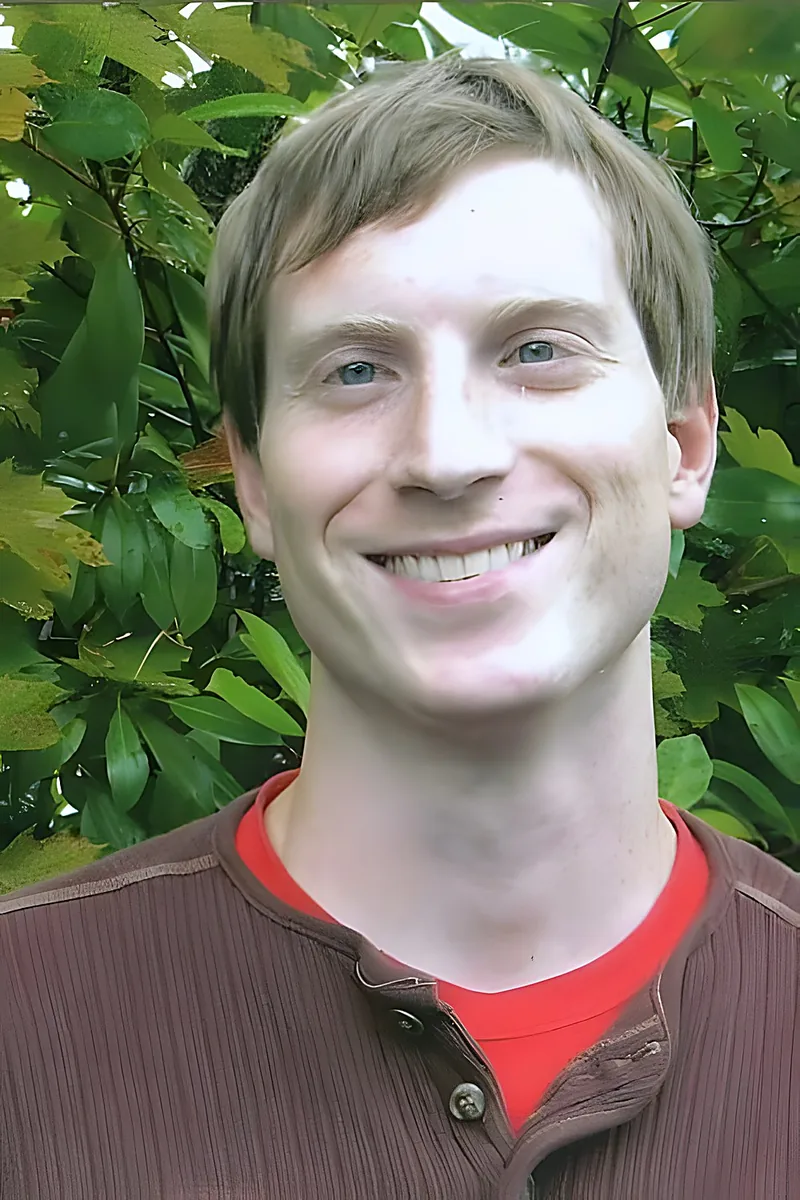
I am a Masters student in Physics at the University of Washington and have over 10 years of teaching and tutoring experience. Most recently, I worked as a teacher at the Yellow Wood Academy, a private high school that offers students a specialized one-on-one classroom environment. At YWA, I taught all high school science classes (including AP, Computer Programming, and Environmental Science) and all levels of high school math. In addition to my teaching and tutoring duties, I designed individualized lesson plans, curricula, homework assignments, and tests. Subjects I have successfully tutored Physics: all levels Chemistry: all levels high school, plus P-Chem, O-Chem Biology: all levels high school Math: all levels high school, plus Differential Equations, Statistics, some Group Theory. Standardized test preparation (incl. SAT, ACT, GRE, MCAT) Need help in another area? Just ask! While math and science are the subjects I am most passionate about, I am well-versed in many academic areas, and I may be able to help you.

Mechanics is usually a student's first real encounter with translating physical intuition into mathematical language — setting up free-body diagrams, applying Newton's laws, tracking energy through a system. Cory earned his B.S. in Physics and treats each problem as a conversation, relating forces and motion to everyday experiences so the equations feel like descriptions of something real rather than formulas to memorize. Rated 4.9 by students.
Clare's math background — through calculus and beyond — means the algebra and trigonometry woven into physics problems never become a separate obstacle; she can keep the focus on the physics itself. She's particularly effective at breaking down Newton's second law scenarios and work-energy problems into clean mathematical steps, connecting each line of math back to what's physically happening. Her philosophy training also sharpens the logical reasoning that multi-step problems demand.
An electrical engineering degree is essentially a physics degree with soldering — Daniel spent four years at Stevens Institute of Technology applying Newtonian mechanics, wave behavior, and electromagnetism to real circuits and systems. He brings that applied perspective to physics tutoring, connecting abstract force diagrams and energy conservation problems to things students can actually picture.
I am a professional scientist with multiple years of experience in the biopharmaceutical field. I have spent time in the classroom with elementary aged students and am comfortable with this age group. I am also familiar with AP classes and ACT/SAT preparation. I look forward to sharing my love of learning with students and helping them achieve academic goals!
Eric approaches physics the way his Duke engineering program taught him: start with a free-body diagram, identify what's conserved, and let the math follow from the concept. Whether it's projectile motion, circuits, or rotational dynamics, he walks through each problem type until the setup becomes second nature.
Kinematics equations and free-body diagrams intimidate a lot of students, but the underlying logic is surprisingly systematic once someone shows you how to set up each problem. Annabel's science background means she can unpack both the math and the physical intuition behind Newton's laws, energy conservation, and wave behavior without skipping the steps that textbooks gloss over.
Engineering students solve physics problems differently than most — they diagram forces, track units obsessively, and translate word problems into equations almost automatically. Annie brings that engineering instinct from her Cornell coursework to topics like kinematics, Newton's laws, energy conservation, and circuits, showing students a systematic approach that works across problem types.
Nima's physics degree means the subject isn't something adjacent to his training — it's the core of it, from classical mechanics and electromagnetism through thermodynamics and wave theory. He teaches students to build the physical picture first, identifying which laws actually govern a scenario before any algebra starts, so that even multi-step problems feel like a clear sequence rather than guesswork. Rated 4.7 by students.
Engineering students use physics every day, and Ava's dual degree in mechanical and energy engineering means she didn't just learn kinematics, Newton's laws, and energy conservation — she applied them to real systems. She TAed physics-related engineering courses at WashU and tutored high school physics students for several years, so she's comfortable adjusting her explanations whether someone is solving their first free-body diagram or wrestling with rotational dynamics.
A physics degree gives Matthew the mathematical backbone to teach everything from Newtonian mechanics and rotational dynamics to electromagnetism and wave optics. Rather than handing students formulas to memorize, he traces each equation back to the physical situation it describes — so a free-body diagram or a circuit schematic becomes something students can read intuitively, not just label.
Kinematics equations and free-body diagrams are straightforward once a student learns to read a physics problem like a story — identifying what's moving, what forces act on it, and what the question is really asking. Maggie teaches that translation process explicitly, drawing on her science background to walk through mechanics, energy conservation, and wave behavior with clarity. She holds a 5.0 student rating.
Understanding physics means seeing the same core principles — Newton's laws, conservation of energy, wave behavior — show up in wildly different problems. Amber teaches students to identify which principle applies and how to set up the math, drawing on her strong background in both science and mathematics. Her 5.0 client rating speaks to an approach that makes even tricky free-body diagrams and projectile motion problems feel manageable.
Kinematics equations and free-body diagrams become far less intimidating once a student learns to read each problem as a physical story rather than a math puzzle. Garrett breaks problems into setup, diagram, and solve phases, teaching students a repeatable framework they can apply from Newton's laws through electromagnetism. His science and math background lets him bridge the conceptual reasoning and the calculations seamlessly.
Substitute teaching STEM to college-prep high schoolers gave Noel a clear picture of where physics concepts like Newton's laws and energy conservation tend to fall apart for students — usually at the transition from reading about a concept to actually setting up the problem. His public policy background at UChicago might seem unrelated, but it trained him to break complex systems into cause-and-effect chains, which is exactly the reasoning that kinematics and force problems demand. Rated 4.9 by students.
Brown's immunobiology track is quietly physics-heavy — Jessica has worked through the thermodynamics, fluid mechanics, and wave behavior that underpin everything from membrane transport to imaging techniques like X-ray diffraction. Her genetics TA role sharpened her ability to break complex multi-step problems into smaller logical pieces, a skill that translates directly to setting up force diagrams and energy conservation equations in introductory physics.
Mechanical engineering means Vania has ground through every corner of introductory and intermediate physics — statics, dynamics, thermodynamics, circuits — as core coursework rather than survey material. A 1590 SAT underscores the quantitative precision she brings to setting up free-body diagrams and tracking energy through multi-step problems, and she teaches across calculus and AP Physics 1 and 2, so the mathematical machinery never outpaces the physical reasoning.
Testimonials
Because the right Physics tutor makes all the difference.
Average Session Rating – Based on 3.4M Learner Ratings
Practice Physics
Free practice tests, flashcards, and AI tutoring for Physics
Other Seattle Tutors
Related Science Tutors in Seattle
Frequently Asked Questions
Physics students often struggle with visualizing abstract concepts like forces, motion, and energy—especially when jumping from theoretical equations to real-world applications. Many students also find unit conversions and dimensional analysis challenging, and connecting these mathematical tools back to the physical phenomena they represent. Personalized tutoring helps break down these conceptual barriers by working through problems step-by-step and showing how the math describes what's actually happening in the physical world.
Physics labs require both understanding the underlying concepts and mastering the scientific method—designing experiments, collecting data, and drawing valid conclusions. Tutors can help you prepare for lab work by clarifying the physics principles involved, walking through experimental procedures, and teaching you how to analyze results critically. This preparation makes lab time more productive and helps you develop stronger scientific reasoning skills that extend beyond just getting the right answer.
Physics equations often feel abstract because students are taught to memorize formulas without understanding what each variable represents or why the relationship makes physical sense. When you work through problems with a tutor, you learn to decode equations—understanding that F=ma tells you how force, mass, and acceleration relate to each other in real situations. This conceptual foundation makes equations far easier to remember and apply, whether you're solving textbook problems or tackling new scenarios on exams.
Your first session is about understanding where you are and what you need. A tutor will ask about the topics you're studying, review recent assignments or exams, and identify specific concepts that aren't clicking yet. From there, you'll work through a problem or concept together so the tutor can see your thinking process and tailor future sessions to address your learning style and goals—whether that's mastering kinematics, understanding energy, or preparing for the AP Physics exam.
AP Physics exams test both conceptual understanding and problem-solving skills under time pressure. Tutors help you master the core topics—mechanics, energy, waves, electricity, and magnetism—while building the reasoning skills needed to tackle unfamiliar problems on test day. Regular tutoring sessions also include practice with AP-style questions, review of common misconceptions, and strategies for managing the exam format, giving you confidence going into May.
Varsity Tutors connects you with expert tutors who have strong backgrounds in physics—often with degrees in physics, engineering, or related sciences, plus experience teaching or tutoring the subject. Tutors are vetted for both content knowledge and teaching ability, ensuring they can explain complex concepts clearly and adapt their approach to your learning needs. When you connect with a tutor, you'll know they have the expertise to guide you through challenging material.
Unit conversions trip up many physics students because they're treated as a mechanical task rather than a tool for checking if your answer makes sense. Tutors teach you to use dimensional analysis strategically—understanding that if you're calculating velocity, your units should work out to distance/time, which helps you catch errors before they derail your solution. With practice and clear explanations of the 'why' behind conversions, this skill becomes a powerful problem-solving tool rather than a frustrating obstacle.
In a typical Seattle classroom with a 15.4:1 student-teacher ratio, it's hard for teachers to slow down for abstract concepts or speed up for students ready to move ahead. Personalized 1-on-1 instruction lets you learn at your own pace, revisiting topics until they click or accelerating through material you grasp quickly. A tutor can also focus on your specific learning style—whether you learn best through visual diagrams, hands-on problem-solving, or detailed explanations—making physics far more accessible and engaging.
Let’s find your perfect tutor
Answer a few quick questions. We’ll recommend the right plan and match you with a top 5% tutor.