Award-Winning Physical Chemistry Tutors
serving Seattle, WA
Physical Chemistry
Tutors in Seattle
Private 1-on-1 tutoring, weekly live classes for academic support, test prep & enrichment, practice tests and diagnostics, and more to elevate grades and test scores.
Based on 3.4M Learner Ratings
UniversitiesSchools & Universities
DeliveredHours Delivered
ProficiencyGrowth in Proficiency
Who needs tutoring?
No obligation. Takes ~1 minute.
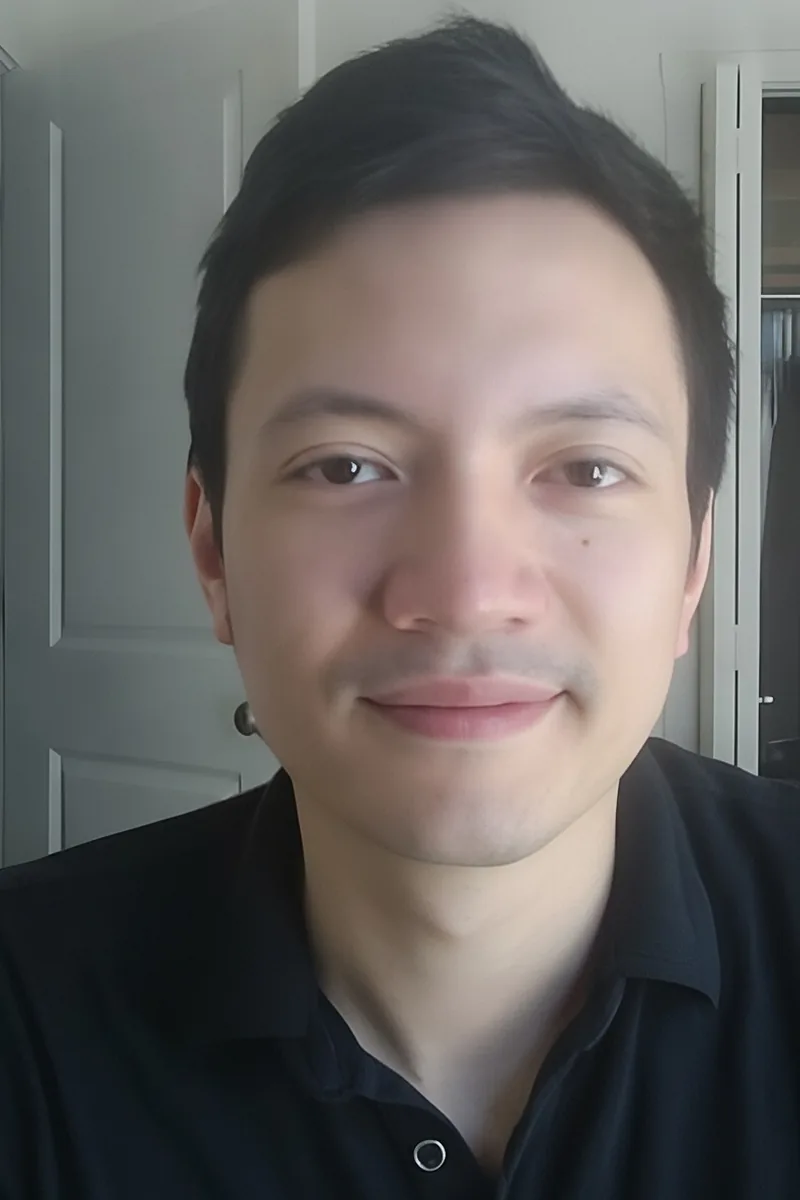
A physics degree gives Cory something many p-chem tutors lack — native comfort with the quantum mechanics and statistical mechanics that chemistry students often encounter for the first time in this course. He treats topics like wave functions, partition functions, and thermodynamic state variables as extensions of the physics he already thinks in, then builds the chemical context around them. Rated 4.9 by students.
Pre-med coursework at Rice plus dual degrees in environmental sciences and ecology meant Daniel was solving energy balance problems and applying thermodynamic reasoning to natural systems well before encountering p-chem's formal derivations. His lab technician work at Rice keeps the quantitative skills sharp — setting up calculations involving enthalpy, equilibrium, and kinetic models is part of the daily routine, not a distant textbook memory.
As an MD/PhD student at Northwestern with a chemistry PhD focus and a B.S. in Chemical Science from Michigan, Austin has gone deep on the thermodynamics and quantum mechanics that form p-chem's backbone — and he's still actively working through advanced coursework in these areas. He tackles derivations by building chemical intuition first, so when a student hits a wall at, say, a Legendre transform connecting internal energy to Gibbs free energy, the math follows naturally from understanding what each variable physically represents.
Biomedical engineering at BU and Tufts meant Anthony lived in the math that makes p-chem intimidating — differential equations, thermodynamic modeling, and the kinetics of biological systems — long before applying it to physical chemistry specifically. His research background studying neurodegenerative disease therapies keeps him fluent in the quantitative reasoning behind concepts like Gibbs free energy, phase equilibria, and reaction rate theory. Rated 4.9 by students, he connects each derivation to the physical system it describes so the notation carries real meaning.
Teaching high school chemistry daily means Kathleen regularly translates thermodynamic concepts like enthalpy, entropy, and equilibrium into language that clicks — a skill that carries directly into the more calculus-heavy treatment those same ideas get in a p-chem course. Her M.S.Ed from Penn and chemistry degree give her both the content depth and the instinct for spotting exactly where a derivation stops making sense to a student. Rated 5.0 by students.
Medical school at Tufts demands fluency in the thermodynamics and kinetics that p-chem students dread — Eric works through Gibbs free energy calculations, entropy-driven processes, and rate equations daily in a clinical science context, which keeps the material grounded rather than purely abstract. His economics background also sharpens the kind of quantitative modeling and equilibrium thinking that translates surprisingly well to topics like chemical potential and phase diagrams.
Biology coursework builds a surprising amount of p-chem intuition — enzyme kinetics, membrane energetics, and metabolic thermodynamics all run on the same free energy and rate equations that dominate a physical chemistry sequence. Ade uses that biological grounding to make abstract derivations tangible, turning something like a Boltzmann distribution into a concrete picture of how molecules actually partition energy across states.
Conservation biology at ASU gave River a working familiarity with the thermodynamic and kinetic principles that p-chem puts under a mathematical microscope — energy flows in ecosystems, reaction energetics in biochemical cycles, and the statistical behavior of molecular populations. That biology-first perspective lets River approach topics like Gibbs free energy and equilibrium constants by starting with the physical intuition before wading into the calculus. Rated 4.8 by students.
I am a public school teacher (Chemistry and Living Environment) but can tutor most sciences. I truly believe in differentiated learning and once I know the learning style of a student, I tailor my teaching style for optimum time usage. I love to utilize stories from my real life experiences in labs to help students understand the implications of their science education.
Pursuing a dual Ph.D./Pharm.D. at UConn with graduate work in medicinal chemistry means Xhesika encounters the thermodynamic and kinetic formalism of p-chem as daily working tools — calculating drug stability, modeling reaction pathways, predicting how molecular interactions shift with temperature and pressure. She teaches derivations like Maxwell relations and Clausius-Clapeyron by tying each variable back to the pharmacological systems where she actually uses them, so the math carries chemical weight instead of feeling like abstract symbol-pushing.
I am currently an adjunct professor of chemistry at a small liberal arts college in the Chicago area. Previously, I worked in the chemical industry for several years as a researcher, but I've found that the most satisfying moments have come when I am able to share my expertise with someone else. Similarly, I very much enjoyed the four semesters in the graduate school when I was a teaching assistant. It gave me the opportunity to work with students and help them develop an understanding for the subject. These are the primary reasons that I have decided to go into teaching.
P-chem is where thermodynamics, quantum mechanics, and kinetics collide, and most students feel overwhelmed by the math intensity alone. Jacob's biochemistry-emphasis BS in Chemistry means he tackled these derivations firsthand — from partition functions to the Schrödinger equation — and he's skilled at unpacking the physical meaning behind each equation so the math stops feeling arbitrary. Rated 5.0 by students.
Testimonials
Because the right Physical Chemistry tutor makes all the difference.
Average Session Rating – Based on 3.4M Learner Ratings
Other Seattle Tutors
Related Science Tutors in Seattle
Frequently Asked Questions
Physical chemistry bridges chemistry and physics by studying the properties of molecules and how chemical reactions occur at a molecular level. It's challenging because it requires understanding abstract concepts like thermodynamics, quantum mechanics, and kinetics—and then applying them to real reactions. Many students struggle with the math-heavy nature of the subject and visualizing molecular behavior, which is why personalized instruction focused on connecting theory to tangible examples makes a real difference.
Your first session is an opportunity for a tutor to understand your current level, identify specific areas where you're struggling (whether it's thermodynamics, equilibrium, or lab work), and learn your learning style. Tutors will ask about your course goals, upcoming exams or projects, and any concepts that feel particularly abstract or confusing. This foundation helps create a personalized plan tailored to your needs in Seattle's competitive academic environment.
Students often struggle with balancing complex equations, unit conversions, and understanding abstract concepts like entropy and free energy. Many also find it difficult to connect theoretical principles to lab work and experimental results. Additionally, the heavy reliance on calculus and problem-solving can be overwhelming without a clear framework. Tutors help break down these barriers by teaching both the content and the scientific reasoning skills needed to tackle unfamiliar problems.
Expert tutors use multiple strategies—diagrams, molecular models, real-world analogies, and step-by-step problem breakdowns—to make invisible concepts visible and understandable. For example, they might use energy diagrams to explain activation energy, or walk through how molecular motion relates to temperature and pressure. Personalized 1-on-1 instruction allows tutors to identify which visualization methods work best for your learning style and adjust on the fly.
Yes. Tutors can help you understand the theory behind experiments, interpret data, troubleshoot unexpected results, and connect lab observations back to the physical chemistry principles you're learning in class. They can also help you develop stronger scientific reasoning skills—learning how to form hypotheses, design controls, and draw valid conclusions from your results. This support strengthens both your understanding and your ability to think like a scientist.
Understanding is far more valuable than memorization. Physical chemistry is about grasping why reactions happen and how variables like temperature and pressure affect outcomes—not memorizing equations. When you understand the underlying principles, you can derive formulas, solve novel problems, and adapt to new situations on exams. Tutors focus on building this deep understanding so you can confidently tackle any problem, even ones you've never seen before.
Tutors create targeted study plans based on your exam format and the topics covered, working through practice problems, past exams, and challenging concepts in focused sessions. They help you identify knowledge gaps, build problem-solving strategies, and manage test anxiety. With personalized instruction, you'll develop the confidence and skills to approach exams systematically rather than relying on last-minute cramming.
Varsity Tutors connects you with tutors who have strong backgrounds in chemistry, physics, or related fields and understand the specific challenges of physical chemistry. Tutors are matched based on your goals, learning style, and schedule. Whether you need help with a specific unit, exam prep, or ongoing support throughout the course, you'll get personalized 1-on-1 instruction designed to help you succeed.
Let’s find your perfect tutor
Answer a few quick questions. We’ll recommend the right plan and match you with a top 5% tutor.