Award-Winning Physics Tutors
serving Spokane, WA
Physics
Tutors in Spokane
Private 1-on-1 tutoring, weekly live classes for academic support, test prep & enrichment, practice tests and diagnostics, and more to elevate grades and test scores.
Based on 3.4M Learner Ratings
UniversitiesSchools & Universities
DeliveredHours Delivered
ProficiencyGrowth in Proficiency
Who needs tutoring?
No obligation. Takes ~1 minute.
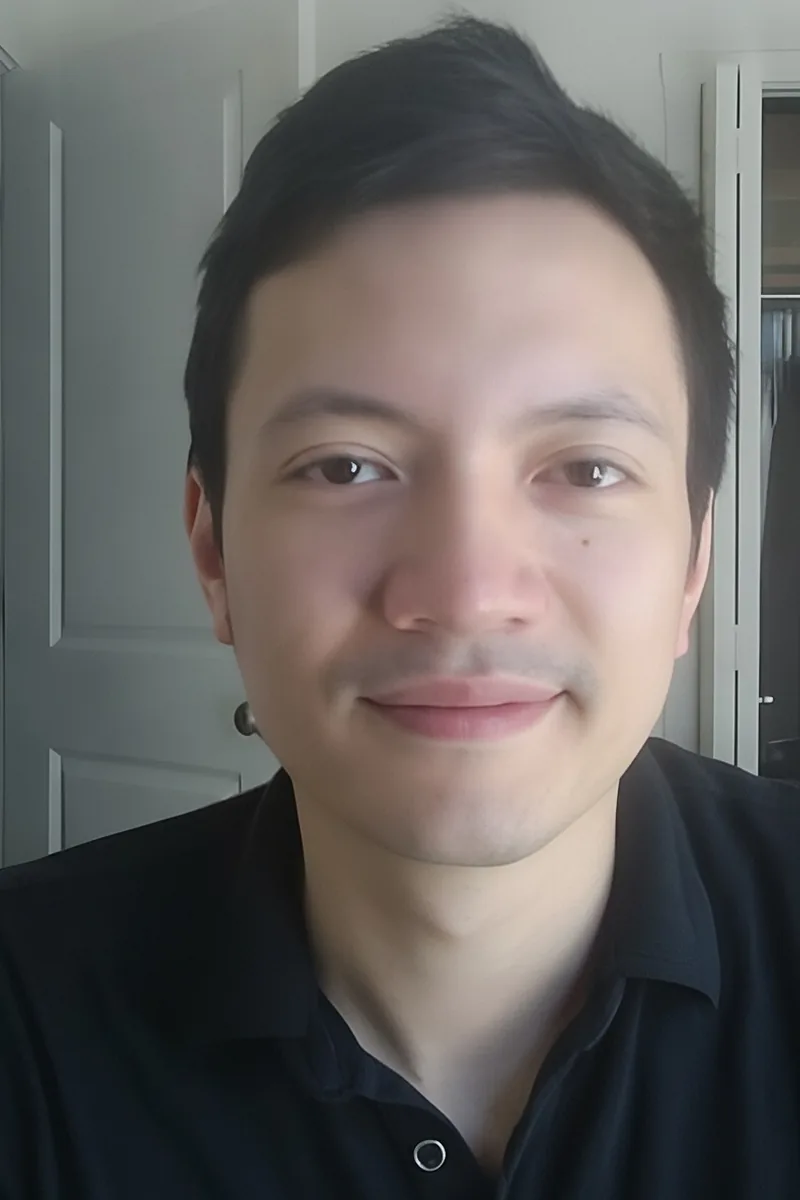
Mechanics is usually a student's first real encounter with translating physical intuition into mathematical language — setting up free-body diagrams, applying Newton's laws, tracking energy through a system. Cory earned his B.S. in Physics and treats each problem as a conversation, relating forces and motion to everyday experiences so the equations feel like descriptions of something real rather than formulas to memorize. Rated 4.9 by students.
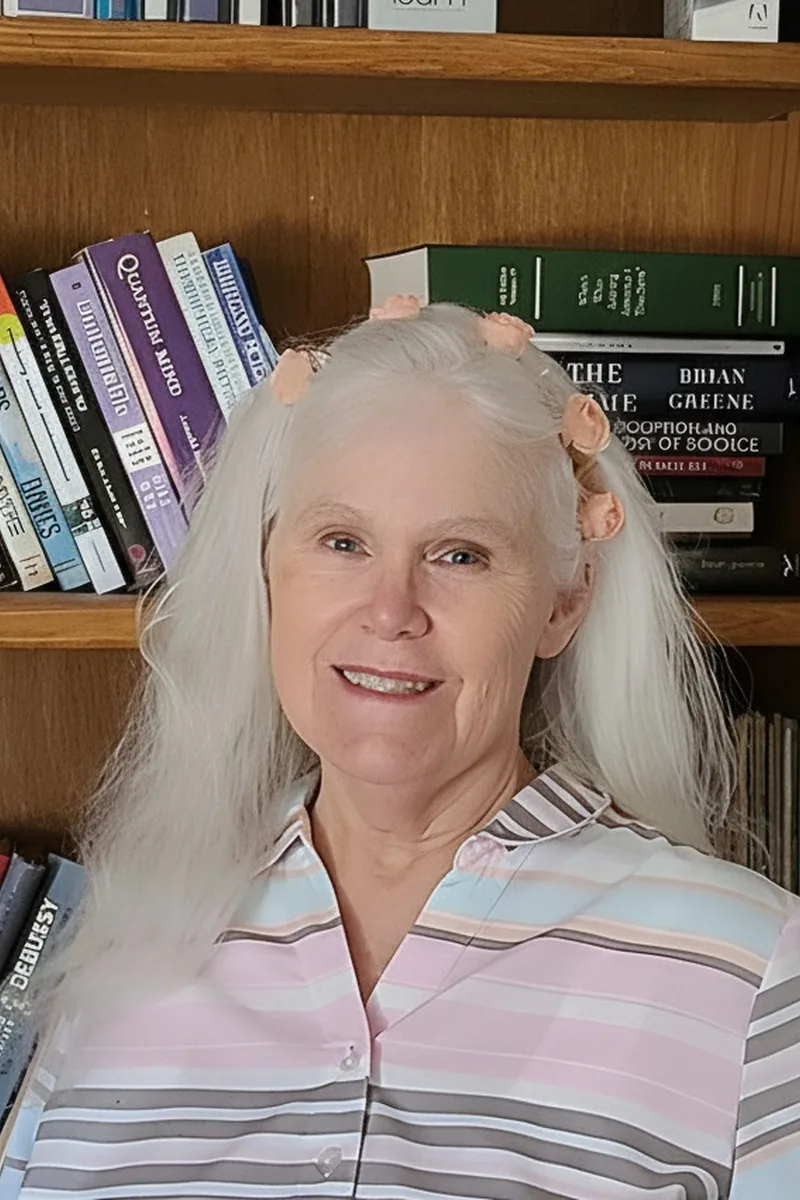
Clare's math background — through calculus and beyond — means the algebra and trigonometry woven into physics problems never become a separate obstacle; she can keep the focus on the physics itself. She's particularly effective at breaking down Newton's second law scenarios and work-energy problems into clean mathematical steps, connecting each line of math back to what's physically happening. Her philosophy training also sharpens the logical reasoning that multi-step problems demand.
An electrical engineering degree is essentially a physics degree with soldering — Daniel spent four years at Stevens Institute of Technology applying Newtonian mechanics, wave behavior, and electromagnetism to real circuits and systems. He brings that applied perspective to physics tutoring, connecting abstract force diagrams and energy conservation problems to things students can actually picture.
I am a professional scientist with multiple years of experience in the biopharmaceutical field. I have spent time in the classroom with elementary aged students and am comfortable with this age group. I am also familiar with AP classes and ACT/SAT preparation. I look forward to sharing my love of learning with students and helping them achieve academic goals!
I am a Masters student in Physics at the University of Washington and have over 10 years of teaching and tutoring experience. Most recently, I worked as a teacher at the Yellow Wood Academy, a private high school that offers students a specialized one-on-one classroom environment. At YWA, I taught all high school science classes (including AP, Computer Programming, and Environmental Science) and all levels of high school math. In addition to my teaching and tutoring duties, I designed individualized lesson plans, curricula, homework assignments, and tests. Subjects I have successfully tutored Physics: all levels Chemistry: all levels high school, plus P-Chem, O-Chem Biology: all levels high school Math: all levels high school, plus Differential Equations, Statistics, some Group Theory. Standardized test preparation (incl. SAT, ACT, GRE, MCAT) Need help in another area? Just ask! While math and science are the subjects I am most passionate about, I am well-versed in many academic areas, and I may be able to help you.
Applied math at Caltech means Samuel's daily coursework is the calculus and differential equations that power every physics problem — from projectile motion to oscillating springs to electric fields. He teaches students to build the mathematical setup first, identifying which principles apply and why, so that plugging into formulas becomes the easy final step rather than a frantic guessing game.
Studying applied math at Stanford gave Alex a deep comfort with the mathematical backbone of physics — setting up differential equations for oscillating systems, working through vector fields, or translating a word problem into a free-body diagram. He teaches the problem-solving process itself, showing students how to identify which principles apply before touching a single equation.
Benjamin's physics teaching goes beyond plugging values into kinematic equations. He digs into free-body diagrams, energy conservation, and vector decomposition by asking students to predict outcomes before calculating — a habit that builds the physical intuition textbooks often skip. His math fluency from studying economics at UChicago means the quantitative side never becomes a bottleneck.
Engineering students use physics every day, and Ava's dual degree in mechanical and energy engineering means she didn't just learn kinematics, Newton's laws, and energy conservation — she applied them to real systems. She TAed physics-related engineering courses at WashU and tutored high school physics students for several years, so she's comfortable adjusting her explanations whether someone is solving their first free-body diagram or wrestling with rotational dynamics.
Bryan holds a B.S. in Physics and teaches the subject the way it's actually practiced — starting from a real situation, identifying the relevant principles, and building a solution step by step. Whether the problem involves conservation of momentum or circuit analysis, he emphasizes drawing clear free-body diagrams and checking units before touching a calculator.
Dylan's physics major at Vanderbilt means he's not recalling intro-level material from years ago — he's actively working through classical mechanics, electromagnetism, and modern physics right now, which keeps his explanations current and sharp. His instinct is to ground every abstract concept in a physical, graphical picture: showing what a free-body diagram actually represents, or why a velocity-time graph reveals more about acceleration than a formula ever could. That visual-first approach, backed by a 36 ACT and a math minor, makes the subject click for students who've been drowning in equations without understanding what they mean.
A physics degree gives Matthew the mathematical backbone to teach everything from Newtonian mechanics and rotational dynamics to electromagnetism and wave optics. Rather than handing students formulas to memorize, he traces each equation back to the physical situation it describes — so a free-body diagram or a circuit schematic becomes something students can read intuitively, not just label.
A Stanford computer science and political science student, Margaret went through the Project Lead the Way STEM magnet program, where physics wasn't just a class but a daily toolkit for engineering challenges. She teaches kinematics, force diagrams, and energy conservation by tying each concept to tangible scenarios that make the math feel purposeful.
JF's dual training in mathematics and computer science at Stanford means the calculus and vector algebra that bog down most physics students are second nature — freeing up mental bandwidth to actually think about what's happening physically in a problem. He tackles everything from AP Physics 1 mechanics to AP Physics 2 electromagnetism, and he's particularly effective at teaching students to build equations from diagrams rather than hunting for the right formula to plug into. Rated 5.0 by students.
Three science degrees from Yale — including one in chemistry — mean Zosia has worked through mechanics, thermodynamics, and electromagnetism problems repeatedly across disciplines, building the kind of cross-subject fluency that makes her especially clear on where physics concepts connect to the math underneath. She digs into the specific step where a student's reasoning breaks down, whether that's setting up Newton's second law for a pulley system or tracking signs through a conservation-of-energy equation. Rated 4.9 by students.
Kinematics equations and free-body diagrams become far less intimidating once a student learns to read each problem as a physical story rather than a math puzzle. Garrett breaks problems into setup, diagram, and solve phases, teaching students a repeatable framework they can apply from Newton's laws through electromagnetism. His science and math background lets him bridge the conceptual reasoning and the calculations seamlessly.
Most physics struggles come down to one thing: not knowing how to start a problem. Phillip teaches a systematic approach — draw the diagram, identify the forces, pick the right coordinate system — that turns intimidating multi-step problems into a sequence of smaller, solvable ones. He's taken physics through the college level as part of his biomedical engineering degree at Brown and knows exactly where conceptual gaps tend to hide.
Testimonials
Because the right Physics tutor makes all the difference.
Average Session Rating – Based on 3.4M Learner Ratings
Practice Physics
Free practice tests, flashcards, and AI tutoring for Physics
Other Spokane Tutors
Related Science Tutors in Spokane
Frequently Asked Questions
Varsity Tutors matches Spokane students with expert Physics tutors for 1-on-1 instruction. We pair each student with a tutor based on their specific needs, learning style, and goals.
Whether you need homework help, exam prep, or want to get ahead, our Physics tutors are ready to help.
Common challenges include gaps from earlier material, difficulty with specific concepts, and trouble applying learning to new problems. These issues can snowball quickly in Physics.
A tutor identifies where you're stuck, fills in gaps, and provides targeted practice. The 1-on-1 format means you get help exactly where you need it.
Tutors work with your student's actual coursework—homework assignments, class notes, and upcoming tests. This keeps tutoring directly relevant to what's happening in the classroom.
When you share information about your student's school and curriculum, we can match you with a tutor who has relevant experience.
All tutors complete background checks, credential verification, and teaching evaluation. Many of our Physics tutors hold advanced degrees or have years of teaching experience.
You can review tutor profiles to find someone with the right background for your student's level and needs.
Many students see improved grades within a few weeks, along with better understanding of Physics concepts and more confidence tackling challenging material.
Tutors track progress and adjust their approach to ensure continued improvement.
Most students benefit from 1-2 sessions per week. More frequent sessions help if your student is significantly behind or has an important exam coming up.
Your tutor can recommend a schedule based on your student's specific situation and goals.
Tutoring is purchased in packages of hours, with rates varying by tutor experience. Varsity Tutors offers several options to fit different budgets and needs.
You can discuss pricing during your consultation to find what works best.
Your tutor will assess where your student is, discuss goals, and start working on priority areas. Most students bring current homework or upcoming test material to focus on.
By the end, you'll have a clear sense of how the tutor can help and a plan for moving forward.
Let’s find your perfect tutor
Answer a few quick questions. We’ll recommend the right plan and match you with a top 5% tutor.