Award-Winning Science Tutors
serving Bronx, NY
Science
Tutors in Bronx
Private 1-on-1 tutoring, weekly live classes for academic support, test prep & enrichment, practice tests and diagnostics, and more to elevate grades and test scores.
Based on 3.4M Learner Ratings
UniversitiesSchools & Universities
DeliveredHours Delivered
ProficiencyGrowth in Proficiency
Who needs tutoring?
No obligation. Takes ~1 minute.
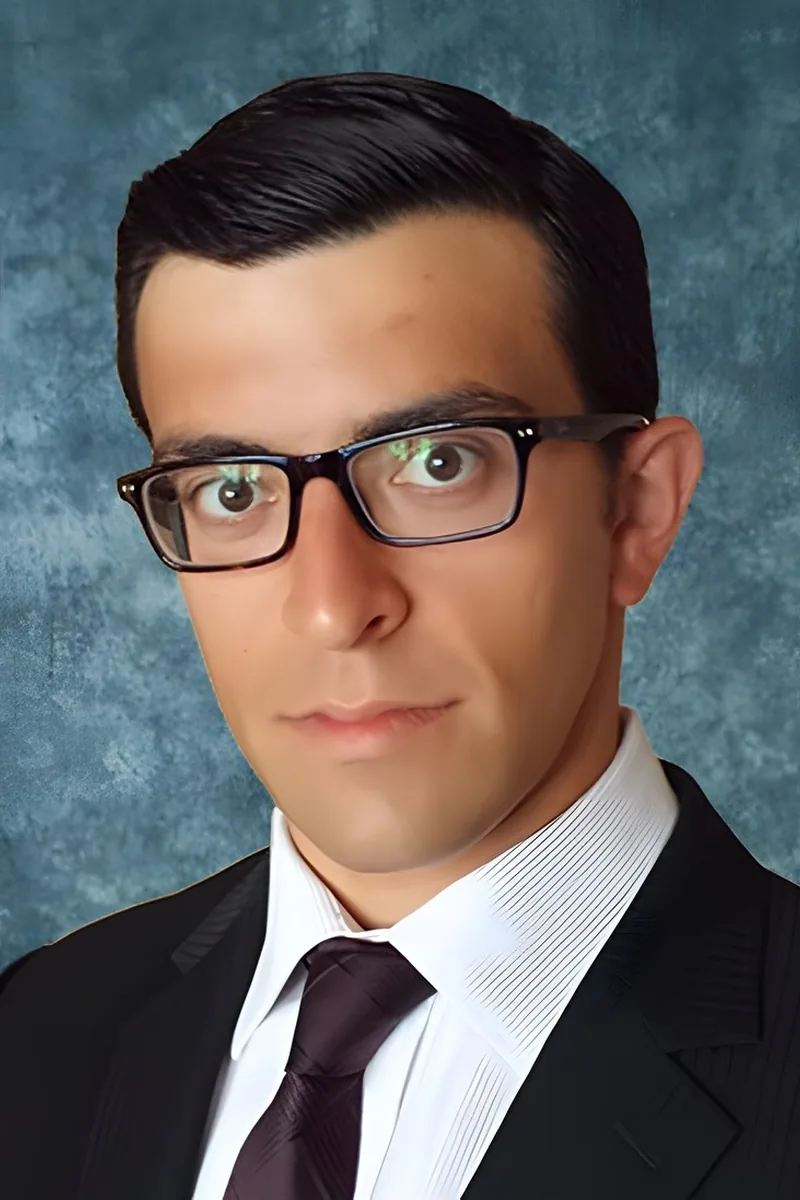
A fourth-year medical student at Albert Einstein College of Medicine, Michael tackles science the way it actually works — connecting concepts across biology, chemistry, and physiology instead of treating them as separate silos. His biology degree and MCAT teaching experience at Kaplan mean he can break down everything from cellular respiration to acid-base equilibria in terms that actually click.
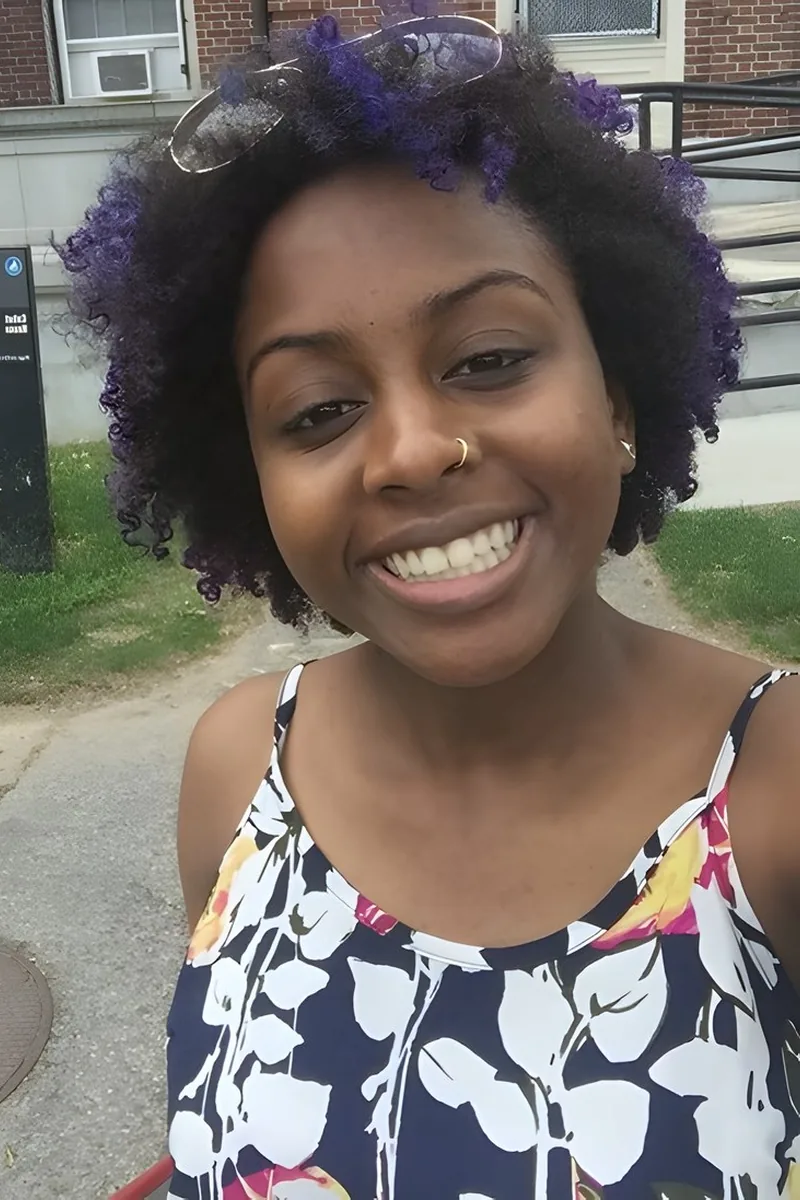
For younger students, science should feel like discovery — asking why leaves change color or how magnets pull from a distance. Gabriela connects these everyday curiosities to the actual concepts behind them, whether that's life cycles, states of matter, or basic earth science. She makes observation and questioning feel natural rather than like a worksheet exercise.
Having debugged enough physics simulations and coded enough data-analysis scripts during his Penn State CS program, Nicholas picked up a working fluency in scientific reasoning that most computer science majors don't bother developing — understanding how variables interact, why controlled experiments matter, and how to read results critically. He teaches science the way he'd troubleshoot a program: isolate what's happening, test one change at a time, and figure out exactly where the logic breaks down. Rated 5.0 by students.
Abigail's Columbia master's program in International Affairs required heavy engagement with research methodology — analyzing datasets on global health, evaluating environmental policy studies, and interpreting statistical evidence across disciplines. That training translates well when she walks students through reading scientific graphs, understanding experimental design, or explaining how to support a conclusion with evidence rather than guesswork.
Growing up steeped in math and ELA before pursuing graduate work in Africana Studies, Devon brings an interdisciplinary lens to science — particularly when it comes to reading dense informational texts, pulling key details from charts, and organizing written explanations of how things work. That cross-training in quantitative reasoning and close reading covers exactly the two skills where most students hit a wall in science class.
Biology is where Victoria lives academically — her Cornell degree in Biology and Society plus her current MPH work mean she can unpack everything from cell biology and genetics to human physiology and ecology with real depth. She connects scientific concepts to health and nutrition examples that make processes like cellular respiration or enzyme kinetics click for students who struggle with purely textbook explanations.
Ten years of teaching in NYC classrooms — including self-contained and Collaborative Team Teaching settings — means Ivan has seen firsthand how students with different learning profiles struggle to process science material, from decoding diagrams to organizing lab observations into coherent explanations. His special education training gives him a toolkit for scaffolding dense content so that vocabulary-heavy units in life science or earth science don't become walls. Rated 4.8 by students.
Dan's math background — through discrete math, calculus, and quantitative reasoning — means he can handle the computational side of science that often trips students up: dimensional analysis, interpreting rate graphs, and working through stoichiometry or physics equations without losing track of units. His comparative literature training also sharpened his ability to pull meaning from dense, unfamiliar texts, which turns out to be exactly what's needed when students face a chapter packed with scientific terminology and diagram-heavy explanations.
Between her neuroscience undergraduate work and her medical school training at Albert Einstein College of Medicine, Taylor has spent years immersed in biology, chemistry, and human physiology at a level most science tutors haven't reached. She unpacks topics like cell structure, ecosystems, and the scientific method by tying them back to how the human body actually works — making abstract concepts tangible.
Electrical engineering at Carnegie Mellon means Chimdi lives in the overlap of physics, math, and applied problem-solving — building circuits, analyzing waveforms, and testing real systems against theoretical predictions every week. That hands-on lab experience makes him especially effective at teaching students how to set up controlled experiments, read data from graphs, and connect scientific concepts to measurable outcomes. Rated 4.8 by students.
A Physiological Science degree from UCLA means Samantha spent four years connecting chemistry, biology, and physics to understand how living systems work. She brings that same integrative thinking to science tutoring, whether a student is learning the water cycle, balancing chemical equations, or tracing energy through a food web.
Biology, chemistry, and physics all sit in Laura's wheelhouse — her dual biology and anthropology degree from Fordham means she studied living systems from the molecular level up through human populations. Now pursuing a Master's in Public Health at Columbia with a focus on environmental health sciences, she teaches science by grounding abstract concepts in real-world applications, like explaining chemical exposure pathways to make toxicology and cellular biology tangible. Rated 5.0 by students.
Neuroscience sits at the intersection of biology, chemistry, and psychology, which means Zarrin spent her undergraduate years connecting ideas across scientific disciplines rather than treating them as separate subjects. She unpacks concepts like cellular respiration, chemical bonding, or experimental design by tying them to real phenomena students can visualize. That cross-disciplinary instinct is especially useful for younger students still figuring out what "thinking like a scientist" actually means.
Psychology sits at the intersection of biology and social science, which gives June a practical bridge into topics like the scientific method, experimental design, and data interpretation. She walks students through how to read graphs, identify variables, and understand cause-and-effect reasoning — core skills that transfer across every science class.
Charles teaches chemistry at the high school and college level, so when he tackles broader science material, he brings real comfort with the quantitative side — balancing equations, working through unit conversions, and interpreting lab data. His 4.9 rating across 38 subjects suggests he's unusually good at adjusting his explanations to match what a particular student actually needs to hear.
As a teaching assistant at a performing arts high school, Joshua regularly supports students through the kind of cross-disciplinary thinking science demands — reading dense nonfiction passages, interpreting visual data, and building written explanations that actually demonstrate understanding. His English training makes him especially effective at the parts of science that aren't about formulas: decoding textbook language, organizing lab write-ups, and teaching students to articulate the reasoning behind their answers rather than just circling one.
Tackling science means learning to think in cause-and-effect chains — why increasing temperature speeds up a reaction, or how force and acceleration relate on a ramp. Miguel's background spans both physics and broader coursework, so he can walk students through lab reports, unit conversions, and the conceptual reasoning that multiple-choice questions are really testing.
A year spent studying ancient languages in Israel might not scream 'science tutor,' but Nathaniel's Classical Studies training revolves around exactly the kind of systematic analysis science demands — gathering evidence, testing interpretations, and building arguments that hold up to scrutiny. His 1530 SAT confirms he handles quantitative and data-driven reasoning with ease, and his knack for breaking down Greek and Latin roots means scientific terminology stops being a foreign language for his students.
Philosophy majors spend their days doing something surprisingly close to science: constructing hypotheses, testing them against evidence, and tearing apart weak arguments — and Ava brings that same rigor to teaching students how to work through experimental design and data interpretation. Her Latin background also gives her a practical edge when students hit unfamiliar scientific terminology, since she can break terms like 'photosynthesis' or 'endothermic' into their Greek and Latin roots on the spot. Rated 4.9 by students.
Gregory's background spans physics and astronomy, and he approaches science by teaching students how to read experiments the way researchers do — identifying variables, interpreting data tables, and connecting observations to underlying principles. His international economics training reinforces the quantitative reasoning that runs through every science discipline.
Physics is where Jonathan's math expertise becomes especially practical — he shows students how the equations they've learned in algebra and calculus actually describe real forces, motion, and energy. Instead of treating formulas as things to memorize, he walks through the reasoning that connects a free-body diagram to the math that solves it.
Cole's finance coursework at Fordham Gabelli — including business statistics and calculus — means he's comfortable with the quantitative backbone of science: reading graphs, calculating rates, and interpreting data sets to draw defensible conclusions. He's especially handy for students who freeze up when science problems involve math, since he can walk through unit conversions and proportional reasoning without skipping steps. Rated 4.7 by students.
A math degree builds the exact quantitative backbone that science leans on — reading graphs, converting units, calculating rates, and spotting patterns in data — and Jonathan has taught those skills across every level from elementary arithmetic to AP Calculus BC. He's especially useful for students who hit a wall in science not because the concepts are hard, but because the math underneath feels shaky. Rated 5.0 by students.
A physicist by training, Muhammed treats science as a way of asking questions and designing methods to answer them — not as a collection of facts to memorize. He teaches students to read graphs, interpret experimental data, and connect cause-and-effect reasoning across topics in biology, chemistry, and physical science. Rated 4.6 by students, he's comfortable adapting from middle school life science to college-level physics.
Vicquaja's AP Biology background and quantitative training make her a solid fit for students who need science support, especially when the material turns data-heavy — interpreting graphs, understanding experimental design, or connecting biological processes to mathematical models. Her Psychology minor also gives her insight into topics that bridge life sciences and social sciences.
Hi! I'm Isabella, and I'm passionate about helping students understand difficult concepts and reach their goals. I make learning simple, engaging, and tailored to each student's needs. I look forward to working with you!
Mimi's Masters in Education from Harvard focused on inquiry-based and object-based learning — an approach that turns science into something students can observe, question, and test rather than just read about in a textbook. Her integrated arts background means she often teaches concepts like ecosystems or states of matter through hands-on exploration and visual models, which tends to stick with students who struggle to learn from lectures alone. She's especially strong with younger and middle school learners building their first real science habits.
A neurobiology-focused biology degree from Northwestern means Nina didn't just take introductory science — she studied cellular mechanisms, genetics, and brain physiology in depth. She connects textbook concepts like mitosis or enzyme kinetics to real research contexts, which tends to make the material click faster than rote memorization. Rated 5.0 by students.
Reid treats science as a way of thinking rather than a collection of facts to memorize. He walks students through how to read data tables, design controlled experiments, and connect observations to underlying principles — the same analytical habits that show up across biology, chemistry, and earth science courses.
Sociology research at Harvard meant Solange spent years designing surveys, analyzing datasets, and defending conclusions in front of professors who demanded airtight reasoning — all of which is applied scientific method, even if the subject matter was social rather than physical. She's especially effective at teaching students to distinguish correlation from causation and to read charts and graphs with a critical eye, since those skills were daily requirements in her coursework. Her 34 ACT confirms she can handle the quantitative side of science just as comfortably as the conceptual.
Running a tutoring program at a charter middle school meant Liz wasn't just teaching science content — she was figuring out how to make vocabulary-heavy units on cells, ecosystems, and states of matter land for students with dyslexia, ADHD, and other learning differences. Her special education master's gave her a toolkit of concrete strategies for breaking down dense nonfiction text and multi-step processes, which is where most science students actually get stuck. She holds a 4.7 rating across her subjects.
A PhD in Computational Mathematics from the University of Chicago means Justin doesn't just know science — he understands the quantitative reasoning that ties physics, chemistry, and earth science together. He breaks down concepts like energy conservation, wave behavior, and data analysis by connecting them to real-world phenomena, from climate modeling to how lenses form images. Rated 5.0 by students.
A chemistry major headed to Columbia Medical School, James treats science tutoring as an exercise in building intuition — understanding why a reaction proceeds a certain way or how energy flows through a biological system, not just memorizing diagrams. He's especially sharp at bridging the gap between introductory courses and the more rigorous thinking that AP or IB-level science demands.
Applied math and computer science at Johns Hopkins means Sabira spends her days quantifying patterns and testing models — the same core loop students encounter in science when they're asked to measure, predict, and explain. She's particularly strong on the computational side of science: reading data tables, graphing relationships, and working through the math embedded in physics or chemistry problems. Holds a 5.0 rating.
Daniel's sociology degree means he spent years learning to design surveys, analyze demographic data, and apply the scientific method to real human behavior — skills that translate naturally when teaching students how to form hypotheses, control variables, and interpret results in a general science context. He's especially comfortable helping students who freeze up at graphs and data tables, since reading quantitative evidence was a daily requirement in his coursework. Holds a 5.0 rating.
Speech-language pathology graduate training at Columbia is surprisingly science-heavy — anatomy, neuroscience, research design — and Sherry brings that clinical lens to teaching students how biological systems work and how experiments should be structured. Her UChicago psychology and linguistics background also means she's comfortable with everything from statistical reasoning to breaking apart dense scientific terminology using morphological roots. Rated 5.0 by students.
Chemistry is Sung's home discipline, which means he teaches science the way a working scientist thinks about it: grounding every concept in evidence, units, and careful reasoning. Whether a student is balancing equations, interpreting lab data, or connecting molecular structure to physical properties, Sung ties abstract ideas back to observable, concrete examples.
A Yale education heavy on critical reading and analytical writing gave Maya the tools to tackle science from the comprehension side — parsing dense passages, extracting key claims from lab descriptions, and explaining results in clear, organized language. She's particularly useful for students who understand the concepts but freeze when asked to write up an experiment or interpret what a data table is actually saying. Holds a 5.0 rating.
Scoring in the 99th percentile on the MCAT required Josef to master science across disciplines — biology, chemistry, physics, and biochemistry — and he brings that integrated perspective to every session. Rather than treating each science topic as isolated, he connects ideas like energy transfer in physics to metabolic pathways in biology, showing students how the same principles reappear across fields.
A statistics and machine learning certificate at Princeton means Julie spends her coursework building models, testing hypotheses against real data, and evaluating whether results are statistically meaningful — all of which is applied scientific reasoning. She brings that quantitative rigor to science tutoring, especially when students need to move from memorizing definitions to actually interpreting experiments, reading graphs, and explaining what their data means. Her 4.9 rating suggests the approach lands.
Testimonials
Because the right Science tutor makes all the difference.
Average Session Rating – Based on 3.4M Learner Ratings
Practice Science
Free practice tests, flashcards, and AI tutoring for Science
Other Bronx Tutors
Related Science Tutors in Bronx
Frequently Asked Questions
Many students struggle with connecting abstract concepts to real-world applications, especially in chemistry and physics where visualization is critical. Others find it difficult to balance memorization of facts with understanding underlying principles, or they lack confidence in lab work and data analysis. Personalized tutoring helps by breaking down complex topics into digestible pieces and tailoring explanations to how each student learns best.
In a classroom with a 11.8:1 student-teacher ratio, teachers must pace lessons for the average student, which means some students fall behind while others get bored. Personalized tutoring adapts in real time to your learning speed, identifies knowledge gaps before they compound, and focuses on the specific concepts giving you trouble. A tutor can also spend time on hands-on problem-solving and explain "why" something works, not just "what" it is.
Tutors working with Varsity Tutors are familiar with New York State Science Standards and the progression of courses from middle school (Earth Science, Life Science, Physical Science) through high school (Biology, Chemistry, Physics, Earth Science) and advanced options like AP or honors courses. They can target your specific curriculum, whether you're preparing for Regents exams, building foundational skills, or tackling advanced topics. This ensures tutoring directly supports what you're learning in class.
Your first session is focused on understanding where you are and where you want to go. The tutor will assess your current understanding of key concepts, identify specific areas of struggle, and learn about your learning style and goals—whether that's improving a grade, mastering a unit, or building confidence for an exam. From there, they'll create a personalized plan and start addressing your needs right away.
Many students see noticeable improvements in understanding and confidence within 2-3 sessions, especially when tutoring targets specific problem areas like balancing equations or understanding photosynthesis. Grade improvements typically follow as comprehension deepens, though the timeline depends on how frequently you meet and how much material needs to be covered. Consistent, focused practice between sessions accelerates progress.
Yes. Tutors can help you understand the purpose and methodology behind experiments, interpret lab data, write lab reports, and develop critical thinking skills for experimental design. They can also clarify concepts that labs are meant to teach—like why certain reactions occur or how variables affect outcomes. This support builds both your practical lab skills and your conceptual understanding.
Tutors can create a targeted study plan covering the entire exam scope, identify your weakest topics, and focus intensive practice on those areas. They'll teach test-taking strategies, work through past exam questions with you, and help you manage time during the actual test. For AP exams specifically, tutors can also help you understand the rubrics and what graders are looking for in free-response answers.
Varsity Tutors connects you with expert tutors who match your needs—whether that's a specific grade level, course, or teaching style. You'll discuss your goals and challenges, and we'll find someone with the right expertise and availability for you. Most students start their first session within days of getting matched.
Let’s find your perfect tutor
Answer a few quick questions. We’ll recommend the right plan and match you with a top 5% tutor.