Award-Winning Science Tutors
serving Staten Island, NY
Science
Tutors in Staten Island
Private 1-on-1 tutoring, weekly live classes for academic support, test prep & enrichment, practice tests and diagnostics, and more to elevate grades and test scores.
Based on 3.4M Learner Ratings
UniversitiesSchools & Universities
DeliveredHours Delivered
ProficiencyGrowth in Proficiency
Who needs tutoring?
No obligation. Takes ~1 minute.
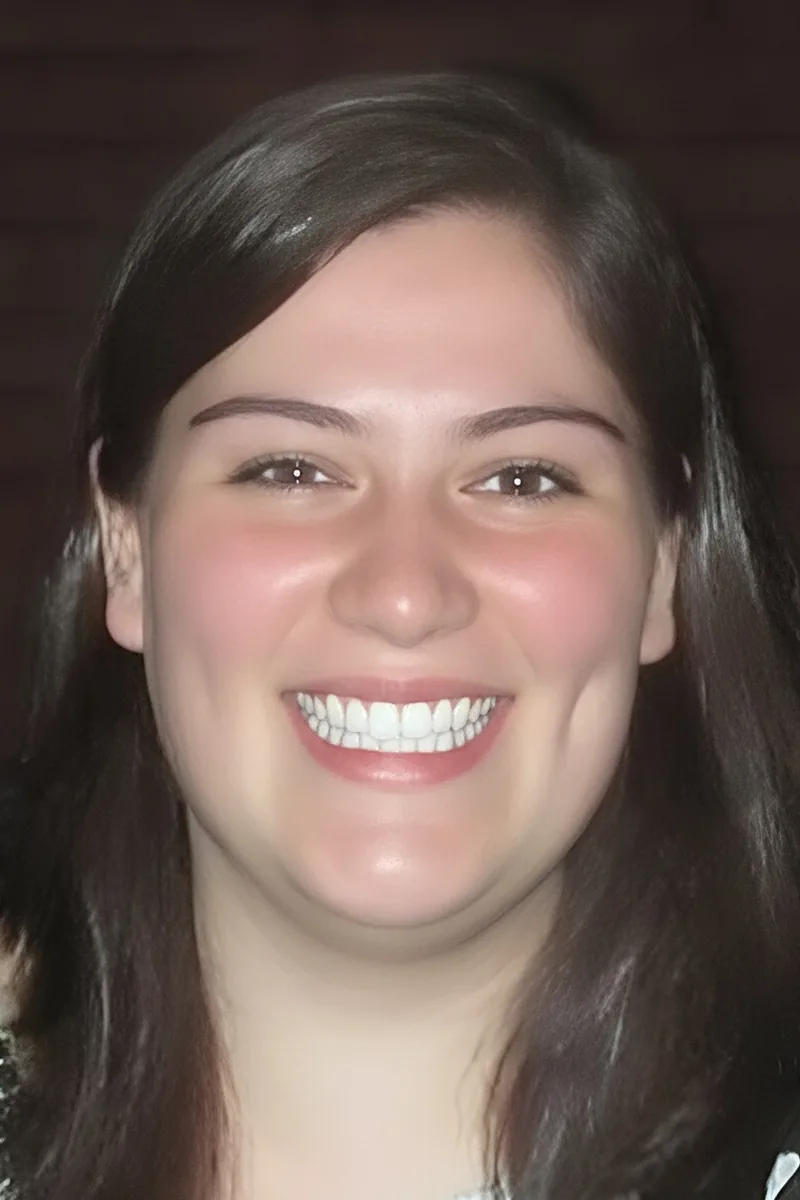
Civil engineering sits at the intersection of physics, chemistry, and environmental science, so Catherine's daily work involves applying scientific principles to real structures and systems. She's especially strong at breaking down force diagrams, unit conversions, and experimental design — the foundational skills that trip up most science students before content even enters the picture.
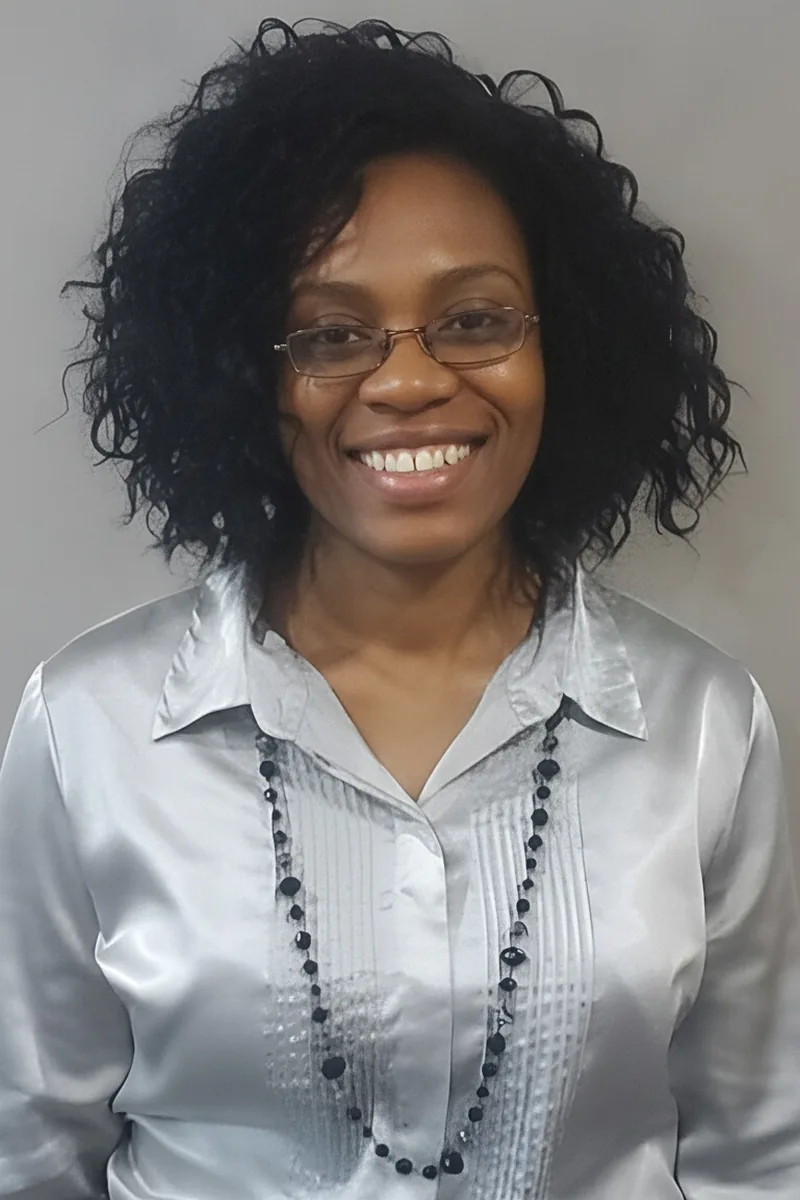
A law degree trains you to dissect arguments, weigh evidence, and spot holes in reasoning — and Monique applies that same disciplined thinking when walking students through hypothesis testing, data interpretation, and experimental design in science. Her economics background also means she's comfortable with graphs, variables, and quantitative relationships, which are often the parts of science that feel most intimidating to students. Rated 5.0 by students.
Research experience at Weill Cornell Medical College gives Robert a working understanding of the scientific method that goes beyond textbook definitions — he's applied it in a real lab studying microbial databases. He breaks down topics like cell biology, experimental design, and data interpretation by connecting them to tangible examples from his clinical and research work.
A physics degree builds a particular way of thinking about science — breaking complex systems into measurable variables, interpreting data, and connecting observation to theory. Matthew applies that analytical framework to topics across biology, chemistry, and earth science, making sure students understand how to reason through a problem rather than just recall isolated facts.
I am excited to tutor because I know what it feels like to get stuck and I'm happy to help people who encounter challenges in their studies. Though frustrating, there's something really valuable about these moments when you're not quite getting it. It means that by proceeding slowly and practicing a new concept or strategy you'll learn a new skill that will stick with you even more because it took some work to master. My focus in teaching is in French and, more broadly, language arts. I studied French Literature at New York University because of my passion for literature, creativity, and expression. Learning a new language opens up more than just a new literary world but also lets you tap into another set of human experiences, expression, emotion, history. I think the greatest reward in teaching French and language arts is helping a student connect with a text and gain access to someone else's experience, what someone else thought important enough to write down, and then how this connection can help reframe the reader's thinking - deepening, challenging, or shifting the ways our own thought. Apart from the study and appreciation of literature, learning a language at a linguistic level is invaluable. It promotes human connection, openness of thought, and pushes one's own capacity and diversity of self-expression.
As a cell and molecular biology major on the premed track, Laveda lives inside the sciences daily — from chemistry problem sets to biology lab reports. She connects big-picture concepts like the scientific method and energy transfer to the specific experiments and examples that make them stick, whether a student is tackling life science, earth science, or introductory physical science.
Study skills and test prep are Christopher's wheelhouse, and he applies that same systematic approach to science — teaching students how to organize information, identify key terms, and work through questions methodically instead of relying on rote memorization. His 1510 SAT required parsing data-heavy passages and evaluating experimental scenarios under pressure, so he knows how to coach students through the kind of evidence-based reasoning that science coursework demands.
While science isn't Tatiana's core specialty, her broad teaching background and analytical mindset make her a solid fit for students who need support with foundational science coursework. She's especially useful when the stumbling block is reading-based — interpreting lab instructions, understanding textbook explanations, or writing up results clearly.
Biomedical engineering sits at the intersection of biology, chemistry, and physics, so Liza doesn't just know these subjects individually — she understands how they overlap. When a student is struggling with, say, energy transfer in biology, she can pull in thermodynamics concepts or chemical equilibrium to make the picture click.
Having taught physics at both the high school and college level, Fayad knows how to connect abstract scientific concepts — force diagrams, energy conservation, wave behavior — to the math that makes them precise. He walks students through the quantitative side of science with enough rigor to build real understanding, not just formula memorization. Rated 4.5 by students.
Olga is currently in Brooklyn College's accelerated BA/MD program, which means she's deep in biology and chemistry coursework right now — not remembering it from years ago. She unpacks topics like cell respiration, stoichiometry, and lab data interpretation with the clarity of someone who just mastered them herself. That proximity to the material makes her explanations grounded and current.
Currently teaching a chemistry course at Stony Brook under the head of the department, Daniel lives in the intersection of biology, chemistry, and psychology every day. He tackles science concepts — whether it's cellular respiration, stoichiometry, or the nervous system — by linking them to real-life scenarios that make the material click instead of requiring brute-force memorization.
Running experiments in a business program looks different than in a chemistry lab, but the core logic is identical — Winson's coursework in market research and data-driven decision-making taught him to isolate variables, test hypotheses, and interpret results with precision. He brings that structured thinking to science topics like graphing relationships, understanding controlled experiments, and explaining what data actually proves. His 5.0 rating and 33 ACT confirm he can make those analytical skills accessible to students.
Studying mechanical engineering at RIT means Martin applies physics, chemistry, and materials science daily, which gives his science tutoring a practical edge. He's the kind of tutor who explains Newton's third law using a rocket nozzle example or demonstrates energy transfer with a real pulley system, making abstract ideas tangible.
Mimi's Masters in Education from Harvard focused on inquiry-based and object-based learning — an approach that turns science into something students can observe, question, and test rather than just read about in a textbook. Her integrated arts background means she often teaches concepts like ecosystems or states of matter through hands-on exploration and visual models, which tends to stick with students who struggle to learn from lectures alone. She's especially strong with younger and middle school learners building their first real science habits.
A neurobiology-focused biology degree from Northwestern means Nina didn't just take introductory science — she studied cellular mechanisms, genetics, and brain physiology in depth. She connects textbook concepts like mitosis or enzyme kinetics to real research contexts, which tends to make the material click faster than rote memorization. Rated 5.0 by students.
Reid treats science as a way of thinking rather than a collection of facts to memorize. He walks students through how to read data tables, design controlled experiments, and connect observations to underlying principles — the same analytical habits that show up across biology, chemistry, and earth science courses.
Running a tutoring program at a charter middle school meant Liz wasn't just teaching science content — she was figuring out how to make vocabulary-heavy units on cells, ecosystems, and states of matter land for students with dyslexia, ADHD, and other learning differences. Her special education master's gave her a toolkit of concrete strategies for breaking down dense nonfiction text and multi-step processes, which is where most science students actually get stuck. She holds a 4.7 rating across her subjects.
Sociology research at Harvard meant Solange spent years designing surveys, analyzing datasets, and defending conclusions in front of professors who demanded airtight reasoning — all of which is applied scientific method, even if the subject matter was social rather than physical. She's especially effective at teaching students to distinguish correlation from causation and to read charts and graphs with a critical eye, since those skills were daily requirements in her coursework. Her 34 ACT confirms she can handle the quantitative side of science just as comfortably as the conceptual.
A PhD in Computational Mathematics from the University of Chicago means Justin doesn't just know science — he understands the quantitative reasoning that ties physics, chemistry, and earth science together. He breaks down concepts like energy conservation, wave behavior, and data analysis by connecting them to real-world phenomena, from climate modeling to how lenses form images. Rated 5.0 by students.
A chemistry major headed to Columbia Medical School, James treats science tutoring as an exercise in building intuition — understanding why a reaction proceeds a certain way or how energy flows through a biological system, not just memorizing diagrams. He's especially sharp at bridging the gap between introductory courses and the more rigorous thinking that AP or IB-level science demands.
Daniel's sociology degree means he spent years learning to design surveys, analyze demographic data, and apply the scientific method to real human behavior — skills that translate naturally when teaching students how to form hypotheses, control variables, and interpret results in a general science context. He's especially comfortable helping students who freeze up at graphs and data tables, since reading quantitative evidence was a daily requirement in his coursework. Holds a 5.0 rating.
Applied math and computer science at Johns Hopkins means Sabira spends her days quantifying patterns and testing models — the same core loop students encounter in science when they're asked to measure, predict, and explain. She's particularly strong on the computational side of science: reading data tables, graphing relationships, and working through the math embedded in physics or chemistry problems. Holds a 5.0 rating.
Speech-language pathology graduate training at Columbia is surprisingly science-heavy — anatomy, neuroscience, research design — and Sherry brings that clinical lens to teaching students how biological systems work and how experiments should be structured. Her UChicago psychology and linguistics background also means she's comfortable with everything from statistical reasoning to breaking apart dense scientific terminology using morphological roots. Rated 5.0 by students.
Chemistry is Sung's home discipline, which means he teaches science the way a working scientist thinks about it: grounding every concept in evidence, units, and careful reasoning. Whether a student is balancing equations, interpreting lab data, or connecting molecular structure to physical properties, Sung ties abstract ideas back to observable, concrete examples.
Jennifer's ELA training at NYU's accelerated MAT program might seem distant from science, but teaching students to read dense nonfiction closely — pulling claims from evidence, evaluating an author's reasoning, spotting unsupported conclusions — is exactly what science coursework demands when students face lab reports, textbook passages, and data-heavy questions. She's especially useful for students who understand the concepts but struggle to articulate their thinking in written explanations or short-answer responses.
Scoring in the 99th percentile on the MCAT required Josef to master science across disciplines — biology, chemistry, physics, and biochemistry — and he brings that integrated perspective to every session. Rather than treating each science topic as isolated, he connects ideas like energy transfer in physics to metabolic pathways in biology, showing students how the same principles reappear across fields.
Studying Mechanical and Aerospace Engineering at Princeton means Matthew lives in physics, thermodynamics, and applied chemistry daily — subjects that map directly onto high school science curricula. He breaks down concepts like force diagrams, energy conservation, and kinematics using step-by-step problem solving, then builds complexity so students internalize the reasoning rather than just the formulas.
Having earned a 1560 SAT — which requires sharp data interpretation and evidence-based reasoning across both sections — Sash can walk students through the analytical side of science that often trips them up: reading graphs, evaluating experimental setups, and explaining results in precise language. Her comparative literature training at Princeton also means she's unusually good at helping students decode dense scientific texts and write clear, well-structured lab reports.
Electrical engineering at Stanford required Jai to live inside physics and applied science — circuit analysis, electromagnetic theory, thermodynamics, and the math that ties them together. He approaches science tutoring by anchoring each concept to a physical intuition or real-world example before introducing the equations. Students studying for AP Physics, chemistry, or general science courses get someone who genuinely thinks in scientific terms daily.
Journalism is fundamentally about investigation — gathering evidence, verifying claims, and explaining complex topics to a general audience — and Meghan applies that same discipline when walking students through scientific concepts like experimental design and data interpretation. Her Northwestern training emphasized rigorous sourcing and logical structure, which translates naturally to teaching students how to read a graph, evaluate a hypothesis, or write up lab results that actually say something clear. Rated 5.0 by students.
Three separate science degrees mean Zosia doesn't just know chemistry or biology in isolation — she understands how energy transfer in physics explains chemical bonding, which in turn drives cellular processes. That cross-disciplinary perspective is exactly what makes her effective at teaching foundational science concepts like the scientific method, experimental design, and data interpretation. She builds each session around the specific science course and topics a student is wrestling with.
A Yale education heavy on critical reading and analytical writing gave Maya the tools to tackle science from the comprehension side — parsing dense passages, extracting key claims from lab descriptions, and explaining results in clear, organized language. She's particularly useful for students who understand the concepts but freeze when asked to write up an experiment or interpret what a data table is actually saying. Holds a 5.0 rating.
A statistics and machine learning certificate at Princeton means Julie spends her coursework building models, testing hypotheses against real data, and evaluating whether results are statistically meaningful — all of which is applied scientific reasoning. She brings that quantitative rigor to science tutoring, especially when students need to move from memorizing definitions to actually interpreting experiments, reading graphs, and explaining what their data means. Her 4.9 rating suggests the approach lands.
Biology, chemistry, physics, and physiology all live under one roof in Garrett's teaching repertoire, which means he can trace a concept like energy transfer from a physics equation through a chemical reaction and into a biological system. That cross-disciplinary perspective is exactly what students need when science courses start connecting dots between fields. His biology degree anchors the content knowledge, while his broad coursework keeps explanations flexible.
A year as a course assistant in Harvard's math department gave Richard practice breaking down quantitative concepts for undergrads — the same skill that makes him effective at teaching the measurement, graphing, and data-analysis components of science coursework. His 36 ACT composite, which includes a perfect Science section score, confirms he can handle the evidence-based reasoning and experimental interpretation the subject demands.
Vivian's history degree trains exactly the kind of evidence evaluation that science coursework demands — weighing sources, identifying cause and effect, and building arguments from data rather than gut feeling. She applies that analytical framework to teaching students how to interpret experimental results, trace variables through a procedure, and explain their reasoning clearly in lab write-ups. Her 4.9 rating suggests the approach lands.
Three philosophy degrees trained Moon to do exactly what science demands at its core: construct logical arguments, evaluate evidence, and identify when a conclusion doesn't actually follow from the data. That rigorous analytical habit makes her especially effective at walking students through hypothesis testing, experimental design, and interpreting results — the reasoning skills that separate students who understand science from those just memorizing facts. Holds a 5.0 rating.
A Stanford science degree and ongoing medical training give Mica unusual depth across biology, chemistry, and human physiology. She unpacks scientific concepts by tying them to tangible examples — explaining cellular respiration through what happens during exercise, or teaching the periodic table through how elements behave in actual reactions rather than in isolation.
A Stanford Human Biology degree with a bioinformatics concentration means Matthew has lived in the overlap of biology, chemistry, and data science. He unpacks scientific concepts top-down — starting with the big question a topic answers before diving into mechanisms and details. That approach is particularly effective for students who struggle when science courses feel like disconnected facts.
Testimonials
Because the right Science tutor makes all the difference.
Average Session Rating – Based on 3.4M Learner Ratings
Practice Science
Free practice tests, flashcards, and AI tutoring for Science
Other Staten Island Tutors
Related Science Tutors in Staten Island
Frequently Asked Questions
Many students in Staten Island struggle with connecting abstract scientific concepts to real-world applications, especially in chemistry and physics where visualization is critical. With an average student-teacher ratio of 12.2:1 across the district, classroom instruction often can't address individual learning gaps—whether that's foundational math skills needed for physics or lab technique proficiency. Personalized tutoring helps students work through these specific obstacles at their own pace, building confidence before moving to more complex topics.
Tutors working with Varsity Tutors are familiar with New York State's science curriculum, including the Next Generation Science Standards (NGSS) and state-specific requirements across middle school, high school biology, chemistry, physics, and earth science. They tailor instruction to match what students are learning in their classrooms while filling gaps and accelerating understanding where needed. This alignment ensures students see immediate application of tutoring to their coursework and assessments.
Yes. Many science tutors have hands-on experience with laboratory techniques and can help students understand experimental design, data collection, analysis, and safety protocols. Whether preparing for a school lab practical, understanding how to write a lab report, or building confidence with equipment, personalized instruction provides the focused practice that classroom lab time alone may not offer. This is especially valuable for students preparing for Regents exams or AP science courses.
The first session focuses on understanding where the student is—their current grade level, specific topics they're studying, areas of struggle, and learning style preferences. The tutor will likely work through a problem or concept together to gauge understanding and identify the best teaching approach. This foundation helps create a personalized plan that targets the student's actual needs rather than generic instruction.
Absolutely. Tutors connect with students preparing for New York Regents exams in biology, chemistry, and earth science, as well as AP Biology, AP Chemistry, AP Physics, and AP Environmental Science. They focus on mastery of key concepts, test-taking strategies, and practice with released exam questions. Personalized instruction is particularly effective for AP prep since students can focus on their weakest topics rather than reviewing material they already understand.
Yes. Whether a student is struggling with foundational concepts like the scientific method and basic chemistry, or advancing through honors and AP-level coursework, tutors adapt to meet them where they are. Personalized 1-on-1 instruction works for both remedial support and enrichment, allowing advanced students to explore topics in greater depth and struggling students to rebuild confidence through targeted skill-building.
Many students see noticeable improvement in understanding and confidence within 4-6 weeks of consistent tutoring, though the timeline depends on the starting point and frequency of sessions. Students working toward a specific goal—like passing a Regents exam or improving a grade—often benefit from 2-3 sessions per week. Consistent practice between sessions, combined with personalized instruction, accelerates progress more than classroom learning alone.
Pricing varies based on the tutor's expertise, your location within Staten Island, and session frequency. Introductory consultations are free, and you can discuss your budget and goals to find a tutoring plan that works for your family. Varsity Tutors connects you with tutors across different experience levels, so there are options to fit various budgets while maintaining quality instruction.
Let’s find your perfect tutor
Answer a few quick questions. We’ll recommend the right plan and match you with a top 5% tutor.