Award-Winning Science Tutors
serving Brooklyn, NY
Science
Tutors in Brooklyn
Private 1-on-1 tutoring, weekly live classes for academic support, test prep & enrichment, practice tests and diagnostics, and more to elevate grades and test scores.
Based on 3.4M Learner Ratings
UniversitiesSchools & Universities
DeliveredHours Delivered
ProficiencyGrowth in Proficiency
Who needs tutoring?
No obligation. Takes ~1 minute.
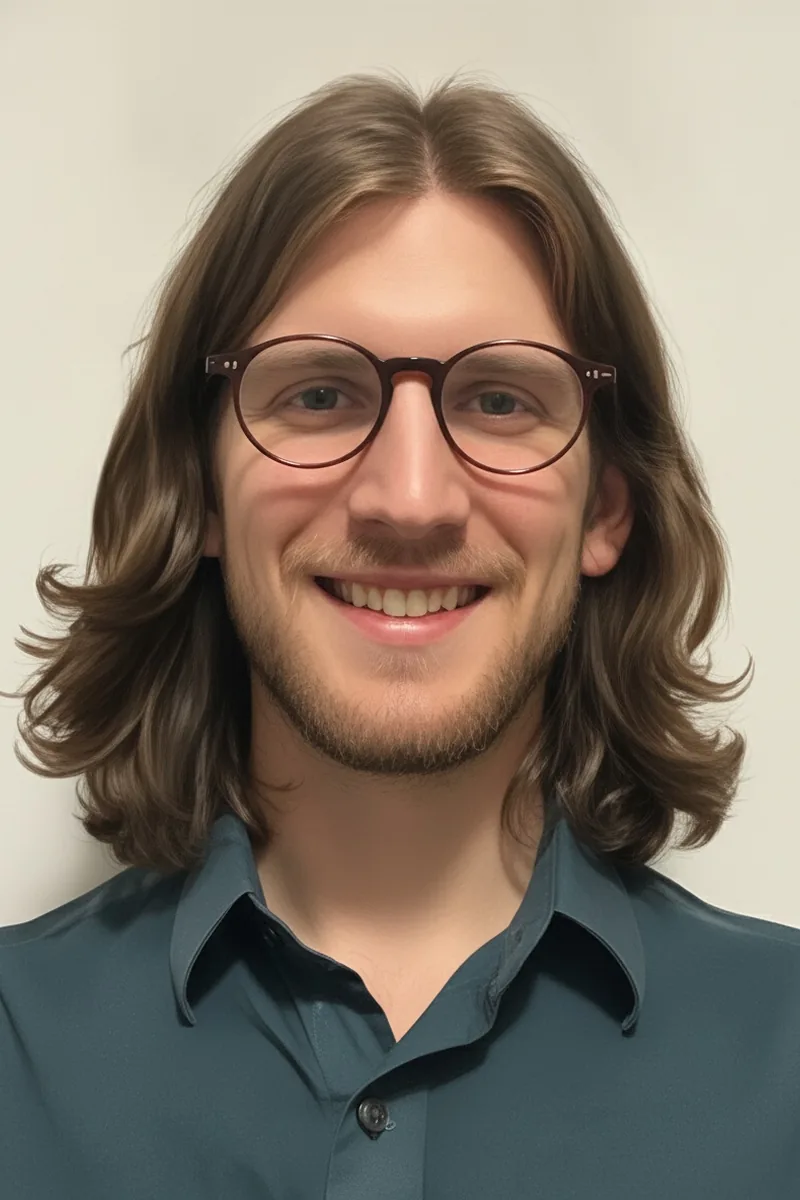
Reid treats science as a way of thinking rather than a collection of facts to memorize. He walks students through how to read data tables, design controlled experiments, and connect observations to underlying principles — the same analytical habits that show up across biology, chemistry, and earth science courses.
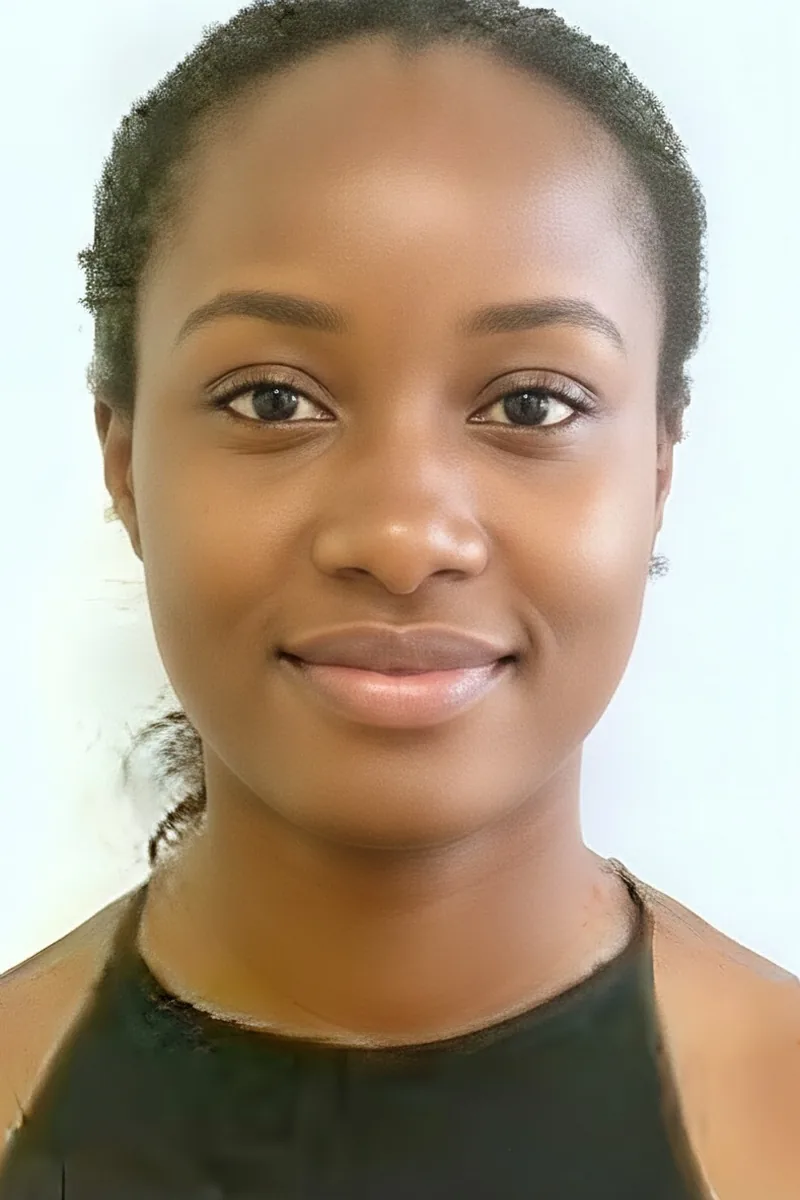
Sociology research at Harvard meant Solange spent years designing surveys, analyzing datasets, and defending conclusions in front of professors who demanded airtight reasoning — all of which is applied scientific method, even if the subject matter was social rather than physical. She's especially effective at teaching students to distinguish correlation from causation and to read charts and graphs with a critical eye, since those skills were daily requirements in her coursework. Her 34 ACT confirms she can handle the quantitative side of science just as comfortably as the conceptual.
Applied math and computer science at Johns Hopkins means Sabira spends her days quantifying patterns and testing models — the same core loop students encounter in science when they're asked to measure, predict, and explain. She's particularly strong on the computational side of science: reading data tables, graphing relationships, and working through the math embedded in physics or chemistry problems. Holds a 5.0 rating.
Daniel's sociology degree means he spent years learning to design surveys, analyze demographic data, and apply the scientific method to real human behavior — skills that translate naturally when teaching students how to form hypotheses, control variables, and interpret results in a general science context. He's especially comfortable helping students who freeze up at graphs and data tables, since reading quantitative evidence was a daily requirement in his coursework. Holds a 5.0 rating.
A statistics and machine learning certificate at Princeton means Julie spends her coursework building models, testing hypotheses against real data, and evaluating whether results are statistically meaningful — all of which is applied scientific reasoning. She brings that quantitative rigor to science tutoring, especially when students need to move from memorizing definitions to actually interpreting experiments, reading graphs, and explaining what their data means. Her 4.9 rating suggests the approach lands.
A Yale education heavy on critical reading and analytical writing gave Maya the tools to tackle science from the comprehension side — parsing dense passages, extracting key claims from lab descriptions, and explaining results in clear, organized language. She's particularly useful for students who understand the concepts but freeze when asked to write up an experiment or interpret what a data table is actually saying. Holds a 5.0 rating.
A physics major at Yale, Ian brings the real thing to science tutoring — actual lab experience with controlled experiments, quantitative analysis, and the kind of cause-and-effect reasoning that underpins every branch of science from biology to earth science. He's particularly strong at walking students through the quantitative side: reading graphs, converting units, and making sense of formulas that feel intimidating until someone shows you what each piece actually represents. His 1550 SAT confirms the cross-disciplinary reasoning chops to back it up.
Allen's interdisciplinary degree from Yale — blending economics and political science — required constant work with data sets, statistical models, and evidence-based argumentation, all of which translate naturally to teaching students how to interpret scientific data and reason through cause-and-effect relationships. He's especially strong at demystifying the quantitative side of science, like reading graphs and evaluating whether experimental evidence actually supports a conclusion, since his own coursework (and a 1570 SAT) demanded exactly that kind of analytical precision.
Rachel's history training — sifting through conflicting sources, weighing evidence, and building arguments from incomplete information — mirrors the critical thinking science coursework actually tests, especially when students need to evaluate hypotheses or explain what an experiment's results do and don't prove. Her 34 ACT confirms she can handle the data-interpretation and quantitative reasoning that show up across science topics. She's a strong fit for students who need someone to walk them through reading charts, understanding variables, and writing clear explanations of their observations.
While science isn't her core subject area, Michelle's strength is in reading comprehension and analytical thinking — skills that matter enormously when students are interpreting lab data, understanding textbook passages, or answering science questions on standardized tests. Her study-skills toolkit and structured approach to breaking down unfamiliar material translate well to elementary and middle school science concepts.
Noah's philosophy training built the exact logical scaffolding science demands — constructing arguments from premises, identifying flaws in reasoning, and distinguishing what evidence actually proves from what it merely suggests. He applies that same rigor to teaching students how to evaluate hypotheses, trace cause-and-effect in experimental setups, and articulate conclusions that go beyond restating observations. His 1540 SAT confirms he handles data interpretation and evidence-based reasoning at a high level.
Three philosophy degrees trained Moon to do exactly what science demands at its core: construct logical arguments, evaluate evidence, and identify when a conclusion doesn't actually follow from the data. That rigorous analytical habit makes her especially effective at walking students through hypothesis testing, experimental design, and interpreting results — the reasoning skills that separate students who understand science from those just memorizing facts. Holds a 5.0 rating.
While science isn't David's primary lane, his economics and business background gave him strong skills in data interpretation, graphing, and hypothesis testing — tools that transfer directly to lab reports and scientific reasoning. He's a good fit for students who need structured support reading charts, understanding experimental design, or connecting evidence to conclusions.
A Classics degree means Sarah spent years parsing Latin scientific terminology at its roots — a skill that makes decoding unfamiliar vocabulary in biology, chemistry, and earth science far less intimidating for students encountering terms like "photosynthesis" or "endothermic" for the first time. She also brings strong reading comprehension to the table, which matters more than most people realize when students need to pull key information from dense textbook passages or interpret what a lab procedure is actually asking them to do.
Dana's biology coursework and her 36 ACT — which includes a perfect Science section score — mean she knows how to break down experiment-based passages, data tables, and scientific reasoning across life and physical sciences. She treats science as a reading and logic challenge, teaching students to identify variables, interpret graphs, and connect evidence to conclusions rather than relying on memorization alone.
A philosophy degree trains you to do something science also demands: take a claim, stress-test it against evidence, and figure out whether the reasoning actually holds up. Lucas applies that same logical rigor to teaching students how to work through hypotheses, interpret what an experiment's results are really saying, and spot the difference between a supported conclusion and a lucky guess. His 1480 SAT confirms he handles the quantitative and data-reading side of science just as comfortably.
A math degree from Brown means Violet spent years doing the quantitative heavy lifting that underpins science — unit conversions, interpreting graphs, and translating word problems into equations — so she's especially useful when students hit the calculation-dense parts of physics or chemistry units. She breaks formulas down into simple, logical steps rather than treating them as things to memorize, which tends to unstick students who understand the concepts but freeze when numbers enter the picture.
Because neuroscience sits at the intersection of biology, chemistry, and physics, Anna's degree gave her unusually broad science fluency. She connects concepts across disciplines — explaining, for instance, how electrical circuits relate to neural signaling or how chemical equilibrium applies to neurotransmitter dynamics. Her 5.0 rating speaks to how well that cross-disciplinary lens clicks for students.
Manolya's computer science and math training at MIT gives her a structured, analytical lens that translates well to general science topics like experimental design, data interpretation, and quantitative reasoning. She's especially strong at teaching students how to read graphs, set up unit conversions, and connect formulas to what's physically happening.
Studying religion and philosophy at Pomona College meant Miranda spent four years doing exactly what good science students do — examining claims, weighing evidence, and constructing arguments that hold up under scrutiny. She applies that same logical rigor to teaching students how to work through hypotheses, interpret results, and explain their reasoning clearly. Her 1560 SAT and 5.0 rating back up the analytical sharpness she brings to the table.
A biology major at Washington University in St. Louis, Laura has spent semesters deep in lab work, data analysis, and courses spanning chemistry, physics, and evolutionary biology. She breaks scientific concepts down by connecting them to observable, everyday phenomena — explaining osmosis through cooking or Newton's laws through sports — so the vocabulary and equations carry real meaning.
As a premed student at Cornell, Tameem is deep in the sciences right now — biology, chemistry, and the quantitative reasoning that ties them together. He's particularly effective at teaching students how to interpret data, set up unit conversions, and connect lab observations back to the underlying concepts.
Duncan's geography research at UBC and as a Fulbright scholar in Bulgaria required serious engagement with earth systems, climate data, and ecological processes — the same material that shows up in middle and high school science courses. He teaches students to read data critically and connect observations to underlying mechanisms rather than treating science as a list of vocabulary terms.
Working as an educator at the Rubin Museum of Art meant Harry regularly translated complex exhibit content — including topics in natural history, ecology, and physical science — into accessible explanations for visitors with zero background knowledge. That same skill applies when he teaches students to unpack scientific vocabulary, trace cause-and-effect in a reading passage, or explain an experiment's outcome in plain language. His Northwestern communications training keeps the emphasis on clarity: if you can't explain it simply, you don't understand it yet.
Ben's Dartmouth English training built a skill that quietly powers science success: the ability to read dense, unfamiliar material carefully and extract exactly what matters. He applies that close-reading discipline to helping students parse lab instructions, pull key information from textbook passages, and write up experimental conclusions in clear, precise language. His 5.0 rating suggests the approach lands.
Three chemistry-heavy degrees give Abismael a deep bench in physical, organic, and general chemistry, plus the physics and biology that overlap with engineering coursework. He's known for throwing curveball questions at students during sessions — not to trip them up, but to build the kind of flexible thinking that makes exam problems feel manageable.
Corey's undergraduate work in Brain Behavior & Cognitive Science at Michigan covered neuroscience, biology, and research methods — the same foundational topics that show up in high school science courses. He's especially comfortable with concepts like cell biology, the nervous system, and experimental design, and he teaches students to read scientific figures and interpret data rather than just memorize terminology.
An anthropology degree from Northwestern means Samantha spent years doing exactly what science asks students to do — observing systematically, collecting evidence, and building explanations for why things work the way they do. She's particularly good at teaching students to move from raw observations to structured conclusions, since ethnographic fieldwork runs on the same logic as a well-designed experiment. Her 33 ACT confirms she handles the quantitative and data-reading demands of science coursework with ease.
While science isn't Alexander's primary credential, his analytical training at Johns Hopkins and his year preparing charter school students for standardized tests — including science-adjacent reasoning sections — gave him a structured approach to breaking down scientific concepts. He's particularly effective at teaching students how to read data, interpret graphs, and connect observations to broader principles.
Earning departmental honors in philosophy at UCLA meant Willow spent years constructing and dismantling logical arguments — the same core skill students need when forming hypotheses, evaluating evidence, and explaining whether experimental results actually support a conclusion. Her 1440 SAT confirms she handles data and analytical reasoning comfortably, and she brings that precision to teaching students how to work through scientific processes step by step rather than treating them as facts to memorize.
A philosophy degree trains you to do one thing relentlessly: ask why — and that's exactly the habit Tim brings when walking students through scientific concepts like energy conversion, classification systems, or how variables interact in an experiment. His state teaching certification and master's in education mean he knows how to structure a lesson so the reasoning builds step by step, not just pile up as disconnected facts. Holds a 5.0 rating.
Esteban's math degree gives him the quantitative backbone that makes physical science and chemistry click — he can walk a student through stoichiometry, unit conversions, or motion equations without skipping the algebraic reasoning behind them. Teaching gifted students daily means he's practiced at pushing past surface-level answers and digging into the why behind scientific principles. Rated 5.0 by students.
Between her Cornell biology degree and her current nutrition research at Columbia, Rebecca has spent years immersed in chemistry, biology, and the overlap between them. She explains scientific concepts — cell respiration, chemical bonding, experimental design — by linking each topic to something tangible, turning a dense textbook chapter into a story that actually makes sense.
Robert's dual background in electrical engineering and physics means he doesn't just know the formulas — he's applied them in lab settings and real-world design problems. Whether a student is struggling with energy conservation, wave behavior, or circuit analysis, he connects the science to something tangible so the reasoning sticks beyond the test.
Growing up in Brooklyn with a Caribbean family meant Katarah absorbed a lot of informal science early — ocean ecosystems, tropical weather patterns, herbal remedies rooted in biology — and she draws on that curiosity when making science concepts feel relevant to students' own lives. Her Brown education emphasized interdisciplinary thinking, so she's comfortable walking students through the scientific method, reading data, and writing up observations with the same clarity she brings to literary analysis. Rated 5.0 by students.
Working as a research assistant at Penn's Positive Psychology Center means Jeanette runs actual experiments — controlling variables, collecting data, and drawing conclusions — which gives her a practitioner's grasp of the scientific method that she can walk students through step by step. Her psychology background is especially handy for the life science side of general science courses, where topics like the nervous system, genetics, and human behavior overlap directly with what she studies professionally.
A computer science major at Stanford, Winton brings the same systematic debugging mindset to science — when a student's understanding breaks down, he isolates exactly which concept isn't clicking, whether it's balancing forces in physics or tracing energy through a system. His 1590 SAT confirms he can handle the quantitative and analytical reasoning science demands, and his CS training means he's especially comfortable with the data interpretation and graph-reading skills that show up across every science discipline.
Ava's background is rooted in education rather than a specific science discipline, which actually gives her an advantage when a student is lost: she understands the learning process itself. Her Harvard training in cognitive development means she can pinpoint whether a student is struggling with the content, the vocabulary, or the way information is being presented, then adjust accordingly.
Having earned both a pharmacy degree and a master's in epidemiology, Mona doesn't just recite textbook definitions — she explains why a cell membrane is selectively permeable or how the water cycle connects to disease transmission because she's used that knowledge professionally. She covers everything from elementary life sciences to college-level biology and earth science, adapting the depth to each student's level.
An MFA in acting might not scream 'science tutor,' but Matt's 34 ACT required him to tear through data interpretation and experimental reasoning under pressure — and his economics training at the undergraduate level built real fluency with graphs, variables, and quantitative analysis. He's strongest when a student needs to slow down and actually read what a chart is telling them before jumping to conclusions.
Testimonials
Because the right Science tutor makes all the difference.
Average Session Rating – Based on 3.4M Learner Ratings
Practice Science
Free practice tests, flashcards, and AI tutoring for Science
Other Brooklyn Tutors
Related Science Tutors in Brooklyn
Frequently Asked Questions
During the first session, a tutor will assess your current understanding of science concepts, identify specific areas where you're struggling, and learn about your learning style and goals. This helps create a personalized plan tailored to your needs—whether you're building foundational skills in biology, mastering physics problem-solving, or preparing for AP exams. You'll walk away with a clear sense of how personalized instruction will help you improve.
Many students struggle with translating abstract concepts into real-world applications, especially in physics and chemistry where visualization is critical. Others find it difficult to keep up with the pace of classroom instruction or don't get enough practice with problem-solving techniques. Personalized tutoring addresses these gaps by allowing tutors to slow down, use targeted examples, and give you repeated practice with concepts until they stick.
Tutors in Brooklyn are familiar with New York State science standards and the specific curricula used across the city's 801 schools. Whether you're working on middle school life science, high school Regents exams (Living Environment, Earth Science, Chemistry, Physics), or AP courses, tutors can align instruction with what you're learning in class. This ensures tutoring reinforces classroom learning rather than creating confusion with different approaches.
In a classroom with an 11.7:1 student-teacher ratio, teachers must pace instruction for the whole group, which means some students get left behind while others don't get challenged enough. Personalized tutoring lets you move at your own speed, spend extra time on difficult concepts like stoichiometry or photosynthesis, and get immediate feedback on your thinking. Tutors can also customize explanations and examples to match how you learn best, rather than using a one-size-fits-all approach.
Yes. Tutors can help you master the specific content and question types on Regents exams in Living Environment, Earth Science, Chemistry, and Physics. They'll focus on areas where you're weakest, teach you test-taking strategies, and give you practice with past exam questions so you feel confident on test day. Many students see significant score improvements with targeted Regents prep tutoring.
Absolutely. Tutors can help you understand the reasoning behind lab procedures, how to analyze data, and how to communicate findings clearly—skills that are critical for both classroom labs and standardized assessments. Whether you're learning how to write a proper hypothesis, interpret graphs, or troubleshoot an experiment, personalized instruction helps you build confidence in the lab and in writing lab reports.
Yes. Tutors connect with students preparing for AP Biology, AP Chemistry, AP Physics, and AP Environmental Science. They can help you master complex topics, develop strong problem-solving skills, and practice with released AP exam questions. Personalized tutoring is especially valuable for AP science because these courses move quickly and require both deep conceptual understanding and the ability to apply knowledge to unfamiliar scenarios.
Pricing varies based on the tutor's qualifications, your grade level, and the complexity of the subject matter. When you connect with Varsity Tutors, we'll match you with tutors whose rates fit your budget and discuss what works best for your situation. Most students start with 1-2 sessions per week and adjust frequency based on their progress and upcoming exams.
Let’s find your perfect tutor
Answer a few quick questions. We’ll recommend the right plan and match you with a top 5% tutor.