Award-Winning Pre-Calculus Tutors
serving Bronx, NY
Pre-Calculus
Tutors in Bronx
Private 1-on-1 tutoring, weekly live classes for academic support, test prep & enrichment, practice tests and diagnostics, and more to elevate grades and test scores.
Based on 3.4M Learner Ratings
UniversitiesSchools & Universities
DeliveredHours Delivered
ProficiencyGrowth in Proficiency
Who needs tutoring?
No obligation. Takes ~1 minute.
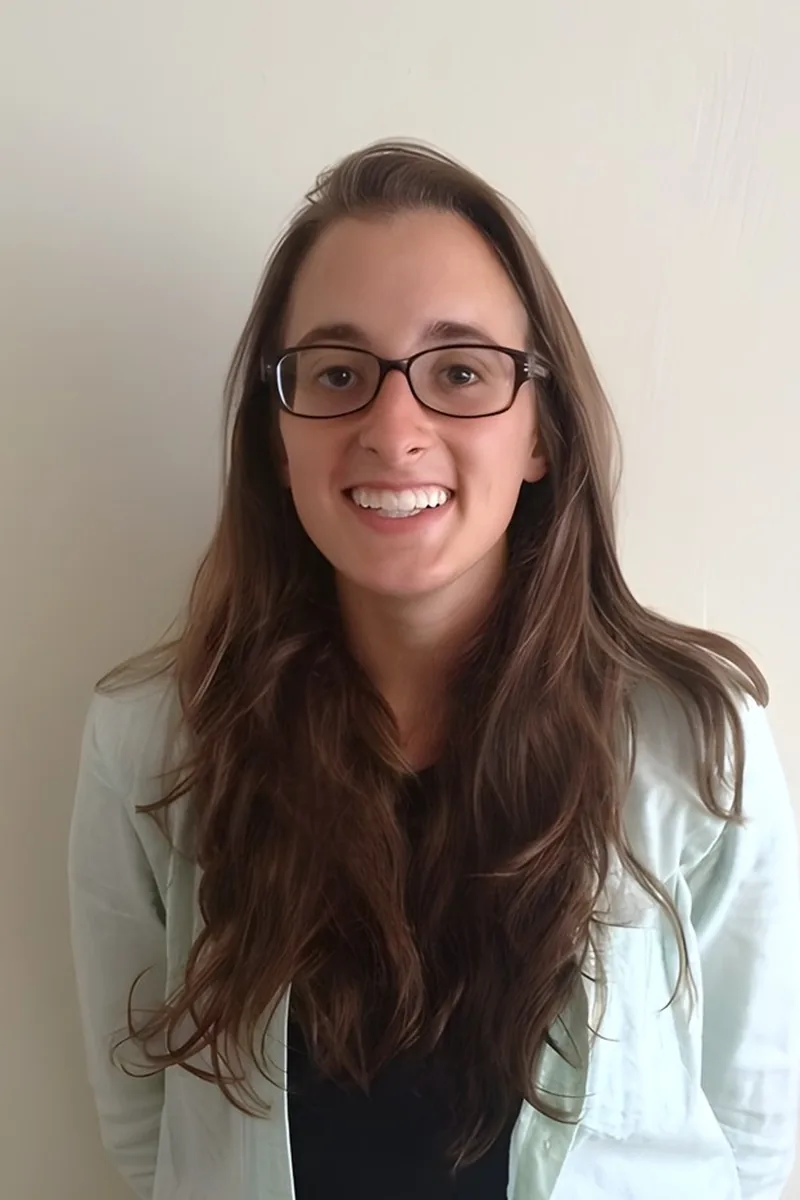
A double major in biology and anthropology at Fordham meant Laura spent semesters toggling between quantitative modeling and analytical writing — and pre-calculus sat right at the center, supplying the exponential growth curves for population genetics and the logarithmic scales for field data analysis. She zeroes in on helping the transition from mechanical algebra to genuine functional thinking, especially around graphing transformations and interpreting composite functions. Her 1530 SAT and 5.0 rating back that up.
Charles teaches pre-calculus with a focus on the transition points where students typically stall — moving from memorizing trig ratios to actually understanding the unit circle, or seeing why composite and inverse functions behave the way they do. His broad math teaching range, from arithmetic through calculus, means he can quickly spot which algebra skills need reinforcing before a new concept will land. Rated 4.9 by students.
The jump to pre-calculus trips up a lot of students because it demands fluency with trigonometric identities, limits intuition, and function transformations all at once. Gregory approaches each concept by connecting it to the one before it — showing, for instance, how polynomial behavior predicts what rational functions will do. His economics background means he's comfortable with the applied math that makes pre-calc topics feel purposeful rather than abstract.
The leap from algebra to calculus hinges on pre-calc topics like limits, trigonometric identities, and function transformations — and rushing through them creates gaps that surface later. Cole approaches pre-calculus as deliberate preparation, making sure students understand why a rational function behaves a certain way near an asymptote before ever seeing a derivative.
Having taught everything from elementary math through multivariable calculus, Jonathan knows exactly which algebraic skills need to be rock-solid before pre-calculus concepts like rational functions and trigonometric identities will stick — and he can spot those gaps quickly. His math degree means he doesn't just demonstrate procedures; he digs into why a transformation shifts a graph the way it does or how the structure of a polynomial dictates its end behavior. That big-picture wiring is what turns pre-calc from a disconnected checklist into genuine preparation for calculus.
Jonathan's math degree gives him a clear view of how pre-calculus concepts like sequences, series, and parametric equations actually function as calculus prerequisites — not just standalone topics to survive. He teaches students to read graphs and manipulate composite functions with the kind of fluency that makes the first week of calculus feel familiar instead of foreign. Rated 5.0 by students.
A PhD in physics means Muhammed has taught and used pre-calculus concepts — trigonometric decomposition, vector analysis, conic sections — as foundational tools across mechanics, electromagnetism, and wave theory for years. He approaches the course by showing students the structural logic that connects each topic, so something like polar-to-rectangular conversion or composite function behavior becomes a reasoning skill rather than a disconnected procedure. Rated 4.6 by students.
An economics major with minors in both mathematics and psychology, Vicquaja approaches pre-calculus from the intersection of quantitative modeling and how people actually learn — she knows that a concept like polynomial end behavior or rational function asymptotes won't stick unless the student sees the reasoning, not just the rule. She teaches the course with an eye toward building each new idea out of the algebra students already have confidence in, which makes the jump to limits and calculus feel like a natural next step. Rated 4.7 by students.
A philosophy major at Princeton with a certificate in Statistics and Machine Learning, Julie approaches pre-calculus proofs and function analysis with the logical rigor her coursework demands — she's especially sharp at breaking down the 'why' behind trigonometric identities and limit intuition before students hit calculus. She teaches across the full math ladder from elementary through Calculus II, so she knows exactly which algebraic instincts need to be solid and which conceptual leaps trip students up at the pre-calc stage. Rated 4.9 with a 1570 SAT.
Mechanical and aerospace engineering at Princeton means Matthew is constantly applying the trigonometric relationships, parametric equations, and function transformations that pre-calculus introduces — they're the building blocks of orbital mechanics and fluid dynamics problems he tackles in coursework. His teaching style is deliberately hands-on: he walks through a concept step by step, then puts students in the driver's seat with progressively harder problems, catching misunderstandings in real time. A 34 ACT confirms the quantitative instincts behind that approach.
A year as a course assistant in Harvard's math department teaching introductory calculus gave Richard a sharp sense of exactly which pre-calculus skills — polynomial end behavior, composite functions, rate-of-change intuition — students need locked down before day one of calc. He teaches those topics with that forward view, connecting each piece to where it's actually headed so nothing feels like busywork. His 36 ACT and 1600 SAT confirm the quantitative range behind that perspective.
The moment pre-calculus shifts from familiar algebra into rational functions, sequences, and trigonometric identities, many students lose their footing — Vansh tackles that transition by making each new concept feel like a natural extension of what came before. His finance background at WashU means he thinks in terms of models and projections built on the same exponential and logarithmic frameworks students are learning to navigate. A 1550 SAT and 4.8 rating confirm he delivers on that approach.
The jump into pre-calculus — trigonometric identities, limits, and complex functions — trips up even strong math students who breezed through earlier courses. Julia breaks these topics into logical building blocks, connecting each new idea back to the algebra and geometry students already know. Her Stanford coursework in economics and quantitative methods keeps her sharp on exactly the kind of function analysis pre-calc demands.
Engineering physics at Cornell means Daniel is currently neck-deep in the material that grows directly out of pre-calculus — and he remembers exactly where the conceptual jumps tripped him up, from grasping how polynomial end behavior works to internalizing why the unit circle isn't just a memorization exercise. He tackles those sticking points by connecting each new idea to the algebra underneath it, building toward calculus-readiness one concept at a time. Holds a 5.0 rating and a 1520 SAT.
Phillips Exeter's math program is built around problem sets that force students to derive concepts before seeing formal definitions — and that training shaped how Violet teaches pre-calculus topics like rational functions, sequences, and the behavior of composite expressions. Her BS in Mathematics from Brown means she's carried these ideas through multivariable calculus and beyond, so she can pinpoint exactly where a pre-calc concept is headed and why mastering it now saves real pain later. Her 1550 SAT confirms the quantitative sharpness behind that long-view approach.
Materials science at Brown is essentially applied pre-calculus — Shun uses trigonometric functions to model crystal lattice orientations, exponential decay to describe diffusion processes, and logarithmic relationships to analyze phase transformations. That hands-on familiarity means he teaches topics like function behavior and graphical transformations as tools he actually reaches for, not abstract exercises to memorize. His 1590 SAT and 4.9 rating confirm the precision behind his approach.
Most pre-calculus students already know more algebra than they realize — the trick is seeing how those skills extend into trigonometric reasoning, limits of sequences, and the behavior of rational expressions. Laura, a biology and French double major at WashU with a 35 ACT, teaches the course by bridging what's familiar to what's new, especially when it comes to function transformations and the unit circle. Rated 5.0 by students.
A geography master's degree might seem unrelated to pre-calculus, but Duncan's research at UBC leaned heavily on quantitative spatial analysis — the kind that demands real command of function transformations, logarithmic scaling, and trigonometric relationships. He teaches these topics by building the conceptual bridge between algebra and calculus, making sure students understand *why* a transformation shifts a graph before worrying about memorizing the rules. Rated 5.0 by students.
Eric's ecology and evolutionary biology background means he's modeled population dynamics with logistic curves, analyzed species distributions using exponential and logarithmic functions, and applied periodic models to seasonal data — all core pre-calculus material in a research context. He zeroes in on how function families actually behave, teaching students to read a graph's story through its asymptotes, end behavior, and transformations rather than treating each topic as an isolated formula to memorize. His 1520 SAT and 32 ACT confirm the quantitative range behind that approach.
Three engineering degrees with a specialization in applied mathematics mean Rahi has worked through pre-calculus material so many times it's become second nature — particularly the interplay between polynomial behavior, rational expressions, and the trigonometric reasoning that holds higher math together. He zeroes in on the algebraic structure underneath each topic, teaching students to see why a transformation or identity works so the leap into calculus feels like a natural next step. His 34 ACT confirms the quantitative depth behind that approach.
The jump to pre-calculus is really a jump in abstraction — suddenly students need to think about function behavior, limits of trigonometric identities, and how polynomial end behavior connects to graphing. Manolya studied mathematics and computer science at MIT, so she approaches these topics with both theoretical depth and a knack for making complex relationships visual and concrete.
The jump from algebra to pre-calculus — trigonometric identities, polar coordinates, sequences and series — trips up students who've relied on memorizing procedures. Samantha teaches the underlying logic so that verifying a trig identity or graphing a rational function becomes a reasoning exercise, not a guessing game. She scored a 1490 on the SAT and brings that same precision to every session.
The jump from algebra to pre-calculus trips up a lot of students, especially when trigonometric functions and limits enter the picture. Molly's self-described hobby of studying math beyond her arts curriculum means she genuinely enjoys unpacking these topics, and her teaching instincts — sharpened through years of music instruction — keep explanations clear and paced to each student's needs.
Rachelle's physiology degree from UCLA required navigating the exact mathematical terrain pre-calculus covers — modeling muscle contraction with sinusoidal functions, tracking hormone concentrations through exponential decay, and composing multi-step biological relationships as nested functions. That science background means she teaches topics like transformations and trigonometric identities by connecting them to systems students can visualize, not just rules to memorize. Rated 5.0 by students.
Engineering at Stanford means Zora is constantly working through the pre-calculus toolkit — polynomial behavior, trigonometric relationships, and function transformations — as prerequisites for the differential equations and linear algebra her coursework demands. She teaches these topics with the perspective of someone who knows exactly which skills will matter in calculus and which shortcuts will backfire. Her 1430 SAT and fluency across math, science, and multiple languages reflect the kind of cross-disciplinary thinking that makes abstract function concepts easier to internalize.
Neuroscience at Penn means Daniel spends his coursework translating biological phenomena into mathematical language — sinusoidal models for neural oscillations, exponential decay for membrane potentials, logarithmic curves for sensory perception thresholds. He teaches pre-calculus by making those function families feel like tools with real explanatory power, not just abstract graphs to memorize before calculus. His 1500 SAT and 5.0 rating back up the approach.
The leap from Algebra 2 to Calculus hinges on Pre-Calculus, where students need to internalize trigonometric identities, limits intuition, and function transformations. Dennis approaches each of these topics by showing how they connect forward to Calculus concepts, so students aren't just memorizing formulas — they're understanding why the material is structured the way it is.
I am a current undergraduate student at Cornell University. I began tutoring 4 years ago because I am passionate about helping students become confident in their academic skills and reach their academic goals. Each session with a student consists of consistent, guided instruction that fosters independence and confidence in their skills. While I can instruct in many subjects, I love to tutor in math and English.
The jump to Pre-Calculus is where students first encounter the idea that functions are objects you transform, not just equations you solve — and that shift in thinking trips up even strong math students. Laura spent her first two years at Princeton as a molecular biology major, which required heavy quantitative coursework, and she brings that comfort with trigonometric identities, sequences, and limit intuition to every session.
A math degree means Katharine didn't just pass through pre-calculus — she circled back to its core ideas repeatedly in upper-level coursework, which gives her a clear sense of exactly where students get tripped up on topics like rational functions and the algebra-to-trig transition. She zeroes in on the conceptual jumps that textbooks tend to rush, particularly building intuition around how transformations reshape parent functions. Her 1540 SAT confirms the quantitative precision behind that approach.
A Yale biochemistry degree means Sam spent semesters immersed in the quantitative reasoning that pre-calculus formalizes — modeling reaction kinetics with exponential and logarithmic functions, using trigonometric relationships to interpret molecular structures, composing functions to describe multistep biological processes. He teaches the course as a bridge rather than a checklist, connecting each new concept back to the algebraic intuition students already have so the jump to calculus feels like a natural next step. His 1530 SAT confirms the mathematical precision behind that approach.
Cornell's CS curriculum threw Mohammed straight into discrete math and linear algebra, but the pre-calculus toolkit — function composition, trigonometric reasoning, sequences and series — is what made that jump possible, and he remembers exactly where the sticking points were. He tackles the course by connecting each new concept back to the algorithmic thinking his CS training sharpened, showing students how to break a complex problem into smaller, logical steps. His 1490 SAT confirms the quantitative fluency behind that approach.
Cornell's biology curriculum threw Drishti straight into the quantitative deep end — growth models, dose-response curves, and data analysis that all demand comfort with the exponential, logarithmic, and trigonometric functions pre-calculus introduces. She zeroes in on how these function families actually behave and transform, building the kind of intuition that makes calculus feel like a natural next step rather than a cliff. Her 1500 SAT and 5.0 rating back up that approach.
Katherine's SAT math score of 1500 confirms she can handle the quantitative reasoning pre-calculus demands, and her arts background gives her an unusual edge when teaching topics like sinusoidal modeling — she naturally connects periodic functions to the wave patterns in music and sound. She walks students through function transformations and logarithmic relationships by emphasizing the visual and intuitive logic behind each concept.
After years as a Wall Street research executive building financial models packed with polynomial trends, exponential projections, and logarithmic scaling, Frank switched to teaching — and pre-calculus is where that career translates most directly. He tackles topics like rational functions and sequences by grounding them in the quantitative reasoning he used daily in equity research, giving students a concrete sense of why these tools exist. His MBA and broad math teaching range mean he can meet a struggling algebra student or an advanced one eyeing calculus with equal precision.
Limits, trigonometric identities, and the behavior of composite functions all converge in pre-calculus, making it one of the most concept-dense courses before college math. Ryan breaks these topics into digestible pieces, drawing on the mathematical rigor his Cornell computer science program demands to show students not just the how but the underlying structure.
Chemical engineering at Cornell throws Jonathan into differential equations and reactor modeling that all trace back to the function behavior, limits intuition, and trigonometric reasoning pre-calculus is supposed to build. He zeroes in on graphing transformations and rational functions — two areas where students often memorize steps without understanding the underlying logic — and connects each concept to the calculus ideas waiting on the other side. His 34 ACT reflects the quantitative instincts he brings to breaking down those connections.
Currently applying to PhD programs in applied mathematics, Romeo has spent years living inside the material that pre-calculus is building toward — which means he teaches topics like polynomial end behavior, trigonometric identities, and rational function analysis with a clear sense of exactly where each concept lands in the bigger mathematical picture. His 1510 SAT reflects that quantitative depth, and his teaching range from elementary math through multivariable calculus and differential equations means he can trace any pre-calc concept back to its algebraic roots or forward into the calculus it's preparing students for.
Holding a master's in applied mathematics, Victor has taught every course in the algebra-to-calculus pipeline — which means he knows exactly where pre-calculus fits and what it needs to set up. He zeroes in on the transition points that trip students up, like moving from manipulating expressions to analyzing how rational and trigonometric functions actually behave as systems. Rated 5.0 by students.
The jump into pre-calculus — limits intuition, trigonometric identities, analyzing rational and logarithmic functions — trips up students who coasted through earlier math courses. Rachel's math education background means she can pinpoint exactly which foundational gaps are causing confusion and address them alongside the new material. She teaches through discovery and targeted practice, connecting each pre-calc concept back to the algebra skills supporting it.
Testimonials
Because the right Pre-Calculus tutor makes all the difference.
Average Session Rating – Based on 3.4M Learner Ratings
Practice Pre-Calculus
Free practice tests, flashcards, and AI tutoring for Pre-Calculus
Nearby Pre-Calculus Tutors
Other Bronx Tutors
Related Math Tutors in Bronx
Frequently Asked Questions
Pre-Calculus shifts from just memorizing procedures to understanding why those procedures work. You'll move from solving equations mechanically to analyzing functions, exploring patterns, and connecting concepts across topics like trigonometry, exponentials, and logarithms. This deeper conceptual understanding is what prepares you for Calculus, where you'll need to think about rates of change and limits rather than just follow steps.
Many students struggle with word problems that require translating real-world scenarios into equations, multi-step problems that combine several concepts, and graphing functions without a calculator to understand their behavior. Trigonometry—especially unit circle concepts and identities—and logarithms also trip up a lot of students because they feel disconnected from earlier algebra work. Personalized tutoring helps you see how these topics connect and build problem-solving strategies that stick.
Showing work isn't just about getting the right answer—it demonstrates your reasoning and helps identify where mistakes happen. In Pre-Calculus, the process matters because you're learning to justify your steps and explain your thinking, skills that are essential for Calculus and beyond. A tutor can help you develop clear, organized problem-solving strategies and teach you how to communicate your mathematical thinking effectively.
While most Pre-Calculus courses cover core topics like functions, trigonometry, and exponentials, the order and emphasis can vary between textbooks and schools. Across Bronx schools, you might encounter different approaches to teaching these concepts. Varsity Tutors connects you with tutors who understand multiple curriculum approaches and can adapt their teaching to match your specific textbook and school's pacing, ensuring you're prepared for assessments and the next level.
Many students memorize graphing rules without understanding what they mean visually. A tutor can help you see how changes to an equation translate to shifts, stretches, and reflections on a graph, and why certain functions behave the way they do. Building this visual intuition makes it easier to tackle unfamiliar problems and prepares you to understand derivatives and integrals in Calculus.
Math anxiety often comes from feeling lost or behind, but personalized 1-on-1 instruction gives you a safe space to ask questions without judgment and work at your own pace. A tutor can break down intimidating topics into manageable pieces, celebrate small wins, and help you see that Pre-Calculus concepts are learnable. As you understand more and solve problems successfully, confidence naturally builds.
Your first session is about getting to know each other and assessing where you stand. The tutor will ask about your current Pre-Calculus topics, what's challenging you most, and what your goals are—whether that's improving your grade, preparing for a test, or building a stronger foundation. From there, they'll create a personalized plan that targets your specific needs and learning style.
Varsity Tutors connects you with expert tutors who have strong Pre-Calculus expertise and understand how to teach it effectively. We consider your learning style, schedule, and specific challenges to find a tutor who's a great fit for you. You can also review tutor profiles and get matched with someone whose teaching approach resonates with how you learn best.
Let’s find your perfect tutor
Answer a few quick questions. We’ll recommend the right plan and match you with a top 5% tutor.