Award-Winning Science Tutors
serving Wichita, KS
Science
Tutors in Wichita
Private 1-on-1 tutoring, weekly live classes for academic support, test prep & enrichment, practice tests and diagnostics, and more to elevate grades and test scores.
Based on 3.4M Learner Ratings
UniversitiesSchools & Universities
DeliveredHours Delivered
ProficiencyGrowth in Proficiency
Who needs tutoring?
No obligation. Takes ~1 minute.

Elementary teaching programs cover more science pedagogy than most people realize — Ayesha's coursework included designing hands-on experiments, teaching life and earth science concepts to young learners, and assessing whether students can actually explain a process rather than just label a diagram. That classroom-ready training means she knows how to make topics like plant life cycles, states of matter, and weather systems concrete and interactive instead of abstract. Rated 5.0 by students.
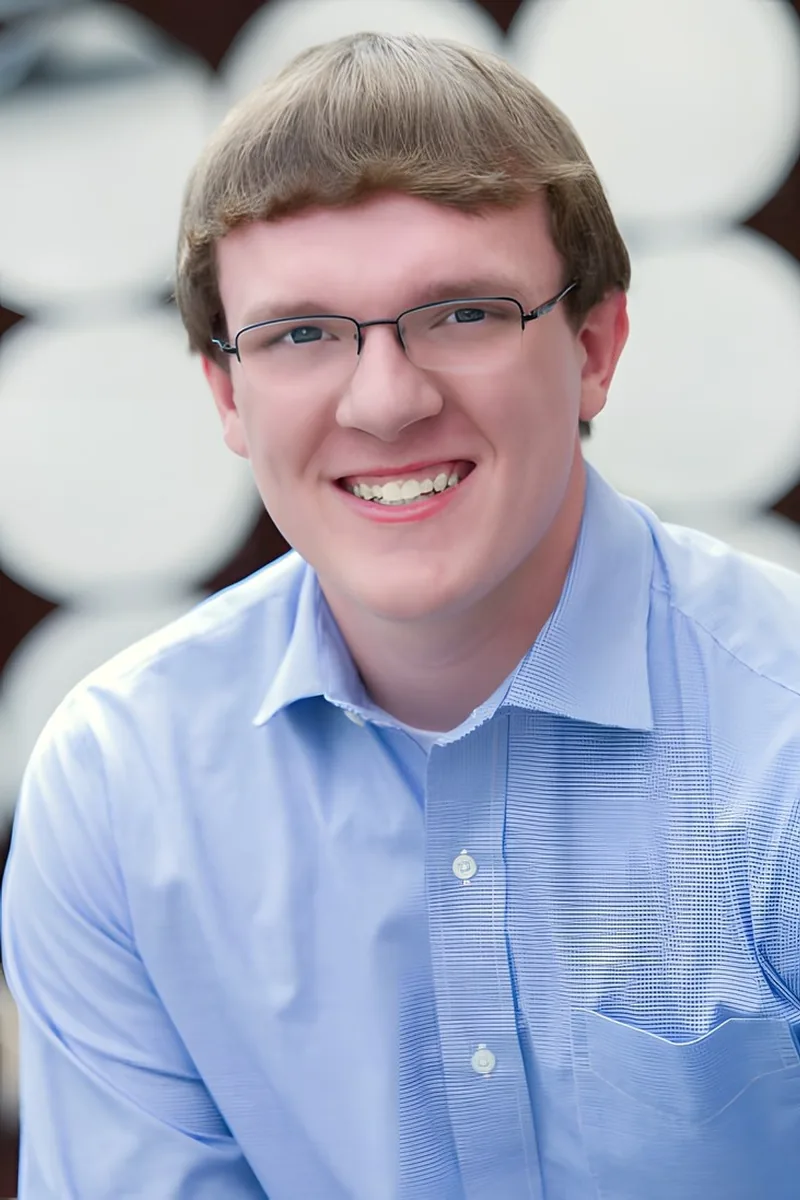
From Newton's laws to thermodynamics to basic chemistry, Jeffrey's mechanical engineering PhD gives him daily fluency with the core sciences students encounter in middle and high school. He connects abstract concepts — like conservation of energy or force diagrams — to tangible engineering examples that make the ideas stick long after the exam.
Jeff's political science coursework at Washington University in St. Louis involved plenty of evidence evaluation and argument construction, but his 32 ACT — which includes the Science section's rapid-fire data interpretation passages — shows he can handle graphs, experimental summaries, and conflicting viewpoints under pressure. He teaches students to treat science questions the way a debater treats a claim: find the evidence first, then decide what it actually proves.
Studying neuroscience at Northwestern means Atrik lives inside biology, chemistry, and experimental design every day. He unpacks scientific concepts — cellular processes, chemical reactions, data interpretation — by tying them back to real research examples, which makes abstract material feel concrete and testable.
Currently in a six-year BA/MD program, Evelyn lives science daily — from microbiology and neurobiology coursework to hands-on clinical learning. She breaks down tough concepts like cell signaling pathways or organ system physiology by tying them to real medical cases, which makes the material click instead of just sitting on a flashcard.
An astrophysics degree means Andrew learned science the hard way: deriving equations from first principles, interpreting real data sets, and connecting abstract theory to physical phenomena. He brings that same rigor to tutoring, whether a student is tackling Newton's laws for the first time or sorting through energy transfer in a chemistry context.
A PhD in French Studies might not scream science, but Dorthea's philosophy certification and critical theory research trained her to do exactly what science demands: evaluate claims, weigh evidence, and build airtight logical arguments from observation. She's especially useful for students who can handle the content but struggle to write clear lab reports or explain their reasoning — seven years of teaching at UCLA and the University of Kansas means she knows how to get ideas out of someone's head and onto the page.
Ariana's teaching certifications span multiple disciplines, including health and social studies, which ground her in the life sciences and scientific reasoning that younger students encounter. She approaches science topics by connecting vocabulary and concepts to real-world examples — turning abstract ideas about ecosystems, the human body, or the scientific method into something students can actually talk through and explain.
I am Chad Bergman, a current Dartmouth student pursuing my Bachelor's in Economics with a physics minor. I have experience tutoring college economics in person on Dartmouth campus as well as online tutoring in high school calculus and physics. I've had great success on the SAT and ACT as well as my AP tests in high school, and I hope to help others succeed as well. My favorite subject to tutor is physics because I feel like learning to apply a few fundamental principles to different real world situations is extremely useful in any discipline. While tutoring I try to help students master the fundamentals so they can apply them to the material we're working on as well as future material. Outside academia, I help look after my four siblings and play more League of Legends online than is perhaps healthy.
Reading a data table or interpreting an experimental setup is a skill that trips up students who actually know the science content. Maddie approaches science the same way she tackles the ACT Science section: teaching students to pull key variables from graphs, distinguish between correlation and causation, and identify what a control group actually controls for.
Emma earned a 35 ACT, which means she handled the Science section's rapid-fire data interpretation — reading conflicting experiments, comparing graphs, and evaluating competing hypotheses — at a near-perfect level. She applies that same read-the-evidence-first approach to general science tutoring, walking students through how to pull meaning from charts and diagrams before jumping to conclusions. Rated 5.0 by students.
Cameron's science tutoring draws on his experience as a broad-subject tutor at Kansas State, where he covered subjects including geology alongside his English coursework. He's strongest at the reading and reasoning side of science — interpreting data tables, understanding experimental design, and translating dense scientific language into something a student can actually parse. For students who struggle more with the literacy demands of science than the formulas, he's a natural fit.
A chemical engineering degree covers a surprising amount of ground — thermodynamics, fluid mechanics, reaction kinetics, materials science — which means Dane can speak to both chemistry and physics concepts with real depth. He walks students through problem-solving by linking formulas back to the physical phenomena they describe, making equations feel less arbitrary.
Kellor's ACT score of 33 required quick, accurate reasoning through the Science section's dense graphs and conflicting viewpoints — and that's the same skillset he brings to general science tutoring. He teaches students to slow down and actually read what a data table is telling them before jumping to conclusions, a habit that pays off whether they're tackling biology worksheets or chemistry labs. Holds a 5.0 rating.
Megan's political science coursework at the University of Kansas involves the same core skills science classes test — evaluating evidence, identifying cause-and-effect relationships, and constructing arguments from data rather than gut feeling. She's particularly good at walking students through how to read charts and graphs carefully and explain what the results actually show, since policy analysis demands that same precision. Rated 5.0 by students.
Cellular and molecular biology is Laynie's home base, but her chemistry minor means she's equally comfortable explaining atomic structure, chemical reactions, and the physical principles underlying biological systems. She digs into the "why" behind each concept — why cells divide the way they do, why certain elements bond — so that students build intuition instead of relying on rote memorization. That cross-disciplinary perspective is especially useful for students taking both biology and chemistry simultaneously.
A neurobiology major with experience teaching middle school through high school science, Chris connects concepts across biology, chemistry, and earth science rather than treating each unit as a silo. He unpacks topics like cellular respiration or chemical bonding by tying them to real physiological examples — the kind of cross-disciplinary thinking that makes science click for students who struggle with abstract material.
Holding a biology degree, Vince brings real fluency to life science topics like cell structure, genetics, and ecology, and he's comfortable crossing into chemistry and physics fundamentals as well. He explains scientific concepts by connecting them to observable, everyday examples — photosynthesis becomes a conversation about why leaves change color, not just a diagram to memorize.
The scientific method sounds simple until a student has to design a controlled experiment or interpret a data table on their own. Nikit studied biomedical engineering, which means he spent years running experiments and analyzing results across biology, chemistry, and physics. He teaches students to read graphs carefully, form testable hypotheses, and explain their reasoning in writing.
A third-year medical student with a behavioral neuroscience degree, Arianna brings real scientific fluency to topics like the scientific method, human body systems, and basic chemistry. She connects textbook concepts to tangible examples — explaining cell division through what actually happens when you get a cut, for instance. That kind of concrete detail makes science click for students who find the abstract version confusing.
Between cell biology, microbiology, biochemistry, and virology, Ashley covers an unusually wide slice of the life sciences — and she ties them together through the molecular mechanisms that underpin all of them. Students studying for exams or working through lab reports get someone who treats science as interconnected rather than compartmentalized. Rated 5.0 by students.
Studying behavioral neuroscience means Ashwini lives in the overlap of biology, chemistry, and research methods every day. She brings that firsthand lab experience into science tutoring, whether a student needs to understand the scientific method, interpret data tables, or grasp concepts like cell structure and energy transfer. Her 5.0 rating speaks to how clearly she breaks down complex material.
Art history might not scream science, but Andi's training in close visual analysis — examining details, identifying patterns, making evidence-based claims about what's in front of you — maps neatly onto skills like reading diagrams, interpreting data tables, and describing observations with precision. Her broad teaching range across math and reading also means she can tackle the two places students most often stall in science: the calculations and the dense textbook passages.
Currently finishing medical school at the University of Kansas, Kavya has spent nearly a decade immersed in science — from introductory biology and chemistry through biochemistry, anatomy, and physiology. She teaches students to think like scientists: forming hypotheses, interpreting data, and connecting microscopic processes to observable outcomes rather than treating each chapter as an isolated set of facts.
I am dedicated to helping students succeed and I strive to help them figure things out on their own and experience the joy of reaching their goals.
Biology is Kacey's science sweet spot, spanning cell biology, genetics, molecular biology, physiology, and ecology. She unpacks dense topics like DNA replication, Mendelian inheritance patterns, and membrane transport by connecting each mechanism to a bigger biological story rather than presenting them as isolated facts to memorize.
Science isn't Libby's primary area, but her analytical training and strong reading comprehension make her effective at tackling science coursework that leans on interpreting data, understanding experimental design, and writing lab reports. She approaches science material the way she approaches legal cases — breaking down evidence and drawing logical conclusions.
A computer science degree builds the same logical scaffolding science demands — isolating variables, testing predictions systematically, and debugging when results don't match expectations — and Eamon applies that computational thinking directly to topics like energy, matter, and experimental design. He's especially strong at walking students through data tables and graphs, translating the numbers into plain-language explanations of what actually happened and why.
Sociology and anthropology are fundamentally empirical disciplines — Jack spent his time at the University of Tulsa learning to collect data, test hypotheses about human behavior, and draw evidence-based conclusions, which is the same core loop that science coursework demands. He's especially strong at walking students through how to read a study's methodology and explain what results actually demonstrate, since that's exactly what his social science training required daily.
A math major at the University of Kansas, Mallory brings genuine numerical fluency to the quantitative side of science — calculating rates, converting units, and interpreting graphs come naturally when you actually enjoy working with numbers. She's especially handy for students who understand the concepts but freeze up when a science problem requires setting up an equation or reading data off a chart.
Studying both biology and psychology at the University of Kansas means Tatiana moves comfortably across scientific disciplines — from cellular respiration and genetics to experimental design and data interpretation. She breaks down the scientific method into concrete steps so students learn to analyze variables and draw conclusions, not just memorize facts.
Having earned a 33 ACT — which includes a dedicated Science section built around data interpretation and experimental reasoning — Haley knows firsthand what it takes to read passages full of graphs, conflicting viewpoints, and unfamiliar terminology under time pressure. Her math teaching degree also means she can handle the quantitative backbone of science coursework, from calculating rates to interpreting trends in data sets. Rated 5.0 by students.
While science isn't Christian's core specialty, his academic background demanded rigorous evidence-based reasoning and careful analysis of complex systems. He tackles general science topics — the scientific method, basic chemistry concepts, earth science — by teaching students how to read diagrams, interpret data, and write clear lab explanations.
A math major at the University of Kansas, Alisa brings genuine comfort with numbers to the quantitative side of science — calculating density, converting units, graphing experimental data, and interpreting what a slope or trend line actually means. She also tutors chemistry, so she can bridge the gap when general science concepts start overlapping with chemical reactions and the periodic table. Rated 5.0 by students.
I am a second year medical student at the University of Kansas School of Medicine with an interest in surgery. I hope to make a difference in the world, be it large or small and through teaching I can accomplish that!
Studying neuroscience at the University of Pittsburgh means Vivek sits at the intersection of biology, chemistry, and physics every day — the same subjects that make up a high school science curriculum. He unpacks concepts like cell biology, chemical reactions, and force diagrams by tying them to real examples from his coursework, which makes abstract ideas more concrete. That cross-disciplinary perspective is especially useful for students juggling multiple science classes at once.
Mechanical engineering sits at the intersection of physics, chemistry, and applied math, so Carl brings real-world context to science concepts that can otherwise feel abstract. Whether a student is learning about forces and motion, energy transfer, or the scientific method itself, he connects each idea to tangible examples that make the reasoning click.
A biology degree means Dylan spent years digging into everything from cell respiration and genetics to ecosystem dynamics and evolutionary theory — the exact concepts that show up across middle and high school science curricula. He connects abstract processes like photosynthesis or DNA replication to tangible examples that make the material click, not just pass the next test.
Lee's computer engineering coursework is physics-heavy, covering everything from Newtonian mechanics and circuit analysis to wave behavior and thermodynamics. He approaches science tutoring by connecting abstract formulas to physical intuition — explaining not just how to solve a free-body diagram, but why the forces balance the way they do.
Samuel's biochemistry minor at Arizona State means he's spent real time in labs and lectures working through the scientific method, cellular biology, and chemical reactions — not just reading about them in a textbook. He breaks down complex processes into clear, logical steps that make science click for students who feel lost in the terminology.
Testimonials
Because the right Science tutor makes all the difference.
Average Session Rating – Based on 3.4M Learner Ratings
Practice Science
Free practice tests, flashcards, and AI tutoring for Science
Other Wichita Tutors
Related Science Tutors in Wichita
Frequently Asked Questions
Many students struggle with connecting abstract scientific concepts to real-world applications, especially in chemistry and physics where visualization is critical. With Wichita's average student-teacher ratio of 14.2:1, classroom instruction may not always allow time for individual clarification of these complex ideas. Personalized tutoring helps students work through difficult concepts at their own pace, whether that's mastering the periodic table, understanding molecular structures, or grasping physics principles.
In a classroom setting, teachers must pace instruction for 25+ students with varying learning speeds. Personalized 1-on-1 instruction allows tutors to identify exactly where a student's understanding breaks down—whether it's foundational vocabulary, problem-solving strategy, or test-taking skills—and address those gaps directly. Tutors can also use hands-on explanations, diagrams, and real-world examples tailored to how each student learns best, leading to deeper comprehension and retention.
Varsity Tutors connects students with expert tutors across all science disciplines and grade levels—from elementary life science and earth science, through middle school physical science, to high school biology, chemistry, physics, and AP/honors courses. Tutors are experienced with Wichita school district curricula and can help with foundational concepts, lab report writing, exam preparation, and advanced coursework. Whether a student needs help understanding ecosystems or mastering stoichiometry, personalized instruction adapts to their specific level and goals.
The first session is focused on assessment and building rapport. The tutor will ask about the student's current science course, specific challenges, learning style, and goals—whether that's improving grades, preparing for a test, or gaining confidence in the subject. This initial conversation helps the tutor create a personalized plan and establish a teaching approach that works best for the student. Most students leave the first session with clarity on their strengths and a clear path forward.
Personalized tutoring addresses both content mastery and test-taking strategy. Tutors help students understand the 'why' behind scientific concepts rather than just memorizing facts, which builds the deep understanding needed for challenging exams. For standardized science tests, tutors teach time-management strategies, how to interpret complex diagrams and data, and how to approach different question types. Practice testing and retrieval practice—proven learning techniques—help students retain information longer and perform confidently on test day.
Varsity Tutors connects students with tutors who have strong backgrounds in science—many with degrees in biology, chemistry, physics, or related fields, and classroom teaching experience. Tutors are carefully selected based on their subject expertise, ability to explain complex ideas clearly, and track record of helping students improve. Each tutor brings real-world knowledge of their subject area, whether that's lab experience, research background, or years of classroom instruction.
Many students notice improved understanding and confidence within the first few sessions, especially when tutoring targets specific problem areas. Measurable improvements in grades or test scores typically appear within 4-6 weeks of consistent tutoring, depending on the student's starting point and frequency of sessions. The key is consistent practice between sessions—tutors assign targeted work that reinforces what's learned, helping students build momentum and long-term retention.
Getting started is simple: tell us about the student's science needs, grade level, and goals. Varsity Tutors will connect you with an expert tutor who matches those requirements and is available to work with your schedule. You can begin with a single session to see if the fit is right, and adjust as needed. Most students and families find a tutor they work well with quickly and can begin making progress right away.
Let’s find your perfect tutor
Answer a few quick questions. We’ll recommend the right plan and match you with a top 5% tutor.