Award-Winning SAT Tutors
serving Wichita, KS
SAT
Tutors in Wichita
Private 1-on-1 tutoring, weekly live classes for academic support, test prep & enrichment, practice tests and diagnostics, and more to elevate grades and test scores.
Based on 3.4M Learner Ratings
UniversitiesSchools & Universities
DeliveredHours Delivered
ProficiencyGrowth in Proficiency
Who will be getting tutoring?
No obligation. Takes ~1 minute.
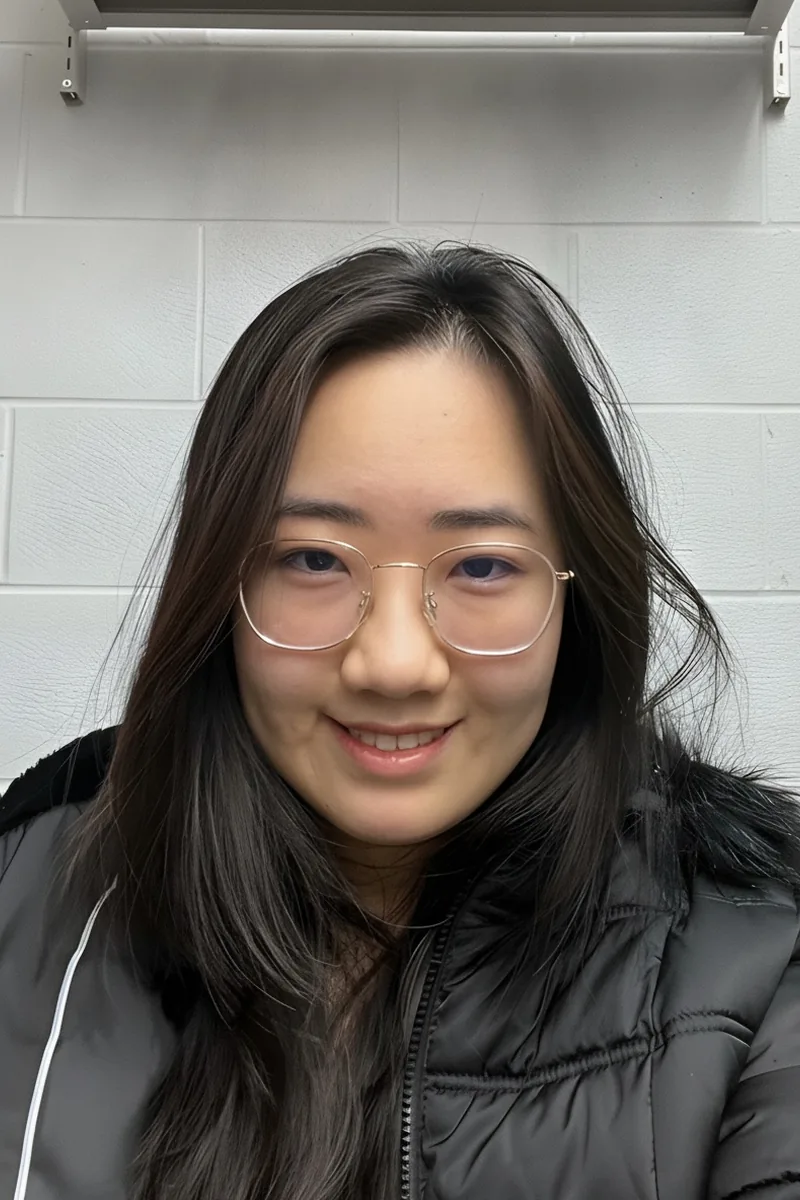
Scoring a 1540 on the SAT herself, Evelyn knows exactly where points hide in both the Evidence-Based Reading section and the no-calculator Math portion. She learned English as a second language, which gave her an unusually sharp eye for the grammar and rhetoric questions that trip up even native speakers. Her approach to the reading passages emphasizes eliminating answer choices using textual evidence — a skill that transfers directly to the writing section's command-of-evidence items.

Scoring a 1550 on the SAT means Atrik knows exactly where points hide — in the no-change answer traps on Writing, the evidence-pair questions on Reading, and the sneaky unit-conversion problems on Math. His neuroscience background at Northwestern also gives him a practical understanding of focus, timing, and test-day stamina that he builds into every prep plan. Rated 5.0 by students.
Kellor scored a 1510 on the SAT and breaks the exam into repeatable patterns — identifying trap answers in Evidence-Based Reading, spotting the grammar rules that appear on nearly every Writing section, and applying strategic shortcuts on no-calculator math problems. His approach emphasizes learning the test's logic so students stop second-guessing themselves under time pressure. Rated 5.0 by students.
A 1520 SAT composite means Samuel knows how to navigate both the math and evidence-based reading sections at a high level — and as a finance major with a biochemistry minor at Arizona State, he brings quantitative and analytical strengths to each. He breaks the test into repeatable strategies for time management, passage annotation, and eliminating trap answers so students can turn practice into real score gains.
I am Chad Bergman, a current Dartmouth student pursuing my Bachelor's in Economics with a physics minor. I have experience tutoring college economics in person on Dartmouth campus as well as online tutoring in high school calculus and physics. I've had great success on the SAT and ACT as well as my AP tests in high school, and I hope to help others succeed as well. My favorite subject to tutor is physics because I feel like learning to apply a few fundamental principles to different real world situations is extremely useful in any discipline. While tutoring I try to help students master the fundamentals so they can apply them to the material we're working on as well as future material. Outside academia, I help look after my four siblings and play more League of Legends online than is perhaps healthy.
What sets Jack apart in SAT prep is his diagnostic approach — he talks through problems with students to figure out where their reasoning goes off track, then fixes the underlying thinking rather than just drilling practice sets. His 1500 SAT score and sociology background give him balanced strength across both the math and evidence-based reading sections, and his experience revising essays across disciplines sharpens his coaching on the Writing and Language portion.
Teaching both English and French at the secondary level gave Ariana a detailed grasp of how language-based test questions are constructed — she knows which grammar rules, rhetorical patterns, and evidence-based reading strategies the SAT leans on hardest. She scored a 1410 on the SAT herself and uses that experience to walk students through pacing decisions and the specific Writing & Language traps that catch even strong readers off guard.
Most SAT prep treats math and verbal as separate worlds, but Justin's PhD work in computational mathematics at the University of Chicago trained him to read precisely and reason quantitatively in the same breath — exactly what the SAT demands. He scored a 1560 and teaches students to attack the math sections through algebraic fluency rather than calculator dependence, while applying the same structured logic to evidence-based reading questions. Rated 5.0 by students.
Law school at the University of Chicago sharpened exactly the skills the SAT rewards — picking apart dense passages under time pressure, spotting logical gaps, and choosing precise language over vague alternatives. Elena pairs that training with a perfect 1600 SAT score and a tutoring approach built around listening to students reason through problems so she can pinpoint the specific assumptions or misreadings costing them points. Her government, Spanish, and legal background gives her unusually natural command of both the verbal and quantitative sides of the exam.
What separates a good SAT score from a great one is often section-level strategy — knowing when to skip and return, how to eliminate two answers fast on evidence-based reading pairs, and where the math section rewards algebraic setup over calculation. Arthur scored a 1490 and teaches the exam as a system of repeatable decisions, drawing on his economics training to approach data interpretation and graph-based questions with particular precision. His 36 ACT composite confirms he knows standardized testing inside and out.
Three semesters teaching ESL to immigrants and refugees at Tufts gave Danielle a sharp sense for how people actually process language under pressure — a skill that translates directly to coaching the SAT's Reading and Writing sections, where time management and passage decoding matter more than vocabulary size. She scored a 1550 on the SAT herself and pairs that with a systematic, pacing-driven approach to the Math section built during her biology and pre-med coursework. Rated 5.0 by students.
Classics and philosophy trained Austin to read dense, argument-heavy texts with precision — exactly the skill that separates good SAT Reading scores from great ones. He scored a 1570 and teaches students to trace an author's reasoning through evidence-based questions rather than relying on surface-level comprehension. His grammar and writing chops carry over to the Writing and Language section, where he unpacks the punctuation and syntax rules the test recycles in every form.
A 1560 SAT scorer with a Master's in Education from Harvard, Mimi brings a structured yet creative approach to test prep — particularly the evidence-based reading passages, where her art history and literary analysis background makes dissecting complex texts second nature. She teaches students to identify argument structure and eliminate trap answers systematically across both the reading and writing sections.
A perfect 1600 on the SAT gives Richard firsthand knowledge of what it takes to navigate every section — from evidence-based reading passages to the no-calculator math grid-ins that trip up even strong students. As a Harvard government major, he brings particularly sharp critical reading and argument-analysis skills to the Reading and Writing sections, where identifying an author's central claim quickly can save crucial minutes. He also spent a year as a math course assistant at Harvard, so the quantitative side is equally covered.
After working as a test prep tutor and admissions consultant in Hong Kong, Asta developed a full-picture approach to the SAT — she knows not just how to raise scores but how those scores fit into a broader college application strategy for students targeting U.S. universities. Her 1530 SAT and University of Chicago political science training sharpen her coaching on the Reading section especially, where she teaches students to trace an author's argument before touching the answer choices. Rated 5.0 by students.
Phillips Exeter's Harkness method trained Violet to pull apart complex problems collaboratively — a habit she now applies to SAT prep, where she teaches students specific tricks for pacing the math sections and spotting grammar patterns in Writing and Language. Her math degree from Brown and 1550 SAT score mean she's equally comfortable drilling no-calculator algebra strategies and coaching students through evidence-based reading questions. Rated 4.5 by students.
Computational biology PhD applicant by day, Max approaches the SAT the way he approaches research — systematically breaking the exam into its component patterns and drilling the highest-yield strategies for each. His 1580 SAT score came from treating the math section as applied logic and the reading section as data extraction, and that's exactly how he teaches it. Rated 5.0 by students.
Most SAT prep treats the math and verbal sections as two separate exams, but Viktor's UChicago math degree and his experience teaching literature, grammar, and college essays mean he can coach the full test without switching gears. He scored a 1600 — a perfect composite — and uses that familiarity with the exam's logic to teach students how to spot the algebraic structures hidden in word problems and the rhetorical patterns that make Reading section trap answers so tempting.
I am no longer needed.
Testimonials
Because the right SAT tutor makes all the difference.
Average Session Rating – Based on 3.4M Learner Ratings
Practice SAT
Free practice tests, flashcards, and AI tutoring for SAT
Other Wichita Tutors
Related Test Prep Tutors in Wichita
Frequently Asked Questions
Most Kansas public universities have flexible admission policies, but competitive scores vary by school and program. For Kansas State University and University of Kansas, middle-50% admitted students typically score between 1100-1300, though automatic admission thresholds often combine GPA and test scores. For more selective programs or scholarships, aim for 1200+. Varsity Tutors connects you with tutors who understand regional college expectations and can help you target the specific score your schools require.
The ACT remains more popular in Kansas and the broader Midwest, and many high schools offer free ACT testing days. However, most Kansas colleges accept both tests equally, and your choice should depend on which format plays to your strengths—the SAT emphasizes reading comprehension and evidence-based reasoning, while the ACT moves faster with more straightforward questions. Many Wichita students benefit from taking practice tests in both formats to see which aligns better with their skills before committing to one.
Most students see 100-200 point improvements with focused preparation over 2-3 months, depending on their starting score and effort level. Students starting around 900-1000 often see larger gains, while those already scoring 1300+ may see more modest improvements. Varsity Tutors connects you with tutors who create personalized study plans targeting your specific weak areas—whether that's time management on the Reading section, data interpretation in Math, or grammar patterns in Writing & Language.
Most juniors benefit from starting SAT prep in the fall or winter, giving them time for 2-3 months of focused study before spring test dates. If you're planning to take the SAT senior year, starting in the summer before senior fall allows flexibility for retesting if needed. Since many Wichita schools emphasize the ACT, confirm your target colleges' testing preferences early—this helps you decide whether to prepare for SAT, ACT, or both, and when to schedule your prep timeline.
The Reading section gives you 65 minutes for 52 questions—roughly 1.25 minutes per question—which is tight. The most effective strategy is to read the questions first, then skim the passage for relevant evidence rather than reading every word. Many students also benefit from practicing with a timer to build speed without sacrificing accuracy. Tutors can help you identify which question types slow you down most and develop personalized pacing strategies that work for your reading style.
Multi-step problems require you to break them into smaller chunks and track your work carefully—rushing through or skipping steps is where most errors happen. Start by identifying what the question is actually asking, write out your steps, and check your arithmetic before moving on. The calculator section (55 minutes, 38 questions) allows more complex calculations, while the no-calculator section (25 minutes, 20 questions) focuses on conceptual understanding and algebra. Tutors can help you strengthen both areas and recognize which approach works fastest for each problem type.
Most colleges see all your scores and many use the highest one, so retaking is usually worth it if you're close to your goal—especially if you can identify specific areas to improve. However, retaking makes most sense if you're 50-100 points away from your target and have time to address weak spots. Wichita students typically have opportunities to test in March, May, June, and fall, giving you flexibility to prepare between attempts. Tutors can review your first attempt and create a focused improvement plan for your next test date.
The Writing & Language section (35 minutes, 44 questions) tests grammar, punctuation, sentence structure, and rhetorical skills. Success comes from recognizing common error patterns—comma splices, subject-verb agreement, pronoun reference, and wordiness appear repeatedly. The best approach is to practice with real SAT questions to identify which errors trip you up most, then drill those specific patterns. Tutors can help you build a mental checklist of what to look for in each question, turning grammar rules into quick, automatic recognition rather than time-consuming analysis.
Let’s find your perfect tutor
Answer a few quick questions. We’ll recommend the right plan and match you with a top 5% tutor.