Award-Winning Pre-Calculus Tutors
serving Wichita, KS
Pre-Calculus
Tutors in Wichita
Private 1-on-1 tutoring, weekly live classes for academic support, test prep & enrichment, practice tests and diagnostics, and more to elevate grades and test scores.
Based on 3.4M Learner Ratings
UniversitiesSchools & Universities
DeliveredHours Delivered
ProficiencyGrowth in Proficiency
Who needs tutoring?
No obligation. Takes ~1 minute.
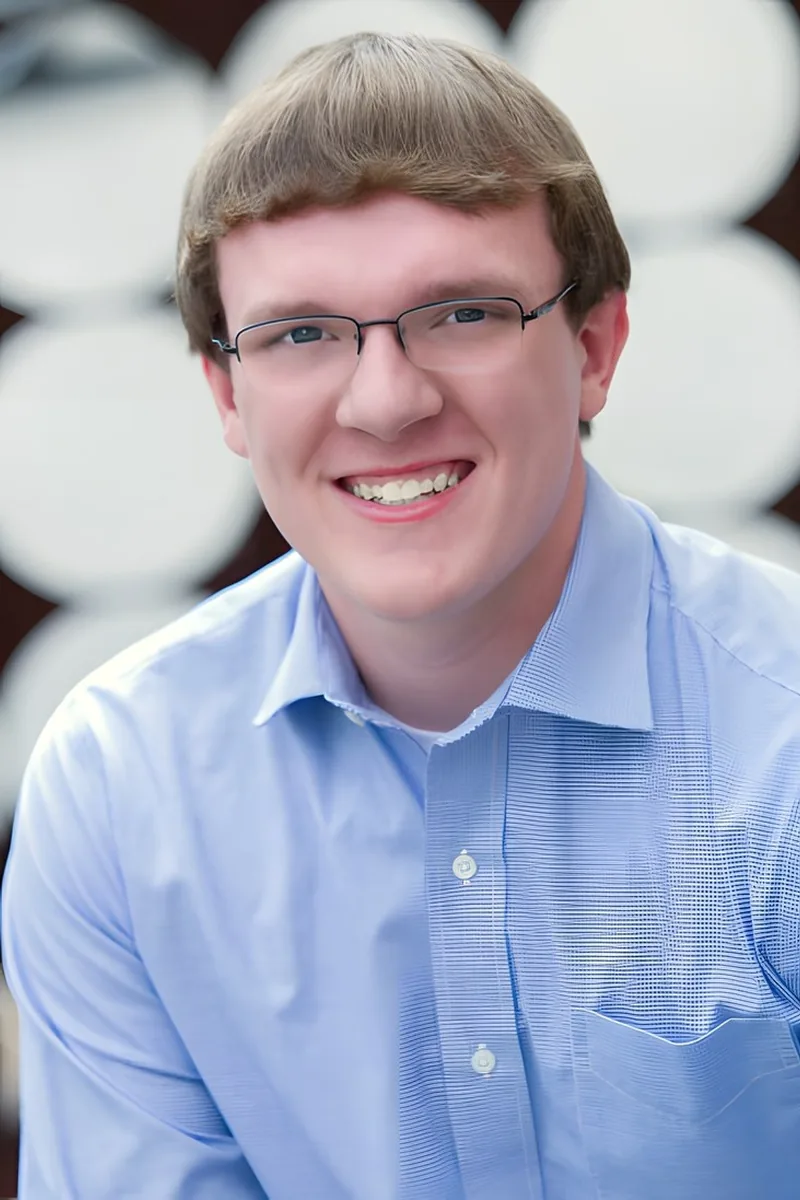
Jeffrey's mechanical engineering PhD work at Rice means he's spent years relying on the exact toolkit pre-calculus introduces — function composition, trigonometric modeling, and exponential behavior all show up constantly in dynamics and thermodynamics problems. He teaches these topics by walking through the engineering contexts where they actually matter, which gives students a concrete reason to care about each concept. His 34 ACT and 4.9 rating speak to the clarity he brings to quantitative subjects.
An astrophysics degree means Andrew didn't just pass through pre-calculus — he built on it daily, using trigonometric identities to model orbital mechanics, conic sections to describe planetary trajectories, and logarithmic scales to measure stellar brightness. That scientific context lets him show students exactly where concepts like polar coordinates and function transformations are headed, turning what often feels like disconnected material into a coherent story. His 33 ACT and 4.9 rating confirm the quantitative depth behind his teaching.
I am Chad Bergman, a current Dartmouth student pursuing my Bachelor's in Economics with a physics minor. I have experience tutoring college economics in person on Dartmouth campus as well as online tutoring in high school calculus and physics. I've had great success on the SAT and ACT as well as my AP tests in high school, and I hope to help others succeed as well. My favorite subject to tutor is physics because I feel like learning to apply a few fundamental principles to different real world situations is extremely useful in any discipline. While tutoring I try to help students master the fundamentals so they can apply them to the material we're working on as well as future material. Outside academia, I help look after my four siblings and play more League of Legends online than is perhaps healthy.
A chemical engineering degree means Dane spent years working with the rate equations, reaction kinetics, and thermodynamic models that depend on exactly the function behavior pre-calculus introduces — exponential growth, logarithmic scaling, and trigonometric periodicity. He tackles the course by connecting each new concept back to the algebra underneath it, so the jump from manipulating expressions to analyzing entire function families feels like a natural next step rather than a leap. Holds a 5.0 rating and a 32 ACT.
Chris's neurobiology coursework demanded fluency with the exact pre-calculus concepts that trip most students up — exponential decay models, trigonometric functions for periodic data, and composite function analysis. He teaches these topics by grounding them in real applications, so ideas like logarithmic scaling or sinusoidal behavior click instead of feeling abstract. Rated 5.0 by students.
Electrical engineering at Notre Dame throws Jacob into circuits and signal processing where sinusoidal functions, complex number arithmetic, and polar-to-rectangular conversions aren't textbook exercises — they're the vocabulary of every lab report. That daily immersion lets him teach the unit circle and trig identities with the intuition of someone who actually depends on them, connecting each concept to the algebra students already have under their belt. He also tutors the full path from algebra through AP Calculus, so he knows exactly which pre-calc skills need to be airtight before the next course.
Haley earned her degree in mathematics teaching, which means she didn't just learn pre-calculus — she learned how to teach it, studying exactly where students get tripped up on topics like rational functions, transformations, and the shift from algebraic manipulation to functional thinking. Her 33 ACT and 5.0 rating confirm she delivers on that training. She's especially sharp at bridging the gap between what students mastered in algebra and the more abstract reasoning calculus will demand.
The leap from trig identities to limits can feel overwhelming, but Pre-Calculus is really about learning to read and manipulate functions — polynomial, rational, exponential, logarithmic. Alisa's mathematics coursework at the University of Kansas means she teaches these function families with an eye toward what's coming in Calculus, so nothing feels like busywork.
Everything in Pre-Calculus — from trigonometric identities to rational functions to sequences — exists to prepare students for the thinking calculus demands. Vivek connects each topic forward, showing why mastering something like the unit circle or function composition matters once limits and derivatives enter the picture. As a neuroscience major actively using calculus at Pitt, he knows exactly which Pre-Calc skills carry the most weight.
Structural engineering is essentially applied pre-calculus — Wade spent his master's program using trigonometric functions to resolve force vectors, logarithmic models to analyze material fatigue, and polynomial expressions to describe load distributions across beams. He teaches these topics by connecting them to the physical problems they were designed to solve, which makes abstract function behavior feel like a tool instead of a chore. Rated 4.9 by students.
Computer engineering at the undergraduate level means Lee spent semesters steeped in the signal processing and circuit analysis that run on trigonometric functions, complex numbers, and the algebra of rational expressions — all core pre-calculus territory. He tackles topics like graph transformations and polar coordinates by showing the engineering logic underneath, connecting each concept to the algebra students already have under their belt. A 35 ACT confirms the quantitative rigor behind his approach.
I am an effective, skilled communicator and tutor. I am personable, approachable, and fun. USDA-NRCS Agricultural Engineer University of Oklahoma - Hydrology Grand Canyon University - School of Engineering Subjects: Physics, Engineering, Math, History Colorado native living in KS Love all kinds of sports- participating and watching Avid reader - multiple genres Youth leadership roles at church; service trips to Dominican Republic USDA Agricultural Engineer Fan of Star Wars, slack lining, outdoor adventure, music and road trips LinkedIn: https://www.linkedin.com/in/tobinmorse80 Facebook: https://www.facebook.com/tobin.morse
The jump to pre-calculus is where many students first encounter limits of their algebraic intuition — rational functions behave strangely, trigonometric identities pile up, and sequences suddenly matter. Emily tackles these topics by emphasizing the graphical and conceptual logic underneath, drawing on a math background that earned her a 1590 SAT and a 36 ACT.
A mechanical engineering degree from WashU (magna cum laude) means Caroline spent years where pre-calculus wasn't a course — it was the baseline language for everything from thermodynamic cycles to stress analysis, with polar coordinates, parametric equations, and trig identities showing up in nearly every problem set. She zeroes in on the conceptual leap from manipulating expressions to thinking in terms of function behavior, which is exactly where most students stall before calculus. Holds a 5.0 rating and a 1560 SAT.
After studying economics and computer science at Caltech, Brian developed a habit of thinking about functions as machines — inputs transform into outputs through a chain of operations, and pre-calculus is where that mechanical intuition gets built. He digs into the transition points that trip students up most, like moving from polynomial behavior to rational functions where asymptotes and holes suddenly matter. His 1580 SAT reflects the kind of precision he brings to breaking down each concept.
The jump to pre-calculus is where many students first encounter trigonometric identities, polar coordinates, and limits — concepts that feel disconnected from anything they've done before. Eileen bridges that gap by tying each new idea back to familiar algebra and geometry, giving students a clear roadmap into calculus.
I've been working with students for over seven years, from middle school all the way through college, across subjects like math, calculus, statistics, linear algebra, chemistry, and physics, with a lot of SAT and ACT prep mixed in. My background is perhaps a little unconventional. I have two bachelor's degrees, one in Engineering and one in Communication Studies, plus a Master's in Design. That combination means I can guide you through challenging technical material and communicate it in a way that is easy to grasp. What I care most about is helping students get to a place where they don't need me anymore. I know that sounds like a strange thing for a tutor to say, but I think it's the right goal. I'm not here to walk you through steps to copy down. I want you to understand why something works, because that's what holds up under pressure, on a test you haven't seen before. If you're ready to ace that test or prove that theorem that's been bugging you, reach out and let's work together
Most pre-calculus courses throw the unit circle, rational functions, and logarithmic properties at students in rapid succession without showing the thread connecting them — Kathleen's math degree from Washington University means she sees that thread clearly and teaches accordingly. She's especially sharp at bridging the gap between algebraic mechanics students already trust and the functional thinking calculus will demand, building each new concept as a natural extension rather than a separate topic to memorize. Her 35 ACT and 1550 SAT confirm the quantitative depth behind her approach.
Researching cosmic ray acceleration at Princeton's astrophysics department meant Dennis had to model particle behavior using the exact toolkit pre-calculus teaches — parametric equations, vector components, and the interplay between exponential and trigonometric functions. He brings that research intuition to sessions, breaking down how and why transformations reshape a graph or how polar and rectangular forms connect, so the material clicks as a coherent system rather than a checklist. A 36 ACT and 4.7 rating back up the depth of understanding he brings.
Mechanical engineering at the undergraduate level means Andrea spent semesters grinding through the exact transition pre-calculus prepares students for — mastering polar coordinates, parametric equations, and trigonometric identities before they became essential tools in dynamics and thermodynamics courses. She teaches that material as someone who knows precisely where each concept resurfaces, breaking down topics like composite functions and rational expressions by connecting them to the engineering problems they eventually power. Her 32 ACT and 4.8 rating reflect consistent results across a wide range of students.
Trigonometric identities, logarithmic functions, and the behavior of rational expressions all land differently when a student can see what's happening on a graph. Dylan leans heavily on visual and graphical reasoning to make Pre-Calculus concepts intuitive rather than procedural — an approach sharpened by his physics and math coursework at Vanderbilt. He's particularly effective at bridging the gap between algebraic manipulation and the conceptual thinking calculus will demand.
The jump into pre-calculus is really about learning to think in terms of functions — how they behave, transform, and connect to each other across trigonometric, polynomial, and rational families. Dane's engineering coursework at Duke means he uses these tools daily and can show students how concepts like limits, composite functions, and unit circle values actually build toward calculus rather than existing as isolated topics.
Andrew's PhD in biomedical engineering means he's pushed well past calculus into differential equations and multivariable territory — so he teaches pre-calculus with a clear map of where every topic is headed and why it matters. He's particularly sharp on the transition points that trip students up, like moving from memorizing trig ratios to actually understanding the unit circle as a geometric argument. Rated 4.9 by students.
An applied mathematics degree from Stanford means Alex didn't just pass through pre-calculus — he built an entire major on top of it, so he knows exactly which concepts in trigonometric reasoning, function transformations, and limit intuition carry the most weight later. He teaches the course as a bridge rather than a checklist, connecting each new idea back to the algebra underneath it and forward to the calculus ahead. His 35 ACT and 4.8 rating reflect a tutor who's still close enough to the material to remember where it gets confusing.
Testimonials
Because the right Pre-Calculus tutor makes all the difference.
Average Session Rating – Based on 3.4M Learner Ratings
Practice Pre-Calculus
Free practice tests, flashcards, and AI tutoring for Pre-Calculus
Other Wichita Tutors
Related Math Tutors in Wichita
Frequently Asked Questions
Pre-Calculus shifts from mostly procedural problem-solving to understanding the deeper concepts behind functions, transformations, and rates of change. You'll move beyond just "getting the right answer" to understanding *why* methods work and how different mathematical ideas connect. This conceptual foundation is essential for success in Calculus, where you'll need to think about limits, derivatives, and how functions behave.
Graphing transformations, trigonometric identities, and word problems that require setting up complex equations are frequent pain points. Many students also find the transition from concrete algebra to more abstract function analysis challenging. Personalized 1-on-1 instruction helps break down these topics into manageable pieces and shows you how to recognize patterns that make problems feel less overwhelming.
Word problems require translating real-world situations into mathematical models—a skill that takes practice and strategic thinking. Tutors can teach you a framework for approaching these problems: identifying what you know, what you're solving for, and which Pre-Calculus concepts apply. Working through problems together helps you develop confidence in recognizing problem types and choosing the right strategies.
Graphing is how you visualize function behavior—seeing shifts, stretches, asymptotes, and intersections helps you understand concepts that are purely algebraic on paper. Pre-Calculus graphing builds the visual intuition you'll need for Calculus. Tutors can help you master transformations and connect what you see on a graph back to the equation, making abstract ideas concrete.
Your first session focuses on understanding where you are right now—which topics feel solid, where you're stuck, and what your goals are. Varsity Tutors connects you with a tutor who'll assess your strengths and challenges, then create a personalized plan. You'll likely work through a problem or two together to identify specific gaps and build a roadmap for improvement.
Absolutely. Math anxiety often stems from feeling lost or unsupported—personalized 1-on-1 instruction builds confidence by letting you ask questions without judgment and work at your own pace. When you understand the *why* behind concepts rather than just memorizing procedures, Pre-Calculus becomes less intimidating. Many students find that consistent, supportive tutoring transforms their relationship with math.
Yes. Wichita schools use different textbooks and approaches, and tutors connected through Varsity Tutors are familiar with major curricula. When you connect with a tutor, let them know which textbook or approach your school uses, and they'll tailor explanations and practice to match your specific course. This alignment ensures tutoring reinforces exactly what you're learning in class.
Trigonometry makes up a significant portion of Pre-Calculus and is foundational for Calculus, physics, and engineering. You'll work with trig functions, identities, and applications—concepts that feel abstract until you see how they model real phenomena like waves and circular motion. Tutors help you move beyond memorizing identities to understanding the relationships and patterns that make trig click.
Let’s find your perfect tutor
Answer a few quick questions. We’ll recommend the right plan and match you with a top 5% tutor.