Award-Winning SAT Math Tutors
serving Wichita, KS
SAT Math
Tutors in Wichita
Private 1-on-1 tutoring, weekly live classes for academic support, test prep & enrichment, practice tests and diagnostics, and more to elevate grades and test scores.
Based on 3.4M Learner Ratings
UniversitiesSchools & Universities
DeliveredHours Delivered
ProficiencyGrowth in Proficiency
Who will be getting tutoring?
No obligation. Takes ~1 minute.
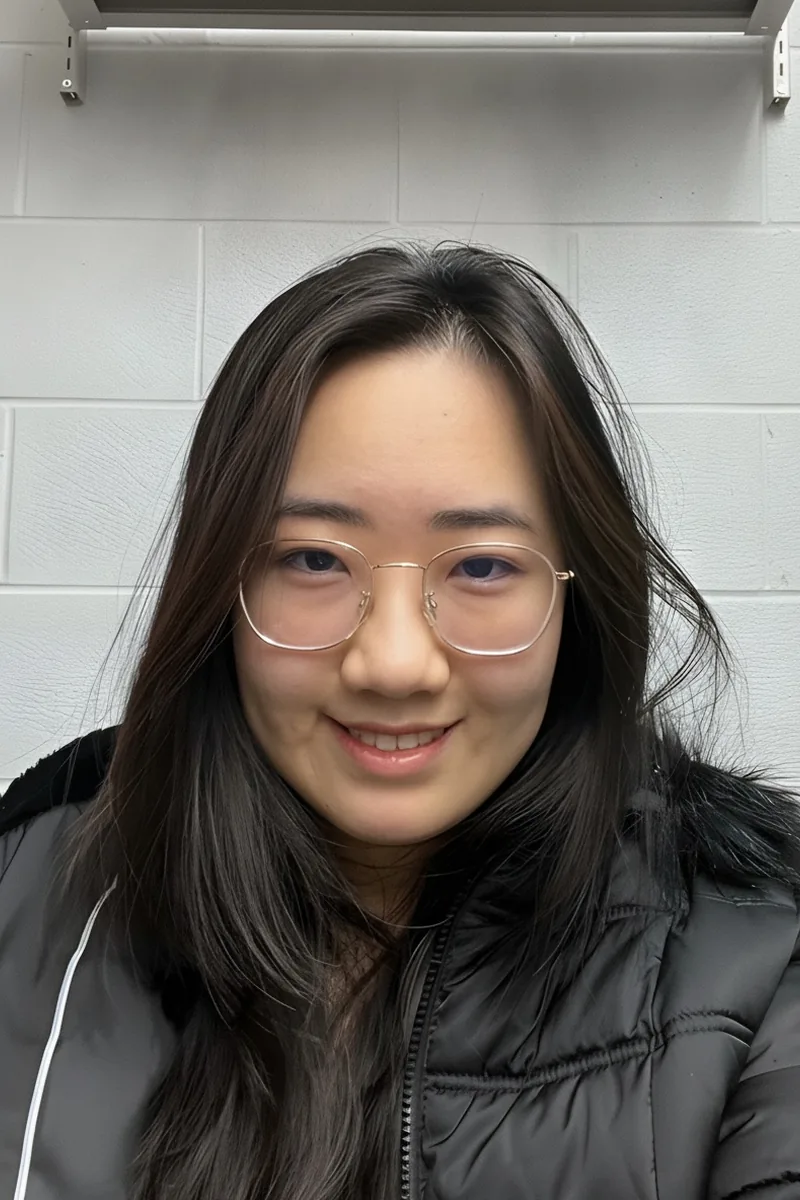
I am a medical student currently attending the 6 year BA/MD program at UMKC. My interest in both the sciences and the humanities has led me to pursue a career in medicine. My favorite subjects to learn and teach include English reading and writing, Mandarin, math, and biology. I am especially passionate about teaching English reading and writing because as someone who personally went through the process of learning English from scratch, I deeply understand the challenges involved in honing one's language skills. I hope to use the lessons I have learned from my experience to help others who are working on improving their reading and writing skills, no matter how far they are along the process. I am patient, persistent, supportive, receptive to feedback, and I always strive to adapt my tutoring style to work with each student's unique needs and expectations.
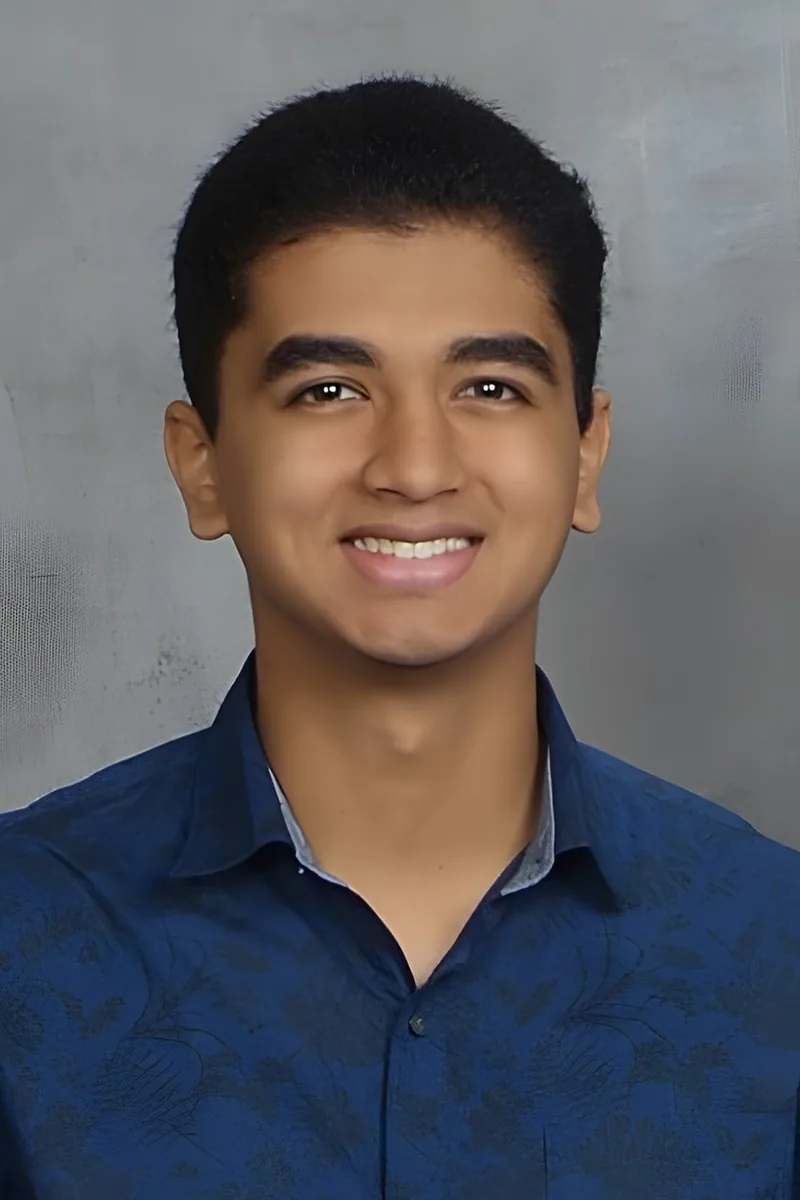
I am currently a first-year student at Northwestern University studying Neuroscience and Global Health. I have experience tutoring K-12 students in mathematics, ranging from teaching elementary school students how to add and subtract to helping high school students understand Calculus. I had the opportunity to work as a paid math tutor for over a year and tutored kids in math voluntarily throughout high school.
I am entirely committed to ensuring every one of my students break through the barriers preventing them from reaching their full potential. My process involves an individual, connected explanation of the content, discussing problem-solving strategies to make testing much easier than it seems, encouraging practice and the growth of individual learning, and making sure my style of teaching is right for my student's style of learning. Most importantly, I seek to make my students love learning as much as I do.
I am Chad Bergman, a current Dartmouth student pursuing my Bachelor's in Economics with a physics minor. I have experience tutoring college economics in person on Dartmouth campus as well as online tutoring in high school calculus and physics. I've had great success on the SAT and ACT as well as my AP tests in high school, and I hope to help others succeed as well. My favorite subject to tutor is physics because I feel like learning to apply a few fundamental principles to different real world situations is extremely useful in any discipline. While tutoring I try to help students master the fundamentals so they can apply them to the material we're working on as well as future material. Outside academia, I help look after my four siblings and play more League of Legends online than is perhaps healthy.
I am a Finance Major and Biochemistry Minor at Arizona State University.
Sociology research trained Jack to think in variables and relationships — survey design, statistical significance, reading crosstabs — which maps surprisingly well onto the SAT Math section's data-analysis and word-problem questions. His 1500 SAT score backs up that quantitative instinct, and his diagnostic, talk-it-through teaching style is especially useful for students who understand the math conceptually but keep misreading what a problem is actually asking.
I am a former middle-school English teacher (and former high-school French teacher). I am certified to teach English (grades 6-12), History/Government/Social Studies (grades 6-12), Psychology (grades 6-12), Health (grades PreK-12), General Music (grades PreK-12), and French (grades PreK-12). I have also taught AP French and college-level French.
Kevin earned a 1550 SAT alongside his 36 ACT, so he knows exactly where the two math sections diverge — the SAT leans harder into multi-step word problems, data interpretation, and algebraic reasoning that rewards setting up equations carefully over grinding through calculations. He breaks down the no-calculator section's trickiest question types, like systems of equations and quadratic modeling, into repeatable strategies. His engineering training at Case Western Reserve keeps him sharp on every concept the test covers.
I am excited to help anyone who might need it!
Premed coursework at Cornell means Sharan regularly tackles quantitative problems under exam pressure — and she channels that same discipline into SAT Math prep, particularly the data-analysis and algebraic modeling questions where sloppy setup costs more points than weak math skills. Her 1540 SAT confirms she knows how the test actually works, and she teaches students to build a systematic checklist for each problem type so nothing gets skipped when the clock is running. Rated 5.0 by students.
I am currently a resident physician at Northwestern Hospital.
John's approach to SAT Math zeroes in on the difference between knowing algebra and knowing how the SAT tests algebra — things like rewriting equations to match answer choices or catching unit conversion traps in word problems. With a 1420 SAT and deep experience across calculus, geometry, and college algebra, he connects each practice problem to the specific concept being tested so students build real recognition, not just test-day luck.
I'm eager to teach students how to make connections and understand any part of the world they need!
Scoring well on SAT Math requires recognizing which tool fits each problem before time pressure kicks in — is this a substitution question disguised as a word problem, or a ratio question hiding inside a geometry setup? Rachel earned a 1600 and knows the test's architecture inside and out. She teaches students to categorize problems on sight so they spend their energy solving, not figuring out where to start.
I am a lifelong learner, teacher, and researcher in the field of physics. I received a PhD in Physics from the University of Michigan and a BS in Physics from Rice University. I have four years of physics teaching experience at the University of Michigan, primarily undergraduate laboratory courses with an emphasis on electromagnetism, circuits, waves, optics, and real-world applications of these and other physical phenomena. Many of these courses, including one I helped design, focused on helping non-STEM students master physics concepts that may be difficult to grasp in a standard classroom setting. I have tutored in a variety of subjects since high school, but most recently I have spent several years helping students understand concepts and succeed in coursework throughout a large variety of college-level physics topics, from basic mechanics to advanced electrodynamics and special relativity.
The SAT Math section rewards students who can read precisely — and Julia's English and linguistics degree makes her unusually good at untangling the deliberately tricky wording the test uses to disguise straightforward algebra and geometry. She scored a perfect 1600 SAT herself and teaches students to treat each problem like a sentence to parse: identify the subject, strip out the filler, and solve what's actually being asked. Rated 5.0 by students.
Engineering coursework gave Conor a comfort with math that most SAT tutors simply don't have — he sees the underlying concept a question is testing before he finishes reading it. With a 1560 SAT composite, he knows exactly where the test writers hide difficulty, especially in the no-calculator section's algebra and data analysis problems. He drills students on recognizing problem types quickly so they spend time solving, not deciphering.
Scoring a 1570 on the SAT, Perry knows exactly where the math section tries to trip students up — especially on quadratic and exponential word problems that test conceptual understanding rather than computation speed. He teaches efficient strategies for data analysis and passport-to-advanced-math questions that turn tricky phrasing into straightforward algebra. Rated 5.0 by students.
Medical school at Baylor means Michelle solves quantitative problems under brutal time constraints every day — and her 1570 SAT proves she's already mastered doing exactly that on the test her students are preparing for. She zeroes in on the algebraic modeling and geometry questions where a biochemistry background actually helps, teaching students to treat each problem like a lab setup: identify the variables, find the relationship, then solve cleanly without second-guessing.
Testimonials
Because the right SAT Math tutor makes all the difference.
Average Session Rating – Based on 3.4M Learner Ratings
Practice SAT Math
Free practice tests, flashcards, and AI tutoring for SAT Math
Other Wichita Tutors
Related Test Prep Tutors in Wichita
Frequently Asked Questions
Score improvement depends on your starting point and commitment level, but most students see meaningful gains within 8-12 weeks of consistent practice. Students who work with a tutor typically improve 50-100+ points by focusing on their specific weak areas—whether that's algebra, geometry, or test-taking strategy. The key is identifying which question types trip you up and building targeted skills rather than reviewing everything.
Your first session focuses on understanding where you stand and what to prioritize. A tutor will likely review your practice test results, ask about your target score, and identify patterns in the questions you're missing—are they timing issues, conceptual gaps, or careless errors? This diagnostic helps create a personalized study plan that tackles your biggest opportunities for improvement.
Pacing is one of the most common challenges students face—you have about 1.4 minutes per question, which feels tight. Expert tutors help you develop strategies like identifying which questions to tackle first (easier ones build confidence), which to skip strategically, and how to avoid getting stuck on one problem. Practice tests are essential here; they train your brain to recognize when to move on and come back later.
Take a full practice test under timed conditions and review every question you missed or guessed on. Look for patterns: Are you struggling with algebra, functions, geometry, or word problems? Are you running out of time? Varsity Tutors connects you with tutors who can analyze your practice tests and pinpoint exactly which topics and question types need work, so you're not wasting time on things you already know.
The SAT Math section includes multiple-choice questions and student-produced response (grid-in) questions, and they test algebra, advanced math, problem-solving, data analysis, geometry, and trigonometry. Each question type has its own tricks—multiple choice lets you work backwards, while grid-ins require exact answers. A tutor helps you master the format-specific strategies for each type so you're not caught off guard on test day.
Test anxiety often stems from feeling unprepared or panicked by difficult questions. Working with a tutor builds genuine confidence through repeated practice with real SAT questions, so you know what to expect and trust your skills. Tutors also teach calming strategies like taking deep breaths when stuck, skipping hard questions without panic, and using your time strategically—all of which reduce anxiety significantly.
Most students benefit from 3-4 months of consistent preparation, dedicating 5-8 hours per week to SAT Math practice. This includes taking full practice tests (every 1-2 weeks), reviewing mistakes, and targeted skill-building on weak areas. Your tutor helps you create a realistic schedule that fits your life and ensures you're spending time efficiently on what actually moves your score.
Varsity Tutors connects you with experienced tutors who specialize in SAT Math and understand the test inside and out. When you get matched with a tutor, you can discuss your target score, timeline, and learning style so the fit is right from day one. Tutors work with you flexibly around your schedule to prepare you for success.
Let’s find your perfect tutor
Answer a few quick questions. We’ll recommend the right plan and match you with a top 5% tutor.