Award-Winning Japanese Tutors
serving Wichita, KS
Japanese
Tutors in Wichita
Private 1-on-1 tutoring, weekly live classes for academic support, test prep & enrichment, practice tests and diagnostics, and more to elevate grades and test scores.
Based on 3.4M Learner Ratings
UniversitiesSchools & Universities
DeliveredHours Delivered
ProficiencyGrowth in Proficiency
Who needs tutoring?
No obligation. Takes ~1 minute.
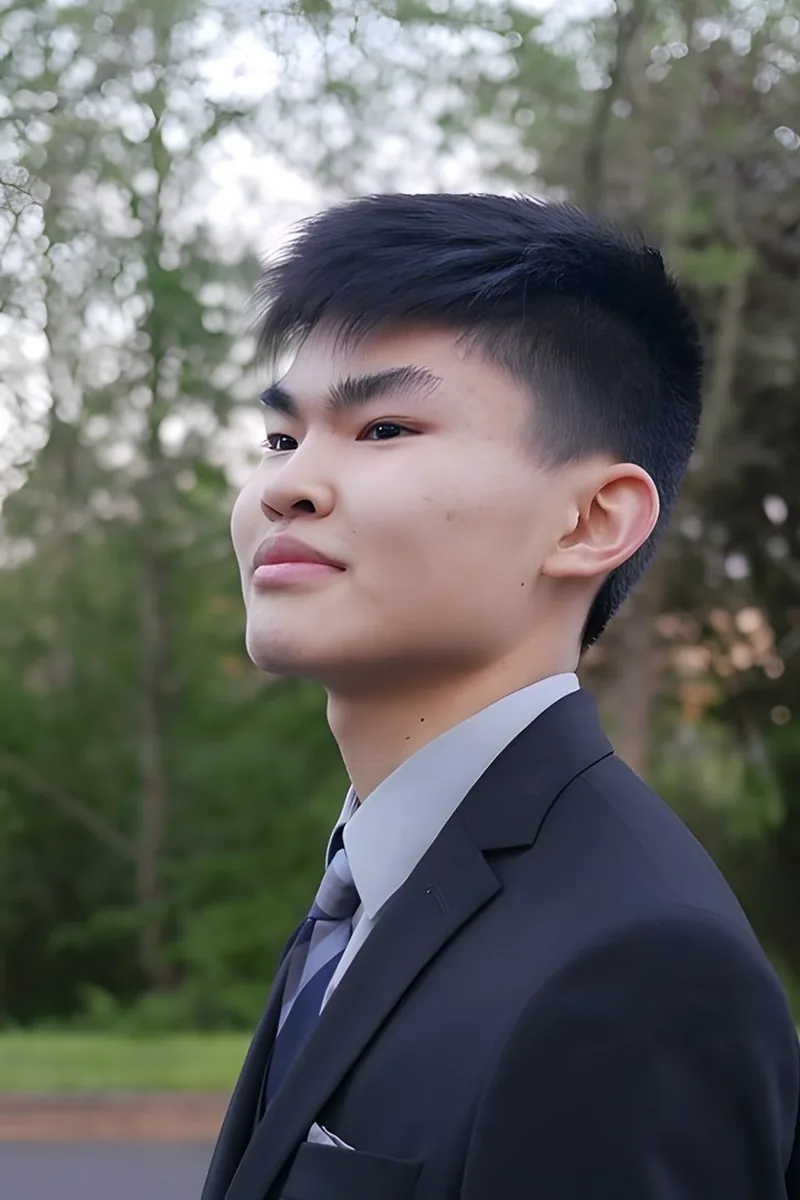
I'm a candidate for a B.S. in Business Administration at Northeastern University. In addition to tutoring, I enjoy playing the tuba and learning about transportation engineering/planning. I'm also fully Japanese and can read, write, and speak the language. As someone who scored 1530 on the SAT and 800 on the Math II subject test, I'd love to assist you in preparing for college!

Most students learning Japanese hit a wall somewhere between mastering hiragana and actually constructing sentences with particles, verb conjugations, and counters. Kai has been teaching Japanese through the student organization meetings on campus, building lessons that move learners from basic self-introductions to reading short passages and holding simple conversations.
Linguistics training gives Andrew a structural advantage when teaching Japanese — he understands how languages build meaning differently, which matters when explaining why particles replace prepositions or why verbs land at the end of every sentence. His background in Korean and German means he's personally navigated multiple grammar systems far removed from English, and he applies that comparative instinct to make Japanese word order and conjugation feel logical rather than arbitrary.
I am studying Chemical Biology in UC Berkeley. One of my passions is Organic Chemistry, which I used to loath but now enjoys after taking a year of it. Also, because I like helping others, I enjoys tutoring/teaching students who are struggling. During high school, I have tutored other high students after school on various subjects such as Math, Physics, Chemistry, and Latin. During college, I have held informal review sessions for General Chemistry and Organic Chemistry for my underclassmen. I tutored my roommate and one of my underclassmen in Organic Chemistry. Finally, with a Graduate Student TA, I co-taught a Organic Chemistry Lab class section , where I answer questions regarding lab material and demonstrate lab techniques. Currently, I am interested in tutoring Organic Chemistry, General Chemistry, Biochemistry, Physics, and Calculus
Earning a full bachelor's degree in Japanese — not just a minor or a few semesters — means Jina can teach well beyond survival phrases into kanji readings, grammar particles like は vs. が, and the nuances of keigo (formal speech). She brings the same analytical rigor from her science training to breaking down sentence structure and verb conjugation patterns.
I'm currently a freshman at Brown University. I will most likely triple major in Ancient Greek & Sanskrit, Latin, and Japanese. I have had lots of experience tutoring those around me, such as friends, peers, and class mates, and I have always enjoyed seeing their progress as students. My tutoring experiences include after-school assistance to those struggling in Ancient Greek at my former high school, to helping Juniors and Sophomores help ace the SAT. My specialty is language and history, with an emphasis on Japanese, English, Latin, US history and World History, but I am also more than happy to help out those struggling with Algebra and Geometry. As someone who was once an ESL student himself, I believe that a good education rests upon the ability to comprehend, interact, and apply ideas. Besides academic matters, I am also fond of running, calisthenics, and Enka music.
Studying Japanese as a minor at Columbia — with plans to eventually work in Japan's renewable energy sector — Shin uses the language as a living tool, not just a classroom exercise. He teaches everything from hiragana and katakana basics to intermediate grammar patterns like ~てしまう and ~ことにする, adjusting to each student's level and building real conversational confidence alongside written accuracy.
As an Asian Studies major at Duke, Caitlin engages with Japanese language in an academic context that goes beyond textbook dialogues — she understands how kanji, hiragana, and katakana each function within the writing system and why particles like は and が trip up English speakers. She walks through sentence structure and honorific levels with cultural context that makes the grammar patterns memorable.
I currently work for an afterschool enrichment program (Best Brains) tutoring elementary English and math, and I have 4+ years of experience as a private ESL tutor for both children and adults. I am working toward my Masters of Science in Secondary English Education and ESL at the University of Wisconsin- Madison. I graduated from the University of Oregon with a Bachelor of Arts in Comparative World Literature and Japanese, and from the University of Wisconsin-Madison with a Master of Arts in Japanese Language and Literature. I began tutoring while I was in high school, assisting with algebra homework. In college, I volunteered as a kindergarten reading assistant through a program called Start Making a Reader Today. I later volunteered while in graduate school at a local high school tutoring students in beginner Japanese. I have also been employed by the University of Wisconsin as a Teaching Assistant, and taught in Religious Studies and East Asian Studies. In all cases, it has been a pleasure watching students progress in their academics and to see them grow as young scholars. I especially enjoy teaching language arts because of the feeling of connection that language can bring. My favorite part of teaching is seeing the smiling face of someone the moment that they finally "get" something they've been struggling with and watching their confidence boost. In my free time, I host a small book club, pen pal with friends around the world, and try my hand at new recipes.
Emily minored in Japanese at Texas A&M and continues to engage with the language through media and self-study. She teaches hiragana, katakana, and foundational grammar patterns like particle usage with the same structured approach she applies to her other languages, making the writing systems feel systematic rather than overwhelming.
Learning Japanese means juggling three writing systems, unfamiliar grammar structures, and a set of politeness registers that don't exist in English. Katharine brings a methodical, pattern-oriented mindset to breaking down concepts like particle usage, verb conjugation groups, and kanji radicals so that each lesson builds logically on the last.
Sho teaches Japanese with attention to the details that trip up English speakers most — particle usage, verb conjugation groups, and the shift between casual and polite registers. Whether a student is learning hiragana for the first time or working through intermediate kanji and grammar patterns, he brings structured practice to a language that rewards consistency.
Testimonials
Because the right Japanese tutor makes all the difference.
Average Session Rating – Based on 3.4M Learner Ratings
Other Wichita Tutors
Related Languages Tutors in Wichita
Frequently Asked Questions
Your first session is an opportunity to connect with a tutor and establish your learning goals. The tutor will assess your current level across reading, writing, speaking, and listening, then tailor a personalized plan to address your specific needs—whether that's mastering verb conjugation, building conversational confidence, or preparing for an exam. This foundation helps ensure every session moves you closer to fluency.
In a classroom setting, speaking practice is often limited by class size and time constraints. With personalized 1-on-1 instruction, you get consistent speaking practice every session, immediate feedback on pronunciation and grammar, and the chance to have real conversations at your level. This direct interaction is one of the most effective ways to build confidence and fluency in Japanese.
Both matter, but they work together. Understanding grammar rules gives you structure and confidence, while natural usage—learning how native speakers actually communicate—helps you sound authentic and understand context. Expert tutors balance both approaches, teaching you the rules while also showing you how Japanese is really spoken in everyday situations, cultural contexts, and different social settings.
Japanese verbs change based on tense, politeness level, and grammatical form, which can feel overwhelming without clear guidance. A tutor breaks down these patterns into manageable pieces, uses spaced repetition to help verb forms stick in your memory, and gives you plenty of practice in realistic sentences. With consistent personalized instruction, conjugation becomes second nature rather than a constant struggle.
Research on learning shows that spacing out practice over time and using words in context are far more effective than cramming. Tutors use retrieval practice—asking you to recall and use vocabulary in conversations and writing—combined with spaced repetition to move words into long-term memory. They also help you learn vocabulary in thematic groups and cultural contexts, making words more meaningful and memorable.
Reaching professional-level fluency typically requires around 2,200 hours of study according to language learning research. However, conversational fluency—where you can handle everyday situations comfortably—comes much sooner with consistent, focused practice. Your timeline depends on your starting level, how frequently you study, and the intensity of instruction. A tutor can help you set realistic milestones and accelerate progress through efficient, personalized learning.
Japanese grammar and vocabulary are deeply tied to culture—politeness levels reflect social relationships, certain phrases only make sense in specific contexts, and understanding cultural norms helps you communicate authentically. Tutors who understand both the language and the culture can teach you not just what to say, but when and how to say it appropriately, making you a more confident and respectful communicator.
Look for tutors with native or near-native fluency, teaching experience, and expertise in the specific areas you need—whether that's conversational Japanese, exam prep, or business communication. Varsity Tutors connects you with expert tutors who have proven teaching ability and can demonstrate proficiency across all four language skills: reading, writing, speaking, and listening.
Let’s find your perfect tutor
Answer a few quick questions. We’ll recommend the right plan and match you with a top 5% tutor.