Award-Winning English Tutors
serving Wichita, KS
English
Tutors in Wichita
Private 1-on-1 tutoring, weekly live classes for academic support, test prep & enrichment, practice tests and diagnostics, and more to elevate grades and test scores.
Based on 3.4M Learner Ratings
UniversitiesSchools & Universities
DeliveredHours Delivered
ProficiencyGrowth in Proficiency
Who needs tutoring?
No obligation. Takes ~1 minute.

Between tutoring phonics, ESL learners, and college essay writers, Ayesha covers an unusually wide stretch of the English spectrum — and her elementary education training is what ties it together, since she learned to break language down to its smallest pieces and build back up. That scaffolding instinct is especially useful for grammar and syntax, where she can trace a rule from its simplest form to how it functions in a polished essay. Rated 5.0 by students.
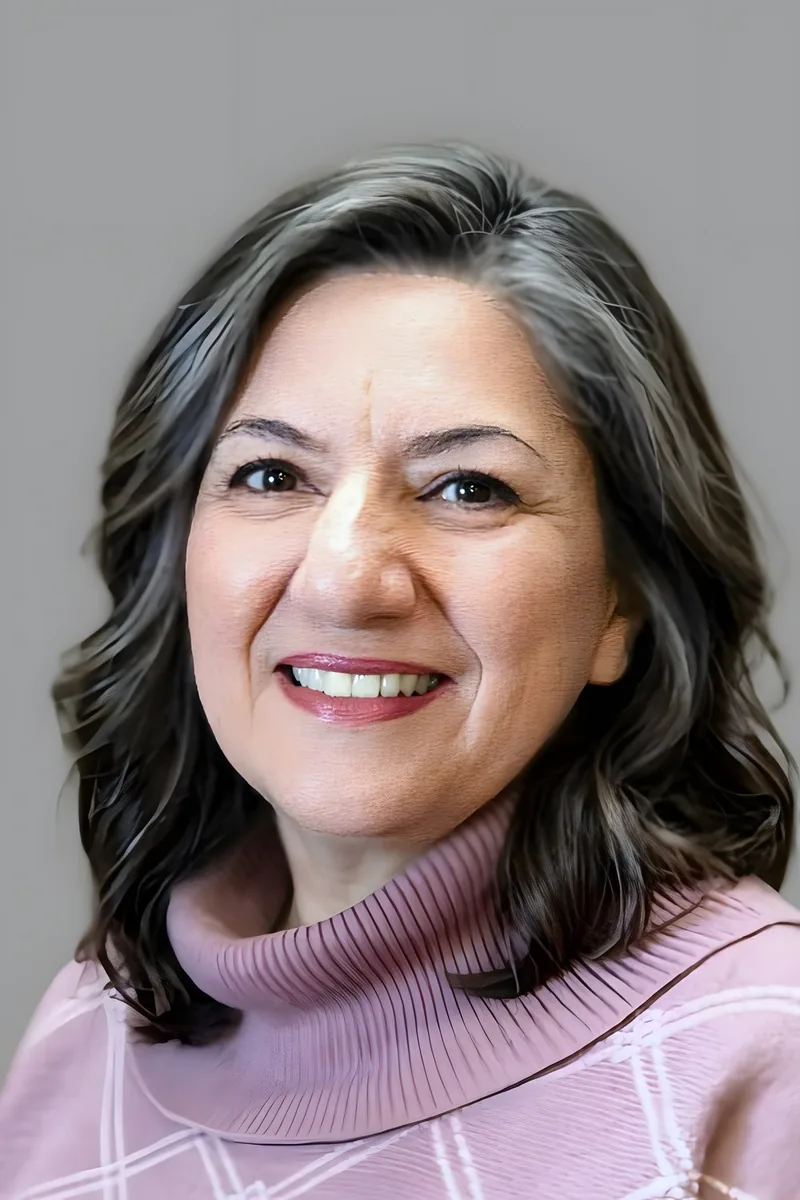
I am a dedicated educator with over 35 years of teaching experience and a Doctor of Business Administration (DBA). Teaching is my natural calling, and I excel at making learning accessible, engaging, and tailored to each student's unique learning style and personal goals. My students frequently tell me that teaching is my natural calling, and I pride myself on being a supportive facilitator who makes learning both engaging and accessible for all ages and across all subjects of expertise. I treat every student as a unique individual, exploring their personal aspirations and learning styles. I tailor my approach to build both academic skills and independent confidence. My expertise includes: College Business: Guiding students through complex theories and foundational principles. Reading Comprehension & Writing: Structuring engaging, thinking-based lessons for both English and Arabic languages. Academic Mentorship & Study Skills. Life is school.......let's learn together!
Engineering PhDs write constantly — grant proposals, literature reviews, technical arguments that have to persuade skeptical readers. Jeffrey brings that precision to English tutoring, breaking down sentence structure, grammar mechanics, and paragraph organization in a way that makes the logic behind good writing click. Rated 4.9 by students.
Between his political science coursework, law school preparation, and a genuine love of reading and writing, Jeff lives inside the skills that English classes demand — close reading, thesis development, and constructing arguments from textual evidence. He's particularly sharp at showing students how to move from a vague reaction to a book into a focused, well-supported analytical essay.
Reading a novel and actually analyzing it are two different skills, and Atrik tackles the gap by teaching students to identify literary devices like motif, tone shifts, and unreliable narration within the text. His 1550 SAT score reflects sharp reading comprehension instincts that he now channels into breaking down passages and strengthening analytical writing.
Because Evelyn learned English as an additional language, she approaches reading comprehension and analytical writing with unusual precision — she doesn't take idioms, tone shifts, or implied arguments for granted. Her background spans literature analysis, essay structure, and close reading strategies, and she's scored a 1540 SAT, demonstrating the kind of verbal reasoning she now teaches students to sharpen.
Between college essays, literature analysis, and essay editing, Andrew has spent years inside the full arc of English coursework — from close-reading a passage for tone and figurative language to drafting a thesis that actually argues something. His approach treats reading and writing as two sides of the same skill: understanding how authors build meaning so students can do it themselves.
Years of teaching college-level writing and literature at UCLA gave Dorthea a clear picture of what strong English skills actually look like at every stage — from constructing a thesis statement to analyzing tone in a novel. She brings a literary scholar's precision to close reading, essay structure, and argument development, connecting each skill to the kind of critical thinking that carries across subjects. Rated 4.7 by students.
An avid reader and writer heading to Notre Dame Law School, Maddie digs into English with a focus on close reading — teaching students to trace how an author's word choice, structure, and tone build meaning in a passage. She's especially effective at showing students how to move from a general reaction ("I liked it") to a specific, evidence-backed interpretation they can defend in class or on paper.
I am Chad Bergman, a current Dartmouth student pursuing my Bachelor's in Economics with a physics minor. I have experience tutoring college economics in person on Dartmouth campus as well as online tutoring in high school calculus and physics. I've had great success on the SAT and ACT as well as my AP tests in high school, and I hope to help others succeed as well. My favorite subject to tutor is physics because I feel like learning to apply a few fundamental principles to different real world situations is extremely useful in any discipline. While tutoring I try to help students master the fundamentals so they can apply them to the material we're working on as well as future material. Outside academia, I help look after my four siblings and play more League of Legends online than is perhaps healthy.
Between her classroom experience teaching English in grades 6–12 and her advanced training in language acquisition through her French MA, Ariana understands how reading comprehension, analytical writing, and vocabulary development actually click together. She's particularly sharp at teaching students to pull meaning from complex texts and translate that understanding into well-organized written responses — skills that show up everywhere from book reports to standardized tests.
Political science coursework at the University of Kansas keeps Megan neck-deep in argumentative writing — constructing thesis-driven essays, integrating evidence from dense readings, and revising for clarity under deadline pressure. That constant practice with persuasive prose translates directly when she teaches essay organization, grammar mechanics, and how to turn a vague idea into a sharp, supported claim. Rated 5.0 by students.
Reading comprehension, analytical writing, vocabulary in context — English as a subject pulls in a dozen different skills that students rarely practice in an integrated way. Kellor's background teaching everything from literature analysis to college essays means he can pinpoint whether a student struggles with understanding what they read, articulating what they think, or both. That diagnostic approach is a big reason he carries a 5.0 rating.
An MA in Literature from Kansas State means Cameron has spent years inside texts — not just reading them, but dissecting how authors build meaning through structure, diction, and rhetorical strategy. He's particularly effective at teaching close reading as a transferable skill, showing students how to annotate a passage so that an essay practically writes itself. His background in both literary analysis and expository writing covers both halves of what English courses demand.
Reading, writing, and art are genuine hobbies for Dane, not just résumé lines — and that shows in how he approaches English instruction, whether the task is crafting a thesis statement, unpacking a poem's imagery, or strengthening paragraph cohesion. He brings an engineer's clarity to the messy process of putting ideas into words.
A self-described bookworm with a strong background in AP and honors English courses, Emma tackles reading comprehension and literary analysis by teaching students to identify an author's argument before diving into themes or stylistic choices. She's particularly sharp at essay structure — building a thesis that actually drives the paper rather than just restating the prompt.
Reading comprehension, thesis development, and clear written arguments are skills Laynie sharpened through years of lab reports and research summaries in her biology program. She brings that precision to English tutoring, teaching students how to construct paragraphs with real evidence and how to read a passage for its argument rather than just its plot. It's a practical, structure-first approach that works well for students who want concrete strategies instead of abstract literary discussion.
Strong English skills come from reading critically and writing clearly, and Chris developed both through college-level research writing in neurobiology and literary analysis in his Spanish coursework. He tackles everything from thesis construction and paragraph organization to close reading of texts, teaching students how to build arguments that hold up under scrutiny.
Having written college essays, edited papers, and tutored literature alongside his biology coursework, Vince knows how to move between scientific and humanistic writing — a skill that's especially useful for students who think they're 'just not English people.' He breaks grammar and essay structure down with the same logical sequencing he'd use in a lab report, making the rules feel less arbitrary and more like a system to master.
Reading a passage and actually understanding what the author is arguing are two very different skills. Nikit teaches students to identify thesis statements, trace how evidence supports a claim, and write responses that go beyond summary into real analysis. His 5.0 rating speaks to how well that structured, evidence-first approach clicks with students.
An avid reader and experienced essay editor, Ashley tackles English by linking close reading skills to stronger written arguments — showing students how to pull specific textual evidence and build a thesis around it. Her 33 ACT reflects the kind of analytical reading and writing ability she brings to literature analysis and composition alike.
Reading comprehension and analytical writing reinforce each other, and Ashwini tackles both sides in her English tutoring. She walks students through how to identify an author's argument, pull supporting evidence from a text, and structure a clear response — skills she sharpens constantly through her own research writing in behavioral neuroscience at KU.
Arianna's background in behavioral neuroscience gives her an unusual edge when teaching English — she understands how the brain processes language, which shapes how she approaches everything from close reading to thesis construction. As a former peer tutor and teaching assistant at KU, she spent years breaking down essay structure and argument development with college athletes who needed to sharpen their academic writing quickly. Rated 5.0 by students, she brings that same directness to grammar, literary analysis, and composition at any level.
Studying Spanish at the University of Missouri gave Kacey a deep understanding of how languages work structurally — grammar rules, syntax, and the logic behind sentence construction — which she now applies to English writing and reading comprehension. She's especially effective at breaking down essay organization and thesis development, skills she honed through her own college essays and literature coursework. Rated 4.8 by students.
Kavya treats English as an analytical subject, teaching students to dissect a text's argument and structure before putting their own ideas on paper. Her experience coaching college essays and editing student writing means she can pinpoint exactly where a paragraph loses its thread — whether it's a weak thesis, unclear transitions, or evidence that doesn't connect back to the claim. Rated 4.9 by students.
I am dedicated to helping students succeed and I strive to help them figure things out on their own and experience the joy of reaching their goals.
Strong English skills come down to connecting what you read with how you write — analyzing an author's argument, then building your own with clarity and evidence. Andi's background in art history trained her to do exactly that, constructing well-supported interpretive essays across genres and time periods. She brings that same close-reading discipline to grammar, thesis development, and revision at every level.
From reading comprehension to essay writing, Eamon approaches English by teaching students to slow down and ask what a text is actually doing — how an author builds an argument, sets a tone, or develops a character. He also brings strong editing instincts to student writing, zeroing in on thesis clarity and paragraph structure. Having mentored five younger siblings through school, he's comfortable adjusting his explanations to any level.
Between her literature background, law school writing demands, and years of tutoring reading and composition, Libby covers English from close reading and textual analysis to thesis-driven essay construction. She's especially sharp at teaching students how to move from annotation to argument — turning observations about a text into claims they can actually defend on paper. Rated 5.0 by students.
Essay revision is where Jack does his strongest work — he enjoys sitting with a draft and walking through how to sharpen a thesis, tighten paragraph transitions, and cut unnecessary filler. A dual Sociology and Anthropology graduate from the University of Tulsa, he also brings sharp close-reading skills to literature and comparative texts, teaching students to build arguments from textual evidence rather than summary. Rated 4.7 by students.
Reading a passage and understanding it well enough to write about it are very different tasks, and Mallory tackles both. She digs into how to annotate texts for argument structure, identify an author's rhetorical choices, and translate those observations into clear, organized written responses.
Between her psychology coursework and her experience coaching college essays, Tatiana reads texts with an eye for how authors build arguments and manipulate tone. She teaches students to move from surface-level summaries to analytical claims supported by textual evidence — the shift that typically separates average essays from strong ones.
Between tutoring literature, essay editing, and college essays, Alisa covers the full arc of English skills from close reading to polished writing. She's particularly sharp at teaching students how to build a thesis that actually argues something, then organize evidence around it. Her 5.0 rating suggests students leave sessions with clearer thinking on the page.
I am a second year medical student at the University of Kansas School of Medicine with an interest in surgery. I hope to make a difference in the world, be it large or small and through teaching I can accomplish that!
A background in classical languages gives Christian an unusually precise understanding of how English actually works — from sentence structure and rhetorical devices to the Latin and Greek roots buried inside everyday vocabulary. He breaks down grammar, argument construction, and close reading with the same rigor he applies to translating ancient texts, which makes abstract concepts like tone, syntax, and thesis development feel concrete and logical.
Between writing college-level research papers in biology and tutoring across literature and essay editing, Dylan approaches English as a set of transferable skills: reading closely, building an argument, and revising until the writing actually says what you mean. He's especially effective at teaching students how to pull evidence from a text and weave it into a coherent analytical essay.
Between writing college essays and teaching literature, Haley covers the full spectrum of English skills — close reading, thesis development, and crafting arguments with textual evidence. She's particularly sharp at showing students how to move from a vague reaction to a text into a structured, well-supported analytical essay.
Strong English skills aren't just for English majors — Carl relied on clear writing and critical reading throughout his engineering education, from research papers to project proposals. He unpacks reading comprehension strategies and paragraph-level organization in a straightforward, logical way that resonates especially well with students who think of themselves as 'math people.'
Between literature analysis, essay editing, and college application writing, Vivek covers the full range of what English classes actually demand. His neuroscience background gives him a unique lens on how to structure arguments and read critically, skills he applies when walking students through thesis development and textual evidence.
Between his love of reading and his experience writing technical reports and college essays, Wade approaches English as both a creative and analytical discipline. He digs into close reading strategies, thesis development, and evidence selection, teaching students to construct arguments with the same precision he applies to structural designs.
Testimonials
Because the right English tutor makes all the difference.
Average Session Rating – Based on 3.4M Learner Ratings
Other Wichita Tutors
Related English Tutors in Wichita
Frequently Asked Questions
Students in Wichita schools often struggle with reading comprehension, essay writing, and grammar fundamentals—challenges that are common across Kansas schools. With an average student-teacher ratio of 14.2:1 in Wichita classrooms, many students don't get individualized feedback on their writing or personalized strategies for tackling complex texts. Personalized tutoring addresses these gaps by targeting each student's specific weak areas, whether that's thesis development, literary analysis, or mechanics.
In a classroom setting, teachers must pace instruction for 20+ students with varying abilities and learning styles. Personalized tutoring allows a tutor to adapt their approach to your learning style, focus on your specific weaknesses, and move at your pace—whether you need to slow down to master fundamentals or accelerate through advanced concepts. This targeted approach means more practice with feedback, more time on what matters most to you, and measurable progress in areas like writing quality, reading speed, and test performance.
Tutors working with Varsity Tutors are familiar with Kansas state standards and the specific curricula used across Wichita's 133 schools. Whether your student is working on elementary reading foundations, middle school essay structure, or high school AP Literature analysis, tutors can align their instruction with what's being taught in class—reinforcing skills, clarifying concepts, and preparing for assessments. This ensures tutoring complements classroom learning rather than working in isolation.
Yes. Writing improvement comes from targeted practice with expert feedback—something personalized tutoring excels at providing. Tutors work through your essays or assignments with you, identifying patterns in your errors, teaching you revision strategies, and helping you develop a stronger voice. Over time, students typically see measurable improvements in organization, clarity, grammar, and confidence, which translates to better grades on writing assignments and standardized tests.
The first session is an assessment and planning meeting. Your tutor will discuss your current English skills, identify specific challenges (whether that's reading comprehension, writing mechanics, or test prep), and learn about your goals. Together, you'll create a personalized plan that targets your priorities and outlines what improvement looks like. This foundation ensures every subsequent session is focused and productive.
Yes. Many tutors specialize in English/Reading sections of the ACT and SAT. They teach test-specific strategies, help you understand question types, and provide targeted practice with feedback. Since the English sections test reading comprehension and grammar under time pressure, personalized instruction helps you develop both content knowledge and test-taking techniques to improve your score.
Start by telling us about your English goals and needs—whether it's homework help, writing improvement, test prep, or skill-building in a specific area. Varsity Tutors connects you with a tutor whose expertise and teaching style match what you're looking for. You can then meet for personalized instruction that fits your schedule and learning preferences.
Reading comprehension improves through active practice with guided feedback. Tutors teach strategies like annotation, questioning the text, and summarization—skills that help you engage more deeply with what you read. They also work with you on vocabulary, sentence structure analysis, and inference skills. With consistent practice and personalized guidance, students typically read faster and retain more information, which boosts performance on both classroom assignments and standardized tests.
Let’s find your perfect tutor
Answer a few quick questions. We’ll recommend the right plan and match you with a top 5% tutor.