Award-Winning College Level American Literature
Tutors
College Level American Literature
Tutors
Private 1-on-1 tutoring, weekly live classes for academic support, test prep & enrichment, practice tests and diagnostics, and more to elevate grades and test scores.
Based on 3.4M Learner Ratings
UniversitiesSchools & Universities
DeliveredHours Delivered
ProficiencyGrowth in Proficiency
Who needs tutoring?
No obligation. Takes ~1 minute.

At the college level, American literature stops being a survey and starts demanding real critical engagement — situating Melville within antebellum anxieties, or tracing how Toni Morrison reimagines the slave narrative form. Henry's Harvard thesis work sharpened his ability to build sustained, evidence-rich arguments about complex texts, and he teaches students to construct the kind of layered literary analysis college professors expect.
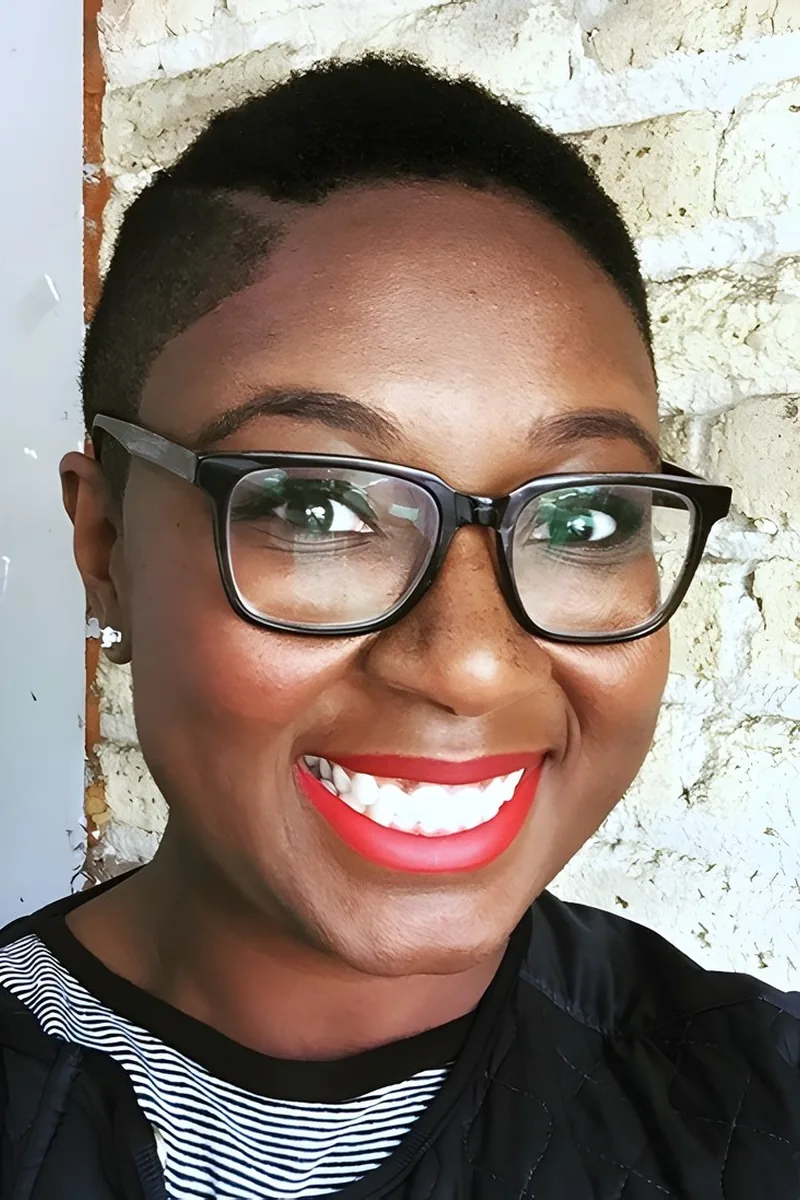
College-level American literature goes beyond reading Fitzgerald and writing a response — it requires engaging with critical frameworks like New Historicism or postcolonial theory and applying them to primary texts. Brittney's M.A. in English and her undergraduate work in Comparative Literature at Princeton prepared her to teach students how to situate American authors within broader intellectual conversations. She's particularly sharp at coaching students through seminar-style discussion prep and research papers.
At the college level, American literature courses expect students to engage with critical theory — whether that's postcolonial readings of Melville or feminist analyses of Chopin. Renee's doctoral training in literary studies means she can walk students through these frameworks and show how to build a scholarly argument that goes beyond surface-level plot summary.
Studying American literature at the college level means grappling with how writers like Melville, Morrison, and Emerson responded to the philosophical and political currents of their eras. Jeff brings both a Princeton philosophy degree and a Berkeley history M.A. to that conversation, connecting literary movements to the intellectual traditions that shaped them. He's especially sharp on Transcendentalism, the American Renaissance, and 20th-century African American literary traditions.
College-level American literature courses expect students to engage with critical theory, historicism, and close reading simultaneously — often on texts like Moby-Dick or Beloved that resist easy interpretation. Tom's PhD in American Studies means he's published and defended arguments on exactly these kinds of works. He digs into the critical frameworks professors assign and shows students how to wield them in their own essays.
At the college level, American literature courses expect students to engage with critical frameworks — postcolonialism, feminism, historicism — not just identify themes. Connor breaks down how to apply these lenses to texts by writers like Toni Morrison or Herman Melville, turning dense theoretical readings into tools students can actually use in seminar discussions and papers.
At the college level, American Literature courses expect students to do more than identify themes — they need to situate Melville alongside antebellum politics or read Toni Morrison through the lens of critical race theory. Jennifer's English BA and current graduate work at NYU mean she can walk through those theoretical frameworks without making them feel impenetrable. She's especially skilled at teaching students how to build a literary argument that synthesizes primary texts with secondary scholarship.
At the college level, American literature courses expect students to move beyond plot summary and engage with critical theory — whether that's examining race in Toni Morrison through a postcolonial lens or reading Whitman alongside debates about democracy and selfhood. Paula's interdisciplinary training in Psychology and Communication Studies equips her to tackle these layered readings and coach students through the analytical writing these courses demand.
Columbia's American Studies MA program is built around close reading of the American literary canon — from slave narratives and Transcendentalist essays to Harlem Renaissance poetry and postmodern fiction. Michelle brings that graduate-level training directly into her tutoring, unpacking how authors like Morrison, Baldwin, and Whitman shaped and challenged national identity. Rated 5.0 by students, she's especially sharp on intersections between race, culture, and literary form.
Studying English at Yale means Kyle engages daily with the kind of critical frameworks — postcolonialism, New Historicism, feminist theory — that college-level American literature courses expect students to apply. He digs into texts like Beloved or Moby-Dick by connecting authorial choices to broader cultural and historical contexts. Students working on seminar papers or close-reading assignments get a tutor who's navigating the same academic rigor right now.
College-level American literature courses expect students to move beyond plot and character into conversations about race, class, gender, and nationhood embedded in the texts. Mica's Stanford anthropology training is directly relevant here — she knows how to read a Toni Morrison novel or a Frederick Douglass narrative through cultural and historical lenses that produce the kind of layered analysis professors reward. She's rated 5.0 by the students she's worked with.
At the college level, American literature shifts from "what does this mean" to "how does this text participate in larger conversations about race, identity, and national mythology." Amy tackles authors like Morrison, Whitman, and Didion through the interdisciplinary lens she's built at Penn, where her English major overlaps with journalism and art history in ways that deepen textual analysis.
College-level American literature digs into questions most survey courses barely touch: how do Melville's maritime allegories reflect antebellum anxieties, or what does Toni Morrison's narrative fragmentation reveal about memory and trauma? Skyler's graduate work in literary and cultural analysis across multiple traditions gives her the interpretive framework to unpack these texts at a sophisticated level. She's rated 5.0 and excels at teaching students to write the kind of thesis-driven essays these courses demand.
College-level American literature courses expect students to do more than summarize plots — they demand critical arguments about how writers like Morrison, Faulkner, or Whitman engage with race, identity, and national mythology. Patrick studied English Literature at the University of Chicago, where close reading and rigorous literary analysis were the baseline for every seminar. He teaches students to build thesis-driven essays that move beyond surface-level interpretation and engage seriously with the text.
At the college level, American literature courses expect students to do more than identify symbols — they want sustained critical engagement with how race, gender, and nationhood shape a literary tradition. Alyssa's double major at Harvard in Environmental Science and Studies of Women, Gender, and Sexuality gives her a genuinely interdisciplinary lens for unpacking writers from Douglass to Morrison to Anzaldúa.
College-level American literature courses demand more than plot summaries — they ask students to situate writers like Toni Morrison, Whitman, or Didion within larger cultural and literary movements. Cynthia's English Literature degree and MFA from Columbia give her the critical vocabulary to teach close reading, thesis development, and the kind of textual analysis that distinguishes an A paper from a B+ one.
At the college level, American literature courses expect students to engage with critical frameworks — historicism, postcolonialism, feminist theory — not just plot and theme. Eric's philosophy background gives him fluency with these theoretical lenses, and he's particularly strong at teaching students how to weave secondary criticism into their own original arguments about texts from Melville to Morrison.
American literature courses often ask students to connect texts across periods — tracing how Emerson's self-reliance echoes in Whitman, or how Toni Morrison's narrative structure responds to the slave narrative tradition. Galen unpacks these thematic and formal connections by teaching students to read like philosophers, interrogating what each author assumes about language, identity, and the American project itself.
At the college level, American literature stops being a survey and starts demanding real critical engagement — situating Melville within antebellum capitalism, or reading Toni Morrison through the lens of narrative theory. Justin's doctoral work in English gave him deep fluency with the literary criticism and historiography that upper-division courses expect. He walks students through the process of developing original, evidence-grounded arguments that go beyond plot summary.
A PhD candidate in Literature/Creative Writing at the University of Denver, Erinrose lives inside the American literary tradition daily — tracing how writers like Faulkner, Baldwin, and Didion shaped and subverted narrative form. She teaches college students to move past surface-level thematic readings and engage with questions of craft, voice, and cultural context that drive upper-division and graduate coursework.
Tackling college-level American lit means moving beyond plot summary into sustained critical analysis — examining how Toni Morrison's narrative structure or Melville's allegory operates on multiple levels simultaneously. Dana's policy training taught her to interrogate texts for underlying arguments, a skill she applies directly to seminar discussions and research papers on the American literary canon.
At the college level, American literature courses expect students to situate texts within critical frameworks — postcolonialism, gender theory, New Historicism — not just summarize themes. Alessia's interdisciplinary coursework at Penn in political science and psychology gives her a natural toolkit for the kind of ideological and cultural analysis these classes require. She holds a 5.0 rating from her students.
I'm a current PhD student in the history department at Georgetown University who is also an experienced instructor with Varsity Tutors. As a recipient of several degrees, the most recent being a BA in history from Hillsdale College and a MA in Russian, East European, and Eurasian Studies from Stanford University, I have long sought to make teaching my profession. Meanwhile, as a volunteer grade school teacher and a tutor with this company, I have many years' experience helping students reach their full potential. I am capable of teaching students in many subjects, including reading, mathematics, test prep, Latin, and especially writing, history, and literature. In practice, I am comfortable adapting to different learning styles and specific student preferences. Outside of my academic and career endeavors, I enjoy cooking, reading, and listening to and making music.
At the college level, American literature courses expect students to engage with critical frameworks — postcolonialism, feminism, New Historicism — not just summarize plots. Carly's honors English work at Dartmouth involved exactly this kind of rigorous analysis across texts from the colonial period through contemporary fiction. She walks students through how to build a scholarly argument that goes beyond personal response.
College-level American literature courses expect students to situate texts within intellectual traditions — connecting Emerson's transcendentalism to Whitman's poetics, or tracing how the Harlem Renaissance reshaped American modernism. Charlie's English Literature degree from the University of Chicago trained him in exactly this kind of rigorous, historically grounded literary analysis. He unpacks both the primary texts and the critical frameworks professors expect students to use.
Tackling college-level American literature means grappling with texts that resist easy interpretation — Faulkner's fractured timelines, Morrison's layered symbolism, the political undercurrents in Whitman or Baldwin. Nathaniel studied English with a creative writing focus at Northwestern, so he reads these works both as a literary analyst and as a writer attuned to craft choices. That dual lens sharpens the kind of close reading and thesis construction that literature seminars demand.
College-level American literature courses expect students to engage with critical theory — historicism, race and gender analysis, postmodernism — not just summarize what happens in the book. Paige's Yale Theater Studies degree immersed her in exactly this kind of interpretive work, analyzing American dramatic texts alongside their cultural and political contexts. She teaches students to build seminar-ready arguments that put primary texts in conversation with scholarly criticism.
College-level American lit courses expect students to move past surface-level readings and engage with critical frameworks — postcolonialism, feminist theory, historicism. Kit's pre-law training at Vanderbilt has made him especially skilled at constructing tight, evidence-driven arguments about texts, which is exactly what college literature papers demand. He walks through the process of building a thesis from a close reading rather than from a vague impression.
From the Puritans through the Harlem Renaissance to postmodern metafiction, college-level American literature courses demand that students situate texts within cultural and historical movements. Stephanie unpacks how writers like Hawthorne, Morrison, or DeLillo use form itself — unreliable narrators, fragmented timelines, shifting registers — to make their arguments. Her training in both literary and cinematic storytelling gives her a cross-media lens that enriches discussions of adaptation, visual culture, and narrative technique.
College-level American literature courses expect students to engage with literary criticism, situate texts within theoretical frameworks, and produce seminar-quality essays that go beyond close reading alone. Noel studied at the University of Chicago, where interdisciplinary analysis was baked into every humanities course, and his public policy background adds an unusual lens for examining how writers like Toni Morrison or James Baldwin interrogate American institutions.
College-level American Literature demands more than plot summaries; it requires engaging with literary criticism, historicism, and theoretical frameworks. Andrew earned his bachelor's in Literature and brings an interdisciplinary lens — informed by his science and law training — that sharpens how students construct arguments about texts from Melville to Morrison. His approach to essay writing emphasizes building claims from textual evidence rather than vague thematic generalizations.
College-level American literature demands more than plot summaries — it asks students to engage with literary movements, from Transcendentalism through Harlem Renaissance modernism to postwar metafiction. David approaches each text as both an aesthetic object and a cultural document, teaching students to construct arguments that weave close reading with historical and theoretical frameworks.
College-level American lit demands more than plot summary — professors expect students to engage with critical theory, historicism, and formal analysis simultaneously. Sarah unpacks dense secondary sources alongside primary texts, teaching students to build arguments that put Toni Morrison in conversation with Frederick Douglass or position Whitman within debates about democracy and selfhood.
College-level American literature demands more than summary — professors want students to engage with critical theory, situate texts within literary traditions, and produce original analytical arguments. Mahalia's creative writing degree gives her a dual lens: she reads Melville or Baldwin not just for themes but for craft choices like narrative structure, voice, and point of view. That writer's perspective sharpens the kind of close reading that earns strong marks on literary essays.
College-level American literature asks students to do more than interpret individual novels — it demands engagement with literary movements, historical context, and critical theory. Sarah's PhD training at Harvard keeps her immersed in scholarly discourse, and her interdisciplinary background in English and ethnomusicology lets her draw unexpected connections between texts and the cultural forces that shaped them. She teaches students to write the kind of arguments that hold up in seminar discussions and term papers alike.
College-level American literature moves fast — students are expected to situate Melville alongside transcendentalism, read Ellison through the lens of modernist form, and produce seminar-ready analysis in the same week. Hasan built exactly these skills at Brown, where his Literary Arts program combined rigorous close reading with creative practice across American and global traditions. He's particularly sharp at teaching students how to develop an original interpretive argument rather than restating class discussion.
College-level American lit demands more than plot summaries — professors expect students to engage with critical frameworks, whether that's examining race in Toni Morrison or capitalism in Don DeLillo. Karishma's English and Psychology background gives her a unique lens for unpacking character motivation and thematic complexity at the analytical depth college courses require.
College-level American lit courses move fast and expect students to do more than admire the prose — seminars on Toni Morrison or Don DeLillo demand that you situate a novel within critical conversations about race, capitalism, or postmodernity. Olivia studied American culture and its texts at the undergraduate level, so she knows how to bridge the gap between a student's gut reaction to a book and the kind of theoretically informed argument a professor wants to see. She's especially skilled at helping students develop paper topics that are narrow enough to be interesting.
College-level American Literature courses expect students to situate texts within critical frameworks — postcolonialism, gender theory, ecocriticism — and write essays that do more than admire the prose. Anthony is an active academic author with a Routledge volume in progress, so he understands the scholarly conversation students are being asked to enter. He unpacks how to move from a close reading of, say, Toni Morrison's use of fragmented narrative to a thesis that engages broader critical debates.
Elliot's neuroscience PhD gives him an unusual lens on American literature — he's particularly sharp at unpacking how authors like William James, Sylvia Plath, and Ken Kesey explored consciousness, identity, and mental life in ways that anticipated modern brain science. That interdisciplinary perspective makes close reading and literary analysis click for students who think analytically. Rated 5.0 by students.
Testimonials
Because the right College Level American Literature tutor makes all the difference.
Average Session Rating – Based on 3.4M Learner Ratings
Top 20 English Subjects


Top 20 Subjects
Frequently Asked Questions
A strong thesis goes beyond plot summary to make an arguable claim about how an author uses literary devices, historical context, or thematic patterns to create meaning. Rather than stating "Fitzgerald uses symbolism in The Great Gatsby," a more effective thesis might argue something like "Fitzgerald's green light functions as both a symbol of Gatsby's impossible dream and a critique of American materialism." A tutor can help you move from initial observations about a text to a debatable argument by asking clarifying questions, identifying patterns across scenes or chapters, and showing you how to distinguish between observation and interpretation—a skill that separates strong college-level analysis from surface-level reading.
Close reading means examining specific word choices, sentence structure, imagery, and tone to understand how an author constructs meaning—especially important with challenging texts like Faulkner's stream-of-consciousness passages or Toni Morrison's layered prose. Effective strategies include annotating as you read (marking shifts in perspective, repeated images, or unusual syntax), reading passages aloud to catch rhythm and emphasis, and asking questions like "Why did the author choose this word instead of a synonym?" or "How does this sentence structure mirror the character's mental state?" A tutor can model close reading on specific passages, help you move beyond identifying literary devices to explaining their effect, and teach you to balance detailed textual analysis with broader thematic arguments.
College-level American literature essays often require you to synthesize ideas across multiple works, authors, or literary movements—which demands careful organization beyond a simple thesis-plus-three-body-paragraphs structure. You might organize thematically (comparing how different authors address a concept like the American Dream), chronologically (tracing how literary techniques evolved), or by literary device (examining how symbolism functions differently in texts from different eras). Each body paragraph should make a specific argument supported by textual evidence from one or more texts, with clear topic sentences that connect back to your thesis. A tutor can help you map out your argument before drafting, ensure each paragraph serves a distinct purpose, and revise for coherence when jumping between texts or time periods.
Quoting works best for distinctive language, key phrases, or moments where an author's exact word choice matters to your argument—like analyzing Whitman's use of anaphora or a character's revealing dialogue. Paraphrasing (restating ideas in your own words) is useful when you need to explain a complex passage or concept but the specific wording isn't central to your analysis. Summarizing condenses larger sections to provide context or show how a subplot connects to your main argument. All three require citations, but your goal is to use evidence strategically: too many block quotes can overwhelm your own voice, while too much paraphrasing can dilute the power of the original text. A tutor can review your drafts to ensure you're integrating evidence effectively, using MLA or APA format correctly, and balancing textual support with your own analytical voice.
Historical context matters when it directly illuminates your argument—for example, understanding the Harlem Renaissance is essential to analyzing Langston Hughes's poetry, and knowing about post-Civil War Reconstruction helps explain the racial tensions in Mark Twain's work. However, context should support your literary analysis, not replace it; a paragraph of biographical or historical background without connecting it to specific textual details weakens your essay. The key is selectivity: include only the context that helps readers understand why an author made particular literary choices or what their work reveals about its time period. A tutor can help you determine which historical details strengthen your analysis, teach you to weave context smoothly into paragraphs rather than isolating it, and ensure you're analyzing literature—not just summarizing history.
Substantive revision—improving argument clarity, evidence selection, and overall structure—requires reading your essay with fresh eyes and asking hard questions: Does each paragraph make a clear claim? Is my evidence the strongest possible support for that claim? Have I acknowledged counterarguments or alternative interpretations? Do transitions show how ideas connect? Many writers benefit from reading their drafts aloud to catch awkward phrasing or unclear reasoning, or from workshopping with a peer or tutor who can identify where your argument loses focus. A tutor can provide targeted feedback on the elements that matter most in college-level literary analysis—thesis clarity, textual evidence quality, and analytical depth—and teach you revision strategies you can apply independently to future assignments.
The most common mistake is treating comparison as a simple list of similarities and differences—"Both texts use symbolism" or "Character A is brave while Character B is cowardly"—rather than building a unified argument about what the comparison reveals. Strong comparative analysis uses the texts to illuminate each other and support a larger point: perhaps showing how two authors from different eras approach the same theme differently, or how contrasting characters reveal different aspects of a social issue. This requires a thesis that explains *why* the comparison matters, not just that differences exist. A tutor can help you move from surface-level comparison to analytical comparison by teaching you to use one text as a lens for understanding the other and ensuring each paragraph advances a single claim rather than alternating between texts.
Mastering literary movements means understanding not just the time period and key authors, but the specific stylistic features, philosophical concerns, and historical pressures that shaped the work—Romanticism's emphasis on emotion and nature, Modernism's fragmented form and alienation, the Harlem Renaissance's exploration of African American identity and culture. Rather than memorizing definitions, connect movements to specific texts: How does Emily Dickinson's unconventional punctuation reflect Romantic ideals? How does T.S. Eliot's fragmented structure embody Modernist anxiety? A tutor can help you move beyond labeling texts by teaching you to identify and analyze the formal and thematic features that define each movement, and to use movement context to strengthen your literary analysis without letting it overshadow close reading of individual works.
Let’s find your perfect tutor
Answer a few quick questions. We’ll recommend the right plan and match you with a top 5% tutor.