Award-Winning IB Psychology
Tutors
IB Psychology
Tutors
Private 1-on-1 tutoring, weekly live classes for academic support, test prep & enrichment, practice tests and diagnostics, and more to elevate grades and test scores.
Based on 3.4M Learner Ratings
UniversitiesSchools & Universities
DeliveredHours Delivered
ProficiencyGrowth in Proficiency
Who needs tutoring?
No obligation. Takes ~1 minute.

Having studied education policy at Harvard's Graduate School of Education, Yu brings a sharp understanding of how curricula are designed — which means she can decode exactly what IB Psychology examiners expect when they use command terms like 'evaluate' or 'contrast.' She teaches students to build essay responses around specific studies, connecting findings to the relevant level of analysis rather than summarizing loosely. Her background in IB Theory of Knowledge also strengthens how she approaches the critical thinking and ethical evaluation components of the course.
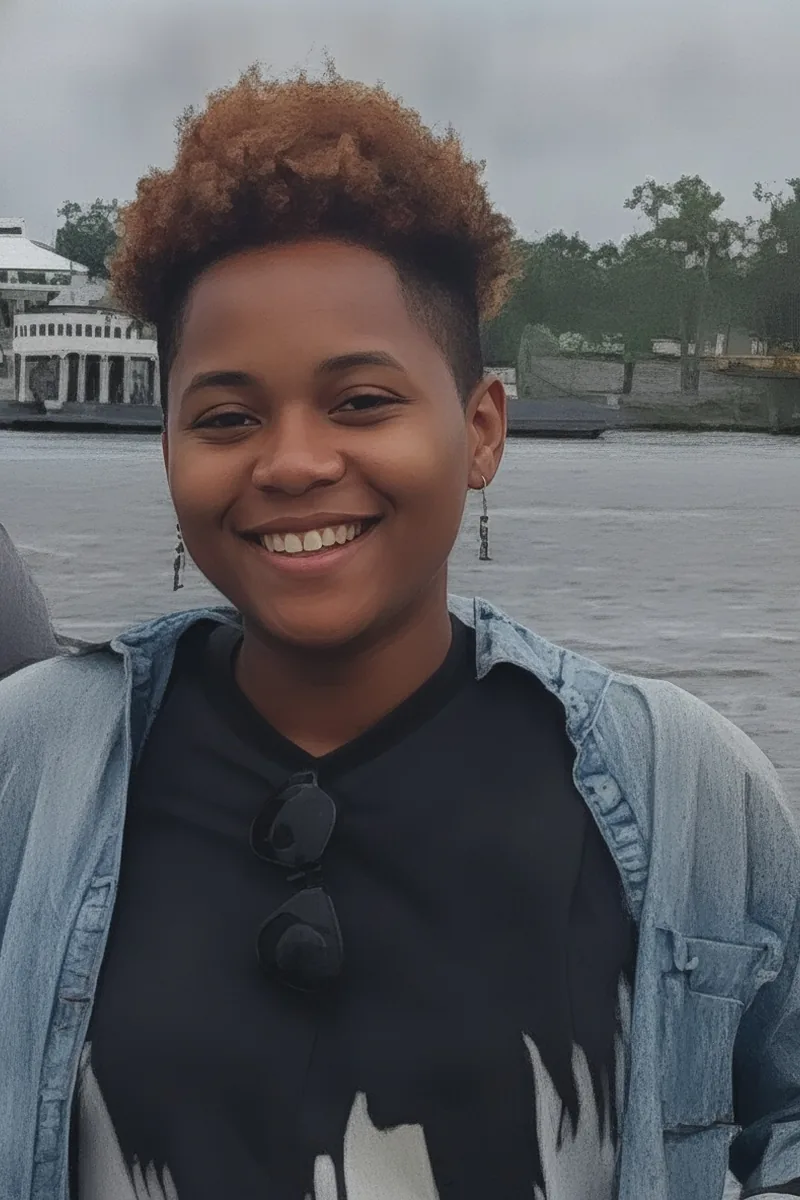
Rachel's public health and environmental health sciences training gave her strong research methodology chops — designing studies, interpreting data, and evaluating limitations — which maps directly onto IB Psychology's demand that students critically assess studies like Milgram or Loftus rather than just summarize them. She also teaches IB Theory of Knowledge and extended essays, so she understands the interdisciplinary thinking and structured argumentation the IB program rewards across subjects. That cross-IB fluency is especially useful when students need to connect psychological research to broader ethical and epistemological questions.
Kaylah studied Behavioral and Cognitive Neuroscience at the University of Florida, which means she doesn't just teach IB Psychology concepts like schema theory or the biological approach — she's actually worked with them in research settings. She breaks down the IB exam's Paper 1 and Paper 2 structures so students know exactly how to frame ERQs and SAQs for top marks.
Yan's Master's in Curriculum and Instruction means she knows how to reverse-engineer what IB examiners actually want — breaking down command terms and rubric criteria so students stop writing generic summaries and start earning marks. Her teaching background spans math, science, and language arts, which gives her a practical edge when coaching the interdisciplinary writing IB Psychology demands in SAQs and ERQs. She's especially effective at helping younger or first-time IB students adjust to the program's academic expectations, rated 4.5 by clients.
Christine is pursuing her B.S. in Psychology at Northwestern while studying learning sciences — which means IB Psychology concepts like cognitive processes, research methodology, and abnormal behavior aren't abstract textbook topics for her but material she's actively engaging with at the university level. She connects IB syllabus requirements to real experimental studies, making the internal assessment and essay components feel less formulaic.
Zo completed the full IB Diploma program herself, including psychology — so she knows firsthand how the course blends content knowledge with the specific writing demands of SAQs, ERQs, and the Internal Assessment. Her sociology studies at UChicago deepen how she approaches the sociocultural level of analysis, connecting concepts like social identity theory and conformity research to the broader structural forces she studies academically. Rated 5.0 by students.
IB Psychology's essays live or die on one thing: whether students can use specific studies as evidence rather than vague generalizations about behavior. Olivia teaches a method for learning key studies — researcher, method, findings, evaluation — so they become usable tools in any essay prompt. She also unpacks the difference between SAQ and ERQ expectations, since many students lose marks by writing the wrong depth for each format.
Cognitive science at Vanderbilt is essentially IB Psychology's biological and cognitive approaches rolled into one degree — Ruiy studies perception, memory, and decision-making at the intersection of neuroscience and behavioral theory every day. That academic grounding means she can explain studies like Baddeley's working memory model or Kahneman's dual-process theory with real conceptual fluency, then show students how to translate that understanding into tightly structured ERQs and SAQs. Rated 5.0 by students.
IB Psychology's emphasis on research methodology and critical evaluation of studies plays directly to Hidefusa's strengths — he spent years designing and analyzing behavioral research at the graduate level. He digs into the biological, cognitive, and sociocultural approaches with students, and is especially strong at teaching how to write the kind of evidence-based essays that earn top marks on Paper 1 and Paper 2.
Succeeding in IB Psychology means doing two things well: understanding the studies and writing about them in a way that earns marks. Adriana tackles both — her biochemistry background at Rice makes the biological approach intuitive, and her experience with IB essay structures across multiple subjects means she knows exactly what examiners look for in SAQs and ERQs. She unpacks command terms like "evaluate" and "discuss" so students stop losing points on technicalities.
The IB Psychology curriculum asks students to toggle between biological, cognitive, and sociocultural levels of analysis — often within a single essay. Emerson's double major in psychology and biology at the University of Chicago gives him genuine cross-disciplinary fluency, so he can explain how a concept like memory consolidation looks different depending on which level of analysis the prompt targets. He also knows the IB assessment structure inside and out from his own IB coursework.
Davien's Columbia psychology degree means he didn't just read about Freud and Milgram in a textbook — he studied the original research, debated its limitations, and learned to build arguments around it, which is exactly what IB Psychology examiners want in ERQs and SAQs. His MFA-level writing chops give him a particular edge on the Internal Assessment and essay components, where structuring a clear, evidence-driven argument often matters more than how many studies a student can name.
Wai's graduate work at UNC — where she teaches adult learners oral pathology, microbiology, and clinical skills — means she's practiced at breaking down how biological systems influence behavior, which is exactly what the biological approach in IB Psychology demands. She also brings IB Extended Essay tutoring experience, so she understands the research design and structured argumentation students need for their Internal Assessment. Rated 5.0 by students.
I am a graduate of UC San Diego with a Bachelors in Neuroscience through the Psychology department. After graduating, I went to Michigan Technological University and did some graduate work, before moving to Texas to be closer to my parents. I did my alternative certification program through Texas Teachers and am highly qualified to teach Science for grades 7-12. I have been a teacher in public and charter schools for the last four years, and have tutoring experience extending over ten years behind me as well.
IB Psychology's internal assessment alone can make or break a final score, and Rosemary's research training in neuroscience gives her a sharp eye for experimental design, ethical considerations, and APA-style writing. She digs into the biological, cognitive, and sociocultural levels of analysis with students, connecting textbook studies — like Milgram or Loftus — to the underlying mechanisms that make them stick.
As a medical student with a biology degree, Kaitlyn brings genuine scientific fluency to the biological approach in IB Psychology — she can explain concepts like neurotransmitter function, the role of cortisol in stress responses, and brain localization studies without oversimplifying the underlying science. That grounding also sharpens how she teaches students to critically assess research methodology in their SAQs and ERQs, since she's spent years reading and evaluating studies herself. Rated 4.8 by students.
The trickiest part of IB Psychology isn't learning the studies — it's learning how to use them as evidence in a timed essay. Justine teaches students to build SAQ and ERQ responses around a clear argument, weaving in studies like Loftus and Palmer or Bandura with the precision the mark scheme rewards. Her background in structured writing, combined with her experience tutoring across humanities subjects, makes her a strong fit for the analytical demands of this course.
Each IB Psychology essay requires a specific architecture: a clear argument, at least two well-explained studies, and critical evaluation woven throughout rather than tacked on at the end. Gabriel teaches students to construct that architecture from scratch, using command terms like "discuss," "evaluate," and "contrast" as blueprints for what the examiner actually wants. His essay-editing expertise means he catches the structural and language issues that quietly drag marks down.
Kelli's psychology degree covered the core theories and research methods that IB Psychology demands — Piaget, Bandura, biological and cognitive approaches — and she understands the specific way IB examiners want essays structured with command terms like 'evaluate' and 'contrast.' She breaks down the internal assessment process so students can design ethical, well-controlled studies that score high marks.
Scoring well in IB Psychology means doing more than memorizing studies — students need to critically evaluate research methodology and write command-term essays that distinguish between "describe," "explain," and "evaluate." Abby's own IB experience means she understands how internal assessments and exam papers are structured. Her science training also makes her especially sharp on the biological level of analysis and research methods components.
Juanita's psychology degree from the University of Florida means she studied the same foundational research — Bandura, Asch, cognitive schema theory — that IB Psychology students need to know cold for their exams. Now pursuing her Master's in Education at Harvard, she brings a sharp sense of how students actually learn and retain complex material, which she applies to the cognitive approach's emphasis on memory, perception, and decision-making. Her French minor also gives her a cross-cultural lens that enriches discussion of the sociocultural level of analysis.
The trickiest part of IB Psychology isn't memorizing studies — it's learning to evaluate them critically and weave them into command-term essays that actually answer the prompt. Lindsay treats each essay like a scientific argument: claim, evidence, limitation, conclusion. Her science training at the University of Arizona makes the biological approach to behavior especially intuitive for her to teach.
The cognitive approach in IB Psychology — schema theory, reconstructive memory, dual-process models — rewards students who can think critically about how studies like Loftus or Kahneman were designed and what their limitations are. Rayhan's history training at Duke built exactly that skill set: evaluating evidence, constructing arguments, and writing under the pressure of command-term precision that SAQs and ERQs demand. His biology and chemistry minors also give him genuine comfort with the biological approach when neurotransmitters and localization come up.
IB Psychology's internal assessment alone can make or break a grade — designing an ethical replication study, analyzing results, and writing it up in the IB's specific format requires more than just knowing the content. Searra studied psychology at San Diego State and understands the biological, cognitive, and sociocultural levels of analysis from the ground up. She walks students through tricky evaluation questions where examiners expect balanced arguments, not just definitions.
Completing the full IB Diploma program — including 12 AP classes and National AP Scholar recognition — gave Rithika firsthand experience with the kind of structured, evidence-based writing that IB Psychology demands across SAQs, ERQs, and the Internal Assessment. Her Science, Technology, and Society studies at Stanford sit at the intersection of scientific research and human behavior, which maps naturally onto the course's emphasis on evaluating psychological studies within broader social and ethical contexts. She's especially strong at teaching students how to connect research findings across the biological and sociocultural levels of analysis rather than treating them as separate silos.
Studying biochemistry while also tutoring neuroscience and philosophy gives Fay an unusual combination — he can walk through the biological approach's neurotransmitter and hormonal mechanisms with real scientific literacy, then pivot to the kind of critical evaluation and ethical reasoning that IB Psychology's essay components demand. His philosophy and ethics background is especially useful for the paper's questions about research methodology and the ethical implications of studies like Milgram or Harlow. Rated 4.9 by students.
As a medical student with a biology degree, Brianna can ground the biological approach in IB Psychology — neurotransmitter systems, brain localization, hormonal influences on behavior — in the kind of firsthand scientific understanding that makes these topics click rather than feel like rote memorization. She also applies her ACT and standardized test experience to the precision IB exams demand, teaching students how to match their depth of analysis to specific command terms in SAQs and ERQs. Rated 4.9 by students.
The IB Psychology curriculum asks students to toggle between biological, cognitive, and sociocultural perspectives — and then write about all three under timed conditions. Jessica teaches students to structure their essay responses like persuasive arguments, linking key studies such as Loftus and Palmer or Bandura directly to the command terms the IB examiners are looking for.
IB Psychology's emphasis on evaluating research methodology separates it from most high school courses — students need to critique studies, discuss ethical considerations, and write essays that weigh multiple perspectives. Carey's psychology degree means she can walk through the biological, cognitive, and sociocultural approaches with genuine depth. She also tackles the Internal Assessment, breaking the research design and report structure into manageable steps.
Melanie's Master of Social Work and hands-on experience with adolescent crisis intervention give her a practitioner's understanding of the abnormal and developmental psychology concepts that run through the IB Psychology syllabus — she's applied theories like attachment and cognitive appraisal in real clinical settings, not just read about them. Her research experience with PTSD also means she can teach students how to critically assess study methodology and ethical considerations, which is exactly what the IA and ERQ responses demand.
IB Psychology's internal assessment and Paper 3 demand more than knowing studies — students need to evaluate methodology, identify ethical concerns, and build arguments around biological, cognitive, and sociocultural approaches. Michelle's science background is especially useful for the biological approach, where she can unpack topics like neuroplasticity and hormonal influences with real depth.
IB Psychology's emphasis on research methodology and cross-cultural perspectives sets it apart from a standard psych course, and the internal assessment demands real scientific writing. Scott's NYU research — which applies both quantitative and qualitative methods to study development across diverse populations — maps directly onto what IB examiners reward. He digs into the biological, cognitive, and sociocultural levels of analysis with the nuance the program expects.
IB Psychology's essay-heavy exams reward students who can do more than recall a study — they need to compare perspectives, weigh ethical concerns, and build a coherent argument under time pressure. Jenny's psychology degree and her experience across both SL and HL curricula mean she knows which studies pair well for comparison and exactly how examiners distinguish a level-5 response from a level-7.
Two years teaching in Guadeloupe and ongoing study abroad gave Megan firsthand experience navigating cross-cultural dynamics — the kind of lived context that brings IB Psychology's sociocultural approach to life when discussing studies on conformity, cultural dimensions, or acculturation. She also tutors IB Theory of Knowledge and extended essays, so she understands how to connect psychological research to the broader epistemological questions IB examiners reward. Rated 5.0 by students.
Earning a degree in psychology gave Robert a deep command of the biological, cognitive, and sociocultural perspectives that form the backbone of the IB Psychology curriculum. He teaches students to do more than summarize key studies — he shows them how to critically evaluate methodology and apply findings to exam prompts in a way that demonstrates genuine understanding.
IB Psychology's internal assessment alone can make or break a final score, and it demands real fluency with research methods — experimental design, ethical considerations, statistical interpretation. Alexander's science training means he treats the IA like a proper research project, coaching students through hypothesis formation and critical evaluation of studies rather than letting them lean on vague summaries.
IB Psychology's emphasis on biological, cognitive, and sociocultural levels of analysis demands more than memorization — students need to evaluate studies and write structured essays that meet IB command-term expectations. Katherine unpacks research methodologies and teaches students how to build a "discuss" or "evaluate" response that earns top marks. Her counseling background gives her particular depth on topics like abnormal psychology and ethics in research.
The IB Psychology curriculum asks students to do something most high schoolers haven't practiced: evaluate research studies using specific command terms like "discuss," "contrast," and "to what extent." Kat teaches the skill of structuring those responses so the psychology knowledge students already have actually earns marks on Paper 1 and Paper 2. Her 5.0 rating speaks to how well that approach lands.
Heading into a school psychology doctoral program at UNC Chapel Hill, Paige has spent years studying how people think, learn, and behave — which means she can teach IB Psychology's cognitive and sociocultural approaches as someone actively immersed in the field, not just reviewing a syllabus. Her English background sharpens the writing side too, particularly when students need to structure ERQs and SAQs with the precision IB command terms demand. Rated 5.0 by students.
IB Psychology's emphasis on research methodology and cross-cultural perspectives sets it apart from a standard psych course. Sahar's psychology major at Emory means she's trained in evaluating studies — identifying confounds, distinguishing correlation from causation, and assessing ethical considerations — which maps directly onto the critical thinking IB examiners reward. She also unpacks the biological, cognitive, and sociocultural approaches so students can write the kind of integrated essays the program demands.
Testimonials
Because the right IB Psychology tutor makes all the difference.
Average Session Rating – Based on 3.4M Learner Ratings
Top 20 Social Sciences Subjects


Top 20 Subjects
Frequently Asked Questions
Students often find the biological level of analysis challenging—particularly understanding neurotransmitters, brain structures, and how to connect them to behavior without oversimplifying. The cognitive level of analysis trips up many because it requires balancing schema theory, memory models, and attention with real-world applications. A third major struggle is the sociocultural level, where students must grasp how culture, socialization, and social influence shape behavior while avoiding stereotyping. Additionally, many students underestimate research methods and statistics—understanding experimental design, identifying confounding variables, and interpreting correlation vs. causation are critical skills that directly impact exam performance and internal assessments.
IB Psychology rewards deep understanding over rote memorization—examiners want to see you apply theories like Ainsworth's attachment styles or Milgram's obedience studies to novel scenarios, not just recite them. The key is learning theories through their research: understand why Bandura designed the Bobo doll experiment, what it revealed about observational learning, and how its limitations inform modern understanding of media influence. When you study a theorist, ask yourself three questions: What was the research question? What were the key findings and limitations? How does this theory connect to other explanations of behavior? This approach helps you retain information longer and answer higher-level exam questions that ask you to evaluate, compare, and apply rather than simply describe.
Research methods aren't just a standalone unit—they're woven throughout the entire IB Psychology course and are essential for your internal assessment (IA). You need to understand experimental design to critically evaluate whether a study actually proves what it claims, distinguish between correlation and causation (a major source of student errors), and identify confounding variables that weaken conclusions. On exams, questions frequently ask you to evaluate research or suggest improvements to study design. For your IA, you'll conduct your own experiment or observational study, so understanding how to control variables, select appropriate samples, and analyze data isn't optional—it's the foundation of your credibility as a researcher.
IB Psychology essays demand evidence-based argumentation: you must make claims about behavior and support them with specific studies, theories, and research findings rather than personal opinion. Examiners expect you to evaluate theories by discussing their strengths and limitations, consider alternative explanations, and acknowledge cultural or methodological biases in research. A strong essay might compare two theories (e.g., Bowlby vs. Ainsworth on attachment), explain why research supports one over the other, and discuss real-world implications. Common mistakes include listing studies without explaining their relevance, failing to address counterarguments, or making sweeping claims about human behavior without acknowledging individual and cultural differences. Your writing should be precise—saying "Milgram's study showed obedience" is weaker than "Milgram found that 65% of participants delivered maximum shocks when instructed by an authority figure, suggesting situational factors override personal morality."
The key is understanding that correlation (two variables move together) tells you there's a relationship, but not why or who caused what. For example, a study might find that students who sleep more have higher exam scores, but that doesn't mean sleep causes better grades—perhaps better-organized students both sleep more and study effectively. In IB Psychology, you'll encounter this constantly: does violent media cause aggression, or do aggressive people seek out violent media? The answer often involves multiple factors and requires experimental evidence to establish causation. When evaluating research, ask: Did the study manipulate variables (experiment = stronger evidence for causation) or just measure them (correlation study = weaker evidence)? Were confounding variables controlled? Could reverse causality explain the relationship? This critical thinking directly impacts how you evaluate studies and write about their implications on exams.
Your IA requires you to design and conduct a small-scale study (usually an experiment or observation), analyze results, and evaluate your methodology—it's where research methods knowledge becomes practical. Start by choosing a researchable question related to IB Psychology content (attachment, memory, social influence, etc.) and designing a study you can actually conduct ethically and feasibly. Common pitfalls include vague research questions, inadequate sample sizes, failure to control confounding variables, and weak statistical analysis. You'll need to present your findings clearly—often using descriptive statistics (means, standard deviations) and sometimes inferential statistics—and honestly discuss limitations like sample bias or demand characteristics. The IA is worth 20% of your final grade, so understanding how to operationalize variables, collect data systematically, and interpret results with appropriate caution is crucial.
IB Psychology emphasizes that much foundational research comes from Western, educated, industrialized, rich, democratic (WEIRD) samples, which limits how well findings generalize to other cultures. Examiners expect you to recognize this: when discussing Ainsworth's attachment styles, acknowledge that secure attachment is valued differently across cultures; when discussing individualism vs. collectivism, explain how theories like Hofstede's apply differently in different societies. Strong answers consider whether a study's conclusions hold across cultural contexts or if cultural factors (parenting norms, family structure, values) offer alternative explanations for behavior. This doesn't mean dismissing Western research—it means being precise about its applicability and acknowledging that human behavior is shaped by culture, not just universal psychology. Demonstrating this awareness shows critical thinking and earns higher marks on evaluation-focused questions.
An effective IB Psychology tutor understands the course structure (biological, cognitive, sociocultural, and individual differences levels of analysis) and can help you see connections between theories rather than treating them as isolated facts. They should be able to break down complex concepts like neural plasticity or schema theory into understandable explanations, help you evaluate research critically (spotting confounds, discussing validity), and coach you on essay writing that balances description with analysis and evaluation. They should also be familiar with common student misconceptions—like assuming correlation proves causation or oversimplifying cultural differences—and help you avoid them. Finally, they should guide you through your IA process, from formulating a research question to interpreting statistics and discussing limitations honestly, ensuring you understand the methodology behind your own research.
Let’s find your perfect tutor
Answer a few quick questions. We’ll recommend the right plan and match you with a top 5% tutor.