Award-Winning AP Calculus
Tutors
AP Calculus
Tutors
Private 1-on-1 tutoring, weekly live classes for academic support, test prep & enrichment, practice tests and diagnostics, and more to elevate grades and test scores.
Based on 3.4M Learner Ratings
UniversitiesSchools & Universities
DeliveredHours Delivered
ProficiencyGrowth in Proficiency
Who needs tutoring?
No obligation. Takes ~1 minute.
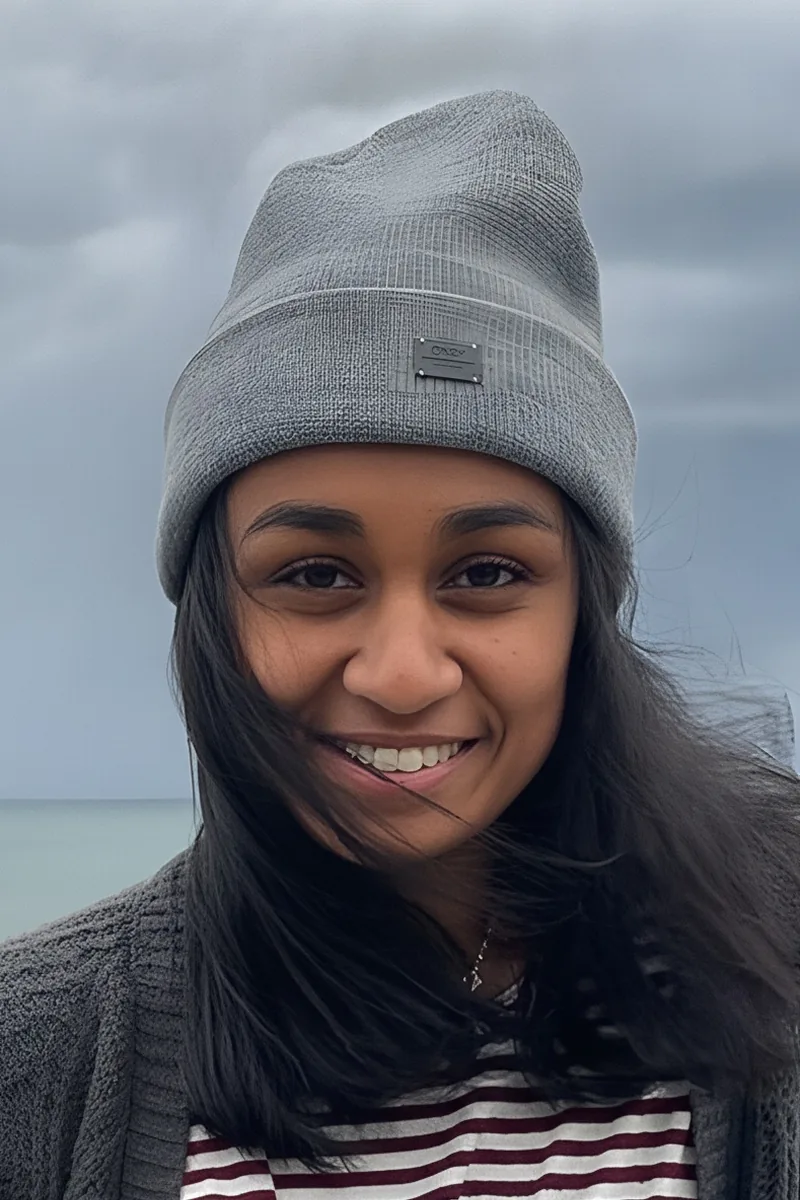
I'm a sophomore at Harvard studying Applied Math, Economics, and Computer Science. I've tutored in a variety of subjects throughout high school and currently work part-time as a Course Assistant for an Introductory Calculus course at Harvard. I especially love tutoring math and making it a more accessible subject for students to learn. Aside from academics, I'm passionate about community service (I'm a director for a student-run homeless shelter!), music, digital design, and baking!
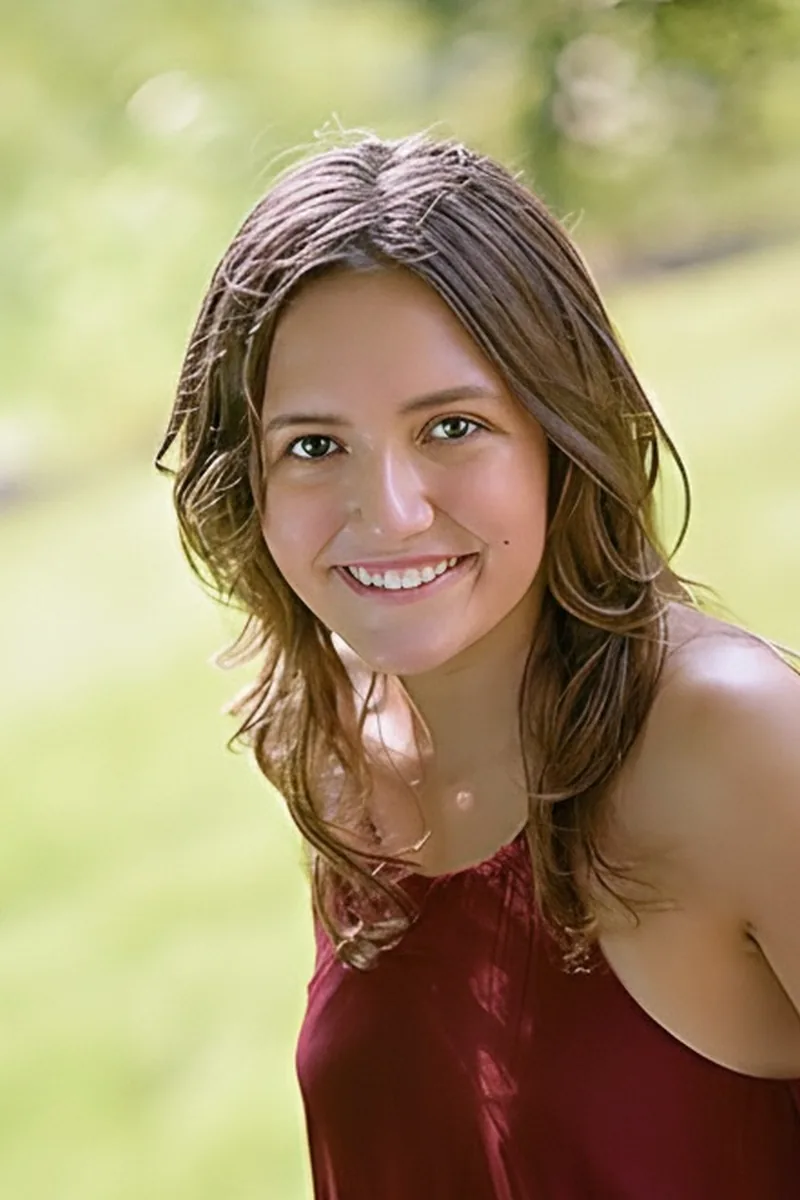
I am a current sophomore at Cornell University pursuing a B.S. in Biomedical Engineering. I have done extensive coursework in biology, physics, chemistry, math, and lab sciences. I love applying engineering problem-solving skills to the biological sciences. For the past year, I have been a teaching assistant for introductory biology classes. In my free time, I participate in cancer immunotherapy research which focuses on melanoma.
I'm starting my junior year at Northwestern University in Evanston, IL. I'm currently getting my degree in biology with a concentration in health and human disease, global health, and a minor in French. I love reading, traveling, learning and helping others learn! I have experience tutoring high school and elementary school students in math, science, and English and I love tutoring in each subject equally. Eventually, I see myself going to medical school and researching topics related to viral diseases which I've been interested in since a very young age. I'm very passionate about the subjects I teach and hope to pass my passion on to the individuals I tutor!
I am a current first-year honors student at Northeastern University pursuing a B.A. in Political Science and a B.A. in History, Culture, and Law. I am a youth activist and have experience working for campaigns and elected officials and am particularly passionate about mental health, climate change prevention, and LGBTQ+ rights. I have done private tutoring for the past three years with students in Elementary, Middle, and High School in a variety of school subjects including but not limited to Math, History, and Writing/Grammar. I am passionate about education and want to use my skillset and knowledge to help other students achieve their best selves. I'm from Denver, Colorado, and currently live in Boston and love to read, watch sitcoms and, of course, tutor my students.
I am a junior Mechanical Engineering major at Yale, and I hope to become a Naval Aviator after college. I am also a varsity sailor, and enjoy playing music with friends when I can get some free time. I have been tutoring my fellow students throughout my entire academic career, and I would best describe my tutoring style as one that adapts to each students' needs. For example, I have always tried to frame questions in a different way so that the student can better understand the question. Some students need visual representations of numbers and systems to understand them, and others benefit more by understanding the concepts behind each formula. I prefer to tutor in math and physics, and especially with real world application problems. I hope to help students improve their standardized test scores and their understanding of the math and sciences so that they can achieve their academic goals!
I am currently a student at Stanford University studying math and political science. I am passionate about sharing my knowledge and experience with younger students. I have helped students of different ages and from diverse socioeconomic backgrounds, and so I am very conscious of the needs and prior knowledge my students and tailor my tutoring method and style individually.
As a second-year medical student with a strong foundation in science and a passion for education, I specialize in making tough subjects easier to understand. I excel in math, biology, physics, and other challenging topics that often intimidate students and I genuinely enjoy helping others master them. My approach combines patience, clarity, and high-level understanding to break down complex ideas into manageable, confidence-boosting lessons. Whether it's reviewing homework or prepping for exams, I'm here to support and motivate students at any level below mine to reach their full academic potential. My interests include: Weightlifting and fitness training (especially strength and hypertrophy programs) Morning cardio and physical conditioning Studying medicine with a focus on anatomy, physiology, and clinical problem-solving Teaching and tutoring tough academic subjects like math, biology, and physics Watching anime as a way to relax and recharge (especially after a long day) Cooking (with a focus on high-protein, keto/carnivore meals)
I am currently a senior at Harvard College where I study chemistry, and I'll be attending Columbia Medical School next year. I have years of experience tutoring college students in math (mostly calculus) and chemistry including both general and organic chemistry. In addition, I am very familiar with all sections of the SAT and ACT having prepared several high school students for these tests. I believe that every student is capable of boosting his or her baseline score on these tests, so long as he or she works hard to get to know the format of the tests and the most popular types of questions. I tutor because I love seeing students develop a genuine passion for the subjects they once disliked (such as math and science), once they understand the power of these subjects and their applications to the real world.
Studying Mathematical Economics at Temple means Andreas works with calculus not as an abstract exercise but as the engine behind optimization models and marginal analysis — so he teaches AP Calculus with a sense of where each concept actually leads. He's especially sharp on series convergence and the BC-specific material that many tutors treat as an afterthought. Rated 4.8 by students.
Integration techniques — substitution, parts, partial fractions — are the make-or-break content in AP Calculus, and Steve approaches each one as a pattern-recognition skill that can be trained. His engineering training at the undergraduate level means he's worked through hundreds of integrals in applied settings, giving him a deep sense of which shortcuts actually hold up on the AP exam. He holds a 5.0 client rating.
I am no stranger to people getting tutors in order to succeed. An ambition to accomplish any academic goal was encouraged all my life; thus, I am accustomed to studying hard on top of participating in countless extra-curricular activities. I graduated highs school and received a diploma from the extremely rigorous International Baccalaureate (IB) program, and began attending an Ivy League college, the University of Pennsylvania, in 2016. With all this said, I am confident that I will be able to teach clients effective ways to solve any problems they have.
I'm a junior at MIT pursuing a B.S. in Computational Neuroscience, and a B.S. in Philosophy. Starting in high school, I have served in a multitude of teaching/tutoring roles, including: tutoring all levels of high school math (from pre-algebra to AP Calculus BC); teaching a six-week class on psychology to underserved high school students in the Boston area; teaching chemistry, biology, and computer science at a STEM summer camp to 6th-9th graders; working as a TA in a college-level philosophy seminar; and even teaching choreo for a hip-hop dance workshop series! And, though my teaching experience centers largely around STEM subjects, I also have a deep love for history, English, and philosophy, and am excited to work with students in these areas as well. In general, I have an intense passion for learning anything and everything, and my top goal when working with any student is to ignite their own curiosity, and awaken their inner desire to understand themselves and the world.
I am current master's student pursuing an advanced degree in environmental engineering. I have about 3 years of experience tutoring a standard math and science curricula to students ranging in age from 7-17. I attended college at Washington University in St. Louis receiving a degree in mechanical engineering and energy engineering in 2020. During my time there, I worked as a teaching assistant for several different engineering courses, tutoring students outside of class in the calculus and physics related topics. As someone that benefitted greatly from tutors and teaching assistants, I really love being able to help students that are struggling in certain areas. I am able to help with standardized tests, focusing on math and science sections, AP Calculus and AP Physics exams, and high school math.
I am also available to tutor for the SAT and ACT. I love passing on the little tips and tricks I have learned through the years, not only for the math sections but also the reading and writing portions. As an avid reader in my downtime and having done a lot of critical reading for my scientific career, I have mastered various strategies for analytical reading that I love passing on.
I am an aspiring applied mathematician, with particular interest in image processing and climate science. I graduated in May 2017 from Washington University in St. Louis with a bachelor's in physics and mathematics, and am beginning a PhD program in September 2017 at the University of Chicago in Computational and Applied Mathematics. I've tutored introductory physics students for three years and enjoyed it thoroughly, as a chance to help other students while revisiting fundamental concepts to enhance my own knowledge. I'm eager to continue reaching out and helping students of math and physics to succeed and, furthermore, to appreciate the beauty and power of these subjects.
As a senior in Yale's Mechanical Engineering program, Yossi uses calculus as a daily working language — from modeling heat transfer to analyzing dynamic systems — which gives his AP Calculus teaching a practical grounding that textbooks alone can't replicate. He's particularly sharp at breaking down the chain rule and related rates into intuitive physical reasoning, showing students how to set up problems before worrying about computation. Rated 5.0 by students.
I am a rising sophomore at Harvard College and am about to declare as a Mechanical Engineering concentrator, working towards a Bachelor of Science degree. I've always enjoyed sharing my knowledge with my peers and those around me and have done so in both formal and informal settings. I've been a tutor for both Math and Spanish programs in high school and enjoyed the strides I made with students. I am willing to tutor any subject I have a background in, but am strong in mathematics, the sciences, Spanish, history, writing, and ACT prep. I enjoy teaching mathematics most due to the joy I can see in children once they master a topic and can answer even pointed questions meant to stump them, and maybe even put their knowledge to real world use. As a tutor, I like to give a strong foundation to orient my student, and then gradually grant them more freedom and independence until they can feel themselves grasp the concept, pointing out pitfalls or common errors along the way; teachers who used these methods on me always left the most lasting impressions. Outside of my studies, I really enjoy listening to music, both old favorites and new interests, reading classics, and gaming/playing basketball with my friends.
I am flexible and adaptive to different learning styles. I welcome students and/or parents to set their own goals/expectations, and I tailor the curriculum to suit those goals.
I am an undergraduate student at the University of Pennsylvania. I have been tutoring for over 6 years now, and I have found it to be an extremely rewarding and enjoyable experience. I specialize in mathematics, particularly at the high school level, and I also have experience tutoring other subjects. I also have done SAT prep for the mathematics section of the New SAT and am very familiar with the recent changes to the exam. My belief is that everyone is capable of learning with enough time, explanation, and practice, and I hope to pass this on to all the students I work with. For this reason, I believe in teaching students how to think and problem solve, rather than just having them memorize patterns or facts.
I am a rising junior at Princeton University pursuing a Bachelors of Arts in Philosophy with a certificate in Statistics and Machine Learning. I am highly passionate about education: during the academic year, I serve as a volunteer tutor for the Petey Greene Program, which provides educational assistance to those incarcerated in New Jersey prisons; after graduation, I hope to work toward becoming a high school mathematics teacher. This summer, I am interning part-time at IntegrateNYC4me, a nonprofit that seeks to integrate New York schools. I believe that quality educational opportunities should be accessible to all, and I hope to dedicate my career toward realizing this vision!
I am a rising Sophomore at Princeton University. I am majoring in Mechanical and Aerospace Engineering, most likely with a minor in Computer Science. During my Junior and Senior years of High School, I tutored a few students on a regular basis. I specialize in Math and Science. More specifically, my strongest subjects are Algebra 1/2/3, Geometry, Trigonometry and ACT Science. I have always found the maths and sciences to be both the most interesting subjects, but also the most applicable to real world problems - this is why I chose to major in what I did. Because I usually tutor in Math, I often tutor in the style of showing how to do a few problems step by step, and then having the student try a few more difficult problems, asking questions along the way. I do this because in my experience, this is the best way to learn and prepare for Math related exams. Outside of academics I play Viola, enjoy running and exercising to stay healthy, and listening to all kinds of music.
I'm available to tutor biology, chemistry, physics, math from Algebra up through AP Calculus, SAT test prep, and French. I've been tutoring students in science and math for 7 years. I also spent 8 months working and studying in France, and have tutored high school and adult students in French. When I'm not working or studying, I love playing volleyball (indoors or on the beach!) and spending time outside, canoeing or hiking with my dog. I look forward to meeting and working with you!
I am an undergraduate of the Johns Hopkins University, majoring in Biomedical Engineering and Computer Science. I have years of experience tutoring and teaching math and various sciences from an elementary to a college level. I primarily tutor college level courses such as physics and biochemistry, but also have extensive experience in social sciences, biology, and higher mathematics such as Calculus and Differential Equations. I believe that demonstrating the various real-world applications of a given concept is the best method to increase a student's understanding.
I'm referring to math, of course, but I didn't always like the subject. Until about age 16, I thought of math as a boring, mind-numbing process of blindly memorizing formulas and then forgetting them after the test, but a series of wonderful teachers showed me the truth. I had thought that everything in math was invented arbitrarily just to torture students, but actually it all made sense in a deep way. When I caught a glimpse of what math really was, I found it irresistible and I ended up majoring in math in college at UChicago. I'm currently a Master's student in Computer Science at NYU.
I am a rising senior at Harvard College pursuing an AB in Government. Academically, I have diverse interests, including history, language, math, physics, philosophy, music, and politics. In high school, I tutored elementary, middle, and high school students in music, math, ACT and SAT prep, and Spanish. At Harvard, I spent a year as a course assistant in the math department, helping to teach introductory undergraduate calculus. Currently, I volunteer with the Leadership Institute at Harvard College (LIHC) as part of its Social Outreach Committee. This work involves teaching a weekly course called "Fundamentals of Leadership" to a class of middle school students. Overall, I have found my experiences tutoring math to be the most rewarding.
I'm currently studying at Stanford University, majoring in either Biology or Science, Technology, and Society. I love helping others and have been a peer tutor for over four years as well as a TA for two math classes. I promise I will work hard with you to achieve your desired score. I'd love to tutor you, so please feel free to contact me!
I'm a freshman at Stanford University pursuing a degree in mathematical and computational science. I've been tutoring students from grades 3-12 throughout high school, and I look forward to continue in college. Nothing excites me more than learning something new, and I strive to share my excitement with my tutees.
I'm Dennis. I study physics, math, and computer science. I have done research about cosmic ray acceleration at supernova shock fronts in the Princeton University Department of Astrophysics, simulating how the turbulent plasmas push protons and ions. I have also worked at the Norfolk State University Department of Engineering, designing, simulating, optimizing, and building light filters for wavelength-division optical-electronic multiplexers. Another field I study is the mathematics of quasicrystals and aperiodic tilings, such as the Penrose tiling of rhombuses.
I'm now living in New York City pursuing a career in casting and producing theater. Although I have found my passion in the arts, I find great fulfillment tutoring math and science, because I think it's important for students to know they can succeed in these challenging subjects. I seek to develop an individual learning plan for each student, discovering the tools that will best help them succeed. My previous private tutoring clients have gone on to graduate at the top of their class. In addition, I am also an experienced SAT and ACT prep tutor.
I am a May 2012 graduate of Princeton University with a degree in Mechanical and Aerospace Engineering currently working in Midtown Manhattan as a consultant. In the past I have had a variety of opportunities to tutor - from one on one tutoring for the SAT in high school and peer tutoring in college, to online tutoring students in Korea and and teaching a two month English seminar in Brazil. Although I have a variety of academic interests, my educational emphasis in math and sciences has led me doing the majority of my tutoring in these subjects. I have worked with students of all ages, learning styles, and strengths, and I love the opportunity to shape a learning experience together!
I am currently a Harvard student majoring in Computer Science with a minor in Applied Mathematics. I graduated Class Valedictorian in high school and was named National Merit Finalist. I took 16 AP classes in high school, including AP Calculus AB, AP Calculus BC, AP Computer Science A, AP Physics C : Mechanics and AP Physics 1, with a score of 5 in all of the tests. I scored a 1570/1600 in my SAT and 800 in the SAT Math Level 2 Subject Test and 790 in the SAT Physics Subject Test.
I'm Kade and I'm currently a second-year at Northwestern University studying biology and chemistry on the pre-medical track. Outside of school/tutoring, I spend time volunteering for my university's annual Dance Marathon fundraiser, a member of Camp Kesem, working as a study group mentor, and I'm also into running and hiking. I look forward to tutoring y'all!
I'm currently a PhD student in economics at Yale University. I also have a BS in physics and math from Yale. Other subjects I enjoy are history, geography, and philosophy, and I dabble in photography and baking. I enjoy helping people understand tricky concepts and solve challenging problems, academic and otherwise.
I am currently an undergraduate student at Duke University. I plan on pursuing a B.S. in statistical science with a minor in music. During my time in high school, I taught saxophone to middle school students. I would be happy to tutor various math subjects such as SAT Math, calculus I (AP Calculus AB), algebra, and pre-algebra. I would also be happy to teach saxophone and music theory and work on college application essays.
I am a freshman at Caltech majoring in Applied and Computational Mathematics. My favorite subject to tutor is math because I find it very rewarding to simplify complex topics to aid in understanding. I have lots of tutoring experience. In high school, I ran and taught an SAT prep class and was vice president of my school's NHS chapter where I ran our tutoring program, and I, myself, tutored. I also was a teaching assistant in the summer of 2020 for a class in discrete mathematics through a program called PACT (Program in Algorithmic and Combinatorial Thinking). I love learning and hope to make the process enjoyable for you!
I am a rising sophomore at Cornell University, studying Human Biology, Health and Society. I am on the premed track and am pursuing a minor in South Asian Studies. I was born in India and grew up in Singapore and Buffalo, NY, where I currently live. This past semester, I tutored middle and high school students in math, biology, and chemistry in Ithaca. I also particularly enjoy tutoring for standardized tests such as the ACT, as I feel it is where students are able to make a lot of progress quickly, and it also tends to be the most rewarding for both the students and for me! As someone who loves making organized and detailed plans, I believe having a clear set of goals for one's future is the key to success, and this can be applied to anything, from a single test to one's entire career. I would love to help my students with setting goals and making plans in their high school and/or college careers, in addition to tutoring a specific subject! In college, I am most involved with Cornell's Hindu Student Council and SPICMACAY, an Indian classical music and dance organization. Outside of academia, I sing South Indian classical music and play many different genres of the piano.
I am currently a senior at the University of Pennsylvania studying cognitive neuroscience and philosophy. I have always loved learning and sharing my love for learning with others. For this reason, I have tutored throughout my time in high school and college. By working with students ranging in age from 5 to 20 years old, I realize that everyone learns in different ways. I am passionate about teaching in a way that works for each individual student. While I have experience tutoring in many subjects, I specialize in essay writing, particularly with personal statements and supplemental essays for college applications. I also specialize in resume writing. Still, I enjoy tutoring subjects like math, ranging from Pre-Algebra to Calculus 1, psychology, and English. For fun I enjoy reading, running, and listening to podcasts.
I'm naturally smart. I'm not that guy that can just look at a problem on the board and just figure it out in seconds. I hate asking that guy for help because he doesn't know how to explain somethinghe just gets it right away. He's never sat down and broken it down. I never was that guy and I will never be that guy.
I am currently a student at Brown University seeking a degree in molecular biophysics. I love studying physics and its many applications in the realms of the life sciences. I have a strange penchant for ultimate frisbee and anything that involves golf (mini golf, frisbee golf, actual golf, etc.). One can often find me at Clark Park or Walnut Greens trying to shoot for par or die trying.
I'm a sophomore at Vanderbilt University, majoring in Physics and Classics and minoring in Mathematics and Computer Science. I'm qualified to teach a wide variety of subjects, but prefer to focus on the fields I'm studying in school listed above; I have a passion for those areas that I want to share with everyone, no matter the education level or confidence. I believe that no one is "bad at math," but many people haven't been taught math and science concepts in a way that matches how they best learn. As a result, I try to tailor my teaching style to be the best it can be for each individual student. With regard to math and physics, I myself prefer a physical, graphical understanding of different concepts, so I do best at explaining what seemingly abstract concepts actually mean in the real world and how they act on a graph.
Testimonials
Because the right AP Calculus tutor makes all the difference.
Average Session Rating – Based on 3.4M Learner Ratings
Top 20 Math Subjects


Top 20 Subjects
Frequently Asked Questions
Students typically find limits and continuity conceptually difficult at the start, especially understanding why a function can approach a value without reaching it. Later, the chain rule and related rates problems trip up many students because they require visualizing how multiple variables change together. Integration techniques—particularly u-substitution and integration by parts—demand significant practice, and many students struggle with recognizing which method applies to which integral. Finally, applications like optimization and differential equations require students to translate real-world scenarios into mathematical models, which is a skill that takes deliberate practice to develop.
This is a common gap—knowing the power rule is different from recognizing when to use it in a related rates or optimization problem. Tutors work by having you practice translating English into equations, identifying which variable is changing and which you're solving for, and then selecting the right differentiation technique. They'll often have you work through several similar problems with decreasing guidance, so you start recognizing patterns independently. Building this translation skill requires targeted practice with feedback, which is exactly what personalized instruction provides.
The AP Calculus exam has two sections: multiple choice (60 minutes for 45 questions) and free response (90 minutes for 6 questions). On multiple choice, aim to spend about 1.3 minutes per question, flagging harder ones to return to if time allows. On free response, read all six questions first and tackle the ones you feel most confident about—this builds momentum and ensures you earn partial credit where you can. Leave 10-15 minutes at the end to review your work and catch arithmetic errors. A tutor can help you practice this pacing with full-length practice tests under timed conditions, so it becomes automatic on test day.
AP Calculus AB covers limits, derivatives, and basic integration. BC covers everything in AB plus additional integration techniques (by parts, partial fractions), series and sequences, and parametric/polar curves. BC is roughly 1.5x the content of AB. If you're taking AB, tutoring focuses on mastering core concepts deeply; if you're taking BC, tutors help you manage the additional topics while reinforcing AB foundations. Many students take AB first, then BC the following year—tutors can help you decide which path fits your goals and pace you accordingly.
Free response questions reward showing your work—you can earn partial credit even if your final answer is wrong, as long as your method is sound. Start by clearly stating what you're finding (e.g., 'I'm using the chain rule to find dy/dx'). Show each algebraic step, especially when simplifying. If you get stuck on one part, move on and use a placeholder for that value in later parts—graders will often give you credit for correct reasoning downstream. Tutors help you practice this by reviewing your solutions with a grader's eye, pointing out where you lose points for skipped steps or unclear notation, so you build the habit of communicating your thinking clearly.
This requires pattern recognition built through practice. U-substitution works when you spot a function and its derivative (or close to it) in the integrand. Integration by parts applies when you have a product of functions where one differentiates to something simpler. Partial fractions handle rational functions. Trigonometric substitution appears with expressions like √(a²-x²). The key is practicing enough problems that you start seeing these patterns automatically—most students need 30-50 varied integration problems to develop real fluency. Tutors accelerate this by showing you how to classify problems quickly and by having you explain your reasoning out loud, which deepens pattern recognition.
Limits are abstract—you're learning that a function can behave a certain way 'near' a point without actually reaching it, which contradicts intuition. Many students memorize limit rules without understanding why they work. Tutors help by using graphs and numerical tables to show you what limits actually mean before diving into algebra. They'll have you evaluate a function at values approaching a point (like 1.9, 1.99, 1.999) to see the pattern, then connect that to the algebraic definition. Once you see limits as 'what value does the function approach' rather than 'what value does it reach,' the rules and applications click into place much faster.
Test anxiety in calculus often stems from feeling unprepared for the variety of problem types or worrying you'll forget a formula. Combat this by taking full-length practice tests under timed conditions weeks before the exam—this builds confidence and reveals which topics still need work. During the test itself, if you feel panicked on a hard question, skip it immediately and move to one you can solve; momentum and early points calm your nervous system. Tutors help by creating a structured study schedule so you know exactly what you're prepared for, and by reviewing your practice test errors so you see patterns rather than feeling overwhelmed by isolated mistakes.
Let’s find your perfect tutor
Answer a few quick questions. We’ll recommend the right plan and match you with a top 5% tutor.