Award-Winning SAT Math Tutors
serving Henderson, NV
SAT Math
Tutors in Henderson
Private 1-on-1 tutoring, weekly live classes for academic support, test prep & enrichment, practice tests and diagnostics, and more to elevate grades and test scores.
Based on 3.4M Learner Ratings
UniversitiesSchools & Universities
DeliveredHours Delivered
ProficiencyGrowth in Proficiency
Who will be getting tutoring?
No obligation. Takes ~1 minute.
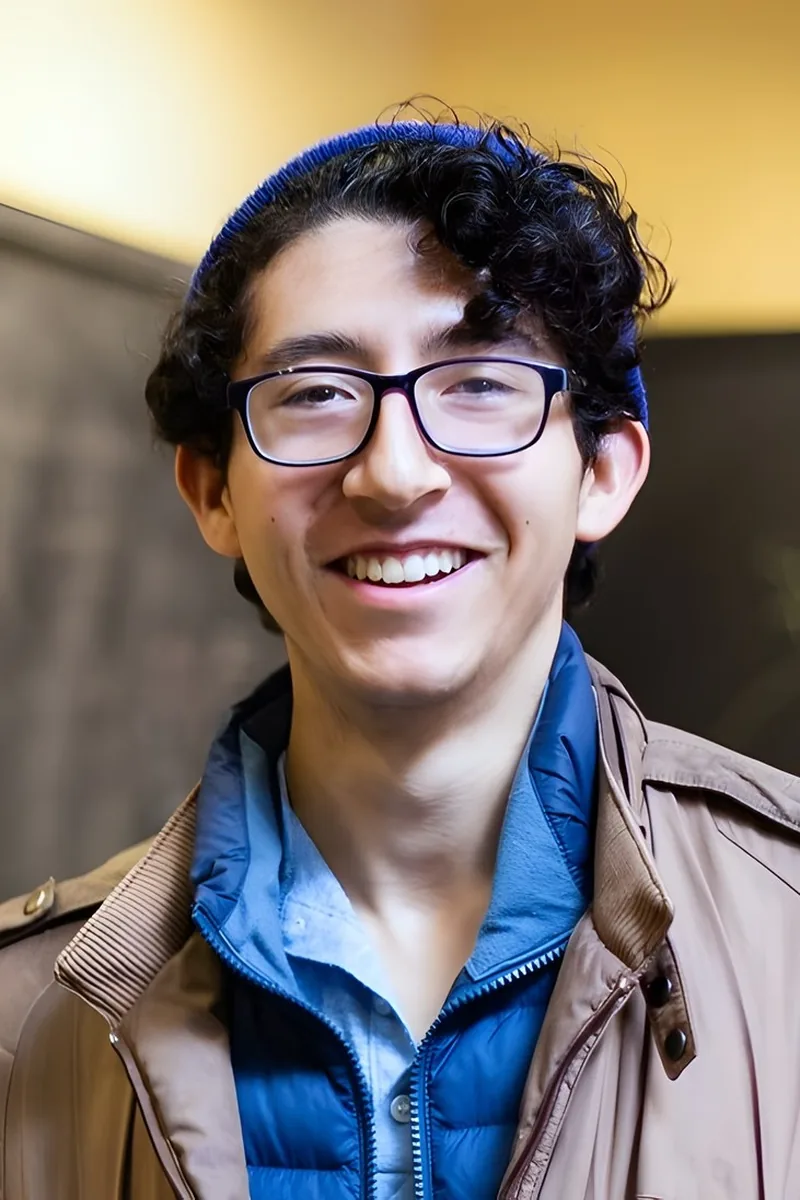
Tim scored a 1560 on the SAT and brings a computational mindset to the Math section — breaking down multi-step word problems, quadratic modeling, and data analysis questions into repeatable strategies. His approach zeroes in on the specific reasoning traps the SAT sets, so students learn to spot them before they lose points. Rated 4.9 by students.
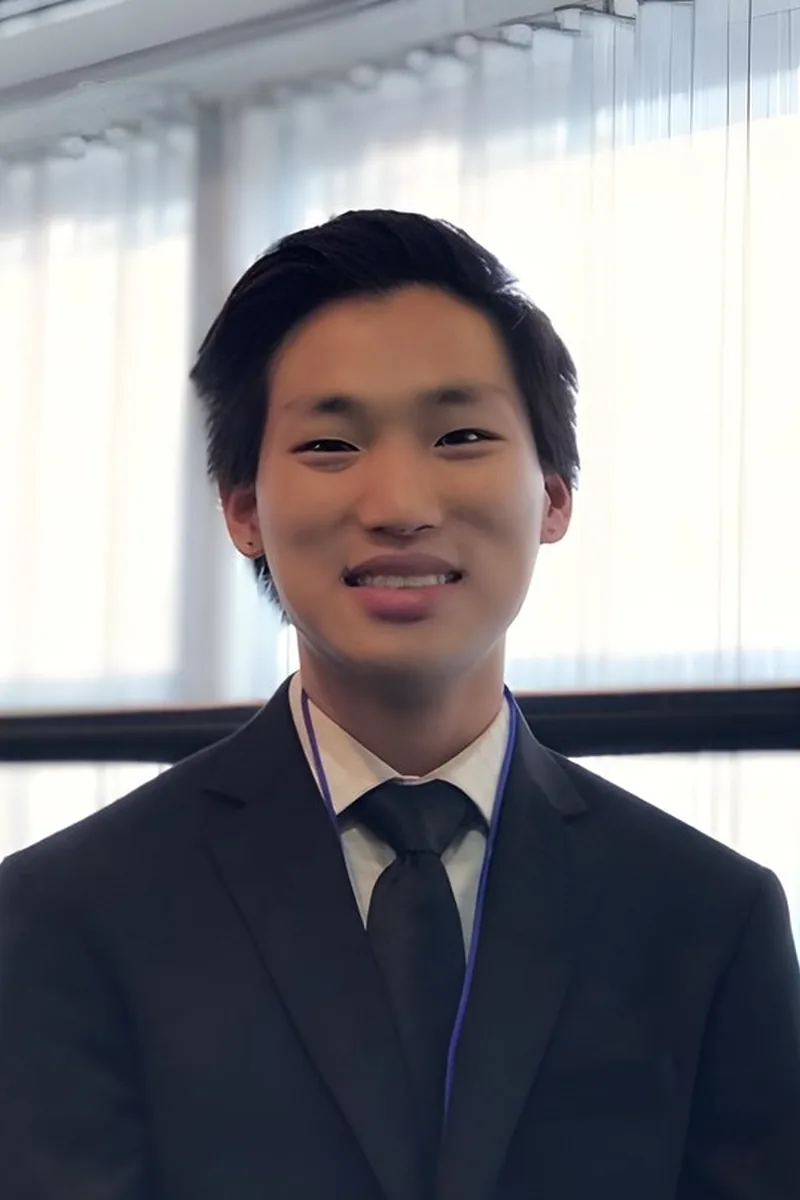
I am currently an undergraduate at Ohio State University. I am studying economics with a math minor in the Honors College of Arts and Sciences.
I am a graduate of the University of Pennsylvania where I studied history and political science. I have been tutoring for 7 years and love to help students do well. I have a particular love for government, American history, and trivia, but I have experience tutoring in a variety of subjects! SAT and AP tutoring is my specialty. Will debate the appropriateness of pineapple on pizza. I look forward to working with you!
Scoring 1550 on the SAT, Zachary knows the math section inside and out — from the no-calculator questions testing algebraic fluency to the data-analysis problems that trip up strong math students. He teaches specific strategies for pacing and question triage so students spend their time where it earns the most points. His approach is practice-driven, with targeted drills on the quadratic, systems, and statistics concepts the College Board emphasizes most.
Passport to Advanced Math questions — manipulating quadratics, interpreting function notation, working with rational expressions — are where most students leave points on the table. Michael's coursework through differential equations and multivariable calculus means these concepts are second nature to him, and his 1570 SAT composite shows he knows how to apply that knowledge under timed pressure. He zeroes in on the specific question types a student struggles with rather than reteaching material they've already mastered.
Deepal scored a 1570 on the SAT and developed shortcut strategies for the math section that cut down on time-consuming algebra — especially on systems of equations, quadratic manipulation, and data analysis questions. He teaches students to recognize problem types quickly so they can pick the fastest path to the answer rather than grinding through every calculation.
I am currently studying for my Bachelors of Science in Electrical Engineering at the University of Nevada, Las Vegas. I tutor my peers at the university level, but enjoy working with younger students as well. While I tutor a variety of subjects, I love tutoring Math and English! I find that students develop an appreciation for Math and English when they thoroughly understand these subjects, and it is my goal to develop this understanding in each of my students.
Michelle earned a 1530 SAT composite and tutored both verbal and math sections at a dedicated SAT prep center, so she knows the test from the inside out. On the math side, she zeroes in on the topics College Board leans on hardest — linear modeling, systems of equations, and passport-to-advanced-math problems involving quadratics and exponentials. Her economics minor at Tufts also means data interpretation and statistics questions feel second nature.
Scoring a 1500 on the SAT, Dylan knows exactly where the tricky points hide — from systems of inequalities to data analysis questions that test reasoning more than raw computation. His engineering coursework at Northwestern keeps these math concepts sharp, and he breaks down each problem type into a repeatable strategy. Rated 5.0 by students.
I'm 18 years old and I am a sophomore at Fordham University. I promise I won't disappoint!
Cassandra scored a 1480 on the SAT and knows exactly where the Math section tries to trip students up — especially on passport-to-advanced-math questions involving quadratics, systems, and polynomial reasoning. She breaks each problem type into a decision tree so students recognize what's being asked before they even pick up their pencil. Rated 4.9 by students.
I am currently an undergraduate at St. John's University in Queens, New York. I am currently pursuing a degree with a major in Economics and minors in Government and Politics and Legal Studies. I have a wide range of interests and have gone to Math/Science schools for most of my life which gives me a good base in all sorts of subjects from Math to Science to English. In my spare time I also like to read, draw, and I am currently teaching myself Computer Science and Chinese. While I am open to tutoring a number of different subjects, I will be sure to cater myself to what you most need and what will help you most succeed - please do not hesitate to contact me!
I'm a 2016 graduate of Pepperdine University with my Bachelor of Arts in Chemistry. Currently I'm preparing to apply to optometry school; I hope to be accepted for the 2018-19 academic year. During my time in college, I was involved as a teaching assistant for General Chemistry I and II laboratory, as a tutor for General Chemistry I, as a member of the Regents Scholar Student Board, and as a "small group" leader through multiple organizations. I am a member of the sorority Pi Beta Phi and held the positions of Historian, Senior Transition Leader, and member of the Leadership and Nominating Committee during my undergraduate years. As far as tutoring goes, I offer my services to students of all ages and in numerous subjects. I particularly enjoy tutoring the STEM subjects. I also thoroughly enjoy working with female STEM students, which allows me to serve as a role model and to offer additional encouragement for my female students to not lose interest in STEM subjects. A large part of my tutoring style focuses on logical thinking for how to tackle new and difficult problems using previous knoledge and educated hypotheses; I have found that my students find both success and a boost in confidence using my methodology. Aside from my academic interests, I love cooking and baking, my cat, photography, and National Parks.
A chemistry master's degree means Shawn has spent years converting real-world scenarios into mathematical models — balancing equations, working with logarithmic scales, interpreting rate data — which is exactly the kind of applied quantitative thinking the SAT Math section rewards. He zeroes in on the geometry and trigonometry questions that many science-track students underestimate, drilling angle relationships and coordinate geometry until the shortcuts become instinct. Rated 4.9 by students.
I love teaching patiently and accurately to achieve concrete goals. A National Merit scholar, a college student, and an aspiring writer, I encourage high achievement and creativity in all my students. With 2+ years of tutoring experience and 1+ years of teaching experience, both in-person and online, I will gladly adapt to your educational and personal needs! Primarily, I tutor the SAT and ACT. I have the most experience in tutoring English (up to 12th grade) and math (up to Algebra II/pre-calc). I can also tutor competitive Lincoln-Douglas and policy debate as well as Impromptu speech at a middle/high school level or general public speaking and argumentation. My favorite subjects are English, which I am pursuing at UNLV, and Speech & Debate, which I teach at a private school. I have an AP Honors Diploma and AP Scholar with Distinction Award from high school.
After earning a 1590 on the SAT, Daniel built a clear playbook for the math section that separates "concept" problems from "strategy" problems — because a student who knows the algebra can still lose points to time pressure or misread graphs. He walks through data-interpretation and word-problem translation techniques that turn careless errors into reliable points.
I'm a rising junior at Brown University studying biomedical engineering. I have lots of experience in middle school through college level instruction in STEM and SAT/ACT prep. My goal is to provide a fun and productive learning environment by only teaching subjects that I am passionate about.
I am passionate about helping students with math, science, test prep, and more! As sophomore undergraduate at Brown University studying Mathematics and Biophysics, I am well experienced with many topics. I received a perfect 36 on my ACT, so I am very confident with test taking.
Scoring 1570 on the SAT means Eric knows exactly where the test tries to trip students up — especially on the math side, where questions about quadratics, systems of equations, and data interpretation are designed to punish rushing. He breaks each problem type into a decision tree so students recognize what's being asked before they start calculating. That pattern-recognition skill is what separates a good math score from a great one.
Psychology and linguistics both demand rigorous data interpretation — Sherry's UChicago coursework in experimental design and statistical analysis maps directly onto the SAT Math section's tables, scatterplots, and percentage questions. Her perfect 1600 SAT means she's mastered every corner of the test, but she zeroes in on the geometry and advanced math problems where students most often misread what's being asked, using her linguist's instinct to untangle the SAT's deliberately tricky phrasing. Rated 5.0 by students.
Heart-of-algebra questions, passport-to-advanced-math problems, and data analysis — the SAT Math section tests a specific slice of math, and Chloe knows exactly which slice. She scored 1540 on the SAT and teaches students to recognize the handful of recurring problem structures the College Board relies on, turning unfamiliar-looking questions into ones they've already practiced.
Engineering coursework gave Conor a comfort with math that most SAT tutors simply don't have — he sees the underlying concept a question is testing before he finishes reading it. With a 1560 SAT composite, he knows exactly where the test writers hide difficulty, especially in the no-calculator section's algebra and data analysis problems. He drills students on recognizing problem types quickly so they spend time solving, not deciphering.
Three semesters teaching ESL gave Danielle an unusually sharp instinct for breaking down dense, wordy problems — a skill that pays off on SAT Math, where half the battle is translating a convoluted setup into a clean equation before any calculating begins. Her 1550 SAT and biology-to-med-school math background mean she's fluent in the geometry, statistics, and algebraic reasoning the test actually emphasizes. Rated 5.0 by students.
I am a Yale graduate with over 8 years experience tutoring students from a variety of backgrounds. I recently graduated from the Yale School of Public Health with a MPH concentrating in Epidemiology and Global Health. I also received my B.S. from Yale with a double major in Molecular, Cellular, and Developmental Biology and French. I have experience both leading group classes and working with students one on one. I will respond to a student's strengths, weaknesses, and learning style in order to help them succeed and make the most of our time together. I earned a perfect score of 36 on the ACT, 2280 on the SAT, and qualified as a National Merit Scholar on the PSAT. I look forward to working with you!
Viktor scored a perfect 1600 on the SAT, and his math degree from UChicago means he doesn't just know the answers — he understands why the College Board designs each question the way it does. He breaks down the no-calculator and calculator sections differently, showing students how to spot which algebraic manipulation or data-analysis shortcut each problem is actually testing.
Engineering coursework at Washington and Lee gave Alex daily practice with the exact math the SAT tests at its hardest level: systems of equations, quadratic modeling, and interpreting complex data tables. He scored a 1590 composite and now teaches students to distinguish between problems that reward algebraic manipulation and those better solved by plugging in values or back-solving. That strategic flexibility is often what separates a 700 from a 780.
Getting past 700 on SAT Math usually comes down to a handful of concept areas: advanced function behavior, systems of equations with no solution, and data analysis questions that blend statistics with algebra. Rhea earned a 1550 SAT and pinpoints exactly which of these areas are costing a student points, then drills those gaps with real College Board problems rather than generic practice sets. Her biology and pre-med coursework at UChicago keeps her math skills sharp through daily quantitative work.
Testimonials
Because the right SAT Math tutor makes all the difference.
Average Session Rating – Based on 3.4M Learner Ratings
Practice SAT Math
Free practice tests, flashcards, and AI tutoring for SAT Math
Other Henderson Tutors
Related Test Prep Tutors in Henderson
Frequently Asked Questions
Varsity Tutors matches Henderson students with expert SAT Math tutors for 1-on-1 instruction. We pair each student with a tutor based on their specific needs, learning style, and goals.
Whether you need homework help, exam prep, or want to get ahead, our SAT Math tutors are ready to help.
Common challenges include gaps from earlier material, difficulty with specific concepts, and trouble applying learning to new problems. These issues can snowball quickly in SAT Math.
A tutor identifies where you're stuck, fills in gaps, and provides targeted practice. The 1-on-1 format means you get help exactly where you need it.
Tutors work with your student's actual coursework—homework assignments, class notes, and upcoming tests. This keeps tutoring directly relevant to what's happening in the classroom.
When you share information about your student's school and curriculum, we can match you with a tutor who has relevant experience.
All tutors complete background checks, credential verification, and teaching evaluation. Many of our SAT Math tutors hold advanced degrees or have years of teaching experience.
You can review tutor profiles to find someone with the right background for your student's level and needs.
Many students see improved grades within a few weeks, along with better understanding of SAT Math concepts and more confidence tackling challenging material.
Tutors track progress and adjust their approach to ensure continued improvement.
Most students benefit from 1-2 sessions per week. More frequent sessions help if your student is significantly behind or has an important exam coming up.
Your tutor can recommend a schedule based on your student's specific situation and goals.
Tutoring is purchased in packages of hours, with rates varying by tutor experience. Varsity Tutors offers several options to fit different budgets and needs.
You can discuss pricing during your consultation to find what works best.
Your tutor will assess where your student is, discuss goals, and start working on priority areas. Most students bring current homework or upcoming test material to focus on.
By the end, you'll have a clear sense of how the tutor can help and a plan for moving forward.
Let’s find your perfect tutor
Answer a few quick questions. We’ll recommend the right plan and match you with a top 5% tutor.