Award-Winning ACT Science Tutors
serving Henderson, NV
ACT Science
Tutors in Henderson
Private 1-on-1 tutoring, weekly live classes for academic support, test prep & enrichment, practice tests and diagnostics, and more to elevate grades and test scores.
Based on 3.4M Learner Ratings
UniversitiesSchools & Universities
DeliveredHours Delivered
ProficiencyGrowth in Proficiency
Who needs tutoring?
No obligation. Takes ~1 minute.

I'm trying to work on personal projects. I really enjoy snowboarding, and have been doing that since the third grade. I also enjoy playing sports and video games.
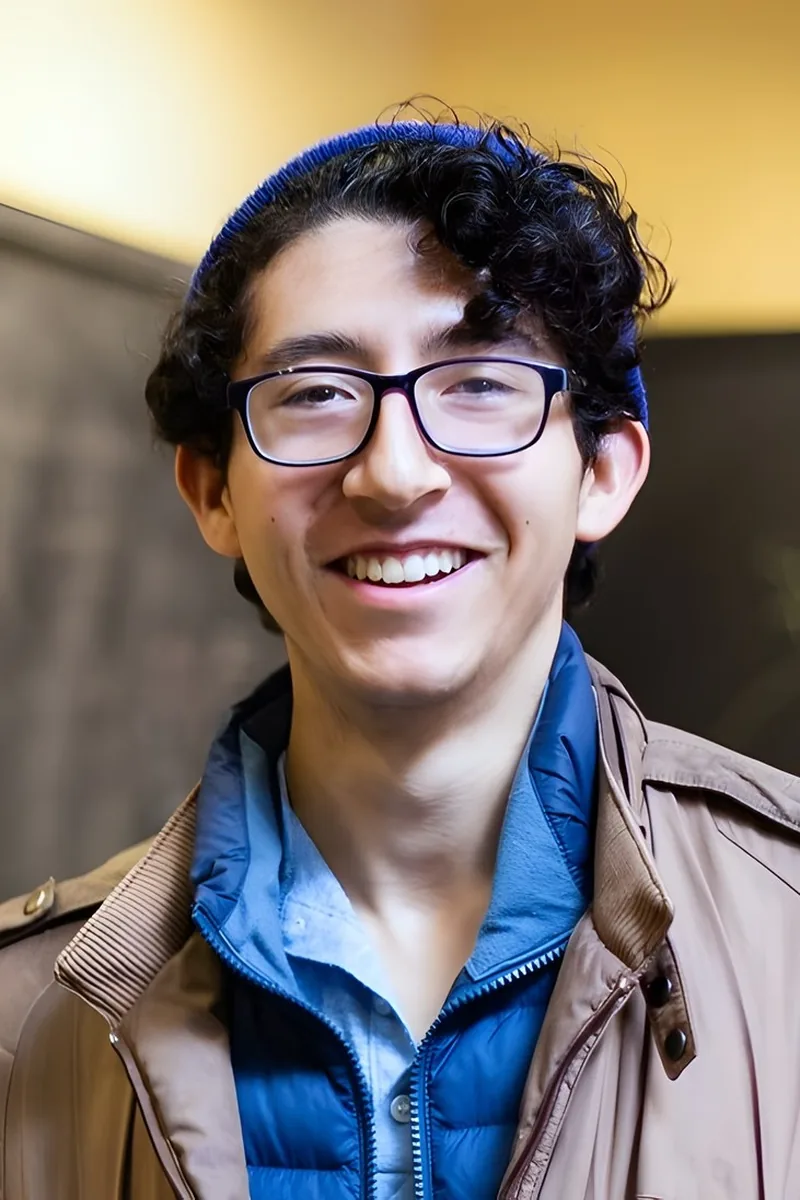
The ACT Science section is really a data interpretation exam disguised as science — and Tim, as a computational science major at MIT, spends his academic life extracting meaning from complex datasets. He teaches students to ignore jargon, read graphs and tables first, and identify the one variable that each question actually tests. His 34 ACT composite reflects how well this systematic approach translates to a high score.
I am currently an undergraduate at Ohio State University. I am studying economics with a math minor in the Honors College of Arts and Sciences.
I'm a sophomore at USC studying Biomedical Engineering. In high school, I maintained a 4.0 GPA while participating in organizations like Mu Alpha Theta so that I could tutor struggling math students in subjects ranging from Algebra to Calculus III. Seeing how comfortable I was in the environment really made an impact on me, and I want to continue that experience tutoring through Varsity Tutors both online and in person. Students I have tutored before in math and standardized testing subjects tell me that my strategies and quick methods for arriving at solutions saves them a great deal of time and energy as they take their exams, which reaffirms my passion and love of tutoring. In my classroom experiences, I found that sometimes the methods that were taught were just too confusing, so then I either created or looked up better ways that secured a better grade for me in the class; the idea that the same problem can be solved in many ways is an idea I try to impart in all of my students so that they can feel comfortable using a process they picked out instead. In my free time, Iove to watch movies, play Super Smash Bros, listen to new music, and read articles on Flipboard.
I'm 18 years old and I am a sophomore at Fordham University. I promise I won't disappoint!
Despite its name, the ACT Science section is really a data-literacy exam — students who try to rely on biology or chemistry knowledge alone run out of time. Cassandra's 33 ACT and her biology degree make her uniquely equipped here: she teaches students to read graphs, compare experimental setups, and identify control variables quickly, then applies actual science knowledge only on the handful of questions that require it. That two-pronged strategy consistently turns a stressful section into a high-scoring one.
I'm currently applying to be a Ph.D. candidate in the hopes of becoming a professor in the social sciences, as my greatest passion is helping students harness their potential and realize their success!
Most students panic when they see the ACT Science section, but Lauryn reframes it as a data-interpretation exercise — the actual science knowledge required is minimal. She drills students on reading graphs, comparing experimental setups, and identifying conflicting viewpoints in research summaries, which are the skills that actually move scores. Holds a 5.0 rating.
I love teaching patiently and accurately to achieve concrete goals. A National Merit scholar, a college student, and an aspiring writer, I encourage high achievement and creativity in all my students. With 2+ years of tutoring experience and 1+ years of teaching experience, both in-person and online, I will gladly adapt to your educational and personal needs! Primarily, I tutor the SAT and ACT. I have the most experience in tutoring English (up to 12th grade) and math (up to Algebra II/pre-calc). I can also tutor competitive Lincoln-Douglas and policy debate as well as Impromptu speech at a middle/high school level or general public speaking and argumentation. My favorite subjects are English, which I am pursuing at UNLV, and Speech & Debate, which I teach at a private school. I have an AP Honors Diploma and AP Scholar with Distinction Award from high school.
I am a 2023 graduate of the University of Notre Dame with a Finance/Economics major and a minor in Innovation and Entrepreneurship. I am a passionate student in the math and business realms, as I enjoy the intuitiveness of the former and the real-world potential of the latter. During classes in middle and high school, I developed a reputation of being a good source of help within my classes in a non-tutor capacity, and grew that into a peer tutor role a couple times a week during lunch my senior year of high school. What I hope to accomplish with my tutoring is ensure that you not only achieve your desired grade/score, but see how the different concepts relate to each other in the bigger picture. The more important part is to critically think about the subject matter in other, more unfamiliar contexts. Also, in my math subjects, I seek to provide personal secrets in realms including quicker computation strategies, unique acronyms for certain rules, and other intuitive shortcuts.
I'm not tutoring, I love walking through New York for design inspiration and taking carpentry, metalworking, and illustration classes.
I am a recent magna cum laude graduate of Duke University and a full-time educator in North Carolina. I have a passion for helping young people figure things out and have experience writing professionally.
Most of ACT Science isn't really about science — it's about reading graphs, interpreting experimental setups, and spotting trends under time pressure. David treats it as a data-literacy exercise, drilling students on how to extract the right information from dense figures without getting lost in unfamiliar terminology. His 36 ACT composite confirms he's mastered this approach himself.
Most students panic when they see ACT Science passages full of unfamiliar terminology, but the section is really a data-interpretation exercise. Richard teaches students to ignore jargon, read graphs first, and identify conflicting variables before touching the questions — a systematic method that turns a confusing section into one of the most improvable. He earned a 36 ACT composite and brings physics coursework that makes the experiment-based passages feel intuitive.
I am available to tutor in a broad range of subjects, though I am most passionate about Economics, History, and Civics. Please feel free to contact me and I would be happy to arrange a session.
I am an aspiring applied mathematician, with particular interest in image processing and climate science. I graduated in May 2017 from Washington University in St. Louis with a bachelor's in physics and mathematics, and am beginning a PhD program in September 2017 at the University of Chicago in Computational and Applied Mathematics. I've tutored introductory physics students for three years and enjoyed it thoroughly, as a chance to help other students while revisiting fundamental concepts to enhance my own knowledge. I'm eager to continue reaching out and helping students of math and physics to succeed and, furthermore, to appreciate the beauty and power of these subjects.
Most students panic when they see an unfamiliar experiment on the ACT Science section, but the test is really about interpreting graphs, tables, and conflicting viewpoints under time pressure. Sugi's dual background in biochemistry and cognitive science — plus years of reading dense research literature in medical school — makes her especially effective at teaching students to extract data quickly without getting lost in scientific jargon. Her perfect 36 ACT speaks for itself.
Alyssa's physical therapy doctorate means she spends her days buried in research studies — parsing experimental designs, reading data figures, and evaluating conflicting results — which is exactly what the ACT Science section demands. She scored a 35 composite herself and teaches students to treat each passage like a lab report: skip the dense background text, go straight to the figures, and answer from the data. Rated 5.0 by students.
The ACT Science section is really a data interpretation exam disguised as science — success depends on reading graphs, identifying trends, and evaluating conflicting hypotheses quickly and accurately. Anna scored a 36 ACT composite and, as a current MD/MBA student at Northwestern's Feinberg School of Medicine, brings genuine scientific literacy that makes parsing experimental passages second nature. Rated 5.0 by students.
I am in my second year at MIT studying mathematics, and I am currently doing a research project in Spectral Graph Theory. I have been a tutor since my junior year in high school, and I enjoy teaching all levels of math; everything from pre-algebra through calculus and linear algebra! I focus primarily on making sure that the definitions and processes given in class make intuitive sense, so that math can begin to feel like second nature.
I am a sophomore at the Georgia Institute of Technology and am working towards a major in Computer Engineering. I have been tutoring students of all ages and backgrounds in various math topics ranging from elementary school math to AP Calculus throughout high school. I love teaching math and always find it amazing to watch my students grow and improve in their mathematical abilities. While helping students with standardized testing, we go through several tricks and tactics that have helped my students succeed and have fun in the process. I am also well versed in Physics and have spent 3 years taking the highest levels of physics courses. I love playing all sports (especially soccer) and enjoy playing the guitar in my free time as well.
Testimonials
Because the right ACT Science tutor makes all the difference.
Average Session Rating – Based on 3.4M Learner Ratings
Practice ACT Science
Free practice tests, flashcards, and AI tutoring for ACT Science
Other Henderson Tutors
Related Test Prep Tutors in Henderson
Frequently Asked Questions
Varsity Tutors matches Henderson students with expert ACT Science tutors for 1-on-1 instruction. We pair each student with a tutor based on their specific needs, learning style, and goals.
Whether you need homework help, exam prep, or want to get ahead, our ACT Science tutors are ready to help.
Common challenges include gaps from earlier material, difficulty with specific concepts, and trouble applying learning to new problems. These issues can snowball quickly in ACT Science.
A tutor identifies where you're stuck, fills in gaps, and provides targeted practice. The 1-on-1 format means you get help exactly where you need it.
Tutors work with your student's actual coursework—homework assignments, class notes, and upcoming tests. This keeps tutoring directly relevant to what's happening in the classroom.
When you share information about your student's school and curriculum, we can match you with a tutor who has relevant experience.
All tutors complete background checks, credential verification, and teaching evaluation. Many of our ACT Science tutors hold advanced degrees or have years of teaching experience.
You can review tutor profiles to find someone with the right background for your student's level and needs.
Many students see improved grades within a few weeks, along with better understanding of ACT Science concepts and more confidence tackling challenging material.
Tutors track progress and adjust their approach to ensure continued improvement.
Most students benefit from 1-2 sessions per week. More frequent sessions help if your student is significantly behind or has an important exam coming up.
Your tutor can recommend a schedule based on your student's specific situation and goals.
Tutoring is purchased in packages of hours, with rates varying by tutor experience. Varsity Tutors offers several options to fit different budgets and needs.
You can discuss pricing during your consultation to find what works best.
Your tutor will assess where your student is, discuss goals, and start working on priority areas. Most students bring current homework or upcoming test material to focus on.
By the end, you'll have a clear sense of how the tutor can help and a plan for moving forward.
Let’s find your perfect tutor
Answer a few quick questions. We’ll recommend the right plan and match you with a top 5% tutor.