Award-Winning Economics
Tutors
Who needs tutoring?
FEATURED BY


TUTORS FROM
- YaleUniversity
- PrincetonUniversity
- StanfordUniversity
- CornellUniversity
Award-Winning Economics Tutors

Certified Tutor
2+ years
ACCOUNTING: Need help in making sense of all those accounting principles and entries that you must make?? FINANCE: Do you find the subject matter INTIMIDATING?? ESPANOL: You want help from someone who is sympathetic to the challenges of learning a new language and can make the experience enjoyable a...
University of Pennsylvania
Undergraduate Degree
Florida Agricultural and Mechanical University
Undergraduate Degree
Certified Tutor
2+ years
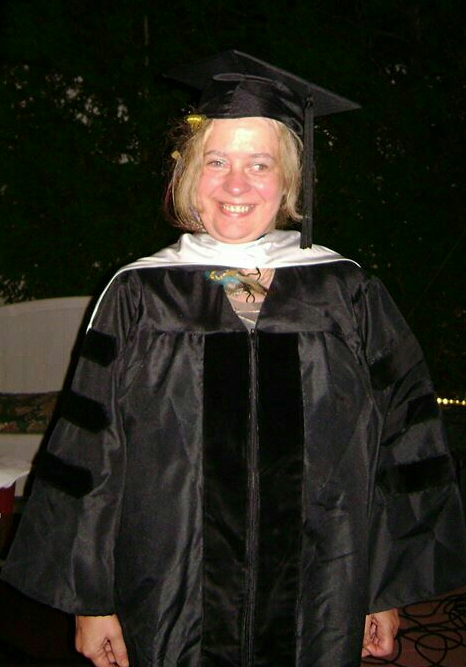
Dr. Réagan
Supply and demand curves are intuitive enough, but students often struggle once the course moves into elasticity, market structures, or macroeconomic policy models. Dr's MBA in Management and decades of teaching business at the university level give her a practitioner's lens on economic theory — she...
Columbia University
Master's

Certified Tutor
2+ years
Supply-and-demand curves, marginal analysis, and cost-benefit reasoning all rely on the same algebraic and graphical thinking Anudeep uses daily in his engineering coursework. He's especially effective at walking students through the math behind economics — interpreting slopes, calculating elasticit...
University
Bachelor's

Certified Tutor
2+ years
Yash
Hi! My name is Yash Kavadia, and I'm currently a Finance major at the University of Texas at Austin's McCombs School of Business. I graduated from Bergen County Academies, one of the top-ranked public high schools in the country, and I've always had the passion and patience for helping others succee...
The University of Texas at Austin
Bachelor's (in progress)

Certified Tutor
2+ years
Susan
Susan's master's in Applied Learning and Instruction means she's studied how people actually absorb and retain new concepts — a skill that pays off in economics, where students often understand ideas like scarcity or elasticity in isolation but struggle to connect them into a coherent framework. She...
University of Central Florida
Undergraduate Degree
Florida Institute of Technology
Undergraduate Degree

Certified Tutor
2+ years
Allyson
Studying economics at Wellesley means Allyson is immersed in supply-and-demand models, market structures, and GDP analysis on a daily basis. She translates those concepts into concrete, relatable examples — like how ticket pricing for a college golf tournament illustrates elasticity. That ability to...
Wellesley College
Bachelors (in progress)

Certified Tutor
2+ years
William
I have a lot of teaching experience in both high-school and college settings, in the United States and abroad. I cover subjects ranging from ESOL, German, literature, and essay writing to most of the humanities topics that arise in AP and IB courses.
Yale University
PhD
Georgetown University
PhD

Certified Tutor
2+ years
Caroline
An effective educator must be able to recognize each individual student's learning style and to adapt the lesson to accommodate that style. Also, each student has a different rate of learning. Thus, the lessons must be directed not only towards ensuring the student masters the material but also keep...
Northwestern University
AM
American University
AM
Certified Tutor
2+ years
Grishma
Northwestern's neuroscience and global health curriculum exposed Grishma to the economic forces behind healthcare systems, resource allocation, and public policy — making her especially effective at connecting microeconomic reasoning to real-world decision-making. Her AP Economics background and med...
Northwestern University
Bachelor
Loyola University-Chicago
Professional (JD, MD, DMD, etc)

Certified Tutor
2+ years
I received my MBA graduate degree from Georgetown University and my Electrical Engineering Bachelors degree from San Diego State University. I worked for Sony Electronics for over a decade as a Senior Electrical Design Engineer, leading hardware designs of newly introduced features of Sony's High-De...
Georgetown University
MBA
San Diego State University
MBA
Top 20 Business Subjects


Meet Our Expert Tutors
Connect with highly-rated educators ready to help you succeed.
Alan
AP Calculus BC Tutor • +28 Subjects
Intensely curious, I am interested in STEM subjects and the liberal arts. I tutor to help you reach your educational goals and because it's immensely gratifying to see my students succeed.
Conrad
Middle School Math Tutor • +12 Subjects
I believe every person has potential, which must be drawn out of them. With over 4 years of leading workshops, being a Teaching Assistant and creating curriculum, and nearly two years of private tutoring, I know how to help students and people of all ages easily understand concepts in Science, Technology, Engineering, and Mathematics. Having graduated from Vanderbilt University with a Bachelors degree in Engineering Science, I know how to move from not understanding a subject to understanding it well. The subjects I tutor include: - Math (Algebra 1, Geometry, Algebra 2, Pre-Calculus**, Calculus 1**, Calculus 2** and Statistics**) - Computer Science (AP CSP / AP Comp SciA, Python, ReactJS/JavaScript, HTML/CSS, Powershell/Bash Scripting) - Science (Physics**) ** - tutor subject at high school/AP/college level My teaching style includes completely modeling a problem on the board. Then, I would guide a student through solving a problem before having them solve it independently.
John William
ISEE- Upper Level Tutor • +2 Subjects
I am a graduate of Middlebury College. At Middlebury I double majored in Economics and History and minored in Spanish. Since graduating over four years ago, I have held two very different jobs! Directly after graduating, I served as a Youth Developement Peace Corps Volunteer in Peru. For two years I lived with a host family in the Andes Mountains and developed sustainable programs in preventative healthcare and education! After Peace Corps I helped launch a technology startup in New York City that partnered with taxi drivers. I absolutely love tutoring and sharing my passion for a variety of subjects including math, history, economics and Spanish! I have extensive experience tutoring all ages, including adults and my approach is collaborative, individualized, and fun. In my free time, you'll find me reading an American History book, running in Prospect Park or finding music with my friends!
Heberto
Geometry Tutor • +7 Subjects
I am a graduate of The University of Colorado, Boulder and Harvard Kennedy School. I received my Bachelor of Arts in Economics and my Master in Public Policy with a focus on international and global affairs. Since graduation, I have worked in investment banking and management consulting, though I also have worked on government relations. While I tutor a broad range of subjects, I am most passionate about History, English Literature, and Math (namely algebra and pre-calc). In my experience helping students prepare for Standardized Tests, I like to focus on the writing and math assessments, as those tend to be challenging to many students. I believe in ensuring students are able to think independently and have the confidence to understand the material. I believe the subjects I tutor are necessary for students to succeed and I want to impart what I know to students. In my spare time, I enjoy reading about history and geopolitics, hiking, and writing.
Clark
Middle School Math Tutor • +14 Subjects
I have a PhD (Yale) in history and an MBA (UCLA) in finance. I have excellent writing and research skills, and have made extensive use of German and French -- spoken and for research. My work in finance has required skills with mathematics. I have taught university classes in finance and international economics. Another area of much interest, related to my background in history and public policy, is US constitutional law. I published a book on monetary history (*Gold, France, and the Great Depression*) , and a more recent book of essays on topics in economics and diplomatic history (http://books.ksplibrary.org/978-625-7501-75-0/ ) .... I have worked extensively on government-related projects, often in the greater Middle East. Effective tutoring should do more than impart techniques -- it should certainly do that -- it should help a student come away with some interest in and enthusiasm for the topic. (Soft evidence for the last is that my daughter earned a PhD in neuro-science, and credits me with inspiring her.)
Sishir
German 4 Tutor • +9 Subjects
I am very passionate about helping students gain proficiency in various types of mathematics and other courses. With 2 years of prior tutoring experience and a plethora of courses taken, I have a true passion for what math can do and how it can translate to real-world applications. I believe in hands on learning and working with students to break down complex problems with tips and methods to help them learn and retain information.
Rhea
Pre-Algebra Tutor • +49 Subjects
I have been a tutor for 9 years, specializing in test prep and admissions tests. I also work with students on admissions essays and general homework help. I come from a suburban town near Houston, Texas, where I attended an international studies high school and gained tutoring experience through working and volunteering. I have worked as an assistant teacher for ESL (English as a Second Language) and volunteered as a tutor in both regular and AP subjects throughout my high school years. I have a BA in International Studies, with a minor in Business Administration and a certificate in Community Based Participatory Research. I am very interested in education, and I have spent lots of time studying different education systems and teaching methods. I believe that every single student has a unique way of learning and processing information, so it is important for them to develop their own studying habits and learning methods. That is why I want to be a tutor - so that I can help students discover their ideal way of learning. I am a determined and dedicated student that wants to help others. I have experience tutoring and working with students that are struggling to grasp difficult material and concepts. I am a social and outgoing person who works well with others, and I will try my best to help students succeed.
Jackson
Middle School Math Tutor • +15 Subjects
I am a senior at Duke University studying Economics and Public Policy. I am passionate about finding specific strategies that work for each individual student, drawing on my broad experience across math and the humanities.
Nico
AP Statistics Tutor • +12 Subjects
I'm a student at Yale University majoring in both Economics and Global Affairs. Over the past 4 years, I am lucky to have worked with students of all ages and helped them reach their full potential. I offer tutoring services in all subjects, and I'm particularly interested in English, Economics, Government, and Math. My teaching philosophy centers on creating a safe, welcoming environment where students can learn at their own pace. Outside of academics, I enjoy spending time outside and enjoying good food with family and friends.
Harleen
AP Statistics Tutor • +22 Subjects
I am a Molecular Engineering major at the University of Chicago, I am currently taking time off to focus on other aspects of my career but I don't want to stop tutoring outside college campus!. I am a child of immigrants and have spent my life tutoring my siblings and younger students, and I loved working with them! See y'all in class!
Top 20 Subjects
Frequently Asked Questions
Students often find supply and demand curves conceptually challenging—not just plotting them, but understanding how shifts occur and predicting market equilibrium changes. Marginal analysis trips up many learners because it requires thinking at the margin rather than in totals, which is counterintuitive. Time value of money and present value calculations also cause frustration since they demand comfort with both the math and the reasoning behind why a dollar today is worth more than one tomorrow. Additionally, students struggle to connect abstract concepts like opportunity cost and comparative advantage to real-world scenarios, and interpreting financial statements (balance sheets, income statements, cash flow) requires understanding both the mechanics and what the numbers actually reveal about a business.
Microeconomics and macroeconomics require different mental models—micro focuses on individual actors (consumers, firms) and markets, while macro examines aggregate phenomena like GDP, inflation, and unemployment. A tutor helps students build these models separately before connecting them, ensuring they understand why a firm's pricing decision differs from how central banks manage inflation. For AP Economics or college-level courses, this distinction is critical because exam questions often test whether students can apply the right framework to a given scenario. Tutors also help students see how microeconomic principles (like elasticity) inform macroeconomic policy decisions, deepening conceptual understanding rather than just memorizing definitions.
Economics is built on logic and incentives, not formulas to plug into. A tutor guides you through the reasoning—for example, why the elasticity formula measures responsiveness to price changes, and how that elasticity determines whether a firm should raise or lower prices to increase revenue. Instead of memorizing that MR = MC at profit maximization, you'll understand why firms compare marginal revenue to marginal cost and what happens when they diverge. This approach transforms concepts like comparative advantage, the multiplier effect, and financial ratios from abstract rules into tools you can apply to new situations. When you understand the logic, you can tackle unfamiliar problems on exams rather than freezing when the specific scenario doesn't match a memorized example.
Strong Economics tutoring bridges the gap between textbook models and actual markets by analyzing real companies, industries, and economic events. For example, when learning about market structures, a tutor might examine why tech companies operate as near-monopolies, how barriers to entry protect their pricing power, and what that means for investors. Supply chain disruptions become concrete examples of how supply shocks ripple through markets and affect inflation. Understanding financial ratios like debt-to-equity or return on assets moves from calculation to analysis—what does a high ratio tell you about a company's risk and growth strategy? This real-world grounding helps students preparing for CFA exams, MBA programs, or careers in finance see Economics as a practical toolkit rather than abstract theory.
Economics demands comfort with algebra, percentages, and interpreting graphs—but also statistical reasoning and basic financial modeling. Students need to calculate elasticity, work with present value formulas, interpret regression results, and build simple financial models (like a pro forma income statement). Many struggle less with the math itself and more with setting up the problem correctly: knowing which formula applies, what variables mean, and how to interpret results in context. A tutor reinforces these skills by working through problems step-by-step, ensuring you understand not just how to solve an equation but why that equation represents the economic relationship you're analyzing. This foundation is especially important for students aiming toward accounting, finance, or economics majors where quantitative rigor increases significantly.
AP Economics (both Micro and Macro) demands that you not only know concepts but can apply them to novel scenarios—the exam tests reasoning, not memorization. College-level Economics goes deeper into mathematical modeling and assumes you've mastered foundational logic. A tutor helps you move from "I can solve this practice problem" to "I understand this principle well enough to apply it in an unfamiliar context." They also help you develop the habit of drawing graphs, labeling axes carefully, and explaining economic reasoning in writing—skills that are heavily weighted on AP exams and college problem sets. Additionally, tutors can address gaps in prerequisite math or logic early, ensuring you're not struggling with algebra when you should be focusing on economic intuition.
Financial statements (balance sheets, income statements, cash flow statements) confuse students because they require understanding both accounting mechanics (debits and credits, GAAP principles) and what the numbers reveal about business performance. A balance sheet isn't just a list of assets and liabilities—it shows what a company owns, owes, and the equity stake of owners. An income statement isn't just revenue minus expenses; it reveals profitability at different levels (gross profit, operating income, net income) and helps you spot trends. A tutor breaks down these statements piece by piece, explaining why certain items belong in certain places and what ratios derived from them (like ROA, debt-to-equity, current ratio) actually tell you about financial health and risk. This understanding is crucial for anyone pursuing finance, accounting, or business careers.
Opportunity cost—the value of the next-best alternative foregone—is foundational to Economics, but students often treat it as a definition rather than a lens for thinking about decisions. A tutor helps you see opportunity cost everywhere: in a firm's decision to invest in Project A versus Project B, in your choice to attend college versus work, in a country's decision to produce guns versus butter. The key is recognizing that opportunity cost is specific to the decision-maker and context; it's not a number you look up, but something you reason through. Once you internalize this thinking, you can analyze trade-offs in supply chains, resource allocation, and policy decisions with clarity. This conceptual shift transforms how you approach Economics problems and prepares you to think like an economist in real-world scenarios.
Connect with Economics Tutors
Get matched with expert tutors in your subject