Award-Winning Finance Tutors
serving Syracuse, NY
Finance
Tutors in Syracuse
Private 1-on-1 tutoring, weekly live classes for academic support, test prep & enrichment, practice tests and diagnostics, and more to elevate grades and test scores.
Based on 3.4M Learner Ratings
UniversitiesSchools & Universities
DeliveredHours Delivered
ProficiencyGrowth in Proficiency
Who needs tutoring?
No obligation. Takes ~1 minute.
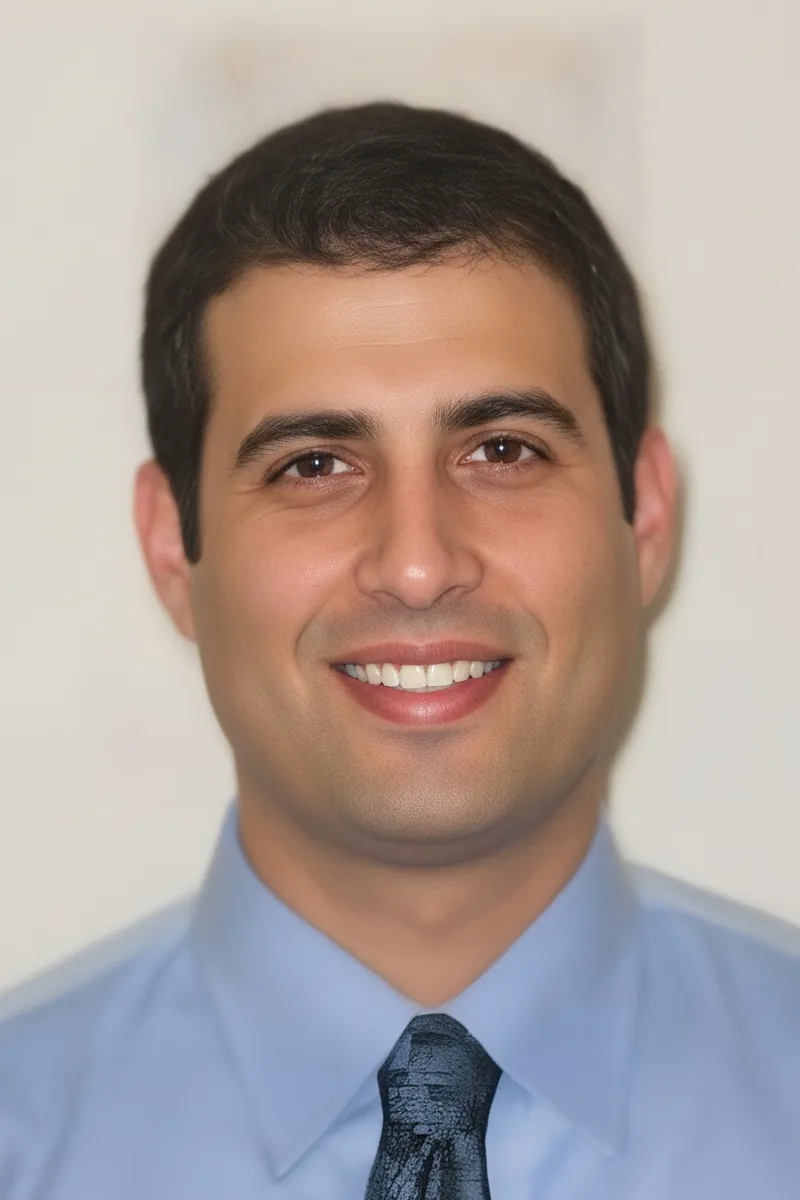
Running a startup means David lives finance daily — building cash flow projections, valuing equity, and weighing capital structure decisions in real time. His UChicago MBA gave him the theoretical framework, but it's the hands-on work with DCF models, ratio analysis, and funding rounds that makes his explanations concrete and grounded.

Time value of money, net present value, and capital budgeting all rely on the same core math — but finance courses layer on terminology that can obscure the underlying calculations. Rahi's triple engineering background means he's comfortable with the quantitative side and can quickly show students how to set up cash flow diagrams, discount rates, and amortization schedules from scratch.
Few finance tutors can walk through discounted cash flow models, capital structure theory, and portfolio risk the way someone who actually built those models on Wall Street can. Frank spent his career as a research executive in finance before transitioning to teaching, and he brings that practitioner's lens to graduate-level topics like valuation, time value of money, and financial statement analysis.
Time value of money, net present value, and portfolio risk calculations are ultimately math problems dressed in business language. Romeo's mathematics degree and PhD-track training give him the quantitative fluency to break down discounted cash flow models and amortization schedules so the numbers actually make sense. He connects each formula to the financial decision it's designed to answer.
Political science trained Reid to think about how institutions, incentives, and policy shape economic outcomes — a lens that translates well to finance topics like risk assessment, time value of money, and capital allocation. He approaches financial concepts methodically, breaking formulas into the logic behind them rather than treating them as black boxes.
A master's in Finance means Alex can dig into time value of money calculations, capital budgeting, and portfolio theory with real fluency — not just textbook definitions. He connects financial models to how actual firms make investment and funding decisions, which makes concepts like WACC and DCF analysis click faster.
Time value of money calculations — present value, future value, NPV — trip students up because the formulas look similar but apply to very different decisions. Mustafa unpacks each one by tying it to a concrete scenario, like evaluating a loan or comparing investment options, so the math has context. His cross-disciplinary background in economics and law gives him a practical lens on corporate finance and capital budgeting topics.
Time value of money, discounted cash flow, and capital structure decisions are concepts Idara uses in her actual career — she's spent years in the finance industry after completing her MS in Management Science & Engineering at Stanford. She unpacks formulas like NPV and IRR by connecting them to real investment decisions, making the math feel purposeful instead of arbitrary.
As a CFA candidate with an economics degree and a background in financial accounting, Ezra lives in the world of time value of money, capital budgeting, and portfolio theory daily. He unpacks concepts like NPV, IRR, and risk-return tradeoffs by grounding the math in real decision-making scenarios rather than leaving students to memorize formulas. Whether the course leans corporate finance or investments, he knows the material from both the academic and practitioner side.
Having worked as a summer associate at a major New York law firm, Patrick encountered corporate finance concepts — capital structure, valuation, risk assessment — in their natural habitat rather than just in a textbook. He unpacks topics like time value of money, DCF analysis, and portfolio theory by connecting the math to the business decisions behind it. His dual background in law and history also gives him a useful lens on financial regulation and market behavior.
Time value of money is the single idea that unlocks most of finance, from discounted cash flow analysis to bond pricing to loan amortization. Jim's economics degree gave him deep fluency with these quantitative tools, and he teaches students to set up and interpret financial models rather than just plugging numbers into formulas. Rated 5.0 by students.
Magnus earned his M.S. in Finance from UVA and now works as a Financial Analyst at an international law firm in New York. He breaks down concepts like DCF valuation, capital structure, and risk-return tradeoffs using real-world deal scenarios that make the theory click.
As a Finance major at NYU — one of the top undergraduate business programs in the country — Eric digs into time value of money, DCF valuation, capital structure, and portfolio theory every day. He translates dense quantitative concepts into intuitive explanations, and his statistics training means he's equally comfortable with the Excel modeling and probability work that finance courses demand.
Carl's economics degree from Uppsala University was concentrated in macroeconomics, which means he digs into finance from the system level down — interest rate mechanics, time value of money, portfolio risk, and how capital markets actually function. He connects textbook formulas like NPV and CAPM to real market behavior, making the quantitative side of finance intuitive rather than formulaic.
An economics degree provides exactly the quantitative backbone that finance concepts demand — present value calculations, risk-return tradeoffs, and interpreting financial statements all build on economic reasoning. Jessie connects these topics to the underlying models students encounter in corporate finance and investment analysis, making formulas feel purposeful rather than abstract.
Studying finance at NYU Stern means Sean tackles concepts like DCF modeling, capital structure, and portfolio theory in his own coursework every week. He breaks down topics such as time value of money and financial statement analysis by tying them to real company data, making abstract formulas feel grounded. His accounting background adds depth when sessions touch on how financial reports drive investment decisions.
Time value of money, discounted cash flows, and risk-return tradeoffs all come down to applied math — exactly where Nikhil thrives. As a mathematics major at NYU with economics coursework, he connects financial formulas to the underlying logic so students can adapt to new problems on exams instead of relying on memorized shortcuts.
Mo earned his B.S. in Finance, so concepts like time value of money, DCF analysis, and capital structure aren't abstract formulas to him — they're the core language of his training. He breaks down financial statements and valuation models step by step, connecting each calculation to the real business decision it informs. Rated 4.9 by students.
A chemistry background might seem unrelated to finance, but Ankit's heavy quantitative training — differential equations, statistics, and data modeling — maps directly onto the math that drives concepts like compound interest, bond pricing, and amortization schedules. He approaches financial formulas the way a scientist approaches equations: by breaking each variable down until the underlying logic is clear, not just memorized.
An English degree might seem like an unlikely path into finance, but Andrew's economics tutoring experience and strong quantitative instincts — evidenced by a 1560 SAT and 35 ACT — mean he's comfortable breaking down the math that underpins topics like compound interest, loan amortization, and basic valuation. He approaches finance the way a careful reader approaches a text: pulling apart each component to see how the pieces fit together, which is especially useful for students who find purely formula-driven instruction hard to follow.
Currently working in the finance and investments industry, Hardik brings live context to topics like time value of money, DCF analysis, and capital structure decisions. He teaches the math behind NPV and IRR alongside the reasoning professionals actually use when evaluating deals, which bridges the gap between textbook formulas and how finance is practiced. Rated 5.0 by students.
Time value of money, DCF analysis, capital structure — finance is applied math with real stakes, and Sean's background covers both sides. His mathematics degree provides the quantitative rigor for building and interpreting financial models, while his MBA training grounds every calculation in the business decisions it's actually meant to inform.
As a finance major in Villanova's Honors Program, Jenna digs into the concepts students find most intimidating — time value of money calculations, DCF modeling, WACC, and capital structure decisions. She connects textbook formulas to the reasoning behind them, so students can set up problems from scratch instead of hunting for which equation to plug numbers into.
An MBA in Finance isn't just a credential for Jay — it's the lens through which he unpacks time value of money, capital budgeting, and portfolio theory for students encountering these concepts for the first time. He connects formulas like NPV and WACC to actual business decisions so the math has a purpose beyond the problem set. Students come away understanding not just how to calculate a discount rate, but why it matters.
Dexter's economics degree and real estate development studies at NYU give him a practitioner's grasp of finance concepts like time value of money, capital budgeting, and risk-return tradeoffs. He connects textbook formulas to actual deal structures and investment decisions, which makes abstract topics like discounted cash flow analysis far more intuitive.
Time value of money, discounted cash flows, and capital budgeting can feel abstract until someone walks you through the logic behind each formula. Brock's economics degree gives him the quantitative grounding to explain not just how to calculate NPV or IRR, but why those metrics matter for real financial decisions. Rated 5.0 by students.
Before tutoring, Lawrence spent three years at Goldman Sachs, where concepts like discounted cash flow, portfolio risk, and capital structure weren't textbook abstractions — they were daily work. He teaches finance by tying each model back to how it's actually used on a trading desk or in a boardroom, which makes formulas and frameworks far easier to internalize.
As a finance concentration at NYU Stern, Joseph lives this material — time value of money, DCF analysis, capital structure, and portfolio theory aren't just exam topics for him but tools he uses in coursework and case competitions. He breaks down quantitative concepts step by step so students build real intuition for how financial decisions get made.
Working at a healthcare startup means Ilyas lives finance — capital budgeting, cash flow analysis, and valuation aren't textbook abstractions for him. His UC Berkeley finance degree provides the academic foundation, while his professional experience lets him explain concepts like time value of money and risk assessment through scenarios students can actually picture.
I am a Yale University graduate with over seven years of tutoring experience with children and adults of all ages, specializing in writing, reading, English, college prep, and working with differently-abled learners. As a writer and entrepreneur, I have tutored since high school because it is something I truly enjoy. I approach tutoring with patience, and with finding a motivation to learn and excel that is specific to each student. With young adults and older learners, I approach each skill with purpose in reaching their individual goals and dreams, and with younger learners it is all personalize-practice-reward, working with parents and mentors to understand their needs and facilitate their individual learning and success. I'd love to hear from you and discuss how we can make the most out of our time together!
I am working as a Cross-border consultant and consult for businesses who want to get into the Chinese market and do business with Chinese companies. Language and culture is a big part of my life both professionally and personally. My articles in mandarin have been published in multiple newspapers and magazines when I was studying in China. Chinese literature and history have always been my greatest passion. I want to help everyone really understand the Chinese culture and learn to use this beautiful language to express themselves whenever they are traveling, studying, doing business with Chinese. I am really good at other subjects too, I passed the GMAT exam with 99% math/quantitative section. Math has always been one of strongest academic subject too. Tutoring is a great responsibility, further to me it can also be one of life's most rewarding experiences. I am naturally attracted to different cultures and love to share mine with everyone. I was also a Junior Olympian (swimmer) for 8 years and love to go outdoors as I love nature.
I'm a current junior studying Computer Science at the Engineering School at UCLA. Most recently, I interned as a Software Engineer at Adobe. My emphasis is on computer science, math, and physics. Reach out to me and say hi!
I am a firm believer of this and, as such, I do not spoon feed students during sessions but rather guide them to figure out how to answer their own questions and solve their own problems. Thus, I focus not only on what to do, but how and why to do it. One of the most significant drivers of independent learning is curiosity, and this is one of the primary traits I aim to cultivate in students.
I am a young finance professional with a Bachelor of Science Honors degree in Finance from the University of Connecticut School of Business. I have levels 1 and 2 of the CFA and am working towards level 3.
I am a recent BS. Civil Engineering Graduate from RPI, and working as a Bridge Engineer! Since HS I enjoyed all things math and science (hence Engineering aha) and have a passion for teaching/tutoring other students! Throughout HS and college, being tutored myself helped me a lot and taught me the value of learning and sharing knowledge. I strongly believe that sparking curiosity and being a life-long learner is very important, and the skills and concepts learned in school can have many applications in any/every aspiration possible. I've tutored other students for about 3-4 years and look forward to tutoring you!
I'm currently a senior in college at Long Island University Brooklyn studying for my BBA in Finance I've been tutoring since I was 12 years old and have worked with major tutoring companies such as KUMON and Mathnasium. I have also completed the KUMON Math program. I love tutoring and love kids! I'm a very patient tutor and know how to work with students of all ages! I'll be starting my job working on Wall Street after my graduation this Spring!
I'm not tutoring, I work in theatre and film (everything ranging from The Muppets and musical comedy to more serious stories grounded in history), and have been involved with productions on Broadway, at Carnegie Hall, and at additional venues throughout the country. I love to travel, and feel fortunate to have worked on projects that have taken me to Africa and England. I recently returned to New York (where I was born and raised), and am excited to "pay it forward" to the next generation, helping students reach their full potential.
I am dedicated tutor specializing in math and sciences. I have my doctorate in pharmacy and have an eclectic repertoire of subjects I am ready to help you pass!
I am a junior at Allegheny College who is majoring in Economics and triple-minoring in Mathematics, Psychology, and Dance and Movement Studies. Growing up, I was always one of the students who helped my classmates when they didn't understand certain problems.
Testimonials
Because the right Finance tutor makes all the difference.
Average Session Rating – Based on 3.4M Learner Ratings
Other Syracuse Tutors
Related Business Tutors in Syracuse
Frequently Asked Questions
Varsity Tutors matches Syracuse students with expert Finance tutors for 1-on-1 instruction. We pair each student with a tutor based on their specific needs, learning style, and goals.
Whether you need homework help, exam prep, or want to get ahead, our Finance tutors are ready to help.
Common challenges include gaps from earlier material, difficulty with specific concepts, and trouble applying learning to new problems. These issues can snowball quickly in Finance.
A tutor identifies where you're stuck, fills in gaps, and provides targeted practice. The 1-on-1 format means you get help exactly where you need it.
Tutors work with your student's actual coursework—homework assignments, class notes, and upcoming tests. This keeps tutoring directly relevant to what's happening in the classroom.
When you share information about your student's school and curriculum, we can match you with a tutor who has relevant experience.
All tutors complete background checks, credential verification, and teaching evaluation. Many of our Finance tutors hold advanced degrees or have years of teaching experience.
You can review tutor profiles to find someone with the right background for your student's level and needs.
Many students see improved grades within a few weeks, along with better understanding of Finance concepts and more confidence tackling challenging material.
Tutors track progress and adjust their approach to ensure continued improvement.
Most students benefit from 1-2 sessions per week. More frequent sessions help if your student is significantly behind or has an important exam coming up.
Your tutor can recommend a schedule based on your student's specific situation and goals.
Tutoring is purchased in packages of hours, with rates varying by tutor experience. Varsity Tutors offers several options to fit different budgets and needs.
You can discuss pricing during your consultation to find what works best.
Your tutor will assess where your student is, discuss goals, and start working on priority areas. Most students bring current homework or upcoming test material to focus on.
By the end, you'll have a clear sense of how the tutor can help and a plan for moving forward.
Let’s find your perfect tutor
Answer a few quick questions. We’ll recommend the right plan and match you with a top 5% tutor.