Award-Winning Biochemistry
Tutors
Who needs tutoring?
FEATURED BY


TUTORS FROM
- YaleUniversity
- PrincetonUniversity
- StanfordUniversity
- CornellUniversity
Award-Winning Biochemistry Tutors
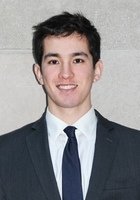
Certified Tutor
10+ years
Zachary
Enzyme kinetics, metabolic pathways, protein folding — biochemistry sits at the intersection of biology and chemistry, and Zachary holds a degree in exactly that. He digs into the molecular logic behind processes like glycolysis and the citric acid cycle, connecting reaction mechanisms to the bigger...
Yale University
Bachelors, Biochemistry and Biophysics

Certified Tutor
6+ years
David
David's neuroscience training at Yale meant wrestling with biochemistry from the nervous system's perspective — neurotransmitter synthesis, ion channel biophysics, and the metabolic demands that make the brain consume a disproportionate share of the body's glucose. Now pursuing a graduate degree in ...
Yale University
Bachelor of Science in Neuroscience
Harvard University
Current Grad Student, Bioethics and Medical Ethics
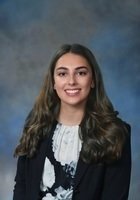
Certified Tutor
8+ years
Amanda
Four years of medical school gave Amanda a particular edge with the biochemistry that underpins clinical reasoning — she's internalized how disruptions in lipid metabolism or glycogen storage pathways manifest as actual disease states. Her biology degree and public health training add breadth, letti...
The University of Alabama
Bachelor of Science, Biology, General
Baylor College of Medicine
Doctor of Medicine, Public Health
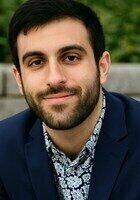
Certified Tutor
Shayan
Studying biochemistry at Penn as part of a pre-health track, Shayan lives in the world of enzyme kinetics, metabolic pathways, and protein structure daily. He breaks down dense topics like the citric acid cycle or amino acid chemistry using visual analogies and step-by-step logic that make the conne...
University at Buffalo
Bachelors, Biology, General
University of Pennsylvania
Current Grad Student, Pre-Health

Certified Tutor
6+ years
Connor
Enzyme kinetics, metabolic pathways, protein folding — Connor digs into biochemistry with the depth his biomedical sciences master's from Loyola Chicago demanded. He connects molecular-level details to physiological outcomes, so a student learning about Michaelis-Menten kinetics also understands wha...
Loyola University-Chicago
Master of Arts, Biomedical Sciences
University of Notre Dame
Bachelor of Science
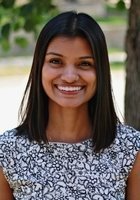
Certified Tutor
5+ years
Sugi
Enzyme kinetics, metabolic pathways, protein structure, nucleic acid chemistry — biochemistry demands that students hold molecular detail and big-picture logic in their heads simultaneously. Sugi graduated summa cum laude with a biochemistry degree from Rice and now applies that knowledge daily in m...
Rice University
Bachelor's degree in Cognitive Science and Biochemistry & Cell Biology
Baylor College of Medicine
Doctor of Medicine, Ophthalmic Technology

Certified Tutor
Natasha
Enzyme kinetics, metabolic pathways, protein folding — biochemistry sits at the intersection of biology and chemistry, and Natasha lives at exactly that intersection as a chemical and biomolecular engineering graduate student at MIT. She unpacks reaction mechanisms and molecular interactions by enco...
Johns Hopkins University
Bachelor of Science, Chemical and Biomolecular Engineering
Certified Tutor
8+ years
Aimee
Enzyme kinetics, metabolic pathways, and protein structure sit right at the intersection of Aimee's two degrees — chemical engineering and biosystems engineering. She unpacks topics like Michaelis-Menten kinetics and amino acid chemistry by tying them to the biomedical research context she works in ...
Georgia Institute of Technology-Main Campus
Bachelor of Science, Chemical and Biomolecular Engineering
Massachusetts Institute of Technology
Current Grad Student, Biological/Biosystems Engineering

Certified Tutor
6+ years
Yasheen
Enzyme kinetics, metabolic pathways, protein structure — biochemistry demands that students hold molecular-level detail and big-picture biological function in their heads simultaneously. Yasheen earned dual degrees in biology and cellular/molecular biology from Yale and now works in a cancer biology...
Yale University
Bachelor of Science in Biology
Certified Tutor
Dennis
Few tutors can teach biochemistry from the perspective of someone who lived it at the graduate level. Dennis holds a Masters in Chemical and Physical Biology from Vanderbilt and an undergraduate degree in Biochemistry, so topics like enzyme kinetics, metabolic regulation, and protein structure are s...
Vanderbilt University
Masters, Chemical and Physical Biology
Grinnell College
Bachelors, Biochemistry
Practice Biochemistry
Free practice tests, flashcards, and AI tutoring for Biochemistry
Top 20 Science Subjects


Meet Our Expert Tutors
Connect with highly-rated educators ready to help you succeed.
Paul
Calculus Tutor • +44 Subjects
I am a graduate of Brown University, where I completed a double major in biology and public health, and received honors in the biological sciences.
Matthew
AP Calculus BC Tutor • +67 Subjects
I am currently conducting breast cancer research as the lab manager in an immunology lab at Columbia University Medical Center. I am extremely comfortable with physics and mathematics (from my studies) as well as biology, chemistry, and biochemistry (through my research experience) and sincerely enjoy tutoring students in those areas. I also enjoy tutoring for standardized tests. While I was studying for the SAT, ACT, and MCAT, all of my preparation was through self-study; as a result, I have a unique approach to preparing for tests that emphasizes knowing the test itself more than the actual material. In addition to tutoring natural sciences and standardized test prep, I tutor Spanish, which I studied for 7 years and spoke for a year while living in Spain. In my spare time, I play guitar, cook for my friends, read, and play with my cat Suki.
Alex
Calculus Tutor • +23 Subjects
I am comfortable tutoring a broad range of topics in the sciences and math for standardized exams. I feel most confident with organic chemistry since I have helped many struggling or confused students map out the reactions and mechanisms, develop study habits, and ace their exams. As an instructor, my aim is to focus on teaching concepts and fundamental principles since this approach builds understanding and allows students to tackle any problems they face.
Eric
Algebra 3/4 Tutor • +22 Subjects
I am looking to use my passion for Chemistry and teaching to help students excel. I recently took the MCAT exam and I am currently applying to medical school. I look forward to helping you or your child succeed in Math and Science.
Maha
Pre-Algebra Tutor • +34 Subjects
I am currently a graduate student at the Johns Hopkins Bloomberg School of Public Health. My teaching experience spans several years and age groups. As a high school student, I volunteered as a teaching assistant for a middle school science class. During college, I spent six months as a GED tutor, working with adults. Later, I spent two years as an Organic Chemistry Laboratory teaching assistant. I am a friendly and outgoing person, and I really enjoy teaching and sharing my knowledge with others. I particularly like working with middle school and high school students, as I can challenge them and help them build strong foundations during some of their most important academic years!
Rohan
Calculus Tutor • +33 Subjects
Hobbies: sports, books, writing, reading, cooking, music, art
Andrew
AP Calculus BC Tutor • +51 Subjects
I am a current graduate student at Columbia University in the City of New York. Tutoring since high school, I have worked with students ages 11-22 (from middle school through college) in subjects as varied as math, organizational skills, PRAXIS prep, and of course, biochemistry! Additionally, I am well-versed in GRE, SAT, ACT, and AP exam coaching. Outside of the classroom, I have and continue to work in biochemical laboratories, play viola in an orchestra, and cross-country hike. As a student of pedagogy, I adapt to each student's unique needs to deliver hands-on approaches that use real world examples and provide mastery in comprehension. I believe that knowledge is power, but only in the application and advancement of knowledge can one find success.
Jhonatan
AP Calculus AB Tutor • +42 Subjects
I am a firm believer in the idea that there is no better feeling than that "aha!" moment.
Salman
Pre-Algebra Tutor • +43 Subjects
I am proficient in teaching Math and Science to elementary, high school, and college students.
Manideep
Pre-Calculus Tutor • +35 Subjects
I am an undergraduate pre-medical student at Northwestern University. I am currently pursuing my degree in Biological Sciences and a minor in Business Institutions. I also work as a TA (teaching assistant) and RA (resident assistant) within the university, so I have practiced many interpersonal skills necessary to be an efficient tutor. As a student in a top-ten ranked institution, I can provide insight and tips for how to best prepare for studies in college.
Top 20 Subjects
Frequently Asked Questions
Students most commonly struggle with metabolic pathways (glycolysis, citric acid cycle, oxidative phosphorylation) because they involve interconnected reactions that are easy to memorize but hard to truly understand. Enzyme kinetics and protein structure-function relationships are also difficult because they require visualizing molecular interactions in 3D. Additionally, many students find it challenging to connect biochemical concepts to their physiological consequences—for example, understanding not just how ATP synthase works, but why the proton gradient matters for cellular energy. A tutor can help you move beyond memorization to grasp the underlying logic of why biochemical pathways are organized the way they are.
Enzyme kinetics is notoriously abstract because it involves mathematical relationships that don't always feel intuitive. A tutor can break down what Km and Vmax actually represent (substrate affinity and enzyme capacity) and show you how to interpret them from graphs and experimental data rather than just plugging numbers into equations. They can also help you understand how inhibitors, pH, and temperature affect enzyme activity by connecting the math back to what's physically happening at the molecular level. Many students benefit from working through real kinetic plots and learning to predict how changes in conditions will shift enzyme behavior.
The key is understanding the logic behind pathway organization rather than memorizing every intermediate. A tutor can help you focus on the critical control points (like phosphofructokinase in glycolysis or isocitrate dehydrogenase in the citric acid cycle) and why cells regulate those specific steps. You'll learn to ask questions like: Why is this pathway exergonic? Where does the energy come from and where does it go? How do different pathways interconnect? Once you understand the "why" behind pathway design, the details become much easier to retain. Tutors can also help you see how different pathways (carbohydrate, lipid, amino acid metabolism) follow similar principles, which reduces the cognitive load.
Protein structure is inherently 3D and difficult to grasp from textbook drawings alone. A tutor can guide you through molecular visualization tools (like PyMOL or Jmol) to explore real protein structures and see how primary, secondary, and tertiary structures relate to function. They can help you understand why certain amino acids cluster together (hydrophobic core), how disulfide bonds stabilize structure, and how even small changes in sequence can cause misfolding diseases like cystic fibrosis. Many students benefit from learning to predict secondary structure using hydropathy plots and understanding how structure determines enzymatic activity, substrate binding, and protein-protein interactions.
Understanding the theory behind biochemistry lab techniques—like gel electrophoresis, chromatography, or spectrophotometry—helps you design better experiments and troubleshoot when things go wrong. A tutor can explain why you're using specific buffers, what pH and ionic strength do to protein behavior, or how to interpret kinetic data from your enzyme assay. They can also help you connect lab results back to underlying biochemical principles, so you understand not just what happened, but why it happened. This deeper understanding makes you more independent in the lab and better prepared to explain your methods and results in reports.
Biochemistry is taught as separate units (carbohydrate metabolism, lipid metabolism, protein synthesis, etc.), but cells don't work that way—everything is interconnected. Students often struggle to see how glycolysis feeds into the citric acid cycle, how that connects to fatty acid synthesis during fed state, or how amino acid metabolism intersects with energy production. A tutor can help you build mental maps showing these connections, using specific examples like how excess glucose is stored as glycogen and fat, or how amino acids can be gluconeogenic or ketogenic. This integrative thinking is essential for understanding metabolic regulation and for success on cumulative exams.
Beyond enzyme kinetics, Biochemistry requires comfort with unit conversions (molarity, moles, concentrations), pH calculations, and thermodynamic principles (ΔG, ΔH, ΔS). Many students struggle with pH because they don't fully grasp logarithms or how buffer systems actually work—they memorize Henderson-Hasselbalch without understanding the underlying principle. A tutor can help you build these quantitative foundations so you can confidently approach problems involving redox reactions, coupled reactions, and energy calculations. Strong quantitative reasoning also helps you understand why certain metabolic reactions are favorable under cellular conditions and how cells use energy coupling to drive unfavorable reactions.
A strong Biochemistry tutor understands not just the content but the conceptual framework—they can explain why pathways are organized the way they are and help you build mental models rather than relying on memorization. They should be comfortable with both the theoretical (thermodynamics, kinetics) and practical (lab techniques, real-world applications) sides of biochemistry. They should also be skilled at breaking down abstract concepts (like proton gradients or allosteric regulation) into digestible pieces and using analogies or visualizations to make them concrete. Finally, they should be able to identify your specific gaps—whether you're struggling with the chemistry fundamentals, the biological context, or the quantitative reasoning—and tailor their approach accordingly.
Connect with Biochemistry Tutors
Get matched with expert tutors in your subject