Award-Winning AP Spanish Literature and Culture
Tutors
Who needs tutoring?
FEATURED BY


TUTORS FROM
- YaleUniversity
- PrincetonUniversity
- StanfordUniversity
- CornellUniversity
Award-Winning AP Spanish Literature and Culture Tutors
Certified Tutor
6+ years
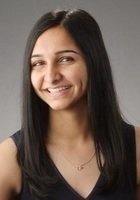
Rhea
Pre-med biology majors don't usually end up on an AP Spanish Literature tutoring page — but Rhea's background in AP Spanish coursework and her analytical training at the University of Chicago give her a sharp eye for breaking down how literary devices function in a text and building structured argum...
University of Chicago
Bachelor of Science, Biology, General
Certified Tutor
6+ years
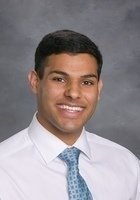
Learning Spanish from scratch starting in second grade and continuing through a medical Spanish interpreting internship at Rice, Sanjay knows exactly where non-native speakers stumble when reading dense literary texts — the archaic syntax in a Cervantes passage or the layered metaphor in a Darío poe...
Rice University
Bachelor in Arts
Certified Tutor
5+ years
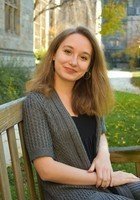
Vivian
This isn't Vivian's core subject — her strengths center on standardized test prep and English — but her 36 ACT and 4.9 rating speak to the analytical rigor she brings to any text-based exam. For students who already have solid Spanish fluency and need help with the structural side of timed literary ...
Yale University
Bachelor in Arts

Certified Tutor
10+ years
Sarah
A double major in Spanish and Government means Sarah studied the language at an advanced level while also learning to build the kind of thesis-driven, evidence-based arguments that the AP exam's free-response essays demand. She's taught across every level of Spanish from introductory through AP Lite...
University of Pennsylvania
Masters, International Educational Development
Georgetown University
Bachelors, Spanish; Government (Double Major)

Certified Tutor
Rebecca
Six months living in Spain didn't just make Rebecca fluent — it gave her the cultural immersion to teach students how a Lorca play or a Pardo Bazán story sits within its specific Spanish literary moment, not just on a reading list. Her English and Philosophy degrees from Notre Dame sharpened the clo...
University of Notre Dame
Bachelors of Arts in English and Philosophy

Certified Tutor
6+ years
Renee
Renee's PhD in Spanish and Iberian Studies means she's spent years inside the literary traditions the AP exam tests — not just reading Garcilaso or Unamuno, but producing original scholarship on how these texts function within broader Iberian cultural movements. That academic depth shapes how she te...
Colgate University
Bachelor in Arts, Spanish
Princeton University
Doctor of Philosophy, Spanish and Iberian Studies
Certified Tutor
Emerson
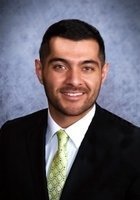
Fully fluent in Spanish and studying at the University of Chicago, Emerson brings genuine literary analysis skills to AP Spanish Literature and Culture — from unpacking the magical realism in García Márquez to dissecting the poetry of Sor Juana Inés de la Cruz. He teaches students to write the kind ...
University of Chicago
Bachelor of Science, Biology and Psychology
Certified Tutor
5+ years
Manuel
Between his CLEP Spanish preparation, SAT Spanish with Listening work, and a Political Science degree that demands close reading of argumentative texts, Manuel has built the exact skill set AP Spanish Literature rewards: analyzing how authors construct meaning and defending an interpretation under t...
Princeton University
Bachelor in Arts

Certified Tutor
8+ years
Elise
Four years of TA'ing Spanish at Dartmouth using the Rassias method — an approach built around verb structure, syntax, and pronunciation drills — gave Elise an instinct for how language mechanics shape literary meaning, which is exactly what the AP exam's analytical essays reward. Her Comparative Lit...
Dartmouth College
B.A. in Comparative Literature
Certified Tutor
10+ years
Caio
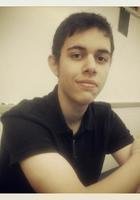
Reading García Márquez or Sor Juana Inés de la Cruz in the original Spanish demands more than translation — it requires understanding the cultural and historical contexts that shaped each work. Caio pairs deep Spanish fluency with his Rice sociology and history training, so he can unpack literary mo...
Rice University
Current Undergrad, Sociology with business minor
Top 20 Languages Subjects


Meet Our Expert Tutors
Connect with highly-rated educators ready to help you succeed.
Meagan
Elementary Math Tutor • +65 Subjects
I am a certified and experienced former middle-school teacher, with a particular passion for teaching reading and writing. I've also enjoyed teaching ESL and sharing my enthusiasm for learning Spanish. These experiences have included working with children from kindergarten through 12th grade.
Alex
Pre-Algebra Tutor • +74 Subjects
I am a recent graduate of Bowdoin College with a BA in Biology, English, and Theater. I have been tutoring pretty steadily in one form or another since middle school and am quite comfortable tackling diverse subjects in both the arts and sciences. As a native Spanish speaker, reader, and writer I have years of experience tutoring students at all proficiency levels in the language. My bilingual background has also given me the opportunity to work with native Spanish speakers in other academic subjects. I bring a compassionate and collaborative approach to teaching. I strongly believe that a tutor must treat his or her student as a teammate and not as someone who merely needs instruction. The goal of any tutoring session should be to bring out and foster a student's own capacity to understand and excel in a given field, which begins with respect. I am currently pursuing a graduate study in biology- where my interests primarily lie in evolution and bioanthropology.
Isabella
Calculus Tutor • +31 Subjects
I am currently a student at the University of Chicago (UChicago), a "Top 10" research institution. I have decided to double major in English and Public Policy with a focus in Journalism. I have tutored students previously, especially in college essay writing. Students that have been under my wing of guidance have gone to prestigious universities such as Harvard, Stanford, UChicago, MIT, Columbia, and more. Though I am most passionate about fortifying my clients' writing abilities by providing constructive feedback on their college essays, I also enjoy helping students with AICE AS Level/AP Language and History related subjects. In my opinion, it is in these fields of learning that we learn to properly analyze and digest information, which is crucial for success on final exams and beyond. I unapologetically believe that broadening knowledge emboldens individuals to achieve their goals.
Arianna
Pre-Algebra Tutor • +47 Subjects
I am a third-year medical student at the University of Kansas School of Medicine. I graduated from the University of Kansas in three years with a Bachelor of Science degree in Behavioral Neuroscience and minors in psychology and Spanish. Before starting medical school, I worked as a medical assistant and a tutor for the KU Athletic Department. Throughout my undergraduate experience, I worked with students extensively as a peer tutor, undergraduate teaching assistant, and seminar assistant. Tutoring has always been a passion of mine as I love to help others by way of education. I work hard with students to establish a friendship that allows for a comfortable dynamic conducive to learning and asking questions. I also utilize a variety of resources in order to keep students engaged and frequently ask questions to assess their learning level. I recognize the importance of working with students to better understand their learning styles and studying methods in order to create individualized tutoring plans that maximize growth in the classroom as well as outside of the classroom. I aim to help students develop valuable habits and skills that will bring success that lasts beyond our tutoring sessions. I feel comfortable modifying my approach when working with different ages, although I have found that many aspects of my teaching strategy remain constant among all my students. I tutor many classes ranging from algebra to statistics, but my favorite courses to teach are related to psychology!
Heather
Pre-Algebra Tutor • +67 Subjects
I am starting graduate school in September of 2024 (PhD in clinical psychology at UMass Boston). Throughout high school, I tutored all subjects at a nearby elementary school. I also tutored another high school student in Spanish, at the request of my Spanish teacher. Before college, I took a gap year to pursue music. During the gap year, I tutored a neighborhood seventh-grade girl in math and writing. Over the years, I have come to better understand how much I enjoy providing one-on-one support to children. I have been particularly successful in helping children who easily get frustrated and lose patience. As a recent student, I would be very excited to help others feel confident in their schoolwork. I understand the stress and frustration that can come with academics, and I would love to help students turn those feelings into pride, confidence, and enjoyment of learning. Please message me if you are interested or would like to learn more! I'd love to meet you.
Iris
Calculus Tutor • +46 Subjects
I'm a recent graduate from the University of Chicago with BAs in Anthropology as well as History and Philosophy of Science. I love to teach about these subjects, and am also eager to tutor writing and study skills! I have experience tutoring students from early childhood to college-age in history, math, English and Spanish. I also have experience copyediting and giving content and structure feedback on student's writing. I would love to work with you!
Adriana
Pre-Algebra Tutor • +48 Subjects
I am a graduate of Rice University (B.A. in Biochemistry and Cell Biology, History) and Emory University (MPH). Through my undergraduate and graduate studies, I have tutored students in various subjects in one-on-one and group tutoring sessions. I am fluent in Spanish and English and enjoy teaching and tutoring students in Spanish, History, English, Algebra I and II, Calculus, Biology and Chemistry. I have personal experience and tutor for the following standardized exams: AP, IB, SAT, ACT and GRE. Hobbies: art, books, music, reading, writing
Corey
Calculus Tutor • +24 Subjects
I am a graduate of the University of Michigan, where I received my Bachelor of Arts in Brain Behavior & Cognitive Science and Latin American & Caribbean Studies. During my undergraduate years I studied Spanish and Portuguese, as well as the cognitive mechanisms by which we learn languages such as Spanish and Portuguese. I was trained as a total immersion language instructor by the Ann Arbor Language Partnership and taught Communicative Spanish classes in the Ann Arbor Public School System for two years. I left Michigan for Nicaragua to work with a local nonprofit where I advocated for improved access to education in disenfranchised communities, managed an international volunteer program, and taught English as a Foreign Language to middle and high school students. While I tutor a broad range of other subjects, I am most passionate about teaching (and learning!) languagesespecially Spanish. I believe that the role of Spanish as an essential communicative and cultural tool should not be lost in classroom instruction, especially in a society where Spanish plays an ever more important role in our daily lives. Central to my personal philosophy is that learning languages should be fun, and I thoroughly enjoy making language personally relevant and interesting for my students. In my experience, this approach helps facilitate the best learning. In my spare time in enjoy biking, running, hiking, camping and cookingmost of which I can do with my dog Calala.
Elliot
Statistics Graduate Level Tutor • +89 Subjects
I am happy to accommodate and work with learners on the spectrum.
Stephanie
Pre-Algebra Tutor • +54 Subjects
I am a senior at Yale studyung Neuroscience and History of Science, Medicine, and Public Health. I am a graduate of the International Baccalaureate (IB) Diploma Programme and a recipient of the IB Diploma. My academic background includes extensive experience in rigorous college level classes at the IB and Advanced Placement (AP) level. As a member of my school's math honor society, Mu Alpha Theta, I have volunteered my time at a local middle school to tutor students in different math levels from pre-Algebra to Geometry. I also absolutely love languages. Aside from being a native Spanish speaker, I have been studying Italian for the last four years and feel confident tutoring in these subjects. Another subject I enjoy tutoring is Standardized Testing, where I help high school students prepare for exams like the SAT, PSAT, and ACT. Preparing for these exams is crucial in order to achieve a good score, and I always make sure that my students are comfortable with both the format and the material on each exam. As a student, I know how important tutoring is, not only to improve grades but also to gain a better understanding of the material. Whenever I dedicate time to tutoring, I try to keep things engaging and fun. Motivation is definitely a key to success, and I believe that with the right encouragement and guidance any student can achieve their goals. Hobbies: books, writing, reading, traveling, music, art, travel
Top 20 Subjects
Frequently Asked Questions
The exam's multiple-choice section tests close reading comprehension across poetry, prose, and drama—often with archaic or regional Spanish that trips up students who've only studied contemporary language. The free-response essays require students to analyze literary devices and cultural context simultaneously, which means understanding not just what a text says, but why an author made specific stylistic choices. Many students also struggle with the timed essay portion, where they need to synthesize multiple texts and write fluently in Spanish under pressure. A tutor can help you build strategies for tackling unfamiliar vocabulary in context, recognizing literary techniques quickly, and structuring arguments that connect textual evidence to broader cultural themes.
The key is moving beyond word-by-word translation and learning to identify literary patterns and author intent. Effective strategies include annotating for tone shifts, metaphorical language, and character development as you read—not just vocabulary. Many students benefit from reading shorter passages multiple times with different focuses: first for overall meaning, then for literary devices, then for cultural or historical context. Tutors experienced in AP Spanish Literature often teach you to recognize common poetic structures (like décimas or sonetos) and prose techniques (like stream of consciousness) so you can spot them quickly during the exam. Building a personal glossary of literary terms in Spanish also helps you recognize and discuss techniques more naturally in your essays.
The strongest essays move beyond plot summary and make a clear argument about how an author uses literary devices to develop theme or reflect cultural values. Common mistakes include: focusing too much on what happens in the text rather than how it's written, failing to connect individual examples to your larger thesis, or writing in English-influenced sentence structures that sound unnatural in Spanish. Effective essays use specific textual evidence (quotes or detailed references), explain why that evidence matters, and connect it back to your main argument in each paragraph. A tutor can help you practice the essay-planning process under timed conditions, teach you how to transition smoothly between analysis and evidence in Spanish, and give you feedback on whether your arguments are actually addressing the prompt's specific question about literature and culture.
Cultural context is essential—it's explicitly part of the exam's focus, and many texts are impossible to fully understand without knowing the historical moment they were written in or the author's background. For example, understanding García Lorca's work without knowing about early 20th-century Spain and his own identity creates huge gaps in interpretation. The exam expects you to recognize how literature reflects and responds to cultural values, social issues, and historical events. This means your preparation should include not just reading the assigned texts, but learning about the periods they come from, major Spanish and Latin American historical events, and how different authors respond to similar cultural moments. Tutors can help you build this contextual knowledge efficiently and show you how to weave it into your essays without letting it overshadow textual analysis.
The exam intentionally includes words you won't know, so your strategy matters more than memorizing vocabulary lists. First, learn to use context clues and word roots to make educated guesses about meaning—especially important for archaic or regional Spanish you won't find in everyday study. Second, distinguish between words you need to understand the overall meaning versus words that are just descriptive details; you don't need to know every single word to answer comprehension questions. Third, focus your vocabulary study on literary and cultural terms that appear across multiple texts (like 'desengaño,' 'soledad,' or 'mestizaje') rather than one-off words. Tutors often recommend keeping a reading journal where you note unfamiliar words in context, then review them in clusters by theme or text—this helps you remember them better than isolated flashcards and makes connections between texts clearer.
Practice tests are most effective when you use them strategically, not just to check your score. Start by taking a full practice exam under timed conditions to identify which sections drain your time (often the multiple-choice reading comprehension) and which literary genres or topics give you the most trouble. Then use individual sections to target weak areas: if poetry comprehension is your challenge, focus several study sessions on poetry passages with timed practice. For essays, write multiple practice responses and get feedback on whether your analysis is specific enough and your Spanish is clear and natural. Spacing out practice tests throughout your preparation—rather than cramming them all at the end—helps you apply what you've learned and build confidence. A tutor can review your practice essays, point out patterns in your mistakes, and help you refine your approach before test day.
Time management on this exam is tricky because the multiple-choice section (1 hour for 52 questions) requires careful pacing, and the free-response section (1.5 hours for 3 essays) demands that you balance planning time with writing time. Many students rush through reading passages and misread questions, losing points they could have earned. A smart strategy is to spend 45-50 seconds per multiple-choice question (including reading the passage), which leaves a few minutes to review flagged questions. For essays, spend 3-4 minutes planning each response (outlining your argument and key evidence) before writing—this prevents rambling and helps you stay focused. Practicing with a timer is essential; tutors often help students develop personalized pacing strategies based on whether they're slower readers, slower writers, or struggle more with analysis versus language production.
Score improvement depends on where you're starting and how much time you invest. Students who begin with solid foundational Spanish (able to understand most everyday conversation) typically see the biggest gains by focusing on literary analysis skills and cultural knowledge—areas where tutoring has the most impact. Realistic expectations: if you're scoring in the 2-3 range (below proficient), targeted tutoring can help you reach a 4 or 5 by teaching you how to write stronger essays and read more strategically. If you're already at a 4, reaching a 5 requires mastery of nuance and the ability to write sophisticated analysis under pressure, which takes consistent practice and feedback. The timeline matters too—students who start tutoring 3-4 months before the exam with weekly sessions typically see more improvement than those who start a few weeks out. Tutors can assess your current skills and give you a realistic roadmap based on your specific weaknesses.
Connect with AP Spanish Literature and Culture Tutors
Get matched with expert tutors in your subject