Award-Winning Organic Chemistry Tutors
serving Seattle, WA
Organic Chemistry
Tutors in Seattle
Private 1-on-1 tutoring, weekly live classes for academic support, test prep & enrichment, practice tests and diagnostics, and more to elevate grades and test scores.
Based on 3.4M Learner Ratings
UniversitiesSchools & Universities
DeliveredHours Delivered
ProficiencyGrowth in Proficiency
Who needs tutoring?
No obligation. Takes ~1 minute.
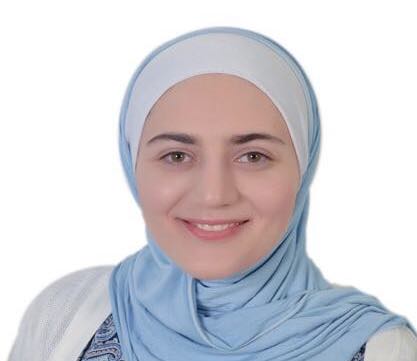
Helping students in their education is my passion. I understand how frustrating it is to keep trying on understanding a concept or master a skill without getting a satisfying result. I aim to help students enjoy learning and acquiring knowledge. Always remember that knowledge is power, and nobody can take it from you. I have sufficient tutoring and teaching experience in secondary and post-secondary settings. I worked as a tutor at the University of Wisconsin Oshkosh. I tutored college students different courses in mathematics, physics, biology, chemistry, and psychology. Also, l worked as a graduate teaching assistant at Marquette University. I taught the laboratory part of general chemistry, analytical chemistry, and organic chemistry. Furthermore, l worked as a science teacher at different secondary schools. I taught science for grades 4,5,6, and 8. Also, l taught chemistry for grade 9. When it comes to my education, l have a bachelor degree in biology healthcare science and chemistry biomolecular science (double major). In addition, l have a master's degree in chemistry. I received my undergraduate education at the University of Wisconsin Oshkosh and my graduate education at Marquette University. I tutor for numerous subjects such as algebra, trigonometry, calculus, physics, organic chemistry, analytical chemistry, human anatomy, developmental biology, ecology, and biochemistry. Also, l tutor for the GRE, DAT, TOEFL, and IELTS. My favorite subjects are the math, physics, biology, and chemistry subjects because l, simply, enjoy these fields. My teaching philosophy and tutoring style are based on practicing with various examples. When you are confronted with numerous problems to solve, you become more confident in that subject area. As a result, better performance in quizzes and exams. Outside of academia, learning about other cultures and countries around the world is my interest.
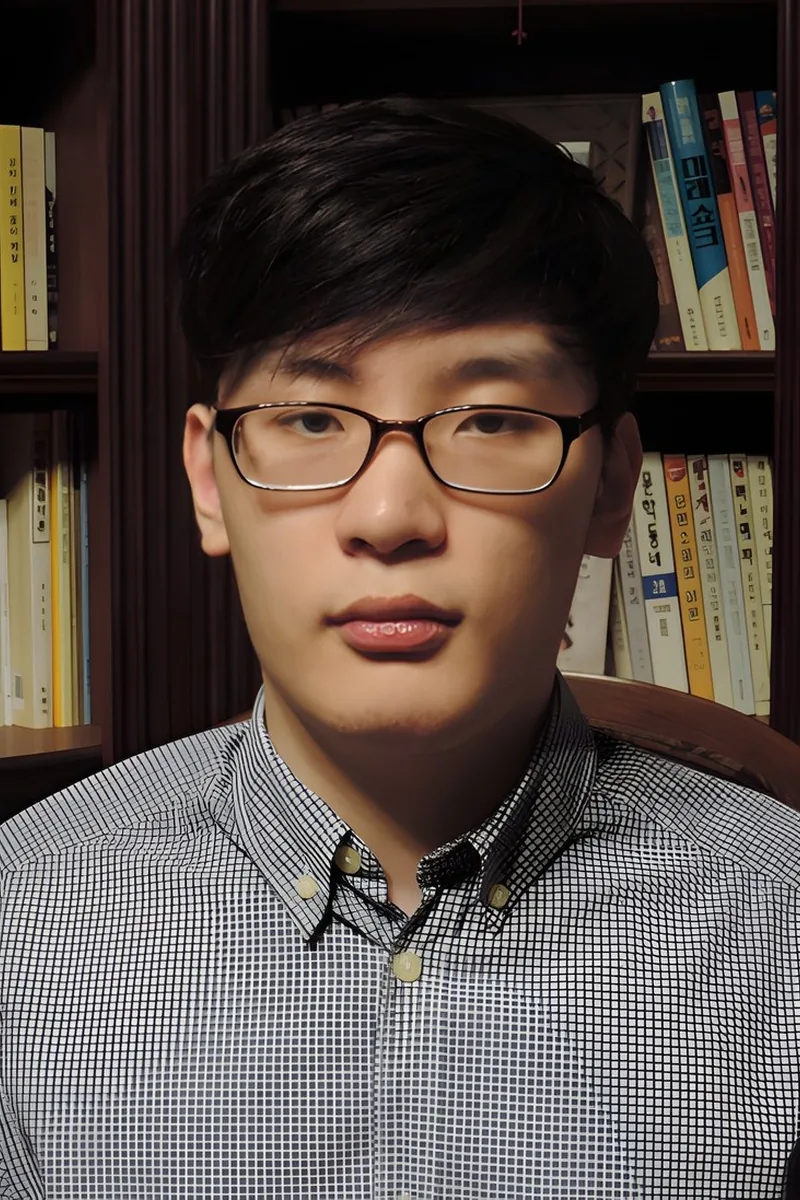
Biochemistry majors don't just pass organic chemistry — they keep using it, which means Addison is building on reaction mechanisms and functional group behavior in courses well beyond the introductory sequence at Rice. That ongoing exposure to carbonyl chemistry, stereochemistry, and arrow-pushing in biological contexts gives her a practical fluency that makes tutoring sessions feel less like reviewing old notes and more like working through the material with someone who still thinks in it daily.
Most organic chemistry struggles come down to not recognizing patterns — why a nucleophile attacks here and not there, or how electron-pushing arrows predict a product. Eric's graduate training in chemistry means he teaches reaction mechanisms as a connected framework of electronic and steric principles rather than a list of isolated reactions. Students rated him 5.0.
Reaction mechanisms are the backbone of organic chemistry, and Natasha teaches them the way she learned them in her biomolecular engineering program — by tracing electron movement step by step until the logic feels inevitable rather than arbitrary. She digs into arrow-pushing, stereochemistry, and functional group reactivity by asking students to predict products before revealing answers, building real intuition for how molecules behave.
Reaction mechanisms are the language of organic chemistry, and Daniel learned to speak it fluently through his microbiology and dental science training. He walks through arrow-pushing, stereochemistry, and functional group reactivity by emphasizing the "why" behind each electron movement — so students can predict products on exam day instead of relying on memorized templates.
As an MD/PhD student at Northwestern doing doctoral research in organic synthesis, Austin lives in the world of reaction design — figuring out which bonds to form, which protecting groups to use, and why one retrosynthetic route beats another. That daily immersion means he teaches mechanisms and stereochemistry with the fluency of someone who actually builds molecules, not just someone who once passed the course.
Currently majoring in chemistry at MIT, Nicholas is immersed in the reaction logic and electron-pushing that organic chemistry demands — and he's learning it at a program known for its rigorous mechanistic approach. He breaks down topics like nucleophilic additions and stereochemical outcomes by connecting them to the underlying thermodynamic and kinetic reasoning, making unfamiliar transformations feel predictable rather than random. Rated 5.0 by students.
I am a freshman at Vanderbilt University studying biochemistry and involved in analytical chemistry research. Despite my studies being very science oriented, I also enjoy studying English and the humanities. I'd be happy to tutor you in any of these areas!
Most organic chemistry frustration comes from trying to memorize hundreds of reactions instead of recognizing the handful of electronic patterns — nucleophilic attack, leaving group ability, steric effects — that drive all of them. Garrett teaches students to read arrow-pushing mechanisms as stories about electron movement, which makes predicting products and regiochemistry intuitive. His approach turns reaction maps from overwhelming charts into logical flowcharts.
Chemical engineering at Cornell meant Rahul didn't just pass organic chemistry — he applied it daily in reactor design, synthesis planning, and thermodynamic analysis of reaction pathways. That engineering lens gives him a distinctive angle on topics like carbonyl chemistry and stereoselectivity, where he ties mechanism logic back to energy landscapes and kinetic versus thermodynamic control. Rated 4.9 by students.
Reaction mechanisms are the language of organic chemistry, and learning to read them — arrow pushing, stereochemistry, regiochemistry — requires a different kind of thinking than most science courses demand. Kevin studied organic chemistry as part of his biomedical engineering curriculum, where understanding molecular behavior was essential rather than optional. He walks students through each mechanism type until the logic behind substitution, elimination, and addition reactions becomes second nature.
Max spent much of high school independently pursuing organic chemistry through coursework and projects well beyond what was required — the kind of deep, self-driven study that builds real fluency with reaction types and synthesis logic. His chemistry degree from MIT and mathematical instincts mean he approaches problems like retrosynthetic analysis and multi-step mechanism design as structured puzzles, breaking each one into clear decision points. Rated 5.0 by students.
David is earning his PhD in organic chemistry at Northwestern, where he teaches undergraduate orgo labs and recitations and has co-written exam questions for the department. That means he knows exactly which reaction mechanisms, stereochemistry problems, and retrosynthesis challenges professors test — and how to break them down so the logic clicks. Rated 5.0 by students, he ties each mechanism to real-world applications that make the material stick.
Testimonials
Because the right Organic Chemistry tutor makes all the difference.
Average Session Rating – Based on 3.4M Learner Ratings
Practice Organic Chemistry
Free practice tests, flashcards, and AI tutoring for Organic Chemistry
Other Seattle Tutors
Related Science Tutors in Seattle
Frequently Asked Questions
Organic Chemistry is notoriously challenging because it requires visualizing 3D molecular structures and understanding reaction mechanisms that aren't always intuitive. Students often struggle with memorizing reactions without understanding the underlying logic, balancing complex equations, and connecting abstract concepts to real-world applications. Personalized tutoring helps students build conceptual understanding rather than relying on memorization, which is key to mastering the subject.
Visualization is crucial in Organic Chemistry, and expert tutors use multiple strategies to help—drawing mechanisms step-by-step, using molecular models, and working through practice problems that build spatial reasoning. Many students benefit from learning to sketch resonance structures, electron movement, and stereochemistry in ways that make the chemistry click. Personalized instruction allows tutors to identify which visualization techniques work best for your learning style.
The short answer: understanding is far more valuable than pure memorization. When you grasp the underlying principles—like nucleophilicity, electrophilicity, and reaction mechanisms—you can predict and solve problems with reactions you've never seen before. Expert tutors help you identify patterns in reactions and build a logical framework, so you're learning chemistry principles rather than just facts. This approach not only improves performance but also makes studying more efficient.
Lab work in Organic Chemistry requires understanding both the theory behind reactions and the practical techniques used to execute them. Tutors can help you prepare for labs by explaining what you'll observe, why reactions proceed the way they do, and how to troubleshoot when something doesn't go as planned. They also help you interpret lab results and connect experimental observations back to the theoretical concepts you're learning in lecture.
During your first session, a tutor will assess your current understanding of Organic Chemistry fundamentals, identify specific topics causing difficulty (like SN1/SN2 reactions, elimination reactions, or synthesis problems), and discuss your goals. From there, they'll create a personalized plan that addresses your weak areas while building on your strengths. Many students find that even the first session provides clarity on concepts that seemed confusing before.
Look for tutors with strong chemistry backgrounds—ideally those who've taken advanced Organic Chemistry courses, completed chemistry majors or minors, or have experience teaching the subject. Varsity Tutors connects you with expert tutors who understand both the content and how to explain complex mechanisms clearly. It's also valuable to find someone who can relate to the specific challenges you're facing, whether that's standardized test preparation or college coursework.
Many students notice improved understanding within 2-3 sessions, especially once a tutor helps them see the patterns and logic underlying reactions. However, true mastery—being able to solve novel problems and apply concepts confidently—typically develops over several weeks of consistent study and tutoring. The timeline depends on your starting point and how frequently you meet, but personalized instruction accelerates progress compared to studying alone.
Seattle's strong science education community means many students have access to excellent lab facilities and peer study groups, which tutors can help you leverage effectively. Expert tutors working with students in Seattle are familiar with the chemistry curricula at local high schools and universities, and can tailor instruction to match your specific course requirements. Whether you're preparing for AP Chemistry, college coursework, or standardized tests, personalized tutoring complements the resources already available to you.
Let’s find your perfect tutor
Answer a few quick questions. We’ll recommend the right plan and match you with a top 5% tutor.