Award-Winning English Tutors
serving San Antonio, TX
English
Tutors in San Antonio
Private 1-on-1 tutoring, weekly live classes for academic support, test prep & enrichment, practice tests and diagnostics, and more to elevate grades and test scores.
Based on 3.4M Learner Ratings
UniversitiesSchools & Universities
DeliveredHours Delivered
ProficiencyGrowth in Proficiency
Who needs tutoring?
No obligation. Takes ~1 minute.

Reading comprehension and written argumentation are skills Thomas sharpened across two graduate programs, where synthesizing dense material and communicating it clearly were daily requirements. He teaches students to dissect a passage's structure, identify an author's purpose, and build organized responses that actually answer the prompt. His 5.0 rating speaks to how well that translates for students at every level.
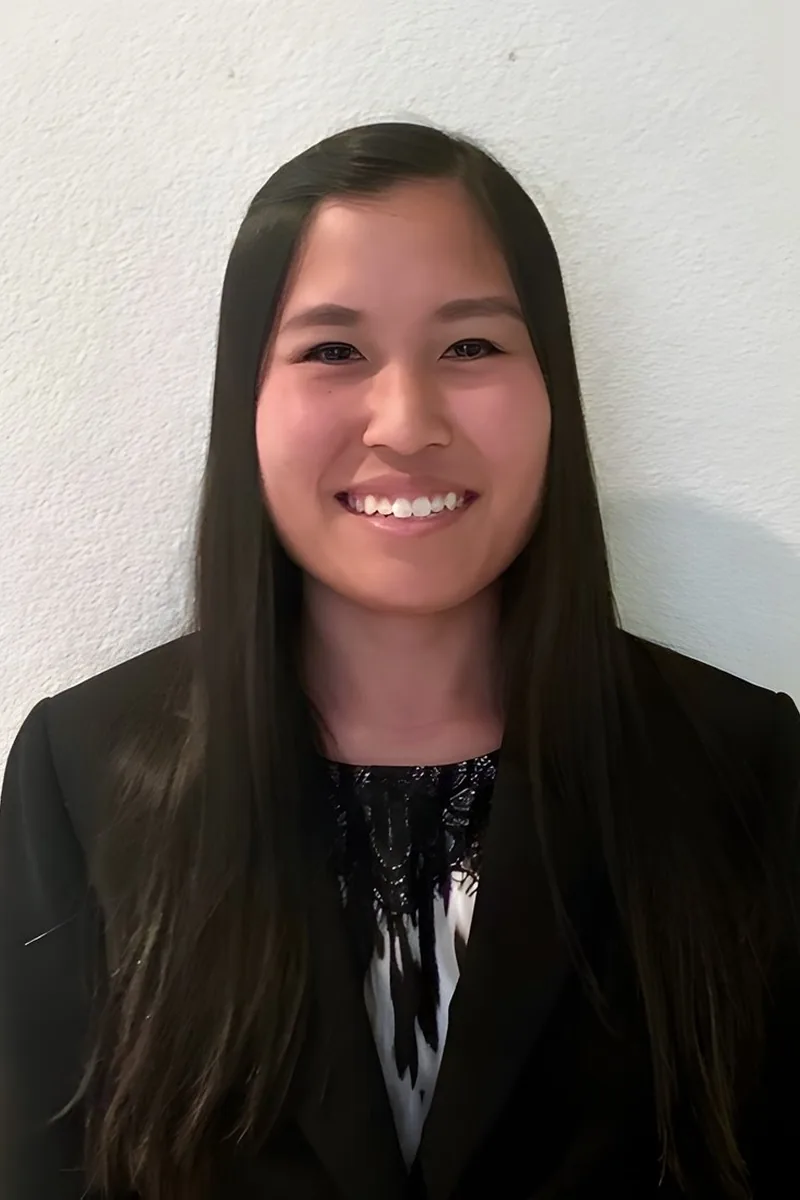
Between a Plan II Honors liberal arts curriculum, a psychology major, and years of tutoring college students in reading and writing, Jasmine tackles English from multiple angles — literary analysis, close reading, thesis development, and evidence-based argumentation. She's especially effective at showing students how to move from a vague first impression of a text to a precise, well-supported claim.
Between her mathematics background and her legal training, Andrea reads and writes across genres that demand very different things — concise proofs, persuasive arguments, close textual analysis. She teaches English students how to build a thesis from evidence in a text and revise their own prose for clarity, whether they're writing literary essays or personal narratives.
Neil's background in anthropology and theatre gives him an unusual lens for English — he treats texts as cultural artifacts and teaches students to analyze tone, argument structure, and authorial intent the way a performer breaks down a script. That multi-angle approach carries over to writing, where he coaches students on crafting thesis statements and organizing evidence-based paragraphs. Rated 4.7 by students.
Jett scored a 1580 on the SAT, which required strong command of evidence-based reading and writing under pressure. While engineering is his main field, he's an avid reader and writer who approaches English through clear argumentation and logical structure. He's particularly useful for students who need to sharpen thesis development and paragraph organization.
Seventeen AP exams require an enormous amount of timed writing under pressure — crafting thesis statements, structuring arguments, and integrating textual evidence on the fly. Beau's experience across AP English and humanities courses at UT Austin means he can break down everything from close reading techniques to paragraph-level coherence in student essays. His computer science background also lends a logical, structural approach to grammar and composition that clicks for analytically minded learners.
Reading a dense government document and reading a novel require the same core skill: figuring out what the author is actually arguing beneath the surface. Lianna's political science training sharpened her ability to pull apart texts for tone, structure, and purpose, and she brings that same close-reading discipline to English tutoring — whether a student is annotating a short story or drafting a thesis statement for a literary essay.
Reading comprehension and essay writing are really thinking skills disguised as English assignments — and that's exactly where Chamberlyn's cognitive studies degree from Vanderbilt becomes an advantage. She teaches students to dissect an author's argument, identify rhetorical strategies, and build thesis-driven essays with evidence that actually supports their claims. Her experience with AP English Literature and Language means she's comfortable with everything from close reading poetry to structuring a timed analytical essay.
I enjoy helping others realize their potential and making the impossible possible. Everyone can reach their goals, and it is my goal to help you reach yours! Math is my favorite subject, and I have even participated in competitions for it. I hope to help others fall in love with math as well.
Scoring a 1570 on the SAT required Michelle to master both the analytical reading and evidence-based writing that define strong English skills. She digs into close reading strategies — identifying author's purpose, tracing argument structure, and analyzing tone — while also coaching students on crafting polished essays, from thesis development through revision.
Reading a dense primary source and constructing a clear argument from it is the same skill whether the context is a literature class or a medical case study — and Sugi has done both extensively. She's particularly sharp at teaching students how to move from annotation to thesis, turning scattered observations about a text into a structured, evidence-driven essay. Her 5.0 rating speaks to how well that translates for students.
Scoring a perfect 1600 on the SAT required Maggie to master close reading, evidence-based reasoning, and precise written analysis — skills she now teaches directly. She digs into how to build a thesis from textual evidence and how to revise drafts so each paragraph earns its place in an essay. Her background writing college essays and editing academic work keeps her feedback specific and actionable.
Strong analytical reading and clear written arguments aren't just humanities skills — Bidyut sharpened both through his coursework at Johns Hopkins, where lab reports and research papers required the same close reading and thesis-driven writing that English classes demand. He digs into essay structure, evidence selection, and how to build a claim that actually persuades a reader.
Between writing college essays for Stanford and tutoring in literature and essay editing, Jake knows what clear, compelling English looks like on the page. He digs into thesis development, paragraph structure, and how to support an argument with textual evidence — the skills that move a student's writing from adequate to persuasive. Holds a 5.0 rating from students.
Jonathan's experience writing college essays, editing academic work, and preparing for the SAT Writing section gives him a practical toolkit for English tutoring that covers both analytical reading and clear, structured writing. He's particularly effective at teaching students how to build a thesis from textual evidence — the skill that separates summary from real literary analysis.
An avid reader and writer who lists both among her top hobbies, Mackenzie brings genuine enthusiasm to English tutoring — whether she's walking through essay structure, close reading strategies, or grammar mechanics. Her experience with college essays, literature analysis, and editing across multiple grade levels means she can adapt quickly to whatever a student is working on. Rated 4.8 by students.
Two degrees' worth of seminar papers, a published senior thesis, and ongoing graduate coursework mean Elena reads and writes analytically every day — not as an abstract skill but as the core of her academic life. She unpacks essay structure by showing students how a strong thesis actually controls every paragraph that follows, using real examples from literary analysis and argumentative writing to make the logic visible.
Balancing a double focus in Mathematical Economic Analysis and Computer Science with Division I golf, Rishi developed sharp reading and writing habits out of necessity — there's no time to reread a passage three times or draft an essay without a plan. He teaches students to annotate strategically, build clear thesis statements, and structure paragraphs so their arguments hold together from start to finish.
Strong writing starts with knowing how to build an argument, and William's experience crafting college essays and editing student work means he knows what clear, purposeful prose looks like. He digs into thesis development, evidence integration, and revision strategies, treating each draft as a problem to solve rather than a chore to finish.
Brown University's open curriculum let Carter range across literary arts, philosophy, and economics — a combination that sharpened his ability to analyze texts from multiple angles. He teaches close reading, thesis development, and essay structure by connecting literature to the broader arguments an author is making, not just summarizing plot. Rated 5.0 by students.
Reading comprehension and essay writing sit at the center of Patricia's tutoring — she treats them as connected skills, teaching students to analyze an author's argument before building their own. Her background across literature, grammar, and college essay revision means she can move fluidly from dissecting a passage's structure to tightening a student's thesis statement. Rated on the SAT at 1580, she clearly practices the close-reading and writing precision she teaches.
From essay structure to reading comprehension to vocabulary in context, Tegan covers the full range of English skills with an emphasis on building real understanding. Her background spans tutoring middle schoolers, working with adult ESL learners, and writing extensively for her Rice coursework — so she adapts quickly to what each student actually needs. She's especially sharp at teaching students how to support an argument with textual evidence.
Reading widely and writing constantly since childhood, Meagen turned that love into an English major at Carleton College, where she digs into everything from close reading of poetry to crafting analytical arguments about novels. She's particularly sharp at breaking down how authors use literary devices — tone, imagery, narrative structure — and showing students how to articulate those observations in their own essays. Rated 5.0 by students.
Between his college essays work and his literature background, Alexander knows how to teach both sides of English — close reading a text for argument and craft, and then building a clear, well-organized written response. He earned a 1580 SAT, which required strong command of evidence-based reading and precise written expression under time pressure.
Between his linguistics coursework, Spanish minor, and experience tutoring reading and writing at multiple levels, Adam approaches English as an interconnected set of skills — comprehension fueling better writing, and writing sharpening analytical thinking. He's especially effective at teaching students how to build an argument from a text, moving from close reading to thesis development to organized paragraphs that say something specific.
Reading a novel in one language while analyzing its translation in another — that's what Comparative Literature training looks like, and it gave Chloe an unusually sharp eye for how authors build meaning through structure, tone, and word choice. She brings that same analytical lens to essay writing, literary analysis, and close reading at the high school and college level. Rated 5.0 by students.
Cognitive Studies at Vanderbilt trains Vy to think about how people process language — how readers extract meaning, how writers encode it, and where that chain breaks down. She applies that lens to grammar, syntax, and essay writing, diagnosing whether a student's issue is conceptual (they don't understand what a thesis does) or mechanical (they can't execute comma rules consistently). Rated 5.0 by students.
Science students often underestimate how much clear writing matters, but Aadith learned early at Rice that strong reading comprehension and persuasive prose are essential in every field. He teaches English skills — from crafting argumentative paragraphs to analyzing an author's rhetorical choices — with the same structured, logical approach he applies to his STEM coursework.
Strong English skills come down to reading critically and writing clearly, and Sajel sharpens both. Whether a student is analyzing a novel's themes or structuring a persuasive essay, she teaches them to identify an author's argument, gather textual evidence, and build their own claims — skills her Social Policy Analysis coursework at Rice demands every week.
Aditi's premed coursework at Rice means she's constantly translating complex scientific ideas into clear, structured prose — a skill that transfers directly to teaching essay organization, thesis development, and revision. She also scored a 1570 on the SAT, so the reading comprehension and grammar mechanics tested in standardized English come as naturally as the academic writing side. Rated 4.8 by students.
Reading closely and writing persuasively are the two skills Paul's entire academic career has demanded, from analyzing texts in his economics coursework to constructing arguments for law school. He walks students through how to identify an author's purpose, support claims with textual evidence, and revise their own writing until every paragraph earns its place.
Between her love of books and her experience editing college essays, Jessy approaches English as a subject where reading and writing reinforce each other — analyzing an author's argument structure in a passage, then applying that same logic to a student's own paragraphs. She's especially sharp at teaching students how to build a thesis and support it with textual evidence. Her 5.0 rating speaks to how well that approach lands.
Between college essays, AP coursework, and the ACT Writing section, Vinson has spent years dissecting how English works at both the sentence level and the argument level. He digs into thesis development, paragraph organization, and evidence integration — the skills that show up whether a student is writing a literary analysis or a research paper. Rated 4.8 by students.
Writing a dissertation and publishing research papers in English as a non-native speaker forced Zhengdong to develop an unusually deliberate command of the language — from crafting clear thesis statements to choosing precise vocabulary. He brings that hard-won clarity to reading comprehension and essay writing, teaching students how to dissect an author's argument and build their own with evidence.
Strong English skills live at the intersection of reading closely and writing clearly, and Iselee covers both — from analyzing literary themes and author's craft to drafting well-organized essays with specific evidence. Her Spanish degree sharpened her understanding of how language works structurally, which she channels into teaching students to write sentences that are precise, not just correct.
Reading a poem or short story closely enough to build an argument about it is a skill most students haven't been explicitly taught. Liz walks through annotation strategies, thesis construction, and textual evidence selection so that English assignments become less about guessing what the teacher wants and more about genuine interpretation.
Between literature courses, years of essay writing through college and medical school, and his experience coaching students on college essays, Sanjay brings a reader's eye and a writer's discipline to English tutoring. He digs into thesis construction, evidence integration, and the revision process — the skills that separate a competent paper from a compelling one. His literature background also means he can walk students through close reading and analytical writing with real depth.
I am an Atlanta native. I hold an undergraduate degree in Business from Tennessee State University and graduated degree in Education from Cambridge College. I am a Georgia and Texas certified teacher. I have always enjoyed working with kids. I have taught kindergarten, first, second and fourth grade. I am a hard-worker, team player and passionate about my students succeeding in whatever they set their minds too. I currently hold endorsements in K-5 Mathematics, Teacher Support Specialist, and ESOL (English for Speakers of Other Languages). I am able to provide instruction that meets the needs of all students. I have the ability to differentiate instruction so that I cater to all learning styles and levels.
Between his SAT verbal teaching at Kaplan and his experience coaching college essays, Sakibul approaches English as a discipline built on clear argumentation and precise language. He digs into how to structure a thesis, support claims with textual evidence, and revise drafts so that each paragraph earns its place in the essay.
An English major at Dartmouth who also writes across disciplines in economics and computer science, Eric knows how to adapt tone, structure, and argumentation to different contexts. He teaches students to move from close reading — identifying how an author builds a claim — to crafting their own thesis-driven essays with sharper evidence and clearer prose.
Testimonials
Because the right English tutor makes all the difference.
Average Session Rating – Based on 3.4M Learner Ratings
Nearby English Tutors
Other San Antonio Tutors
Related English Tutors in San Antonio
Frequently Asked Questions
San Antonio students often struggle with reading comprehension, essay writing structure, and grammar fundamentals—especially as texts become more complex in middle and high school. Many students also find it difficult to analyze literary themes, develop strong thesis statements, and maintain consistent writing mechanics under timed conditions. Personalized instruction helps identify exactly where a student's skills need strengthening, whether that's foundational grammar, critical reading strategies, or advanced composition techniques.
During an initial session, a tutor will assess your student's current reading and writing level, understand specific challenges (like essay organization or vocabulary gaps), and learn about their goals—whether that's improving grades, preparing for standardized tests, or building confidence in class participation. The tutor will then create a personalized plan that targets those areas and aligns with what your student is learning in their San Antonio school. This foundation ensures every subsequent session builds directly on your student's needs.
In a classroom with a 14.5:1 student-teacher ratio, teachers must pace instruction for the whole group, which means some students move too quickly while others fall behind. Personalized tutoring adapts in real time to your student's learning speed, spending extra time on confusing concepts and moving faster through material they've mastered. Tutors can also focus on your student's specific writing style, reading preferences, and learning methods—creating targeted strategies that wouldn't be possible in a group setting.
Tutors work through the entire writing process with students—from brainstorming and outlining through drafting, revising, and editing—providing feedback that helps develop stronger thesis statements, better paragraph organization, and more compelling arguments. Rather than just marking errors, a tutor explains why certain structures work, teaches revision strategies, and helps students internalize the principles of effective writing. With consistent practice and personalized guidance, students typically see measurable improvements in essay grades and writing confidence within a few weeks.
Tutors teach evidence-based strategies like active reading (annotating, questioning the text), summarizing key ideas, and making connections between themes and real-world examples. They also help students build vocabulary in context, practice inference skills, and develop strategies for tackling dense or unfamiliar texts. By working through texts together and discussing what students are reading in their classes, tutors help students move from surface-level understanding to deeper critical analysis—skills that apply across all subjects.
Yes. Tutors can prepare students for reading and writing sections of standardized tests like the SAT, ACT, and state assessments by teaching test-specific strategies, building familiarity with question formats, and practicing time management under pressure. They also help students understand what test makers are looking for in reading passages and written responses, which builds both test performance and genuine writing skills. Many students see significant score improvements after working with a tutor on test-focused preparation.
Yes. Varsity Tutors connects students with tutors across all grade levels—from elementary reading and phonics through high school literature, AP English, and college-level writing. Whether your student needs help with foundational skills like sentence structure or advanced work like literary analysis and argumentative essays, there are tutors experienced in that specific level. Tutors understand grade-level expectations in San Antonio schools and can target instruction accordingly.
Contact Varsity Tutors to discuss your student's specific needs—their current grade, challenges, and goals. You'll be matched with a tutor whose expertise aligns with what your student needs to work on, whether that's grammar, reading comprehension, essay writing, or test preparation. Most students begin seeing progress within the first few sessions as tutors establish rapport and implement personalized strategies tailored to your student's learning style.
Let’s find your perfect tutor
Answer a few quick questions. We’ll recommend the right plan and match you with a top 5% tutor.