Award-Winning SAT Math Tutors
serving San Antonio, TX
SAT Math
Tutors in San Antonio
Private 1-on-1 tutoring, weekly live classes for academic support, test prep & enrichment, practice tests and diagnostics, and more to elevate grades and test scores.
Based on 3.4M Learner Ratings
UniversitiesSchools & Universities
DeliveredHours Delivered
ProficiencyGrowth in Proficiency
Who will be getting tutoring?
No obligation. Takes ~1 minute.

Calculus, trigonometry, and algebra are Jett's daily reality as an electrical engineering major at UT Austin — and those same foundations underpin the hardest SAT Math questions. He zeroes in on the specific problem types a student keeps missing, whether that's systems of inequalities, quadratic modeling, or coordinate geometry, and builds speed through deliberate repetition rather than generic practice sets. His 1580 SAT backs up the approach.
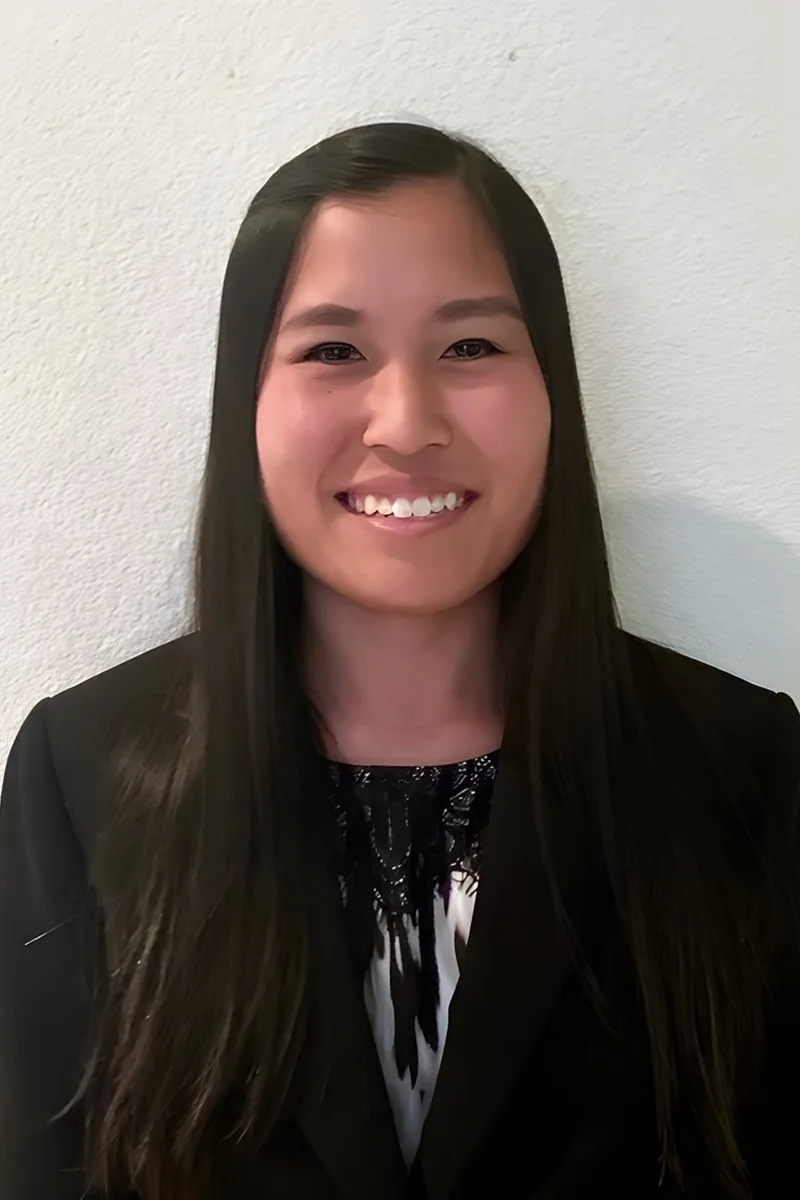
I am a recent graduate from The University of Texas at Austin, where I triple majored in Plan II Honors, Psychology, and Music. I have always valued education and effective testing taking strategies, especially as an incoming medical student. I am very meticulous, patient, and motivating! I have tutored college students in subjects such as writing, math, reading, and music. Ever since I was in high school, I have enjoyed working with children through volunteer activities and over the years have developed the sensitivity and patience required to instruct children as well as connect to them. I am currently a Youth Market Coordinator for the American Heart Association. In this part-time position, I speak to large groups of elementary school children and educate them on how to live healthy lives while spreading the mission of AHA. Please contact me if you have any questions!
Growing up as the son of a math professor, Neil absorbed problem-solving strategies long before the SAT was on his radar — and his 1470 composite score proves those instincts translate to the test. He teaches the underlying algebra, data analysis, and passport-to-advanced-math concepts the SAT actually tests, so students build real fluency instead of relying on tricks that break down under pressure.
Finance majors spend their days building models from equations, manipulating variables, and interpreting data — which is why Natalie's BYU finance training maps so cleanly onto the SAT Math section's algebra-heavy and data-analysis questions. Her 1520 SAT score came partly from treating each problem like a financial case: define what you're solving for, set up the relationship, then execute cleanly without wasted steps. She's particularly effective at drilling the percentage, ratio, and linear modeling problems where sloppy setup — not weak math — is usually what costs students points.
John's approach to SAT Math zeroes in on the difference between knowing algebra and knowing how the SAT tests algebra — things like rewriting equations to match answer choices or catching unit conversion traps in word problems. With a 1420 SAT and deep experience across calculus, geometry, and college algebra, he connects each practice problem to the specific concept being tested so students build real recognition, not just test-day luck.
Medical school at Baylor means Michelle solves quantitative problems under brutal time constraints every day — and her 1570 SAT proves she's already mastered doing exactly that on the test her students are preparing for. She zeroes in on the algebraic modeling and geometry questions where a biochemistry background actually helps, teaching students to treat each problem like a lab setup: identify the variables, find the relationship, then solve cleanly without second-guessing.
Heart-of-algebra questions, passport-to-advanced-math problems, and data analysis — the SAT Math section tests a specific slice of math, and Chloe knows exactly which slice. She scored 1540 on the SAT and teaches students to recognize the handful of recurring problem structures the College Board relies on, turning unfamiliar-looking questions into ones they've already practiced.
Scoring high on SAT Math often comes down to five or six 'hard' problems that test nonlinear systems, advanced quadratic properties, or tricky ratio setups — the rest is execution speed. Maggie's 1600 composite score came partly from a disciplined strategy: lock down the first 40 questions efficiently, then allocate real thinking time to those final problems. She pinpoints exactly which problem types a student struggles with and builds speed and accuracy from there.
The SAT Math section rewards strategic thinking as much as raw computation, and Jonathan's 1550 composite came partly from learning exactly when to use algebra versus back-solving or plugging in. He walks through the higher-difficulty questions — passport-to-advanced-math problems involving quadratic/exponential modeling and systems of inequalities — until students recognize the underlying structure on sight.
An engineering student who scored a 1570 on the SAT, Daniel knows the math section inside out — from quadratic modeling and systems of inequalities to the trickier passport-to-advanced-math questions involving function composition. He teaches students to categorize each problem type on sight so they spend their time solving, not figuring out what's being asked.
I'm Eisha, a Public Health major at the University of Texas at Austin with an interest in medicine and teaching.
I am very passionate in assisting students to meet their goals. My goal is to be as understanding as possible while simultaneously pushing you to do your best in your courses. I have experience working with others in classes and tutoring and assisting a variety of students from college level science courses. Currently, I am a senior biomedical science major at Texas A&M University with an acceptance into Texas A&M College of Medicine this upcoming year. I am looking to tutor people in Biology, Microbiology, General Chemistry, Organic Chemistry, and Biochemistry. I am excited to meet and assist you during our time together.
I'm starting my junior year at Northwestern University in Evanston, IL. I'm currently getting my degree in biology with a concentration in health and human disease, global health, and a minor in French. I love reading, traveling, learning and helping others learn! I have experience tutoring high school and elementary school students in math, science, and English and I love tutoring in each subject equally. Eventually, I see myself going to medical school and researching topics related to viral diseases which I've been interested in since a very young age. I'm very passionate about the subjects I teach and hope to pass my passion on to the individuals I tutor!
The SAT Math section rewards students who can quickly distinguish between problems that need algebra and problems that need arithmetic intuition — and Karen, who teaches everything from pre-algebra through calculus, has the range to build both skill sets in the same session. Her 1550 SAT means she's navigated the test's trickiest questions herself, and she zeroes in on the geometry and advanced math items where students most often second-guess correct instincts.
Game theory for advanced middle schoolers at Johns Hopkins CTY required Carter to break down probability, strategic reasoning, and algebraic modeling for students who were sharp but impatient with slow explanations — a skill set that maps neatly onto SAT Math's demand for quick, clean problem-solving under time pressure. His 1570 SAT and economics training at Brown mean he's especially fluent in the data-analysis and linear modeling questions where students need to interpret real-world scenarios rather than just compute. Rated 5.0 by students.
The SAT Math section rewards students who can quickly distinguish between problems that need careful algebra and problems that have a faster backdoor — plugging in answer choices, testing simple values, or sketching a quick graph. Aditi scored a 1570 and developed her own systematic triage for each question type, which she now teaches to break the habit of defaulting to long-form solving under time pressure. Her psychology background at Rice also gives her a practical handle on managing test-day nerves when the clock starts tightening.
I am a BS/MD program student and President's Endowed Scholar at Texas A&M University studying neuroscience/biology and English. I enjoy helping my students with the SAT and ACT, English grammar, literature, writing, and AP subjects, especially in the sciences. Please feel free to message me for more info or to schedule a session. Thank you!
A perfect 1600 SAT means Sandra didn't just survive the math section — she cleared it without dropping a single point, and her computer science degree means the algebraic logic and function behavior that dominate the test are things she works with daily, not just at test time. She teaches students to treat the no-calculator questions as puzzles in efficient reasoning rather than raw computation, building the kind of strategic speed that turns a good score into a great one. Rated 5.0 by students.
Most SAT Math mistakes aren't actually math mistakes — they're misreads of what the question is asking. Sarah, who earned a 1580 SAT composite, teaches students to decode problem language first and identify the shortest path to an answer, whether that's back-solving, plugging in values, or setting up an equation from scratch. Her Mathnasium teaching experience gave her a sharp eye for the specific algebraic and proportional-reasoning gaps that cost students points.
Scoring a 1570 on the SAT means Mingee knows exactly where the test hides its difficulty — the algebra and advanced math questions that look straightforward but punish careless setup, or the data-analysis problems that require reading graphs precisely. She teaches students to recognize question types quickly and choose between algebraic and strategic approaches on the fly. That kind of test-specific fluency is what moves scores from good to great.
The SAT Math section rewards students who can quickly distinguish between problems that need algebraic setup and ones that can be back-solved or estimated — and Rosemarie, who scored 1550 on the SAT, teaches that decision-making process explicitly so students stop burning time on brute-force approaches. Her IT background sharpens this: she treats each question like a logic problem, training students to identify the most efficient path through quadratic, linear, and data-analysis questions before putting pencil to paper.
The SAT Math section recycles a surprisingly narrow set of algebra and geometry concepts — and Aadith's biophysics training at Rice means he's internalized those quantitative tools so deeply that he can spot which problem type a question is testing before most students finish reading it. His 1590 SAT gives him firsthand knowledge of how the test rewards strategic elimination and clean setup over brute-force calculation, especially on the no-calculator questions involving systems and quadratics.
Biology majors don't always get credit for their math chops, but Harsh's coursework in biostatistics and quantitative analysis at UT Austin means he's drilled the same algebra, function modeling, and data-interpretation skills the SAT Math section leans on hardest. His 1520 SAT backs that up with a score in the top percentile, and he zeroes in on the geometry and advanced-math questions where students who 'know the material' still lose points by misreading what the problem actually wants.
Scoring a 1550 SAT meant developing specific strategies for the Math section — knowing when to backsolve, when to plug in values, and how to spot the fastest path through word problems and data analysis questions. Kavitya teaches those techniques explicitly so students stop burning time on brute-force algebra. As a National Merit Finalist with a math degree, she also fills content gaps in areas like quadratics, advanced functions, and geometry that the test loves to target.
Scoring 1550 on the SAT, Howard developed a systematic approach to the Math section that emphasizes recognizing problem types quickly — knowing when a question is really about ratios disguised as geometry, or when plugging in values beats setting up an equation. He teaches the specific shortcuts and pattern-recognition tricks that turn a 700 into a 780+.
Scoring 1500 on the SAT means Adam has a sharp handle on the specific algebra, advanced math, and data analysis concepts the College Board tests most heavily. He zeroes in on high-frequency topics like systems of equations, quadratic modeling, and ratio problems, showing students how the SAT frames familiar math in unfamiliar ways.
Rice's neuroscience program is quietly math-intensive — statistics, research design, quantitative analysis — and Brett pairs that daily quantitative work with a 1550 SAT to teach the section's trickiest content, particularly the geometry and trigonometry questions that many prep plans underemphasize. He zeroes in on the handful of spatial reasoning and angle-relationship problems that students routinely skip or guess on, turning those into reliable points. Rated 5.0 by students.
I am experienced in tutoring math, science, English, and the environmental sciences, but my favorite subjects to tutor are beginner's Chinese, reading and writing skills, and essay writing and revision. Over the years, I've seen that every student has an individual, personalized learning style, and I strongly believe it is important for tutors to match their teaching styles to the student. The qualities I'll bring into every session with my students are patience, commitment, and persistence, with an eye for a comprehensive mastery of all aspects to the material.
Jacob scored a 1550 on the SAT and, as a pure math PhD student at Boston College, treats the math section as an exercise in strategic problem-solving rather than brute-force calculation. He teaches students to spot the fastest path through quadratic and systems-of-equations problems, shaving seconds that add up across the section. Rated 5.0 by students.
Scoring a 1550 on the SAT, Hanna knows firsthand how the math section tests familiar concepts in unfamiliar ways — a quadratic that looks like an algebra problem but is really about data interpretation, or a systems question buried in a word problem. She teaches students to decode what each question is actually asking before they start solving, which eliminates the careless errors that cost the most points.
Applied mathematics at Rice means Alexander spends his days thinking about *why* formulas work, not just how to use them — and that problem-solving mindset is exactly what unlocks the SAT's trickier passport-to-advanced-math questions, where brute-force calculation is slower than recognizing the underlying structure. His 1580 SAT backs up the approach, and he's particularly effective at teaching students to reframe geometry and advanced algebra problems as puzzles with elegant shortcuts rather than grinding through every step.
Rakhi scored a 1550 on the SAT and holds a degree in applied math, so the quantitative reasoning behind every SAT Math question — from systems of inequalities to quadratic modeling — is second nature to her. She zeroes in on the specific algebra and data-analysis patterns the College Board recycles, teaching students to recognize problem types before they even finish reading the prompt. That pattern-recognition approach is what turns a good math student into a confident test-taker.
I am a graduate of Texas A&M University; I received a Bachelor of Science in Biology along with being a minor in Spanish. I also studied at Plano ISD in high school. As Plano ISD is recognized for its academic achievements and competitiveness, I have always been positively challenged by my curriculum and by my peers to improve and to push myself to excel. From a young age, I have always been a part of the Gifted and Talented program. Trying to challenge myself and wanting to be different, I took a risk and joined the International Baccalaureate (IB) Program, a program that was not as well recognized at the time and was extremely difficult. Joining the IB program was the best decision I have taken thus far. I gained knowledge from all around world- different insights, different histories, different philosophies, different literature, etc.
Quadratic modeling, systems of equations, and advanced passport-to-algebra topics fill the SAT Math section, but the questions students actually lose points on tend to involve reading comprehension — translating word problems into equations under pressure. Miguel's unusual combination of Computer Science and English training makes him especially effective at that translation step. He scored a 1550 SAT and builds each session around timed problem sets that mirror real testing conditions.
I'm a Chemical Engineering major at the University of Texas at Austin with a strong passion for teaching. I enjoy helping students in biology, algebra, and chemistry, focusing on building meaningful relationships that make learning engaging and approachable. Teaching not only strengthens my own understanding but also allows me to see the impact of confidence and curiosity in others. Outside of academics, I love staying active through hiking and playing sports like basketball. I also enjoy exploring new food spots, which gives me a chance to connect with different cultures and experiences.
Scoring a 1560 on the SAT required near-perfect math performance, and Michael's approach to the Math section reflects that precision — he zeroes in on the algebra and advanced math questions that make up over 70% of the test. His statistics training at Rice also gives him a natural edge on the data-analysis problems many students find unfamiliar.
I am currently a student at the University of California at Berkeley. I have worked children of all ages, from kindergarten to high school. During my senior year in high school, I tutored fellow students in SAT and ACT prep, as well as various math and science courses. I enjoy teaching a variety of subjects, but my favorites are math and English. I enjoy getting to know each student and design my curriculums based on each student???s needs. In my spare time, I play the piano, violin, and guitar.
I am currently a senior at Rice University. I am majoring in Economics and Biochemistry & Cell Biology. Since I am still a college student, I have taken most subjects recently so the concepts are still fresh in my mind. I really enjoy working with students and will customize my method of teaching to best cater you. I have previously tutored with Kumon Learning Center and am eager to tutor you!
Most SAT Math mistakes aren't about not knowing the math — they're about misreading what the question actually asks. Jessica, who scored a 1590 composite, teaches students to decode word problems quickly, recognize which algebra or data-analysis concept is being tested, and avoid the traps the College Board builds into answer choices.
Most education majors don't score a 1550 on the SAT — but Jennifer's comfort with math through calculus means she can break down the algebra and problem-solving questions that dominate the test while also leveraging something rarer: she knows how to teach the way kids actually learn. Her Education and Child Studies training at Smith gives her concrete strategies for building a student's confidence on timed sections, not just their content knowledge. Rated 4.9 by students.
Testimonials
Because the right SAT Math tutor makes all the difference.
Average Session Rating – Based on 3.4M Learner Ratings
Practice SAT Math
Free practice tests, flashcards, and AI tutoring for SAT Math
Nearby SAT Math Tutors
Other San Antonio Tutors
Related Test Prep Tutors in San Antonio
Frequently Asked Questions
Score improvement depends on your starting point and commitment level, but most students see meaningful gains within 8-12 weeks of consistent tutoring. Students often improve by 50-100+ points when they work with a tutor to identify weak areas, learn test-specific strategies, and practice with real SAT questions. The key is addressing your specific challenges—whether that's algebra fundamentals, geometry reasoning, or time management—rather than generic test prep.
Many students struggle with pacing—the SAT Math section requires solving 58 questions in 80 minutes, which feels rushed without proper strategy. Others find certain question types confusing, like grid-in problems or multi-step word problems that require translating real-world scenarios into equations. Weak foundational skills in algebra or geometry can also hold students back. A tutor can diagnose exactly where you're losing time or points and create a targeted plan to address those gaps.
Your first session focuses on assessment and planning. A tutor will review your practice test scores, discuss your goals, and identify your strongest and weakest areas—whether that's problem-solving speed, specific math topics, or test anxiety. From there, they'll create a personalized study plan that prioritizes the topics and strategies that will have the biggest impact on your score. You'll typically walk away with clear next steps and maybe even some quick wins to build confidence.
Timing issues usually stem from either weak fundamentals that slow you down or inefficient problem-solving approaches. A tutor teaches you strategic techniques like identifying question difficulty levels, knowing when to skip and return to a problem, and using shortcuts for common question types. They'll also have you practice with real SAT questions under timed conditions so you build speed and confidence without sacrificing accuracy.
Practice tests are essential—they show you exactly how you perform under real test conditions and reveal patterns in your mistakes. Varsity Tutors connects you with tutors who use official SAT practice tests to track your progress and adjust your study plan. Rather than just taking test after test, a tutor helps you analyze each one to understand why you missed questions and what strategies would have helped, turning practice into real learning.
Look for tutors with strong math backgrounds and specific SAT prep experience—they should understand the test format, know which topics appear most frequently, and have proven strategies for common problem types. Ideally, they've helped multiple students improve their scores and can explain their approach clearly. When you connect with Varsity Tutors, we match you with tutors who have the expertise and teaching style that fits your needs.
Most students benefit from 1-2 sessions per week for 8-12 weeks before test day, though your ideal schedule depends on your starting score and target. If you're aiming for a significant improvement or have foundational gaps, more frequent sessions early on can accelerate progress. A tutor will recommend a schedule based on your goals and timeline, and you can adjust as needed based on how you're progressing.
Absolutely. Test anxiety often comes from feeling unprepared or unfamiliar with question formats, both of which tutoring directly addresses. As you build confidence through targeted practice and see your scores improve, anxiety naturally decreases. Tutors also teach stress-management techniques and help you develop a test-day mindset—knowing you've prepared well and have strategies to handle tough questions makes a real difference when you sit down for the actual exam.
Let’s find your perfect tutor
Answer a few quick questions. We’ll recommend the right plan and match you with a top 5% tutor.