Award-Winning Algebra Tutors
serving San Antonio, TX
Algebra
Tutors in San Antonio
Private 1-on-1 tutoring, weekly live classes for academic support, test prep & enrichment, practice tests and diagnostics, and more to elevate grades and test scores.
Based on 3.4M Learner Ratings
UniversitiesSchools & Universities
DeliveredHours Delivered
ProficiencyGrowth in Proficiency
Who needs tutoring?
No obligation. Takes ~1 minute.

Most algebra frustration comes from one place: students learn procedures without understanding what the equation is saying. Thomas teaches students to read an equation like a sentence — what's known, what's unknown, and what relationship connects them — so that factoring, solving linear systems, and working with inequalities feel like reasoning rather than memorization. He's rated 5.0 across his subjects.
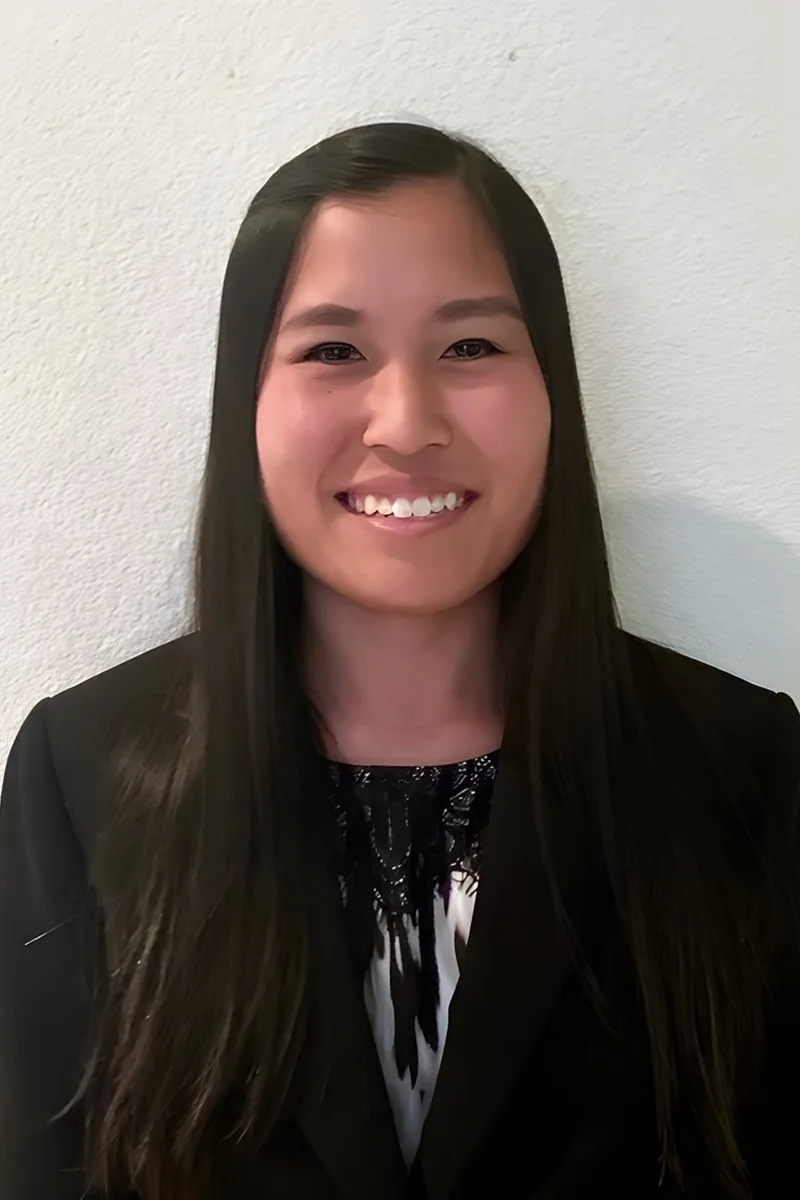
The jump from arithmetic to algebra trips up students who've never had to think about why math rules work — suddenly they're solving for unknowns, graphing linear equations, and factoring polynomials. Jasmine's approach is meticulous and patient, building each algebraic concept from concrete examples before moving to the abstract. Her 5.0 rating speaks to how well that method clicks with students.
Most algebra struggles come down to one thing: students learn to mimic steps without understanding what the symbols actually represent. Andrea tackles that head-on — when she teaches solving systems of equations or factoring quadratics, she makes sure students can explain the logic of each step, not just reproduce it. Her mathematics degree gives her the depth to answer the 'why' questions that textbooks often skip.
Most Algebra struggles come down to one thing: students learn steps without understanding what the symbols actually mean. Neil digs into the logic behind solving equations, working with inequalities, and graphing linear relationships so that each new topic feels like an extension of something a student already knows. He honed this approach teaching and mentoring students at a prefreshman engineering program, where making abstract math concrete was essential.
One thing that trips students up in algebra is treating equations like arbitrary rules instead of logical puzzles with consistent structure. Jett tackles that head-on — whether the topic is factoring quadratics, solving systems, or simplifying rational expressions, he walks through the reasoning behind each step so students can self-correct when they get stuck. His engineering training at UT Austin means algebraic manipulation is second nature to him.
Working with elementary students in an extended school day program, Lianna sees firsthand where early math gaps — especially around translating word problems into equations — create roadblocks once algebra arrives. Her political science coursework at UNT demands constant work with data, variables, and logical argumentation, skills she channels into teaching students how to break down expressions and solve step-by-step. Rated 4.8 by students.
A solid grip on algebra — factoring, manipulating rational expressions, solving systems — is something Beau reinforces every time he writes code or models a problem in his UT Austin computer science courses. He teaches students to read equations as logical statements rather than mysterious strings of symbols, which makes techniques like completing the square or working with inequalities feel far more intuitive.
My favorite part of tutoring is what I call the light bulb moments. These are the moments when a topic makes sense to a student, and if we were in a cartoon, a light bulb would appear over their head. And this is usually the moment when students believe that I don't have more talent in the subject that them; I simply have more practice. I graduated with my Master of Science in Analytical Chemistry from Texas Tech University in 2011, and have tutored students in chemistry and math since 2002. In addition to tutoring, I have taught both as a TA and as an adjunct professor, at the University of Washington, Texas Tech, and the University of the Incarnate Word. I have taught chemistry labs (general, analytical, and nursing chemistry), general chemistry I and II, and first semester nursing chemistry. In my free time, I enjoy reading, crafting, and walking. I am currently working on making my first bed size quilt and have completed the San Antonio Rock n Roll half marathon twice.
I enjoy helping others realize their potential and making the impossible possible. Everyone can reach their goals, and it is my goal to help you reach yours! Math is my favorite subject, and I have even participated in competitions for it. I hope to help others fall in love with math as well.
Most Algebra frustration comes from one place: students learn procedures without understanding what variables and equations actually represent. Michelle tackles that gap head-on, tying concepts like systems of equations and quadratic factoring back to concrete scenarios so the symbolic manipulation feels purposeful rather than arbitrary.
A cognitive science background means Sugi understands how students process symbolic reasoning — why some learners breeze through solving for x but stall when asked to interpret what the solution means in context. She channels that insight into teaching algebraic concepts like equation setup and variable manipulation, making the abstract-to-concrete leap feel intuitive rather than forced. Holds a 5.0 rating.
Most algebra struggles come down to one or two foundational ideas — like what it really means to balance an equation or how to translate a word problem into an expression — that never fully clicked. Maggie diagnoses those specific sticking points quickly, then rebuilds understanding through problems that connect factoring, systems of equations, or quadratic functions back to that core logic. Her perfect 1600 SAT score reflects how deeply she understands the math these skills feed into.
When a student struggles with algebra, the issue is almost never "they can't do math" — it's usually that variables went from concrete to abstract too fast. Bidyut slows down at exactly those transition points, whether the topic is solving systems of equations or simplifying rational expressions, and rebuilds the reasoning step by step. His engineering background means he always has a real example ready to show why the algebra matters.
Most algebra struggles trace back to one or two shaky concepts — maybe distributing negatives, maybe setting up equations from word problems. Mackenzie diagnoses those gaps quickly and rebuilds from there, connecting each skill to the next so that factoring, graphing lines, and solving systems all feel like extensions of the same logic. Her 35 ACT composite reflects the kind of mathematical fluency she brings to every session.
Whether it's factoring trinomials, solving systems of equations, or interpreting word problems, algebra is really about learning to translate situations into mathematical language. Jake scored a 34 on the ACT and tutors math at every level, giving him a clear sense of exactly which algebraic skills students need to master now versus which ones they can refine later.
The jump from arithmetic to algebraic thinking — where letters replace numbers and equations become puzzles — trips up more students than any single topic. Jonathan tackles this by anchoring abstract concepts like systems of equations and polynomial factoring in logical reasoning, drawing on the same problem-solving strategies he sharpened through his Cornell science coursework.
Elena's tutoring experience spans an unusually wide range of subjects, and algebra is one she's tackled repeatedly — from impromptu geometry and equation-solving sessions with middle schoolers through InspireSTL to ongoing test prep work. She's particularly good at walking through word problems and translating real-world scenarios into expressions students can actually solve.
Getting comfortable with variables and equations early makes every math course that follows more manageable. Tegan breaks down concepts like solving systems of equations and working with inequalities by building each step logically from what a student already knows, rather than jumping straight to shortcuts. Her 4.9 rating speaks to how well that patient, structured approach lands.
The jump from arithmetic to algebra is really a jump from "find the answer" to "describe the relationship," and that shift in thinking is where most students get stuck. Aadith breaks down how to translate word problems into equations and how to read a graph as a story about variables. His dual focus in physics and biochemistry at Rice keeps him constantly using algebra as a living tool, not a set of classroom exercises.
The jump from arithmetic to algebraic thinking — using variables, solving multi-step equations, graphing linear relationships — is one of the biggest conceptual leaps in math. Patricia breaks that transition down by connecting abstract notation to concrete examples students already understand. Her 1580 SAT score speaks to the depth of her own mathematical fluency.
When factoring quadratics or solving systems of equations feels like guesswork, the real issue is usually a shaky grasp of what the symbols actually represent. Sajel approaches algebra by making sure students understand the logic behind each manipulation — why you can divide both sides, what a solution set means on a graph — so that procedures stick instead of evaporating after the test.
Most algebra frustration comes from one place: students learn procedures without understanding what the symbols actually represent. William addresses that head-on, connecting equation-solving and factoring to concrete reasoning so that new problem types don't feel like memorizing yet another recipe. As a math and CS major at Rice, he uses algebraic thinking every day and can show students why this material genuinely matters beyond the classroom.
Being on the premed track at Rice means Jessy solves algebra constantly — rearranging dosage formulas, balancing chemical equations, modeling biological growth rates — so she teaches it as something students will actually use, not just survive. She's especially good at bridging the gap for students who understood arithmetic fine but stumble once variables enter the picture, breaking down each new notation until it feels as intuitive as the numbers did.
Every concept in high school algebra — factoring, systems of equations, quadratic behavior — reappears in more advanced math, which is exactly why Rishi emphasizes understanding the reasoning behind each step. Studying mathematical economic analysis and computer science at Rice, he uses algebraic thinking constantly and can show students where these skills actually lead. He's especially sharp at breaking down word problems into clean equations.
Most algebra struggles come down to one thing: students learn steps without understanding what the operations actually mean. Alexander digs into the reasoning behind techniques like factoring or solving systems, so that when a problem looks unfamiliar, students have real tools to work through it. He's pursuing Applied Mathematics at Rice and brings that problem-solving mindset to every session.
Most algebra struggles come down to one thing: students learn procedures without understanding what the symbols mean. Adam tackles that head-on, teaching concepts like variable manipulation and systems of equations through logical reasoning so that solving a new type of problem doesn't feel like starting from scratch.
The jump from solving simple equations to factoring quadratics, manipulating rational expressions, and interpreting function notation trips up a lot of students who were fine in earlier math. Aditi tackles algebra by making each technique feel like a logical extension of what came before, not a disconnected trick. She's especially sharp at translating word problems into equations — the skill most students dread most.
Word problems are where most algebra students freeze, unsure how to translate a sentence into an equation. Carter spent his time at Brown turning real-world scenarios into mathematical models through his economics coursework, and he applies that same translation skill when teaching students to set up and solve linear equations, inequalities, and systems. He carries a 5.0 rating.
Years of tutoring Algebra I and II in under-resourced schools taught Vy something most tutors miss: students don't struggle with algebra because it's hard — they struggle because nobody connected it to reasoning they already do. She tackles topics like solving multi-step equations, graphing linear functions, and factoring by anchoring each one in intuitive logic first. Her 5.0 student rating speaks to how well that approach lands.
When students struggle with Algebra, it's usually not the mechanics — it's translating a word problem into an equation or understanding what a variable actually represents. Paul's economics training required building algebraic models constantly, so he's practiced at showing students how to set up equations from scratch, whether they're solving systems or factoring quadratics.
The moment Algebra shifts from solving for x to interpreting what x means in context — word problems, function notation, systems with real-world setups — many students lose their footing. Meagen tackles that translation gap directly, teaching students to read a problem like a sentence before converting it into an equation. Her 5.0 rating speaks to how well that click moment lands.
A self-described lifelong learner with three graduate degrees, Chloe tackles algebra by connecting abstract expressions to concrete reasoning — especially when it comes to translating word problems into equations. She's particularly effective at breaking down the logic behind systems of equations and inequalities so the steps feel intuitive rather than mechanical.
A strong algebra foundation is what makes higher-level math and science possible, and Sanjay treats it that way — connecting topics like systems of equations and polynomial manipulation to the real quantitative reasoning students will need later. His background spans biochemistry, medicine, and language study, all of which rely on the structured logical thinking that algebra builds.
I am an Atlanta native. I hold an undergraduate degree in Business from Tennessee State University and graduated degree in Education from Cambridge College. I am a Georgia and Texas certified teacher. I have always enjoyed working with kids. I have taught kindergarten, first, second and fourth grade. I am a hard-worker, team player and passionate about my students succeeding in whatever they set their minds too. I currently hold endorsements in K-5 Mathematics, Teacher Support Specialist, and ESOL (English for Speakers of Other Languages). I am able to provide instruction that meets the needs of all students. I have the ability to differentiate instruction so that I cater to all learning styles and levels.
Equations, inequalities, and systems of linear equations all click faster when a student sees the underlying logic instead of memorizing steps. Sakibul's applied mathematics training at Rice means he can trace a concept like factoring or slope back to why it works, making each new algebra topic feel like a natural extension of the last.
A physics PhD requires manipulating algebraic structures constantly — isolating variables, working with systems of equations, simplifying rational expressions under pressure. Zhengdong brings that fluency to algebra tutoring, where he unpacks the logic behind each manipulation so students see why distributing, factoring, or completing the square actually works. Rated 4.8 by students.
Most Algebra frustration comes from one place: students learn procedures without understanding why they work, so each new problem type feels like starting over. Vinson reverses that pattern by teaching the logic underneath — why you balance equations, how factoring connects to the zero-product property, what a variable actually represents. It's an approach rooted in his computational math background, where algebraic reasoning is foundational to everything else.
A psychology background might seem unrelated to algebra, but Liz's research training sharpened exactly the kind of systematic, step-by-step reasoning that untangles systems of equations and inequalities. She teaches students to read word problems like puzzles — identifying what's known, what's unknown, and which relationship connects them.
The moment algebra introduces variables into equations, many students lose their footing because they're trying to memorize procedures without understanding what's actually happening. Iselee unpacks topics like factoring, systems of equations, and inequalities by showing the reasoning underneath each step so students can problem-solve independently.
Most algebra frustration comes from one place: students learn procedures without understanding what variables and equations actually represent. Emily digs into the reasoning behind techniques like factoring, solving linear systems, and simplifying radical expressions so that each method clicks logically. Her science background gives her a deep well of real-world applications to draw from when abstract notation starts feeling meaningless.
Testimonials
Because the right Algebra tutor makes all the difference.
Average Session Rating – Based on 3.4M Learner Ratings
Practice Algebra
Free practice tests, flashcards, and AI tutoring for Algebra
Nearby Algebra Tutors
Other San Antonio Tutors
Related Math Tutors in San Antonio
Frequently Asked Questions
Many students struggle with the shift from arithmetic to abstract thinking—understanding why we use variables and how to manipulate equations, not just follow steps. Word problems are another major challenge, as they require translating real-world scenarios into mathematical expressions. Multi-step equations, graphing, and recognizing patterns across different problem types also trip up students who've learned procedures without grasping the underlying concepts. Personalized tutoring helps students build that conceptual foundation so algebra feels logical rather than arbitrary.
Your first session focuses on understanding where you are right now. A tutor will work through a few algebra problems with you to identify specific gaps—whether it's foundational skills, equation-solving strategies, or confidence with certain topics. They'll ask about your learning style and what's been confusing, then create a personalized plan that addresses your actual needs rather than generic review. This diagnostic approach ensures every session builds on what you already know.
Showing work reveals your thinking process and helps identify exactly where errors happen—not just that an answer is wrong. When tutors see your steps, they can spot whether you're struggling with a specific rule, making careless mistakes, or misunderstanding a concept entirely. Personalized instruction teaches you strategies for organizing your work clearly and checking your reasoning, which builds both accuracy and confidence. This skill also prepares you for standardized tests and higher math courses where showing work is essential.
Yes. Varsity Tutors connects you with tutors who understand different algebra approaches—whether your school uses traditional textbooks, integrated curricula, or modern problem-based methods. Tutors can align their instruction with what you're learning in class, help you understand your teacher's approach, and fill gaps between different methods you might encounter. This continuity means tutoring reinforces what you're already doing rather than introducing conflicting strategies.
Word problems require translating English into math—a skill that improves with guided practice and pattern recognition. Tutors teach strategies like identifying what you know, what you're looking for, and which operations connect them. Breaking complex problems into smaller steps and seeing how similar problems follow the same structure helps you build problem-solving confidence. With personalized instruction, you'll work through problems at your pace and learn to spot the math hidden in the words.
Both topics require seeing connections between abstract algebra and visual or logical representation—something that clicks better with one-on-one guidance. For graphing, tutors help you understand how equations translate to lines and curves, not just plot points mechanically. For proofs, they teach you to think like a mathematician: understanding what you're trying to show, which rules apply, and how to justify each step. Personalized tutoring breaks these abstract concepts into manageable pieces with immediate feedback.
Math anxiety often stems from past negative experiences or feeling lost in a classroom setting. Personalized tutoring removes pressure by working at your pace, celebrating small wins, and helping you see that algebra is a learnable skill, not a talent you either have or don't. When you understand the 'why' behind concepts rather than just memorizing steps, math becomes less intimidating and more interesting. Many students discover that one-on-one instruction transforms their relationship with math entirely.
Varsity Tutors connects you with tutors who have strong algebra backgrounds—many hold degrees in mathematics, education, or related fields, and many have classroom teaching experience. Tutors understand not just how to solve problems, but how students learn math and where misconceptions typically arise. They're trained to explain concepts clearly, ask good questions, and adapt their teaching to your learning style. Your tutor's expertise ensures you're getting instruction from someone who knows algebra deeply.
Let’s find your perfect tutor
Answer a few quick questions. We’ll recommend the right plan and match you with a top 5% tutor.