Award-Winning College Physics Tutors
serving Youngstown, OH
College Physics
Tutors in Youngstown
Private 1-on-1 tutoring, weekly live classes for academic support, test prep & enrichment, practice tests and diagnostics, and more to elevate grades and test scores.
Based on 3.4M Learner Ratings
UniversitiesSchools & Universities
DeliveredHours Delivered
ProficiencyGrowth in Proficiency
Who needs tutoring?
No obligation. Takes ~1 minute.
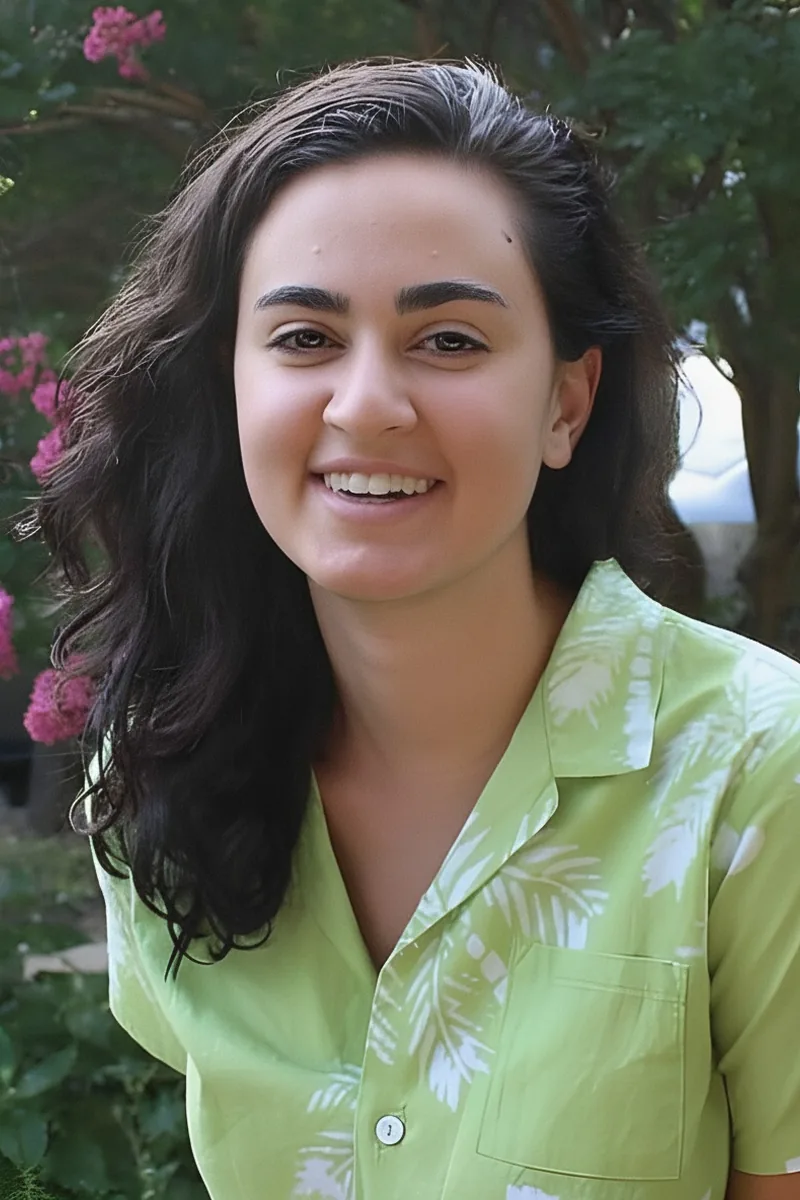
Biomedical engineering at Johns Hopkins means Christine solves physics problems daily that most students only see in textbooks — fluid dynamics in blood flow, pressure gradients across membranes, mechanics of prosthetic joints — giving her a concrete, application-heavy lens for the material. She's particularly strong on the thermodynamics and mechanics portions of college physics, where her coursework overlaps most directly with standard problem sets. Holds a 5.0 rating.

Thermodynamics is where Rahul lights up — it was his favorite corner of Cornell's chemical engineering program, and that enthusiasm shows when he's walking someone through heat engines, entropy, or the first and second laws in a college physics context. His engineering training means he treats every problem as a physical system first and an equation second, pushing for the conceptual reasoning behind each step rather than formula-matching. Rated 4.9 by students.
Medical school gave Sanjul a second education in applied physics — fluid dynamics in the circulatory system, electrical circuits in nerve conduction, optics in clinical imaging. He brings that applied perspective to college physics, connecting topics like electromagnetism and thermodynamics to tangible systems students can picture. His 5.0 rating speaks to how well that approach lands.
Mechanical engineering at Case Western Reserve means Kevin solves statics, dynamics, and thermodynamics problems not just on exams but in design projects where the physics has to actually work — a perspective that sharpens how he explains free-body diagrams, energy methods, and rotational kinematics to students seeing them for the first time. He scored a 36 ACT, which speaks to the quantitative precision he brings to setting up and solving calculus-based physics problems. Rated 4.8 by students.
Preparing for the MCAT's physical sciences section while actively tutoring AP Physics 1 and 2 means Ishaan is constantly translating between conceptual and quantitative approaches to mechanics, electricity, and thermodynamics — exactly the dual fluency college physics demands. He breaks problems down by identifying the governing principle first, then walks through the math step by step, which is especially useful for students who can follow a derivation but freeze when facing an unfamiliar scenario. Rated 5.0 by students.
Playing Division I football at Ohio State means Nikolas has an intuitive, physical understanding of mechanics — projectile motion on a punt, impulse during a tackle, rotational inertia through a hip turn — that he uses to make abstract physics problems concrete. His exercise science degree formalized that intuition with coursework in biomechanics and physiology, and his preparation for medical school keeps him sharp on the quantitative problem-solving college physics demands. Holds a 5.0 rating.
Brian's problem-solving philosophy is refreshingly simple: do more problems. His computer science training at Case Western Reserve built the same logical, step-by-step reasoning that college physics demands — decomposing a complex scenario into known quantities, constraints, and equations before solving. He applies that structured thinking especially well to mechanics and kinematics, where messy word problems need to be translated into clean free-body diagrams and equations of motion.
A PhD in applied mathematics means Dr doesn't just know the physics — he built fluency in the differential equations, vector fields, and boundary value problems that form the backbone of every serious college physics course. When students hit a wall on, say, a damped harmonic oscillator or a Gauss's law derivation, he can trace the confusion back to the specific mathematical step that's causing trouble and fix it there. Rated 4.9 by students.
A PhD in applied mathematics and a mechanical engineering degree mean Samuel has lived on both sides of college physics — deriving the differential equations behind damped oscillations and actually building systems governed by them. He unpacks the calculus-heavy formalism that trips up most students, whether it's applying Newton's second law to coupled systems or working through the vector math in electromagnetism. Rated 5.0 by students.
A PhD in chemical engineering means Alexander spent years knee-deep in the physics that underpins transport phenomena — fluid mechanics, heat transfer, and thermodynamics aren't abstract chapters for him but daily working tools. He's particularly sharp at walking through the calculus-based derivations in mechanics and energy problems, connecting each step back to the physical situation so the math doesn't feel like symbol-shuffling. Rated 4.9 by students.
Chemical engineering coursework is essentially college physics with higher stakes — fluid mechanics, heat transfer, thermodynamics, and transport phenomena all demand the same calculus-based reasoning that fills introductory physics problem sets. Kevin's PhD in environmental engineering added another layer, requiring him to model physical systems like groundwater flow and pollutant dispersion where getting the physics wrong has real consequences. That dual engineering background means he can walk students through everything from free-body diagrams to entropy calculations with the fluency of someone who's applied those concepts professionally.
Studying medical physiology at Case Western Reserve means Ryan encounters physics daily — blood pressure as fluid dynamics, lung expansion as gas laws, nerve impulses as electrical circuits — so he explains college physics concepts through the lens of systems he actively works with. He's particularly effective at walking through free-body diagrams and energy conservation problems, having taught undergraduate sciences including general physics before starting his graduate program.
Physics clicks when you see the math as a language describing real motion, forces, and energy — not just formulas to memorize before an exam. Samuel's computer science and math background at Ohio State means he can walk through the calculus behind kinematics or electromagnetism step by step, connecting each equation to the physical intuition it represents.
Juggling calculus and biochemistry coursework while tackling medical school applications means Robert is actively immersed in the quantitative and scientific reasoning that college physics demands — he's solving the same kinds of force, energy, and wave problems his students are. His classical studies training also gives him an unusual knack for close, careful reading of dense problem statements, which turns out to be half the battle when a multi-step physics question buries the key constraint in the second paragraph.
A physics teaching degree plus a master's in technology and engineering education means Heather has spent years figuring out exactly where students lose the thread — whether it's setting up free-body diagrams, misapplying conservation laws, or blanking on how to translate a word problem into vector components. She teaches the reasoning step before the math step, which is the difference between surviving college physics and actually understanding it. Rated 5.0 by students.
Teaching across physics, physical chemistry, thermodynamics, and quantum mechanics gives Christopher an unusually wide lens on the concepts that collide in a college physics course — he can trace a thermodynamics problem back to its chemistry roots or connect wave behavior to quantum principles when a textbook explanation falls flat. He zeroes in on the physical intuition behind each problem, walking students through force diagrams and energy arguments until the reasoning clicks before any formula gets plugged in.
Serving as a TA for Duke's Electricity and Magnetism course means Florence has graded the exact types of problems — Gauss's law applications, RC circuits, Faraday's law scenarios — that make college physics students sweat, and she knows precisely where the reasoning breaks down. Her computer science background also gives her a knack for teaching the systematic, step-by-step problem decomposition that turns a wall of physics into something solvable. Holds a 5.0 rating.
Studying applied mathematics at Caltech means Samuel encounters physics constantly — from classical mechanics and energy conservation to electromagnetism and wave behavior. He breaks down the math behind physical systems so that equations like Maxwell's or Newton's second law feel like tools rather than obstacles.
As a senior physics major at Yale, Ian tackles college-level topics like electromagnetism, rotational dynamics, and wave optics with the fluency of someone who uses them daily. He breaks intimidating derivations into logical steps, connecting the math to physical intuition so that concepts like Gauss's Law or Lagrangian mechanics actually make sense rather than feeling like symbol-pushing.
Predentistry requires a deep pass through college physics — optics, fluid dynamics, mechanics of materials — and Erica tackled that coursework at Harvard alongside a History of Science degree that gave her an unusual ability to explain *where* physical concepts come from and how they evolved into the frameworks students use today. She breaks down problem-solving by connecting the conceptual narrative to the math, so students aren't just plugging into formulas but understanding the physics driving each step. Rated 4.9 by students.
Studying mechanical engineering at Harvard means Christopher applies physics daily — from free-body diagrams and torque calculations to thermodynamic cycles and fluid dynamics. He breaks down multi-step problems by identifying which conservation law applies and walking through the math from there, so the problem-solving process becomes repeatable rather than mysterious.
Chemical engineering at Vanderbilt means Greg solves physics problems daily — fluid mechanics, heat transfer, thermodynamics, and force balances are baked into every core course, so his explanations come from repeated, hands-on application rather than textbook summaries. His math double major gives him the calculus fluency to walk through derivations cleanly, especially when problems involve integration over continuous systems or solving second-order differential equations of motion. Rated 5.0 by students.
Engineering physics at Cornell means Daniel is taking the most mathematically demanding version of every physics course — mechanics, E&M, waves, thermo — and building the intuition to move fluidly between physical reasoning and formal derivation. He's particularly strong at teaching students how to set up problems from scratch, translating a word problem into a free-body diagram or energy equation before any numbers appear. Rated 5.0 by students.
College-level physics ramps up quickly, especially once calculus-based mechanics and electromagnetism enter the picture. Richard's time as a course assistant in Harvard's math department gave him deep comfort with the calculus underpinning topics like electric flux integrals and differential equations of motion. He teaches the physics and the math simultaneously, so students aren't left wondering where a derivation came from.
Studying biophysics at Rice means Aadith lives where physics and biology collide — modeling protein folding forces, analyzing fluid flow through membranes, applying thermodynamic principles to living systems — so he brings a concrete, research-informed perspective to the mechanics, waves, and electromagnetism that fill college physics syllabi. His 1590 SAT reflects serious quantitative chops, and his dual exposure to physics and biochemistry means he can walk through a tough problem from multiple angles until the reasoning clicks.
Premed coursework and a computing degree at Notre Dame meant Aidan sat through the full sequence of calculus-based physics — mechanics, E&M, waves — while simultaneously learning to think algorithmically about complex problems. That combination is particularly useful when students hit the wall where physics stops being plug-and-chug and starts requiring multi-step reasoning, like connecting free-body diagrams to energy methods or translating a word problem into the right integral. His 35 ACT speaks to the quantitative fluency he brings to those tougher setups.
TA-ing MIT's Physics II course gave Cori front-row experience with the stumbling blocks college students face — from applying Maxwell's equations to navigating multi-step problems in mechanics and thermodynamics. She approaches each topic by building physical intuition first, then layering on the math. Her engineering background means she can also show how these principles appear in real material systems and design problems.
Engineering coursework at Cornell means Abby is actively grinding through the same calculus-based physics — mechanics, wave motion, electromagnetism — that her students are tackling, which keeps her explanations grounded in the specific problem styles and pitfalls that show up on current exams. She breaks down multi-step problems by isolating the physical principle first, then translating it into the math, so students stop guessing which equation to use. Holds a 5.0 rating.
Testimonials
Because the right College Physics tutor makes all the difference.
Average Session Rating – Based on 3.4M Learner Ratings
Other Youngstown Tutors
Related Science Tutors in Youngstown
Frequently Asked Questions
Varsity Tutors matches Youngstown students with expert College Physics tutors for 1-on-1 instruction. We pair each student with a tutor based on their specific needs, learning style, and goals.
Whether you need homework help, exam prep, or want to get ahead, our College Physics tutors are ready to help.
Common challenges include gaps from earlier material, difficulty with specific concepts, and trouble applying learning to new problems. These issues can snowball quickly in College Physics.
A tutor identifies where you're stuck, fills in gaps, and provides targeted practice. The 1-on-1 format means you get help exactly where you need it.
Tutors work with your student's actual coursework—homework assignments, class notes, and upcoming tests. This keeps tutoring directly relevant to what's happening in the classroom.
When you share information about your student's school and curriculum, we can match you with a tutor who has relevant experience.
All tutors complete background checks, credential verification, and teaching evaluation. Many of our College Physics tutors hold advanced degrees or have years of teaching experience.
You can review tutor profiles to find someone with the right background for your student's level and needs.
Many students see improved grades within a few weeks, along with better understanding of College Physics concepts and more confidence tackling challenging material.
Tutors track progress and adjust their approach to ensure continued improvement.
Most students benefit from 1-2 sessions per week. More frequent sessions help if your student is significantly behind or has an important exam coming up.
Your tutor can recommend a schedule based on your student's specific situation and goals.
Tutoring is purchased in packages of hours, with rates varying by tutor experience. Varsity Tutors offers several options to fit different budgets and needs.
You can discuss pricing during your consultation to find what works best.
Your tutor will assess where your student is, discuss goals, and start working on priority areas. Most students bring current homework or upcoming test material to focus on.
By the end, you'll have a clear sense of how the tutor can help and a plan for moving forward.
Let’s find your perfect tutor
Answer a few quick questions. We’ll recommend the right plan and match you with a top 5% tutor.