Award-Winning AP Biology Tutors
serving Youngstown, OH
AP Biology
Tutors in Youngstown
Private 1-on-1 tutoring, weekly live classes for academic support, test prep & enrichment, practice tests and diagnostics, and more to elevate grades and test scores.
Based on 3.4M Learner Ratings
UniversitiesSchools & Universities
DeliveredHours Delivered
ProficiencyGrowth in Proficiency
Who needs tutoring?
No obligation. Takes ~1 minute.
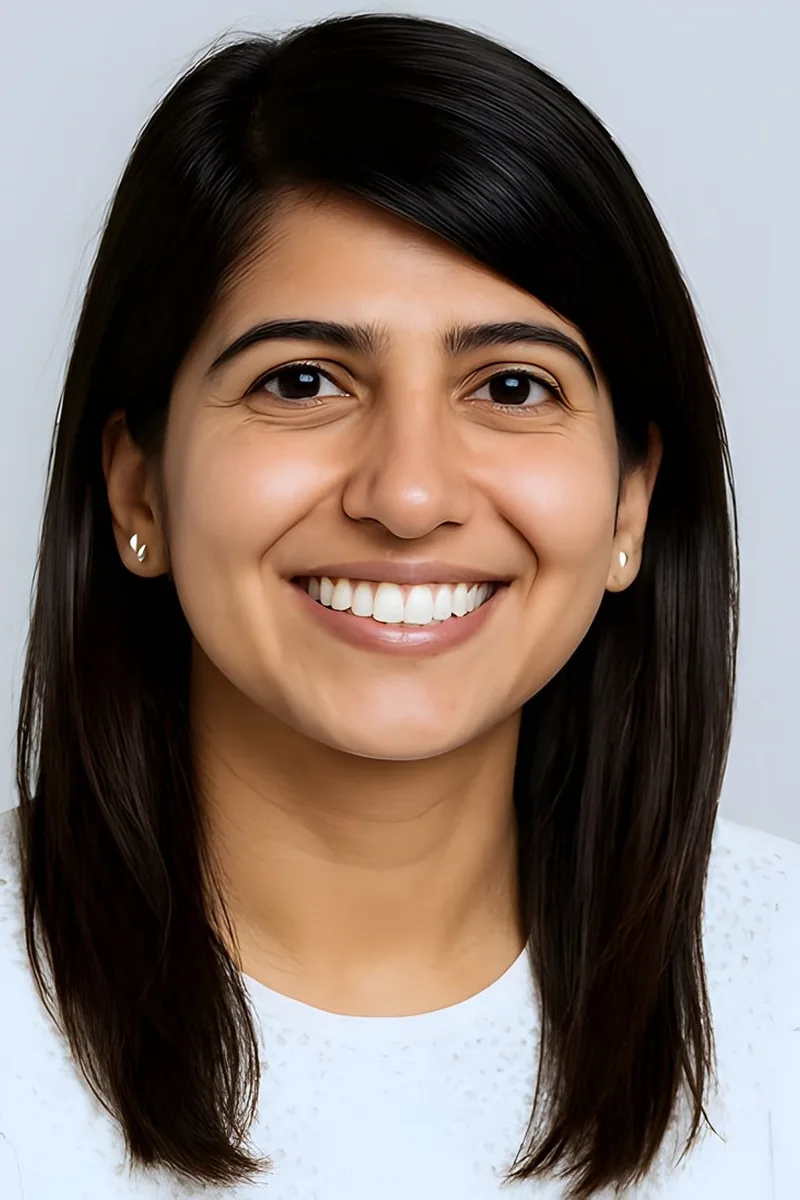
Eshita's neuroscience degree meant living inside the AP Bio curriculum — signal transduction, gene expression, cellular energetics — long before she started tutoring it. She teaches students to think in systems, connecting how a mutation in one pathway cascades through physiology, which is exactly the kind of reasoning the AP free-response questions demand. Rated 5.0 by students.

Vishank's Data Analytics focus on biomedical and public health analysis means he regularly works with biological datasets — gene expression patterns, epidemiological models, population genetics — which gives him an unusual quantitative angle on AP Bio's ecology, evolution, and heredity units. He's especially effective at teaching students to interpret the data-heavy experimental questions the exam throws at them, since reading graphs and spotting statistical trends is literally what his degree trains him to do. Rated 4.9 by students.
Four years of medical school means Sanjul has built the kind of deep, interconnected understanding of biology — from cellular respiration and membrane dynamics to organ-system physiology — that lets him explain *why* a process works, not just walk through a diagram. He's especially sharp on the genetics-to-physiology pipeline, connecting how mutations in DNA replication ripple through gene expression and ultimately alter how an organism functions, which is exactly the multi-step reasoning AP Bio's free-response questions reward. Rated 5.0 by students.
Pharmacy students have to master biochemistry at a level where they can predict how drugs interact with enzymes, receptors, and metabolic pathways — which means Lillian has worked through AP Bio's toughest content (cellular energetics, signal transduction, protein structure-function relationships) with real clinical stakes attached. She's especially sharp at teaching students to spot the patterns in biological systems, like recognizing how feedback inhibition shows up in both hormonal regulation and enzyme kinetics, rather than treating each unit as isolated material. Rated 4.9 by students.
William's psychology degree gave him serious coursework in neuroscience and biological systems — the kind where you trace a neural signal from receptor to brain region to behavioral output, which is exactly the thinking AP Bio's units on cell communication and nervous system function demand. He scored a 34 on the ACT, so he's familiar with high-stakes science reasoning under time pressure, and his planned PhD in neuropsychology means he can teach the behavioral biology and physiology content from a depth most undergrad tutors can't match.
Neuroscience and AP Biology share a huge amount of territory — cell signaling, genetics, membrane transport, and the nervous system all overlap directly with Sunay's major at Emory. He teaches the exam's trickiest free-response questions by connecting molecular-level detail to big-picture biological systems, which is exactly the kind of reasoning the AP readers reward.
Alyssa's linguistics research at the University of Vermont has trained her to break complex systems into structural patterns — a skill that translates surprisingly well to AP Bio topics like gene expression and protein synthesis, where students need to follow sequential, rule-governed processes. She's strongest when teaching students to read and interpret data-rich questions, applying the same analytical precision her research demands to the exam's lab-based free-response prompts.
As a dedicated Biology major at The Ohio State University, I am passionate about guiding students through the intricacies of science and mathematics. With over 2 years of tutoring experience, I specialize in AP Biology, AP Chemistry, and various levels of calculus, fostering a deep understanding of these subjects. My teaching philosophy emphasizes interactive learning and effective study habits, ensuring students not only grasp concepts but can also apply them to solve problems independently. I believe in the potential of every student to succeed, and I strive to create a supportive environment where they can thrive. Outside of academics, I enjoy sports, solving Rubik's cubes, and immersing myself in music, which keeps my approach to tutoring dynamic and engaging. I am committed to helping the next generation of learners achieve their fullest potential.
Studying for AP Biology while already in medical school gives Hyerin an unusual advantage: she knows exactly which cellular respiration pathways, genetics problems, and ecological concepts the exam emphasizes because she's still actively using them. She digs into the data-analysis and experimental-design questions that cost students the most points on the free-response section, turning those into scoring opportunities.
Before starting surgical training at NYU, Camille spent years in a Boston research lab and then medical school at Case Western — which means she's applied AP Bio concepts like cell signaling, organ system physiology, and heredity in both bench science and clinical contexts. She's especially good at teaching students how to trace biological processes across levels of organization, from molecular events up to whole-organism responses, which is exactly the kind of multi-scale reasoning the exam's free-response questions reward. Rated 4.9 by students.
Joseph's path from biomedical engineering into medical school at Ohio University means he's taken collegiate-level biology courses with labs spanning cell biology, genetics, ecology, and physiology — the exact domains AP Biology tests. He digs into the trickiest exam topics, like signal transduction pathways and Hardy-Weinberg equilibrium, with the precision of someone who needed that knowledge for both engineering applications and medical admissions.
Coordinating a tutoring program for pre-health students at Sewanee gave Samuel a clear picture of where biology students get stuck — particularly in molecular and cell biology, which he also tutored one-on-one. His English major actually sharpens his AP Bio teaching: he pushes students to construct written arguments about biological processes (why does this enzyme behave differently at a new pH?) instead of just labeling diagrams, which is exactly the analytical skill the free-response section demands. Rated 5.0 by students.
Susie's biochemistry degree from Swarthmore means she's worked through the molecular machinery behind AP Bio's hardest units — enzyme regulation, metabolic pathways, protein structure-function relationships — at a level where she can explain the logic driving each process, not just the vocabulary. Her research experience at the Cleveland Clinic and NIH adds a practical dimension, especially when teaching students to interpret experimental data and design controlled experiments the way the free-response section demands. Rated 5.0 by students.
Having just taken the MCAT and earned his natural sciences degree, Nathan knows the depth of biological reasoning the AP Bio exam demands — from analyzing chi-square data in genetics problems to explaining feedback loops in endocrine regulation. He breaks down each unit's big ideas and ties them to the kind of experimental-design questions that trip students up on the free-response section.
Christine is a biology major at UChicago, where the program's emphasis on primary literature and experimental design mirrors exactly what AP Bio's lab-based free-response questions demand. Her subject list — genetics, microbiology, ecology — shows she's covered the exam's content from the molecular scale up to population dynamics, so she can teach students to build the cross-unit connections between, say, how mutations arise at the DNA level and how they drive evolutionary change in populations. Rated 4.9 by students.
The AP Biology exam punishes memorization without understanding, especially on those grid-in and free-response questions about cellular energetics or heredity. Emily teaches across nearly every branch of biology — from molecular to evolutionary to ecology — which means she can show students how Unit 1 concepts thread through Unit 8 instead of treating each topic as isolated. Her M.S. in Education informs how she structures review for the exam's four big ideas.
AP Bio covers an enormous range — from molecular genetics to ecosystem dynamics — and the exam tests whether students can apply concepts to unfamiliar experimental scenarios. JF's mathematical and computational science training at Stanford sharpens the data-analysis and graph-interpretation skills that the redesigned AP Bio exam leans on heavily. That analytical lens turns intimidating free-response questions into structured problem-solving exercises.
Saniya's neuroscience degree at Rhodes College required her to learn biology from the molecular scale up — gene expression, cell signaling, neural communication — which means she's tackled AP Bio's toughest conceptual territory in a context where every pathway had to connect to a bigger physiological story. She's continued auditing advanced coursework in anatomy, histology, and embryology since graduating, so the organism-level units on body systems and development are still sharp. Rated 5.0 by students.
Graduate research in Chemical and Physical Biology at Vanderbilt meant Dennis spent years at the intersection of chemistry and living systems — dissecting metabolic pathways, protein interactions, and cellular energetics at a level that makes AP Bio's toughest biochemistry content second nature. His biochemistry undergraduate degree adds even more depth to the molecular biology and genetics units, where he can unpack processes like enzyme kinetics or gene regulation by grounding them in the actual chemistry students rarely get to see in a high school course. Rated 5.0 by students.
Christina's computer science background gives her an unusual edge for AP Bio's data analysis and experimental design questions — she's comfortable with statistical reasoning, interpreting graphs, and the kind of algorithmic thinking that makes tracing metabolic pathways or gene expression cascades more systematic. Her ACT score of 34 also signals strong science reading skills, which matters for an exam where decoding dense passages and pulling evidence from figures is half the battle.
From signal transduction pathways to Hardy-Weinberg equilibrium, AP Biology demands comfort with both molecular detail and big-picture ecological thinking. Amanda earned her biology degree at the University of Alabama and later built on that foundation through medical school coursework in genetics, physiology, and cell biology. She breaks down dense topics like gene regulation and cellular respiration into visual, step-by-step logic that sticks on exam day.
Biophysics at Rice means Aadith studies biological systems through a quantitative lens — analyzing protein folding energetics, membrane dynamics, and molecular interactions — which gives him an unusual edge on AP Bio's units covering macromolecule structure, enzyme kinetics, and cellular energetics. He's also actively taking biochemistry coursework alongside his physics major, so he can explain concepts like the chemiosmotic mechanism or allosteric regulation with the kind of molecular-level precision that earns full credit on free-response questions.
Srini is studying molecular biophysics at Brown, which means AP Bio topics like cell signaling cascades, gene expression, and membrane transport aren't just exam material — they're his daily coursework. He unpacks the why behind each biological process, connecting molecular details to the big-picture themes the AP exam rewards. Rated 4.8 by students.
Cell and molecular biology was Emily's concentration at Duke, where she graduated summa cum laude — so the AP Bio units on gene expression, cell communication, and the central dogma aren't review material she's recalling vaguely, they're concepts she studied at an advanced level and now revisits daily as a Columbia medical student. She's especially sharp at teaching students to diagram signal transduction pathways and trace how a single mutation can ripple through protein function, cell behavior, and organism-level phenotype — the kind of multi-scale reasoning that separates 4s from 5s on the exam. Rated 5.0 by students.
Studying biomedical engineering at Duke means Eric thinks about biological systems at the molecular, cellular, and organismal levels every day. He tackles AP Biology's toughest units — signal transduction, gene regulation, and energy flow through ecosystems — by tying them back to the underlying logic that the AP exam rewards.
Annabel is a molecular biology major heading to medical school, so the content on the AP Bio exam — from cellular respiration and signal transduction to gene regulation and evolutionary evidence — is material she uses daily in her coursework and lab work. She teaches students to think in the way the exam rewards: interpreting data sets, designing experiments, and connecting molecular details to big-picture biological themes.
Ellie's biomedical engineering coursework at Yale — plus her autism research in the School of Medicine — means she's working with the molecular and cellular biology that AP Bio tests at a level where she can explain not just what happens during signal transduction or gene regulation, but why it matters in a living system. She also tutors a Differential Equations course weekly, so she's comfortable with the quantitative reasoning behind chi-square problems and data analysis that trips up students on the exam's free-response sections. Rated 5.0 by students.
Stanford's Human Biology program with a bioinformatics and stem cell science concentration meant Matthew spent his coursework at the intersection of computation and living systems — analyzing gene expression data, studying cell differentiation pathways, and thinking about biology as information processing. That lens is especially useful for AP Bio's molecular biology and genetics units, where students need to trace how information encoded in DNA gets read, regulated, and occasionally misread. Rated 4.9 by students.
Testimonials
Because the right AP Biology tutor makes all the difference.
Average Session Rating – Based on 3.4M Learner Ratings
Practice AP Biology
Free practice tests, flashcards, and AI tutoring for AP Biology
Other Youngstown Tutors
Related Science Tutors in Youngstown
Frequently Asked Questions
Varsity Tutors matches Youngstown students with expert AP Biology tutors for 1-on-1 instruction. We pair each student with a tutor based on their specific needs, learning style, and goals.
Whether you need homework help, exam prep, or want to get ahead, our AP Biology tutors are ready to help.
Common challenges include gaps from earlier material, difficulty with specific concepts, and trouble applying learning to new problems. These issues can snowball quickly in AP Biology.
A tutor identifies where you're stuck, fills in gaps, and provides targeted practice. The 1-on-1 format means you get help exactly where you need it.
Tutors work with your student's actual coursework—homework assignments, class notes, and upcoming tests. This keeps tutoring directly relevant to what's happening in the classroom.
When you share information about your student's school and curriculum, we can match you with a tutor who has relevant experience.
All tutors complete background checks, credential verification, and teaching evaluation. Many of our AP Biology tutors hold advanced degrees or have years of teaching experience.
You can review tutor profiles to find someone with the right background for your student's level and needs.
Many students see improved grades within a few weeks, along with better understanding of AP Biology concepts and more confidence tackling challenging material.
Tutors track progress and adjust their approach to ensure continued improvement.
Most students benefit from 1-2 sessions per week. More frequent sessions help if your student is significantly behind or has an important exam coming up.
Your tutor can recommend a schedule based on your student's specific situation and goals.
Tutoring is purchased in packages of hours, with rates varying by tutor experience. Varsity Tutors offers several options to fit different budgets and needs.
You can discuss pricing during your consultation to find what works best.
Your tutor will assess where your student is, discuss goals, and start working on priority areas. Most students bring current homework or upcoming test material to focus on.
By the end, you'll have a clear sense of how the tutor can help and a plan for moving forward.
Let’s find your perfect tutor
Answer a few quick questions. We’ll recommend the right plan and match you with a top 5% tutor.