Award-Winning College Physics Tutors
serving Columbus, OH
College Physics
Tutors in Columbus
Private 1-on-1 tutoring, weekly live classes for academic support, test prep & enrichment, practice tests and diagnostics, and more to elevate grades and test scores.
Based on 3.4M Learner Ratings
UniversitiesSchools & Universities
DeliveredHours Delivered
ProficiencyGrowth in Proficiency
Who needs tutoring?
No obligation. Takes ~1 minute.

Preparing for the MCAT's physical sciences section while actively tutoring AP Physics 1 and 2 means Ishaan is constantly translating between conceptual and quantitative approaches to mechanics, electricity, and thermodynamics — exactly the dual fluency college physics demands. He breaks problems down by identifying the governing principle first, then walks through the math step by step, which is especially useful for students who can follow a derivation but freeze when facing an unfamiliar scenario. Rated 5.0 by students.
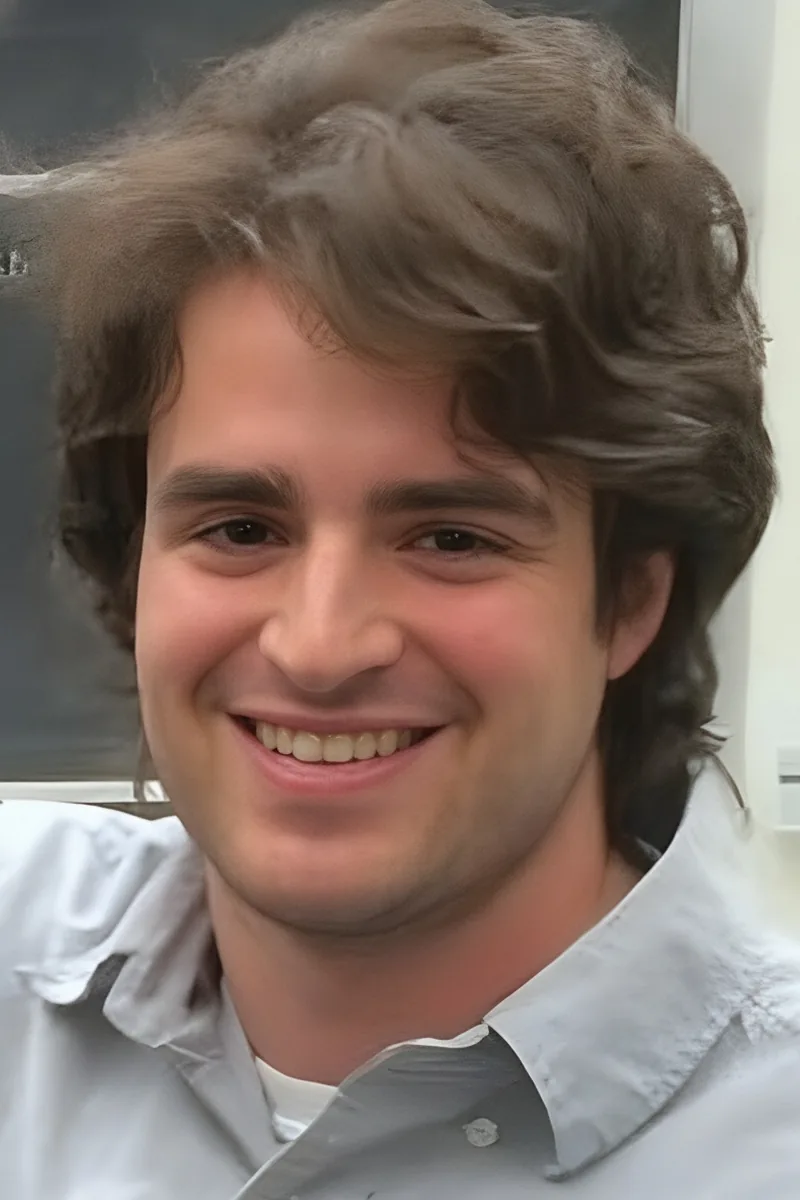
Playing Division I football at Ohio State means Nikolas has an intuitive, physical understanding of mechanics — projectile motion on a punt, impulse during a tackle, rotational inertia through a hip turn — that he uses to make abstract physics problems concrete. His exercise science degree formalized that intuition with coursework in biomechanics and physiology, and his preparation for medical school keeps him sharp on the quantitative problem-solving college physics demands. Holds a 5.0 rating.
Thermodynamics is where Rahul lights up — it was his favorite corner of Cornell's chemical engineering program, and that enthusiasm shows when he's walking someone through heat engines, entropy, or the first and second laws in a college physics context. His engineering training means he treats every problem as a physical system first and an equation second, pushing for the conceptual reasoning behind each step rather than formula-matching. Rated 4.9 by students.
Biomedical engineering at Johns Hopkins means Christine solves physics problems daily that most students only see in textbooks — fluid dynamics in blood flow, pressure gradients across membranes, mechanics of prosthetic joints — giving her a concrete, application-heavy lens for the material. She's particularly strong on the thermodynamics and mechanics portions of college physics, where her coursework overlaps most directly with standard problem sets. Holds a 5.0 rating.
Medical school gave Sanjul a second education in applied physics — fluid dynamics in the circulatory system, electrical circuits in nerve conduction, optics in clinical imaging. He brings that applied perspective to college physics, connecting topics like electromagnetism and thermodynamics to tangible systems students can picture. His 5.0 rating speaks to how well that approach lands.
Mechanical engineering at Case Western Reserve means Kevin solves statics, dynamics, and thermodynamics problems not just on exams but in design projects where the physics has to actually work — a perspective that sharpens how he explains free-body diagrams, energy methods, and rotational kinematics to students seeing them for the first time. He scored a 36 ACT, which speaks to the quantitative precision he brings to setting up and solving calculus-based physics problems. Rated 4.8 by students.
A PhD in applied mathematics and a mechanical engineering degree mean Samuel has lived on both sides of college physics — deriving the differential equations behind damped oscillations and actually building systems governed by them. He unpacks the calculus-heavy formalism that trips up most students, whether it's applying Newton's second law to coupled systems or working through the vector math in electromagnetism. Rated 5.0 by students.
A PhD in applied mathematics means Dr doesn't just know the physics — he built fluency in the differential equations, vector fields, and boundary value problems that form the backbone of every serious college physics course. When students hit a wall on, say, a damped harmonic oscillator or a Gauss's law derivation, he can trace the confusion back to the specific mathematical step that's causing trouble and fix it there. Rated 4.9 by students.
A PhD in chemical engineering means Alexander spent years knee-deep in the physics that underpins transport phenomena — fluid mechanics, heat transfer, and thermodynamics aren't abstract chapters for him but daily working tools. He's particularly sharp at walking through the calculus-based derivations in mechanics and energy problems, connecting each step back to the physical situation so the math doesn't feel like symbol-shuffling. Rated 4.9 by students.
Brian's problem-solving philosophy is refreshingly simple: do more problems. His computer science training at Case Western Reserve built the same logical, step-by-step reasoning that college physics demands — decomposing a complex scenario into known quantities, constraints, and equations before solving. He applies that structured thinking especially well to mechanics and kinematics, where messy word problems need to be translated into clean free-body diagrams and equations of motion.
Studying medical physiology at Case Western Reserve means Ryan encounters physics daily — blood pressure as fluid dynamics, lung expansion as gas laws, nerve impulses as electrical circuits — so he explains college physics concepts through the lens of systems he actively works with. He's particularly effective at walking through free-body diagrams and energy conservation problems, having taught undergraduate sciences including general physics before starting his graduate program.
Chemical engineering coursework is essentially college physics with higher stakes — fluid mechanics, heat transfer, thermodynamics, and transport phenomena all demand the same calculus-based reasoning that fills introductory physics problem sets. Kevin's PhD in environmental engineering added another layer, requiring him to model physical systems like groundwater flow and pollutant dispersion where getting the physics wrong has real consequences. That dual engineering background means he can walk students through everything from free-body diagrams to entropy calculations with the fluency of someone who's applied those concepts professionally.
Physics clicks when you see the math as a language describing real motion, forces, and energy — not just formulas to memorize before an exam. Samuel's computer science and math background at Ohio State means he can walk through the calculus behind kinematics or electromagnetism step by step, connecting each equation to the physical intuition it represents.
Juggling calculus and biochemistry coursework while tackling medical school applications means Robert is actively immersed in the quantitative and scientific reasoning that college physics demands — he's solving the same kinds of force, energy, and wave problems his students are. His classical studies training also gives him an unusual knack for close, careful reading of dense problem statements, which turns out to be half the battle when a multi-step physics question buries the key constraint in the second paragraph.
A physics teaching degree plus a master's in technology and engineering education means Heather has spent years figuring out exactly where students lose the thread — whether it's setting up free-body diagrams, misapplying conservation laws, or blanking on how to translate a word problem into vector components. She teaches the reasoning step before the math step, which is the difference between surviving college physics and actually understanding it. Rated 5.0 by students.
Teaching across physics, physical chemistry, thermodynamics, and quantum mechanics gives Christopher an unusually wide lens on the concepts that collide in a college physics course — he can trace a thermodynamics problem back to its chemistry roots or connect wave behavior to quantum principles when a textbook explanation falls flat. He zeroes in on the physical intuition behind each problem, walking students through force diagrams and energy arguments until the reasoning clicks before any formula gets plugged in.
Studying biophysics at Rice means Aadith lives where physics and biology collide — modeling protein folding forces, analyzing fluid flow through membranes, applying thermodynamic principles to living systems — so he brings a concrete, research-informed perspective to the mechanics, waves, and electromagnetism that fill college physics syllabi. His 1590 SAT reflects serious quantitative chops, and his dual exposure to physics and biochemistry means he can walk through a tough problem from multiple angles until the reasoning clicks.
Studying computer science and applied math at Harvard means Derek uses physics constantly — from electromagnetism in circuit design to mechanics in computational modeling. He tackles college-level topics like Lagrangian dynamics and wave equations by connecting the math to physical intuition, making dense derivations feel less abstract.
College-level physics demands more than plug-and-chug — problems in electrodynamics, rotational mechanics, or thermodynamics often require combining multiple principles in a single solution. Pranav digs into these multi-step problems as a Biomedical Engineering student at Johns Hopkins, where physics underpins much of his coursework. He walks through derivations and problem-solving strategies that build real fluency with the material rather than surface-level familiarity.
Chemical engineering at Georgia Tech means Aimee's spent years solving problems that blend thermodynamics, fluid mechanics, and energy balances — the same physics concepts that make college-level courses demanding, except she's applied them to reactor design and process optimization. Her biosystems engineering graduate work adds another layer, connecting classical mechanics and heat transfer to biological systems in ways that make abstract problem sets feel more concrete. Rated 4.9 by students.
Biomedical engineering at Yale means Ellie applies physics daily — from fluid dynamics in circulatory models to electromagnetic principles in medical imaging. She breaks down topics like torque, wave optics, and circuit analysis by connecting them to real systems she encounters in her coursework and research. Rated 5.0 by students.
Statics, dynamics, circuits, electromagnetics — Steve didn't just take these courses, he took them twice over, earning degrees in both mechanical and electrical engineering before working as a practicing engineer. That dual perspective is especially useful in college physics, where a problem about induced EMF or stress in a beam benefits from someone who's designed real systems around those principles. Rated 4.9 by students.
Serving as a TA for Duke's Electricity and Magnetism course means Florence has graded the exact types of problems — Gauss's law applications, RC circuits, Faraday's law scenarios — that make college physics students sweat, and she knows precisely where the reasoning breaks down. Her computer science background also gives her a knack for teaching the systematic, step-by-step problem decomposition that turns a wall of physics into something solvable. Holds a 5.0 rating.
Studying applied physics at Cornell means Ritesh isn't just teaching college physics concepts — he's actively using them in coursework and research. He digs into the areas that trip up most introductory students, like applying Newton's laws to rotational systems, working through Gauss's law problems, or connecting energy conservation to real circuits. His 4.6 rating speaks to his ability to make those connections click.
Running an immunology lab at Columbia University Medical Center means Matthew applies physics daily in ways most tutors haven't — calibrating imaging equipment, analyzing force and pressure data in tissue samples, and troubleshooting instruments that depend on optics and electromagnetism. That hands-on fluency, combined with a physics degree and a 35 ACT, lets him teach college-level mechanics and E&M problems by connecting equations to the physical systems they actually describe.
Three years of tutoring introductory physics while completing dual bachelor's degrees in physics and mathematics gave Justin a detailed map of exactly where students lose the thread — the jump from one-dimensional kinematics to rotational analogs, the shift from intuitive force reasoning to formal energy methods. His PhD in Computational Mathematics at the University of Chicago deepened that foundation, adding fluency with the differential equations and vector calculus that make the leap from algebra-based to calculus-based physics so steep. Rated 5.0 by students.
When a college physics problem looks like pure abstraction — a block on a frictionless ramp, a charge in a uniform field — Dylan's instinct is to sketch it out, graph it, and show what's physically happening before touching an equation. That visual, graphical approach comes from his physics major at Vanderbilt, where he's simultaneously studying classics and computer science, giving him an unusual ability to translate dense quantitative reasoning into clear, intuitive language. He holds a 4.5 rating and a 36 ACT composite.
Ava's strength in college physics isn't a deep engineering background — it's her ability to teach students how to actually study the material. She breaks down problem-solving into structured steps, emphasizing how to read a force diagram or energy scenario before jumping to equations, and builds note-taking systems tailored to physics courses where lecture moves fast and notation piles up quickly.
Testimonials
Because the right College Physics tutor makes all the difference.
Average Session Rating – Based on 3.4M Learner Ratings
Other Columbus Tutors
Related Science Tutors in Columbus
Frequently Asked Questions
College Physics demands both conceptual understanding and problem-solving skills, which is why many students struggle with translating theory into practice. Common pain points include mastering unit conversions, balancing equations, applying Newton's laws to complex scenarios, and visualizing abstract concepts like electromagnetic fields and wave behavior. Additionally, the mathematical rigor—calculus-based problem sets and vector analysis—catches many students off guard if their math foundation isn't solid.
During your first session, a tutor will assess your current understanding of key concepts, identify specific areas where you're struggling, and learn about your course goals and timeline. They'll ask about your textbook, recent exams, and problem sets to understand your curriculum. From there, you'll develop a personalized plan that might focus on foundational concepts, exam preparation, lab report writing, or problem-solving strategies—whatever will have the biggest impact on your success.
Yes. Tutors can help you understand the scientific method behind experiments, interpret lab data, work through calculations and error analysis, and strengthen your lab report writing. They can also clarify the theory underlying each experiment so you understand not just what you're measuring, but why it matters. This deeper understanding often leads to better experimental design and more confident analysis of your results.
Memorizing formulas without understanding when and why to use them leads to frustration on exams and in real-world applications. Expert tutors focus on building conceptual understanding by connecting abstract ideas to tangible examples—like explaining forces through everyday objects or visualizing energy transfer in circuits. When you truly understand the principles, you can solve novel problems and apply physics concepts to new situations, which is what College Physics courses actually test.
Effective problem-solving starts with identifying what's given, what you're asked to find, and which concepts apply—not jumping straight to formulas. Tutors teach a systematic approach: draw diagrams to visualize the scenario, break multi-step problems into manageable parts, check units at each step, and verify that your answer makes physical sense. This structured method reduces errors and builds confidence, especially on timed exams where panic often derails students.
Varsity Tutors connects you with tutors who have deep expertise in College Physics—many hold degrees in physics or engineering and have successfully taught or tutored the subject at the college level. They understand not just the content, but the specific challenges students face and how to explain complex concepts clearly. When you connect with a tutor, you'll learn about their background, teaching style, and experience so you can find the right fit for your needs.
Tutors help you build a study plan weeks before the exam, review key concepts from lectures and labs, work through practice problems similar to those on past exams, and identify your weak spots early. They can also teach test-taking strategies specific to physics—like estimating answers to check reasonableness or recognizing which equations apply to different problem types. Regular practice and feedback in tutoring sessions significantly improve both understanding and exam performance.
Varsity Tutors makes it easy to get matched with an expert tutor who fits your schedule and learning style. Simply tell us about your College Physics course, your specific challenges, and when you're available, and we'll connect you with qualified tutors. You can start with a single session to see if it's a good fit, then adjust your tutoring plan based on your progress and upcoming exams or assignments.
Let’s find your perfect tutor
Answer a few quick questions. We’ll recommend the right plan and match you with a top 5% tutor.