Award-Winning College Physics Tutors
serving Toledo, OH
College Physics
Tutors in Toledo
Private 1-on-1 tutoring, weekly live classes for academic support, test prep & enrichment, practice tests and diagnostics, and more to elevate grades and test scores.
Based on 3.4M Learner Ratings
UniversitiesSchools & Universities
DeliveredHours Delivered
ProficiencyGrowth in Proficiency
Who needs tutoring?
No obligation. Takes ~1 minute.
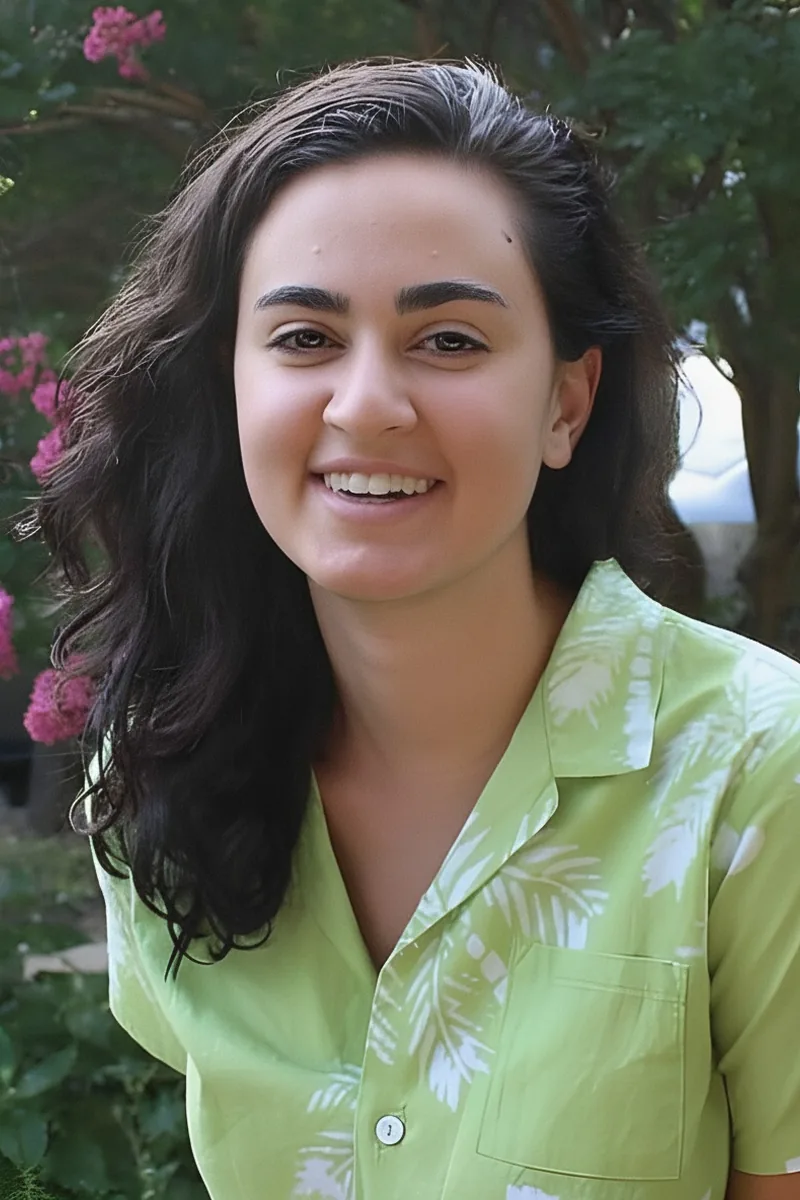
Biomedical engineering at Johns Hopkins means Christine solves physics problems daily that most students only see in textbooks — fluid dynamics in blood flow, pressure gradients across membranes, mechanics of prosthetic joints — giving her a concrete, application-heavy lens for the material. She's particularly strong on the thermodynamics and mechanics portions of college physics, where her coursework overlaps most directly with standard problem sets. Holds a 5.0 rating.
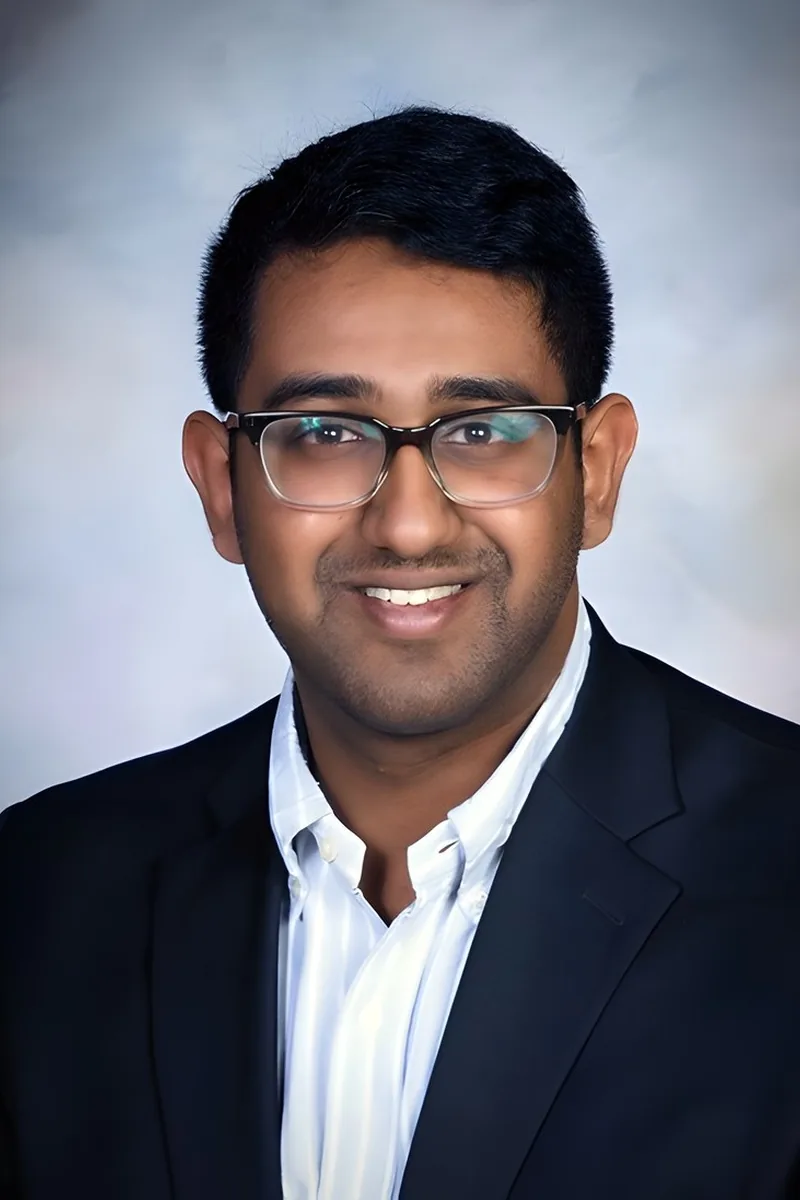
Thermodynamics is where Rahul lights up — it was his favorite corner of Cornell's chemical engineering program, and that enthusiasm shows when he's walking someone through heat engines, entropy, or the first and second laws in a college physics context. His engineering training means he treats every problem as a physical system first and an equation second, pushing for the conceptual reasoning behind each step rather than formula-matching. Rated 4.9 by students.
Medical school gave Sanjul a second education in applied physics — fluid dynamics in the circulatory system, electrical circuits in nerve conduction, optics in clinical imaging. He brings that applied perspective to college physics, connecting topics like electromagnetism and thermodynamics to tangible systems students can picture. His 5.0 rating speaks to how well that approach lands.
Preparing for the MCAT's physical sciences section while actively tutoring AP Physics 1 and 2 means Ishaan is constantly translating between conceptual and quantitative approaches to mechanics, electricity, and thermodynamics — exactly the dual fluency college physics demands. He breaks problems down by identifying the governing principle first, then walks through the math step by step, which is especially useful for students who can follow a derivation but freeze when facing an unfamiliar scenario. Rated 5.0 by students.
Mechanical engineering at Case Western Reserve means Kevin solves statics, dynamics, and thermodynamics problems not just on exams but in design projects where the physics has to actually work — a perspective that sharpens how he explains free-body diagrams, energy methods, and rotational kinematics to students seeing them for the first time. He scored a 36 ACT, which speaks to the quantitative precision he brings to setting up and solving calculus-based physics problems. Rated 4.8 by students.
Playing Division I football at Ohio State means Nikolas has an intuitive, physical understanding of mechanics — projectile motion on a punt, impulse during a tackle, rotational inertia through a hip turn — that he uses to make abstract physics problems concrete. His exercise science degree formalized that intuition with coursework in biomechanics and physiology, and his preparation for medical school keeps him sharp on the quantitative problem-solving college physics demands. Holds a 5.0 rating.
A PhD in applied mathematics and a mechanical engineering degree mean Samuel has lived on both sides of college physics — deriving the differential equations behind damped oscillations and actually building systems governed by them. He unpacks the calculus-heavy formalism that trips up most students, whether it's applying Newton's second law to coupled systems or working through the vector math in electromagnetism. Rated 5.0 by students.
A PhD in chemical engineering means Alexander spent years knee-deep in the physics that underpins transport phenomena — fluid mechanics, heat transfer, and thermodynamics aren't abstract chapters for him but daily working tools. He's particularly sharp at walking through the calculus-based derivations in mechanics and energy problems, connecting each step back to the physical situation so the math doesn't feel like symbol-shuffling. Rated 4.9 by students.
Brian's problem-solving philosophy is refreshingly simple: do more problems. His computer science training at Case Western Reserve built the same logical, step-by-step reasoning that college physics demands — decomposing a complex scenario into known quantities, constraints, and equations before solving. He applies that structured thinking especially well to mechanics and kinematics, where messy word problems need to be translated into clean free-body diagrams and equations of motion.
A PhD in applied mathematics means Dr doesn't just know the physics — he built fluency in the differential equations, vector fields, and boundary value problems that form the backbone of every serious college physics course. When students hit a wall on, say, a damped harmonic oscillator or a Gauss's law derivation, he can trace the confusion back to the specific mathematical step that's causing trouble and fix it there. Rated 4.9 by students.
Studying medical physiology at Case Western Reserve means Ryan encounters physics daily — blood pressure as fluid dynamics, lung expansion as gas laws, nerve impulses as electrical circuits — so he explains college physics concepts through the lens of systems he actively works with. He's particularly effective at walking through free-body diagrams and energy conservation problems, having taught undergraduate sciences including general physics before starting his graduate program.
Physics clicks when you see the math as a language describing real motion, forces, and energy — not just formulas to memorize before an exam. Samuel's computer science and math background at Ohio State means he can walk through the calculus behind kinematics or electromagnetism step by step, connecting each equation to the physical intuition it represents.
Chemical engineering coursework is essentially college physics with higher stakes — fluid mechanics, heat transfer, thermodynamics, and transport phenomena all demand the same calculus-based reasoning that fills introductory physics problem sets. Kevin's PhD in environmental engineering added another layer, requiring him to model physical systems like groundwater flow and pollutant dispersion where getting the physics wrong has real consequences. That dual engineering background means he can walk students through everything from free-body diagrams to entropy calculations with the fluency of someone who's applied those concepts professionally.
Juggling calculus and biochemistry coursework while tackling medical school applications means Robert is actively immersed in the quantitative and scientific reasoning that college physics demands — he's solving the same kinds of force, energy, and wave problems his students are. His classical studies training also gives him an unusual knack for close, careful reading of dense problem statements, which turns out to be half the battle when a multi-step physics question buries the key constraint in the second paragraph.
A physics teaching degree plus a master's in technology and engineering education means Heather has spent years figuring out exactly where students lose the thread — whether it's setting up free-body diagrams, misapplying conservation laws, or blanking on how to translate a word problem into vector components. She teaches the reasoning step before the math step, which is the difference between surviving college physics and actually understanding it. Rated 5.0 by students.
Teaching across physics, physical chemistry, thermodynamics, and quantum mechanics gives Christopher an unusually wide lens on the concepts that collide in a college physics course — he can trace a thermodynamics problem back to its chemistry roots or connect wave behavior to quantum principles when a textbook explanation falls flat. He zeroes in on the physical intuition behind each problem, walking students through force diagrams and energy arguments until the reasoning clicks before any formula gets plugged in.
Princeton's mechanical and aerospace engineering program is essentially a four-year immersion in applied physics — Fred spent it solving problems in fluid dynamics, thermodynamics, structural mechanics, and orbital motion, which maps directly onto the topics that fill college physics syllabi. He breaks down force diagrams and energy methods by connecting them to the engineering contexts where those concepts actually get used, making abstract problem sets feel more concrete. His 1550 SAT reflects the quantitative precision he brings to calculus-heavy coursework.
Four years teaching undergraduate physics labs at the University of Michigan — especially courses designed for non-STEM majors — taught Michael how to strip intimidating topics like electromagnetism, circuits, and wave optics down to their physical intuition before layering the math back on. His PhD research deepened that fluency across the full spectrum of college physics, from introductory mechanics through advanced electrodynamics and special relativity. Rated 4.7 by students.
Engineering coursework at Cornell means Abby is actively grinding through the same calculus-based physics — mechanics, wave motion, electromagnetism — that her students are tackling, which keeps her explanations grounded in the specific problem styles and pitfalls that show up on current exams. She breaks down multi-step problems by isolating the physical principle first, then translating it into the math, so students stop guessing which equation to use. Holds a 5.0 rating.
As a senior physics major at Yale, Ian tackles college-level topics like electromagnetism, rotational dynamics, and wave optics with the fluency of someone who uses them daily. He breaks intimidating derivations into logical steps, connecting the math to physical intuition so that concepts like Gauss's Law or Lagrangian mechanics actually make sense rather than feeling like symbol-pushing.
College-level physics ramps up fast, especially when courses introduce calculus-based mechanics or electromagnetism for the first time. Charles works through these topics as part of his mechanical engineering curriculum at Yale, so he can walk through derivations of torque, moment of inertia, or Gauss's law with the fluency of someone who applies them in lab and design projects regularly.
Three science-focused bachelor's degrees — including biology — meant Garrett sat through the full calculus-based physics sequence and kept coming back to it in physiology and physical chemistry, where concepts like fluid dynamics, pressure gradients, and energy transfer show up again and again. That repeated exposure across disciplines gives him an intuitive feel for when to apply conservation of energy versus momentum, or how to reason through a thermodynamics problem without getting lost in the formalism. His 1530 SAT speaks to the quantitative sharpness he brings to each session.
Between earning a mechanical engineering bachelor's and pursuing his master's, Aaron has taken calculus-based physics from every angle — statics, dynamics, thermodynamics, fluid mechanics — and now applies those principles daily in graduate-level research and coursework. He breaks down problems by teaching students to sketch the physical situation first, identify constraints, and only then select the right conservation law or force equation. Holds a 5.0 rating.
College-level physics ramps up fast, and the jump from textbook examples to exam problems can be brutal. Bryan earned his B.S. in Physics and tackles that gap by teaching problem-solving frameworks — symmetry arguments in electrostatics, constraint equations in multi-body dynamics — that transfer across chapters instead of requiring a new trick every week.
Studying applied mathematics at Caltech means Samuel encounters physics constantly — from classical mechanics and energy conservation to electromagnetism and wave behavior. He breaks down the math behind physical systems so that equations like Maxwell's or Newton's second law feel like tools rather than obstacles.
Ava's strength in college physics isn't a deep engineering background — it's her ability to teach students how to actually study the material. She breaks down problem-solving into structured steps, emphasizing how to read a force diagram or energy scenario before jumping to equations, and builds note-taking systems tailored to physics courses where lecture moves fast and notation piles up quickly.
A molecular biology background means Andrew regularly encountered physics in disguise — diffusion rates, membrane potentials, fluid dynamics in biological systems — before his doctoral work added another layer of analytical rigor. He breaks down mechanics and thermodynamics problems by connecting them to tangible phenomena, which makes the abstract math feel less like symbol-pushing. Rated 4.8 by students.
Having served as a teaching assistant for Differential Equations and Mechanics at Notre Dame, Jeffrey has already spent time explaining the exact concepts — torque, oscillations, coupled systems — that trip up students in university physics courses. His mechanical engineering PhD work at Rice deepens that fluency, especially in thermodynamics and rotational dynamics where the math gets dense fast. He's rated 4.9 by students.
Testimonials
Because the right College Physics tutor makes all the difference.
Average Session Rating – Based on 3.4M Learner Ratings
Other Toledo Tutors
Related Science Tutors in Toledo
Frequently Asked Questions
College Physics builds on foundational concepts but requires deeper understanding of how forces, energy, and motion connect in real-world systems. Students often struggle with translating word problems into equations, visualizing abstract concepts like fields and waves, and applying mathematical reasoning to physical situations. Many also find the transition from memorizing formulas to truly understanding the principles behind them to be challenging. Personalized tutoring helps you develop problem-solving strategies and conceptual clarity rather than relying on memorization alone.
Your first session is about understanding your specific challenges and goals. A tutor will assess your current grasp of key concepts, identify where you're struggling most—whether it's kinematics, thermodynamics, electromagnetism, or something else—and learn about your learning style. From there, they'll create a personalized plan focused on building both conceptual understanding and problem-solving skills, so you can approach exams and labs with confidence.
Absolutely. Lab work is where physics comes alive—it's where you see theoretical concepts in action and develop scientific reasoning skills. Tutors can help you understand the purpose behind experiments, interpret data correctly, connect observations to the physics principles you're learning in class, and strengthen your ability to think like a scientist. This support translates directly to better lab reports and deeper comprehension of the material.
Unit conversions and multi-step physics problems trip up many students because they require both mathematical precision and conceptual understanding. Tutors break down the problem-solving process step-by-step, teach you how to set up equations correctly, help you track units throughout calculations, and show you how to check if your answer makes physical sense. With practice and personalized guidance, these skills become second nature.
Physics isn't just abstract equations—it explains how the world works, from how bridges stay standing to how electricity powers your devices. Tutors help you see these connections by relating concepts to real situations, which makes the material more meaningful and easier to retain. Understanding the "why" behind the physics makes problem-solving more intuitive and helps you appreciate the relevance of what you're learning.
Varsity Tutors connects you with expert tutors who have strong backgrounds in physics and experience helping students master college-level material. When you get matched with a tutor, you'll know they understand both the subject deeply and how to teach it effectively. The personalized approach means your tutor tailors their teaching to your learning style and specific challenges.
Yes. Whether you're preparing for midterms, finals, or the AP Physics exam, tutors help you review key concepts, practice problem-solving under timed conditions, identify weak areas, and build test-taking strategies. Regular tutoring sessions leading up to an exam are far more effective than cramming, because they give you time to develop true understanding and confidence in your ability to apply concepts to new problems.
Pricing varies based on the tutor's experience level and your specific needs, so you have options that fit different budgets. Scheduling is flexible—you can arrange sessions around your class schedule, exam prep timeline, and other commitments. Many students find that consistent weekly sessions work best for building understanding, but you can adjust frequency based on what works for you.
Let’s find your perfect tutor
Answer a few quick questions. We’ll recommend the right plan and match you with a top 5% tutor.