Award-Winning AP Chemistry Tutors
serving Youngstown, OH
AP Chemistry
Tutors in Youngstown
Private 1-on-1 tutoring, weekly live classes for academic support, test prep & enrichment, practice tests and diagnostics, and more to elevate grades and test scores.
Based on 3.4M Learner Ratings
UniversitiesSchools & Universities
DeliveredHours Delivered
ProficiencyGrowth in Proficiency
Who needs tutoring?
No obligation. Takes ~1 minute.
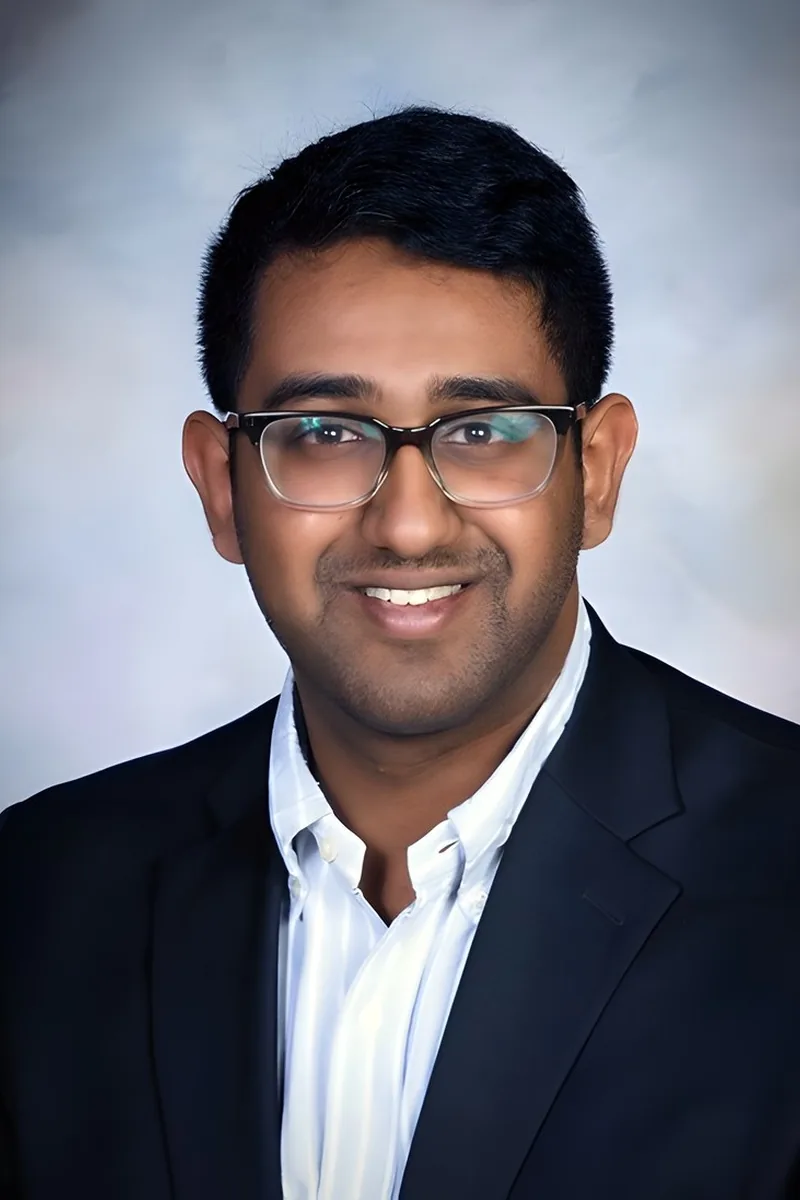
Cornell's chemical engineering program put Rahul through physical chemistry, thermodynamics, and reaction engineering courses where AP Chemistry concepts like enthalpy, equilibrium, and kinetics were just the starting point — so he can teach those topics with the depth that makes free-response questions feel manageable. He's especially sharp on thermochemistry, his self-described favorite, and connects energy diagrams and Hess's law to the industrial-scale processes he studied as an engineer. Rated 4.9 by students.

Forty-plus AP and general chemistry students have worked through thermodynamics, electrochemistry, and equilibrium calculations with Amy, and her 5.0 rating speaks to the results. Her master's in environmental toxicology keeps her deeply connected to the material — she teaches AP concepts like Gibbs free energy and kinetics as tools scientists actually use, not just formulas to memorize for the exam.
AP Chemistry's free-response questions demand more than memorizing reactions — they require students to connect equilibrium, thermodynamics, and kinetics into coherent explanations under time pressure. Vishank's data analytics background at Ohio State sharpens how he breaks down multi-step problems, teaching students to identify what the question is really testing before diving into calculations. Rated 4.9 by students.
A biochemistry degree means Lyndsey has been through the full gauntlet of college-level chemistry — organic mechanisms, physical chemistry, analytical techniques — giving her a depth that makes AP Chemistry's trickiest topics, like electrochemistry and kinetics, feel like familiar territory rather than abstract puzzles. She's especially sharp at teaching students how to read and interpret lab data, a skill the AP exam's free-response section rewards heavily. Rated 5.0 by students.
AP Chemistry's jump from stoichiometry and bonding to thermodynamics and equilibrium catches a lot of students off guard. William tackles each unit by anchoring the math to the underlying chemical logic — explaining why Le Chatelier's principle predicts a specific shift, not just that it does. His experience across both chemistry and biology lets him show how these ideas connect to real systems.
AP Chemistry's free-response questions demand more than memorized formulas — they require students to explain WHY a reaction proceeds, connect particulate diagrams to macroscopic observations, and reason through multi-step equilibrium problems. Ricardo tackles these skills head-on, drawing from his chemistry coursework at Ohio State and years of university-level tutoring. Rated 4.6 by students, he's especially sharp on electrochemistry and thermodynamic calculations.
Chemistry is Lillian's home turf — her prepharmacy program demanded mastery of everything from thermodynamics and equilibrium to electrochemistry and molecular orbital theory. She teaches AP Chemistry by tracing each problem back to the underlying principle, so students learn to predict reaction behavior instead of memorizing isolated equations. That approach shows in her 4.9 client rating.
A PhD in chemical engineering means Alexander has spent years working with thermodynamics, reaction kinetics, and equilibrium at a depth that makes AP Chemistry's toughest topics — like Hess's law, Le Chatelier's principle, and galvanic cells — feel like familiar territory. His biosystems engineering background adds a practical dimension, connecting abstract chemical concepts to real processes like fermentation or membrane transport. Rated 4.9 by students.
Between an economics degree heavy on quantitative modeling and a bioethics master's that required deep engagement with biochemistry and pharmacology, Hyerin has encountered chemistry from multiple angles — which is exactly the kind of cross-disciplinary fluency that AP Chemistry's application-heavy free-response questions reward. She unpacks topics like Le Chatelier's principle and solution chemistry by tying the math to real molecular behavior, making the logic stick long after the exam. Rated 4.9 by students.
AP Chemistry's toughest sections — equilibrium, thermodynamics, electrochemistry — require students to think quantitatively and conceptually at the same time. Susie earned her biochemistry degree at Swarthmore, where the chemistry curriculum is notoriously rigorous, and she's since tutored AP and standardized-test chemistry both domestically and abroad. She unpacks each problem type so students understand the reasoning behind the math, not just the formula.
Neuroscience coursework doesn't let you skip the hard chemistry — John's degree required grappling with electrochemistry, molecular bonding, and reaction thermodynamics to understand how ions cross membranes and how neurotransmitters interact at the receptor level. That gives him a practical angle on AP Chemistry's trickiest conceptual territory, especially when students need to connect what's happening in an equation to what's actually occurring between molecules.
As a dedicated Biology major at The Ohio State University, I am passionate about guiding students through the intricacies of science and mathematics. With over 2 years of tutoring experience, I specialize in AP Biology, AP Chemistry, and various levels of calculus, fostering a deep understanding of these subjects. My teaching philosophy emphasizes interactive learning and effective study habits, ensuring students not only grasp concepts but can also apply them to solve problems independently. I believe in the potential of every student to succeed, and I strive to create a supportive environment where they can thrive. Outside of academics, I enjoy sports, solving Rubik's cubes, and immersing myself in music, which keeps my approach to tutoring dynamic and engaging. I am committed to helping the next generation of learners achieve their fullest potential.
Currently enrolled in Biochemistry alongside his medical school applications, Robert is actively working through the college-level chemistry — reaction mechanisms, thermodynamics, acid-base systems — that AP Chemistry students encounter in condensed form. His Classical Studies background gives him an unusual edge: he's practiced at close reading and structured argumentation, skills that translate directly to parsing AP Chemistry's notoriously tricky free-response prompts where explaining reasoning matters as much as getting the number right.
AP Chemistry's free-response questions punish students who memorize without understanding — especially on equilibrium, thermodynamics, and kinetics. As a college general chemistry instructor, Jennifer teaches this exact material at the university level and knows precisely which conceptual gaps the AP exam is designed to expose. She drills both the quantitative problem-solving and the written justifications the exam demands.
I am always willing to help and I will try my best to help students who desire further understanding of the subject at hand.
Heather's physics teaching degree and master's in technology and engineering education mean she's spent years explaining the physical chemistry concepts — energy transfer, gas behavior, atomic structure — that sit at the heart of AP Chemistry's most demanding units. She teaches lab-based and free-response questions by connecting the math to real physical systems, so students understand what's driving a reaction rather than just balancing it. Rated 5.0 by students.
As a Chemistry and Neuroscience double at Emory, Maria lives in the material AP Chem covers — thermodynamics, equilibrium, electrochemistry, and intermolecular forces all show up in her coursework and lab work. She knows which free-response question styles the exam favors and teaches students to connect conceptual reasoning with the quantitative problem-solving the AP graders reward.
As a tutor for 20+ years, I bring ample experience and knowledge. I specialize in standardized testing (MCAT, SAT, ACT, GRE, & more), medical school and pre-med courses, and undergraduate STEM subjects. A former medical school student and Master of Public Health, I opted for what truly brings me joy: tutoring, teaching, and guiding students to lifelong academic success.
Thermodynamics, electrochemistry, and equilibrium calculations in AP Chemistry require more than formula memorization — they demand fluency with why reactions behave the way they do. Abrahim's chemistry background spans general through physical and organic at UCLA, and his direct teaching style zeroes in on the conceptual reasoning that earns 4s and 5s on exam day.
Raj's biochemistry and molecular biology degree means he's lived through the college-level versions of every AP Chemistry topic — from reaction kinetics and acid-base equilibria to the thermodynamic principles that trip up most students on free-response questions. He teaches the quantitative side (stoichiometry, ICE tables, rate law setups) by anchoring each calculation in what's physically happening at the molecular level, so students build intuition alongside technique. His 36 ACT and 5.0 rating back up that approach.
Enric earned his PhD in Chemistry, which means AP Chem topics like equilibrium, thermodynamics, and kinetics aren't just exam material — they're the foundation of his professional expertise. He knows which free-response question styles the College Board favors and teaches students to connect particulate-level reasoning to macroscopic observations, the skill that separates 4s from 5s. Rated 5.0.
Equilibrium expressions, thermodynamics, and electrochemistry all demand comfort with both conceptual reasoning and quantitative precision. JF's math and computational science background at Stanford makes the mathematical side of AP Chem — ICE tables, rate law calculations, stoichiometric conversions — second nature, freeing up mental energy for the deeper conceptual understanding the exam rewards. Rated 5.0 by students.
Raveena's bioinformatics degree at VCU means she doesn't just know AP Chemistry's content — she applies it daily, using computational tools to analyze molecular structures and chemical data in ways that make topics like electron configuration and periodic trends feel concrete. Her 8-year direct med program has taken her well beyond the AP curriculum through organic chemistry and biochemistry, giving her a clear picture of which foundational concepts the free-response section rewards most. Rated 4.9 by students.
I am a graduate from the University of Florida, University of Pennsylvania, and University of Illinois Urbana-Champaign. I have graduated with scholarship honors in Chemical Engineering with a Bachelor of Sciences from University of Florida, Masters of Computer and Information Technology from UPenn, and a degree in Master of Business Administration from University of Illinois Urbana-Champaign. I have been a private tutor and also a Teaching Assistant for my four years of study at the University of Florida. I teach various subjects ranging from math and the sciences to test prep such as the ACT. My favorite subject to teach is Chemistry because of my overall background in the field. I enjoy working with students of all ages from grade school to college. It makes me really happy when a student is finally able to comprehend a subject they found difficult before. I am very patient with my students and I will do everything in my power to give them the best education possible.
A biophysics major and premed student at Johns Hopkins, Czarina is currently deep in the college chemistry sequence that AP Chemistry is designed to preview — so she knows exactly which concepts, like molecular orbital theory and colligative properties, carry the most weight on the exam versus which ones fade into background noise. She earned a 770 on the SAT Chemistry Subject Test and teaches the subject by linking quantitative problem-solving to the physical intuition behind each reaction. Rated 5.0 by students.
Cornell's engineering curriculum put Ravnoor through rigorous college-level chemistry, and his computer science training sharpened the algorithmic thinking that pays off when students need to systematically work through multi-step problems like limiting reagent calculations or electrochemical cell setups. He teaches AP Chemistry's quantitative sections by treating each problem like a debugging exercise — isolating variables, checking units at every step, and building toward answers methodically rather than jumping to formulas. Rated 5.0 by students.
Thermodynamics, equilibrium, and electrochemistry each require a different style of problem-solving, and AP Chemistry crams all of them into one exam. Andrew's biochemistry degree and lab research give him deep fluency with these concepts at the molecular level, so he can unpack why Le Chatelier's principle works or how entropy drives spontaneity — not just which formula to plug numbers into.
Georgia Tech's chemical engineering curriculum threw Aimee into college-level thermodynamics, kinetics, and reaction engineering years before most students encounter those ideas — which means she can teach AP Chemistry's toughest conceptual leaps, like connecting enthalpy diagrams to spontaneity or interpreting rate law data, from genuine fluency rather than textbook familiarity. Her 4.9 rating and experience as a teaching assistant show she can translate that depth into clear, patient explanations when a student is stuck on a free-response problem at 9 p.m. the night before the exam.
Three semesters as a college chemistry TA gave Joshua deep familiarity with the exact concepts that stump AP students: equilibrium calculations, thermodynamics, and electrochemistry. He knows how free-response questions are structured and teaches students to connect mathematical problem-solving with the conceptual reasoning the AP exam rewards.
AP Chemistry's free-response questions demand more than knowing reactions — they require students to connect thermodynamic principles, equilibrium shifts, and kinetic data into coherent written arguments. Andrew's molecular biology background means he understands these concepts at the research level, and his 4.8 rating shows he communicates that understanding clearly.
Testimonials
Because the right AP Chemistry tutor makes all the difference.
Average Session Rating – Based on 3.4M Learner Ratings
Practice AP Chemistry
Free practice tests, flashcards, and AI tutoring for AP Chemistry
Other Youngstown Tutors
Related Science Tutors in Youngstown
Frequently Asked Questions
Varsity Tutors matches Youngstown students with expert AP Chemistry tutors for 1-on-1 instruction. We pair each student with a tutor based on their specific needs, learning style, and goals.
Whether you need homework help, exam prep, or want to get ahead, our AP Chemistry tutors are ready to help.
Common challenges include gaps from earlier material, difficulty with specific concepts, and trouble applying learning to new problems. These issues can snowball quickly in AP Chemistry.
A tutor identifies where you're stuck, fills in gaps, and provides targeted practice. The 1-on-1 format means you get help exactly where you need it.
Tutors work with your student's actual coursework—homework assignments, class notes, and upcoming tests. This keeps tutoring directly relevant to what's happening in the classroom.
When you share information about your student's school and curriculum, we can match you with a tutor who has relevant experience.
All tutors complete background checks, credential verification, and teaching evaluation. Many of our AP Chemistry tutors hold advanced degrees or have years of teaching experience.
You can review tutor profiles to find someone with the right background for your student's level and needs.
Many students see improved grades within a few weeks, along with better understanding of AP Chemistry concepts and more confidence tackling challenging material.
Tutors track progress and adjust their approach to ensure continued improvement.
Most students benefit from 1-2 sessions per week. More frequent sessions help if your student is significantly behind or has an important exam coming up.
Your tutor can recommend a schedule based on your student's specific situation and goals.
Tutoring is purchased in packages of hours, with rates varying by tutor experience. Varsity Tutors offers several options to fit different budgets and needs.
You can discuss pricing during your consultation to find what works best.
Your tutor will assess where your student is, discuss goals, and start working on priority areas. Most students bring current homework or upcoming test material to focus on.
By the end, you'll have a clear sense of how the tutor can help and a plan for moving forward.
Let’s find your perfect tutor
Answer a few quick questions. We’ll recommend the right plan and match you with a top 5% tutor.