Award-Winning College Physics Tutors
serving Cincinnati, OH
College Physics
Tutors in Cincinnati
Private 1-on-1 tutoring, weekly live classes for academic support, test prep & enrichment, practice tests and diagnostics, and more to elevate grades and test scores.
Based on 3.4M Learner Ratings
UniversitiesSchools & Universities
DeliveredHours Delivered
ProficiencyGrowth in Proficiency
Who needs tutoring?
No obligation. Takes ~1 minute.
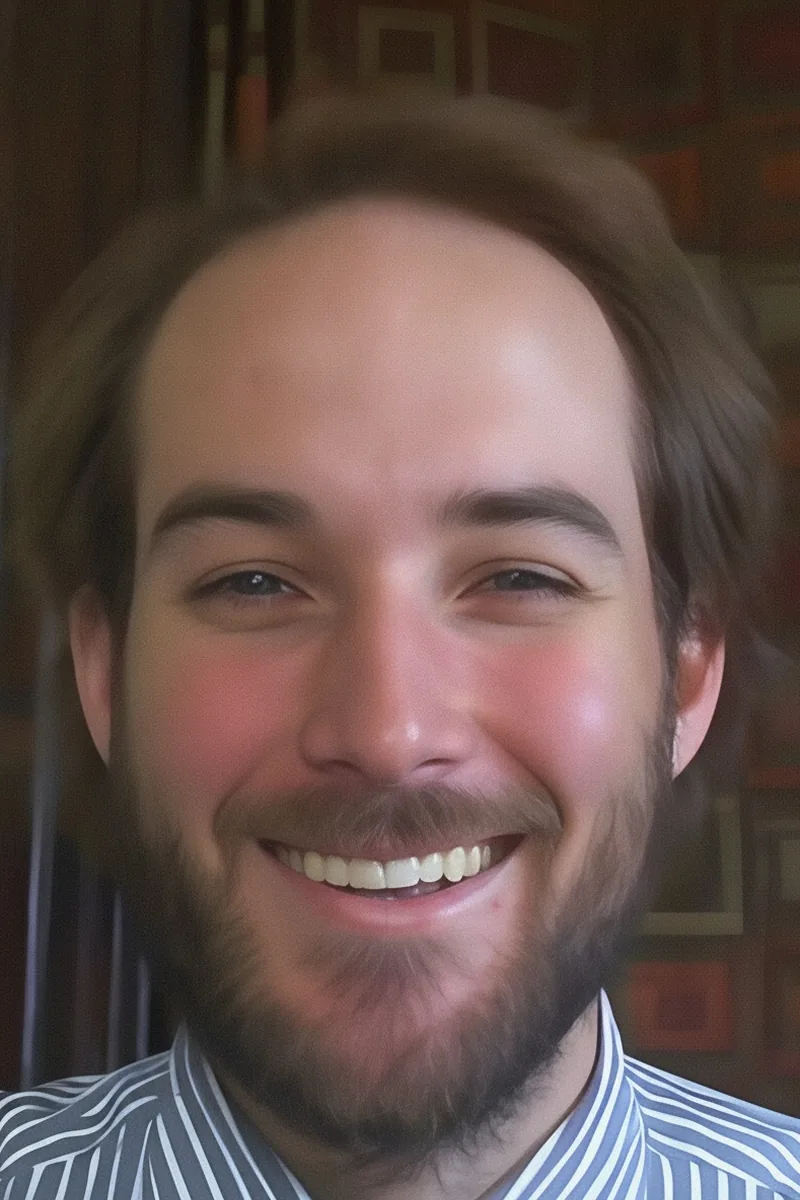
Juggling calculus and biochemistry coursework while tackling medical school applications means Robert is actively immersed in the quantitative and scientific reasoning that college physics demands — he's solving the same kinds of force, energy, and wave problems his students are. His classical studies training also gives him an unusual knack for close, careful reading of dense problem statements, which turns out to be half the battle when a multi-step physics question buries the key constraint in the second paragraph.
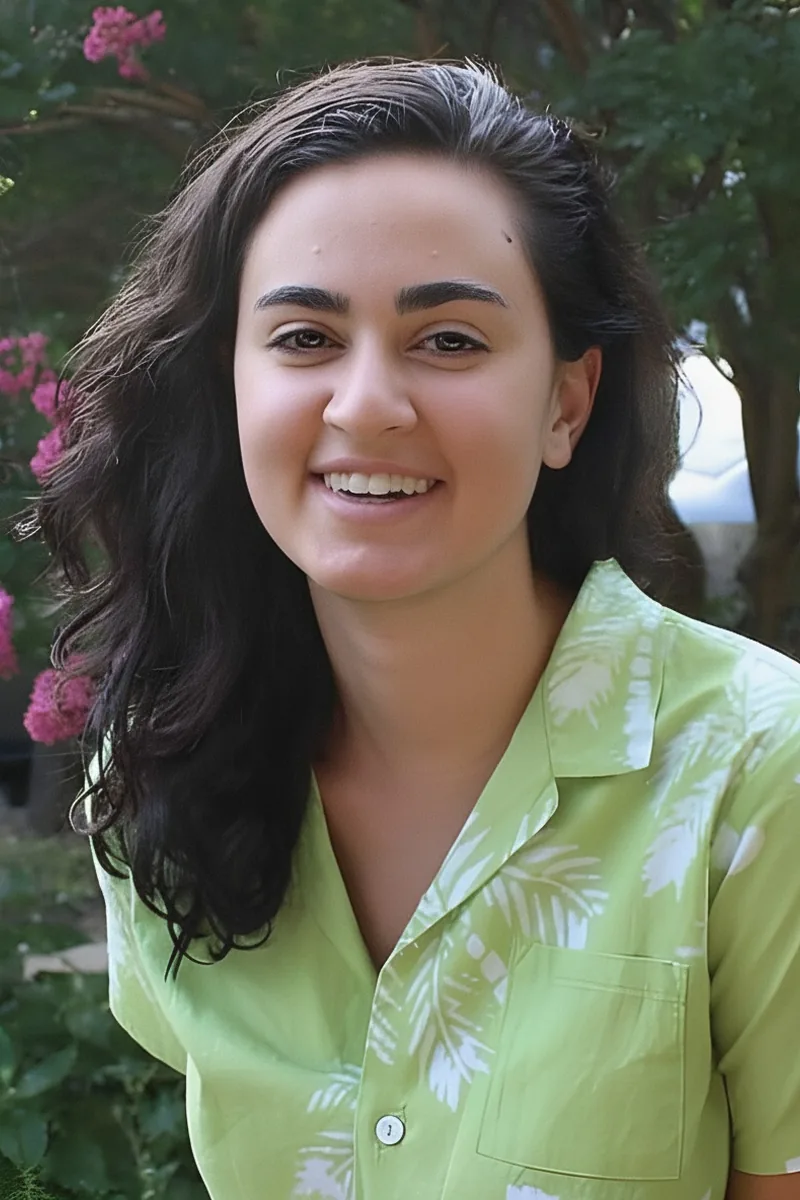
Biomedical engineering at Johns Hopkins means Christine solves physics problems daily that most students only see in textbooks — fluid dynamics in blood flow, pressure gradients across membranes, mechanics of prosthetic joints — giving her a concrete, application-heavy lens for the material. She's particularly strong on the thermodynamics and mechanics portions of college physics, where her coursework overlaps most directly with standard problem sets. Holds a 5.0 rating.
Thermodynamics is where Rahul lights up — it was his favorite corner of Cornell's chemical engineering program, and that enthusiasm shows when he's walking someone through heat engines, entropy, or the first and second laws in a college physics context. His engineering training means he treats every problem as a physical system first and an equation second, pushing for the conceptual reasoning behind each step rather than formula-matching. Rated 4.9 by students.
Medical school gave Sanjul a second education in applied physics — fluid dynamics in the circulatory system, electrical circuits in nerve conduction, optics in clinical imaging. He brings that applied perspective to college physics, connecting topics like electromagnetism and thermodynamics to tangible systems students can picture. His 5.0 rating speaks to how well that approach lands.
Preparing for the MCAT's physical sciences section while actively tutoring AP Physics 1 and 2 means Ishaan is constantly translating between conceptual and quantitative approaches to mechanics, electricity, and thermodynamics — exactly the dual fluency college physics demands. He breaks problems down by identifying the governing principle first, then walks through the math step by step, which is especially useful for students who can follow a derivation but freeze when facing an unfamiliar scenario. Rated 5.0 by students.
Mechanical engineering at Case Western Reserve means Kevin solves statics, dynamics, and thermodynamics problems not just on exams but in design projects where the physics has to actually work — a perspective that sharpens how he explains free-body diagrams, energy methods, and rotational kinematics to students seeing them for the first time. He scored a 36 ACT, which speaks to the quantitative precision he brings to setting up and solving calculus-based physics problems. Rated 4.8 by students.
Playing Division I football at Ohio State means Nikolas has an intuitive, physical understanding of mechanics — projectile motion on a punt, impulse during a tackle, rotational inertia through a hip turn — that he uses to make abstract physics problems concrete. His exercise science degree formalized that intuition with coursework in biomechanics and physiology, and his preparation for medical school keeps him sharp on the quantitative problem-solving college physics demands. Holds a 5.0 rating.
A PhD in chemical engineering means Alexander spent years knee-deep in the physics that underpins transport phenomena — fluid mechanics, heat transfer, and thermodynamics aren't abstract chapters for him but daily working tools. He's particularly sharp at walking through the calculus-based derivations in mechanics and energy problems, connecting each step back to the physical situation so the math doesn't feel like symbol-shuffling. Rated 4.9 by students.
A PhD in applied mathematics means Dr doesn't just know the physics — he built fluency in the differential equations, vector fields, and boundary value problems that form the backbone of every serious college physics course. When students hit a wall on, say, a damped harmonic oscillator or a Gauss's law derivation, he can trace the confusion back to the specific mathematical step that's causing trouble and fix it there. Rated 4.9 by students.
Brian's problem-solving philosophy is refreshingly simple: do more problems. His computer science training at Case Western Reserve built the same logical, step-by-step reasoning that college physics demands — decomposing a complex scenario into known quantities, constraints, and equations before solving. He applies that structured thinking especially well to mechanics and kinematics, where messy word problems need to be translated into clean free-body diagrams and equations of motion.
A PhD in applied mathematics and a mechanical engineering degree mean Samuel has lived on both sides of college physics — deriving the differential equations behind damped oscillations and actually building systems governed by them. He unpacks the calculus-heavy formalism that trips up most students, whether it's applying Newton's second law to coupled systems or working through the vector math in electromagnetism. Rated 5.0 by students.
Chemical engineering coursework is essentially college physics with higher stakes — fluid mechanics, heat transfer, thermodynamics, and transport phenomena all demand the same calculus-based reasoning that fills introductory physics problem sets. Kevin's PhD in environmental engineering added another layer, requiring him to model physical systems like groundwater flow and pollutant dispersion where getting the physics wrong has real consequences. That dual engineering background means he can walk students through everything from free-body diagrams to entropy calculations with the fluency of someone who's applied those concepts professionally.
Studying medical physiology at Case Western Reserve means Ryan encounters physics daily — blood pressure as fluid dynamics, lung expansion as gas laws, nerve impulses as electrical circuits — so he explains college physics concepts through the lens of systems he actively works with. He's particularly effective at walking through free-body diagrams and energy conservation problems, having taught undergraduate sciences including general physics before starting his graduate program.
Physics clicks when you see the math as a language describing real motion, forces, and energy — not just formulas to memorize before an exam. Samuel's computer science and math background at Ohio State means he can walk through the calculus behind kinematics or electromagnetism step by step, connecting each equation to the physical intuition it represents.
A physics teaching degree plus a master's in technology and engineering education means Heather has spent years figuring out exactly where students lose the thread — whether it's setting up free-body diagrams, misapplying conservation laws, or blanking on how to translate a word problem into vector components. She teaches the reasoning step before the math step, which is the difference between surviving college physics and actually understanding it. Rated 5.0 by students.
Teaching across physics, physical chemistry, thermodynamics, and quantum mechanics gives Christopher an unusually wide lens on the concepts that collide in a college physics course — he can trace a thermodynamics problem back to its chemistry roots or connect wave behavior to quantum principles when a textbook explanation falls flat. He zeroes in on the physical intuition behind each problem, walking students through force diagrams and energy arguments until the reasoning clicks before any formula gets plugged in.
Between simulating supernova shock fronts at Princeton and building optical filters at Norfolk State, Dennis has applied college-level physics across mechanics, electromagnetism, thermodynamics, and wave optics in real research settings. He unpacks difficult problem sets by connecting each concept to the physical scenario it describes — an approach that's especially effective for students transitioning from plug-and-chug to genuine problem-solving.
Serving as a TA for Duke's Electricity and Magnetism course means Florence has graded the exact types of problems — Gauss's law applications, RC circuits, Faraday's law scenarios — that make college physics students sweat, and she knows precisely where the reasoning breaks down. Her computer science background also gives her a knack for teaching the systematic, step-by-step problem decomposition that turns a wall of physics into something solvable. Holds a 5.0 rating.
Chemical engineering at Georgia Tech means Aimee's spent years solving problems that blend thermodynamics, fluid mechanics, and energy balances — the same physics concepts that make college-level courses demanding, except she's applied them to reactor design and process optimization. Her biosystems engineering graduate work adds another layer, connecting classical mechanics and heat transfer to biological systems in ways that make abstract problem sets feel more concrete. Rated 4.9 by students.
A molecular biology background means Andrew regularly encountered physics in disguise — diffusion rates, membrane potentials, fluid dynamics in biological systems — before his doctoral work added another layer of analytical rigor. He breaks down mechanics and thermodynamics problems by connecting them to tangible phenomena, which makes the abstract math feel less like symbol-pushing. Rated 4.8 by students.
Having served as a teaching assistant for Differential Equations and Mechanics at Notre Dame, Jeffrey has already spent time explaining the exact concepts — torque, oscillations, coupled systems — that trip up students in university physics courses. His mechanical engineering PhD work at Rice deepens that fluency, especially in thermodynamics and rotational dynamics where the math gets dense fast. He's rated 4.9 by students.
Graduate work in Chemical and Physical Biology at Vanderbilt meant Dennis spent years applying thermodynamics, fluid dynamics, and electromagnetism to biological systems — the same core physics concepts that fill college problem sets, just in a research context where getting the physics wrong meant failed experiments. He breaks down force, energy, and field problems by connecting them to the physical intuition behind the math, which is especially useful for pre-med and life science students navigating calculus-based physics for the first time. Holds a 5.0 rating.
Two physics degrees — a B.S. and a PhD — mean Zhengdong has worked through every layer of the college physics sequence, from introductory Newtonian mechanics all the way to quantum theory and advanced electrodynamics. He's particularly effective at teaching students to translate a physical scenario into the right mathematical framework, whether that's setting up free-body diagrams in mechanics or applying Gauss's law to symmetric charge distributions. Rated 4.8 by students.
College-level physics demands more than plug-and-chug — problems in electrodynamics, rotational mechanics, or thermodynamics often require combining multiple principles in a single solution. Pranav digs into these multi-step problems as a Biomedical Engineering student at Johns Hopkins, where physics underpins much of his coursework. He walks through derivations and problem-solving strategies that build real fluency with the material rather than surface-level familiarity.
College-level physics ramps up fast, especially when courses introduce calculus-based mechanics or electromagnetism for the first time. Charles works through these topics as part of his mechanical engineering curriculum at Yale, so he can walk through derivations of torque, moment of inertia, or Gauss's law with the fluency of someone who applies them in lab and design projects regularly.
Engineering physics at Cornell means Daniel is taking the most mathematically demanding version of every physics course — mechanics, E&M, waves, thermo — and building the intuition to move fluidly between physical reasoning and formal derivation. He's particularly strong at teaching students how to set up problems from scratch, translating a word problem into a free-body diagram or energy equation before any numbers appear. Rated 5.0 by students.
Building things that actually work — which is what mechanical engineering is — means Vania spent her degree applying Newton's laws to real structures, calculating heat transfer through materials, and analyzing fluid flow, not as textbook exercises but as design requirements. That hands-on engineering intuition shows up when she breaks down free-body diagrams or walks through energy conservation problems, because she's solved versions of them that had to hold up in the physical world. Her 1590 SAT underscores the quantitative precision she brings to calculus-based problem solving.
Studying applied physics at Cornell means Ritesh isn't just teaching college physics concepts — he's actively using them in coursework and research. He digs into the areas that trip up most introductory students, like applying Newton's laws to rotational systems, working through Gauss's law problems, or connecting energy conservation to real circuits. His 4.6 rating speaks to his ability to make those connections click.
Testimonials
Because the right College Physics tutor makes all the difference.
Average Session Rating – Based on 3.4M Learner Ratings
Other Cincinnati Tutors
Related Science Tutors in Cincinnati
Frequently Asked Questions
College Physics usually covers mechanics (motion, forces, energy), waves and sound, thermodynamics, electricity and magnetism, and often includes an introduction to modern physics. The course emphasizes both conceptual understanding and problem-solving skills, requiring you to apply physics principles to real-world scenarios—from how bridges withstand forces to how electric circuits power everyday devices. If you're struggling with specific units or concepts, personalized tutoring can help you build a stronger foundation before moving to more advanced topics.
Many students struggle with translating word problems into equations, managing unit conversions, and visualizing abstract concepts like electromagnetic fields or wave behavior. Additionally, College Physics requires both computational skills and conceptual reasoning—you need to understand *why* a formula works, not just memorize it. Varsity Tutors connects you with expert tutors who can break down these challenging topics, work through problem-solving strategies with you, and help you develop the scientific reasoning skills that make physics click.
Lab work is where physics becomes tangible—you're testing theories and collecting real data. A tutor can help you understand the scientific method, design experiments, analyze results, and write clear lab reports that connect your observations to theoretical concepts. They can also help you prepare for lab practicals and troubleshoot when your experimental results don't match predictions, which is a valuable learning opportunity in itself.
College Physics problems are typically more complex, requiring you to combine multiple concepts, work with more sophisticated mathematics, and think critically about which principles apply to a given situation. Rather than following a single formula, you're often asked to analyze a scenario from first principles. Personalized tutoring helps you develop systematic problem-solving strategies—like drawing diagrams, identifying known and unknown variables, and choosing the right approach—skills that transfer across all physics topics.
Your first session is about building a personalized plan. A tutor will assess your current understanding, identify specific topics where you're struggling (whether it's kinematics, energy conservation, or circuits), and learn about your learning style and goals. From there, they'll work with you to develop a targeted approach—whether that's reviewing foundational concepts, working through challenging problem sets, or preparing for exams. Most students find that even one session clarifies misconceptions and boosts confidence.
Visualization is key to understanding physics—whether you're picturing forces acting on an object, electric field lines, or wave interference patterns. Expert tutors use diagrams, analogies, real-world examples, and sometimes interactive tools to help you build mental models of these abstract concepts. For example, understanding that electricity behaves similarly to water flow can make circuit analysis more intuitive. With guided practice, you'll develop the ability to visualize these concepts on your own, which dramatically improves both comprehension and problem-solving.
Ideally, start 2-3 weeks before your exam to allow time for spaced review and practice testing—research shows that spreading study sessions over time is far more effective than cramming. A tutor can help you create a study plan, identify your weakest areas, work through practice problems under exam-like conditions, and review common mistakes. Even a few focused tutoring sessions in the weeks leading up to an exam can significantly improve your performance and reduce test anxiety.
Look for tutors with a strong background in physics—whether that's a degree in physics, engineering, or a related field, plus demonstrated teaching experience. They should be able to explain concepts clearly, work through problems patiently, and adapt their teaching style to your needs. Varsity Tutors connects you with expert tutors who have been vetted for both subject mastery and teaching ability, so you can focus on learning rather than worrying about tutor quality.
Let’s find your perfect tutor
Answer a few quick questions. We’ll recommend the right plan and match you with a top 5% tutor.