Award-Winning Physiology Tutors
serving Toledo, OH
Physiology
Tutors in Toledo
Private 1-on-1 tutoring, weekly live classes for academic support, test prep & enrichment, practice tests and diagnostics, and more to elevate grades and test scores.
Based on 3.4M Learner Ratings
UniversitiesSchools & Universities
DeliveredHours Delivered
ProficiencyGrowth in Proficiency
Who needs tutoring?
No obligation. Takes ~1 minute.
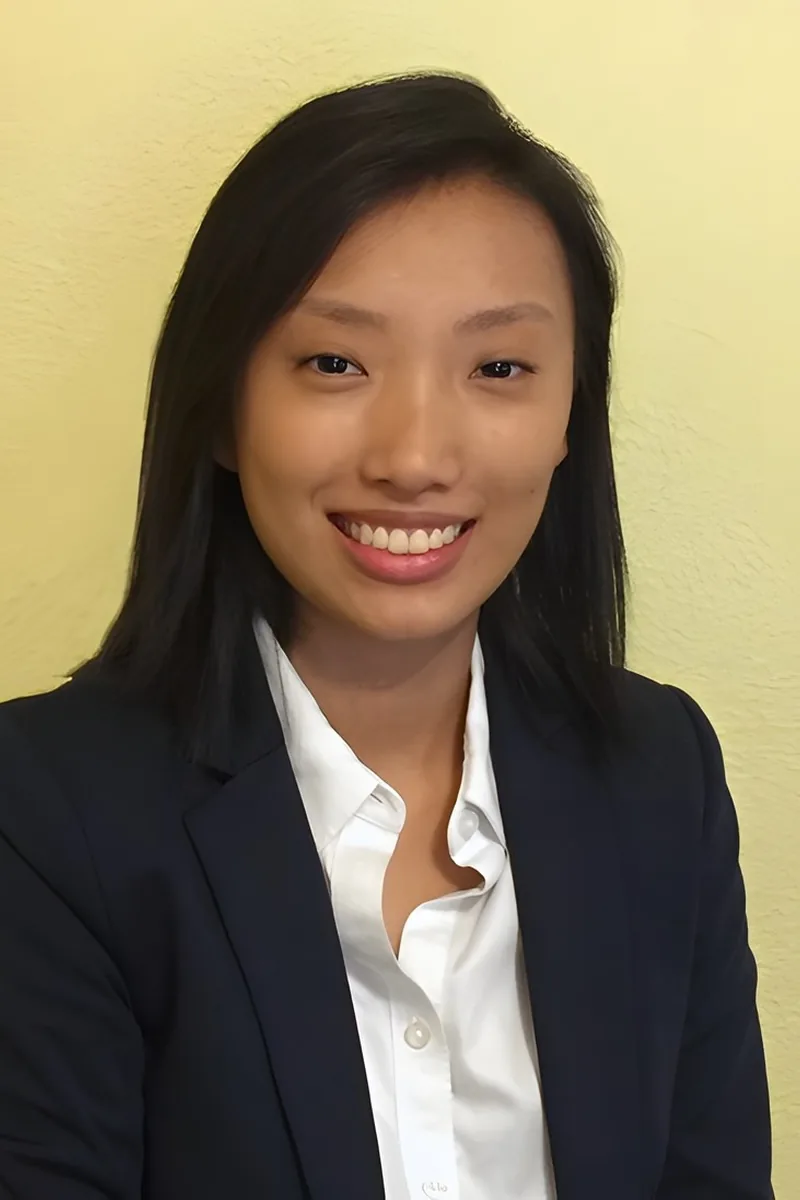
I am currently in my second year of medical school. Because of my diverse academic background, I am able to tutor in a wide range of topics, from Economics and math to Russian and ACT prep.
Nikolas earned his Exercise Science degree at Ohio State studying exactly how the body regulates itself — cardiac output, gas exchange, renal filtration, neuromuscular signaling. That background means he teaches physiology as interconnected systems, not isolated chapters, connecting topics like the Frank-Starling mechanism to broader homeostatic principles. He holds a 5.0 client rating.
Understanding physiology means tracing cause and effect across organ systems — how a drop in blood pressure triggers the renin-angiotensin pathway, or why ventilation-perfusion mismatch leads to hypoxemia. Camille is a medical student heading into surgical training at NYU, so she unpacks these mechanisms with the clinical precision that makes complex feedback loops intuitive.
I am an upbeat and patient tutor. I like to make learning as fun as possible, and I'm constantly learning new things.
I'm in my final year of medical school and have an interest in specializing in Oncology. I did my undergraduate degree in Biology with a minor in Chemistry and a concentration in Pre-Professional Healthcare. I love to teach Biology, Chemistry, Anatomy, Biochemistry, Physiology, Microbiology, Pharmacology and Pathology. My teaching style relies heavily on the use of visual aids to help my students understand concepts in a 3D plane! In my free time I like to partake in boxing, play tennis, basketball and read mystery fiction novels. I hope that I can assist you in your future academic needs!
I am currently a P1 pharmacy student. I have had numerous opportunities to tutor students of various ages primarily in subjects that pertain to my program of study, especially chemistry. Throughout my years of study, I have come to the realization that only after meticulous examination of all the possible scenarios and exceptions of a particular phenomenon can we recognize patterns that may have facilitated our initial attempt to understand it in the first place. As a tutor, I hope to serve as a guide that aids students in discerning such patterns and integrating concepts to achieve a thorough and holistic understanding of the subject being studied. Besides tutoring, I enjoy playing the piano and cello, biking, and reading.
Dominic Theodore graduated from Ohio university with B.A. in psychology. He then went on to earn an M.S. in anatomy from Wright State University and was president of his graduate class. He served as a tutor and teaching assistant throughout undergrad and graduate school, which he continues currently in medical school. He also worked as an adjunct professor at Ohio University in his gap year, during which he taught anatomy, intro biology, and physiology. He is currently a medical student (MS4) at Wright State University, after which he plans on matching internal medicine and ultimately completing a cardiology fellowship. So far in medical school, he has tutored other med students, was nominated for Outstanding 2nd Year Student, and dedicated much of his free time to volunteering and research. He has also served as a member of his school's admissions committee.
I am a recent college graduate looking for opportunities to tutor and get involved with education before I attend medical school this fall. I have a bachelor's of science from the University of Akron and my academic areas of focus where I am best prepared to teach are animal and cell physiology, immunology, biochemistry, and preparing for the MCAT. I took the MCAT this past January and am hoping to share some of the techniques that worked for me while the test is still fresh in my mind. For the ACT I would feel comfortable teaching the reading and science sections since those are my strong points.
I am currently working towards my masters degree in education from Cleveland State University. Right now I'm working full time as a research associate at a biotech company in Cleveland, but I've been tutoring part time since my early college years. I've also spent a lot of one-on-one time with students while coaching high school sailing and instructing summer camps.
I am a recent graduate from The Ohio State University with a passion for sharing knowledge with those around me. During my time at Ohio State University I studied the science of Human Nutrition which included courses of Organic Chemistry, Biochemistry, Calculus, Microbiology, Molecular Genetics, Nutrition, and several others. I plan to attend graduate school for a nurse practitioner program beginning in January 2017. I have tutored a variety of a subjects and with all age groups. Most recently I worked with high school aged students in the subjects of science, math, and ACT/SAT test prep. My goal as a tutor is to make learning a fun and applicable experience for everyone! My favorite subjects to tutor are science subjects and ACT prep. Outside of tutoring I enjoy spending my time in nature, reading, and hanging out with friends. I look forward to meeting you!
I am very skilled at tutoring the mathematics and verbal section of the SAT, as well as the Physical and Chemical, CARS and Bio and Biochem sections of the MCAT. I also love teaching chemistry, biochemistry and biology at the highschool, AP or college level.
I am from a suburb of Columbus, OH where I graduated highschool with over a 4.0, played soccer and lacrosse, and was heavily involved in peer collaboration, both in school and out of school, for students with disabilities. I went on to attend the University of Michigan where I graduated Honors in Cellular and Molecular Biology and Applied Statistics. During which time, I lead informal tutor and study groups for my peers in difficult courses such as microbiology, organic chemistry, and biostatistics, to name a few. Since graduating, I have moved back to my hometown where I worked as Data Analyst for roughly 8 months before changing paths and shifting back to medicine where I work now as a Medical Assistant for a local dermatology practice. I plan to get my Master's in Physician Assistant Studies in the new few years.
As a tutor for 20+ years, I bring ample experience and knowledge. I specialize in standardized testing (MCAT, SAT, ACT, GRE, & more), medical school and pre-med courses, and undergraduate STEM subjects. A former medical school student and Master of Public Health, I opted for what truly brings me joy: tutoring, teaching, and guiding students to lifelong academic success.
Understanding physiology means tracking cause and effect across organ systems — how a change in blood pH triggers respiratory compensation, or why cardiac output depends on both stroke volume and heart rate. Courtney's biology graduate work and undergraduate teaching experience at ASU give her a detailed command of these integrative mechanisms, and she excels at walking through the logic chain that connects stimulus to response.
Understanding physiology means tracing cause and effect across organ systems — why a drop in blood pH triggers faster respiration, or how the nephron maintains electrolyte balance through filtration and reabsorption. Casey's bioengineering degree required deep fluency in these mechanisms, and she explains them by building each pathway step by step rather than presenting finished diagrams to memorize. She's especially strong at connecting cellular-level processes to whole-body function.
Understanding physiology means tracing cause and effect across organ systems — why a drop in blood pH triggers faster breathing, or how the nephron maintains electrolyte balance. Paul's pre-med biology training at Brown gave him a systems-level view of the human body, and he teaches each mechanism by linking structure to function rather than treating chapters as isolated units.
I am also a first year medical student at the Tufts University School of Medicine in Boston. I have extensive experience with premedical classes and have taken and tutored the MCAT exam. I placed in the 97th percentile of the MCAT exam and I understand what the test takers want students to know and how to bridge the gap between knowing the material and doing well on the test. I am always excited when a student finally has that "ah-ha" moment and declares that they now can see how all of these seemingly separate scientific topics are actually all related. The MCAT no longer seems scary, but turns into a means of truly learning this material and providing a strong foundation for the future.
Understanding physiology means seeing the body as an integrated system — how cardiac output affects renal filtration, or why a drop in blood pH triggers a respiratory response. Thomas earned his MD and MPH, which means he teaches organ-system physiology with the clinical context that makes abstract mechanisms click. His 5.0 rating speaks to how well that approach lands with students.
Understanding how the body maintains homeostasis — from cardiac output regulation to renal filtration mechanics — requires more than memorizing diagrams. Jean earned her Doctor of Medicine at Harvard Medical School, where she spent four years connecting physiological systems to real clinical cases, making concepts like action potentials and gas exchange intuitive rather than abstract.
I am currently working towards a doctorate in medicine from New Jersey Medical School. Throughout high school, college, and graduate school, I have tutored students ranging in age from elementary school to college freshmen in a variety of subjects particularly math and science. My favorite subject to tutor is math because it is very methodical and visual. Having a passion to help others, I am drawn to tutoring for the opportunity to share my knowledge with others. My family and friends have described me as being patient, compassionate, and personableall of the qualities that I believe I bring to my students. Outside of tutoring, I like Notre Dame football, dogs (especially my family's German Shepherd!), yoga, cooking, and reading.
Kelly's cancer biology PhD at Cornell involved deep study of how cells signal, divide, and maintain homeostasis — the same organ-system physiology that dominates undergraduate coursework. She digs into membrane transport, cardiac function, and endocrine feedback loops with the precision of someone who's spent years researching how these systems break down in disease.
A Northwestern history and economics graduate turned attorney, Andrew brings an unusual skill to physiology: the ability to build logical arguments out of complex evidence. That translates well when students need to reason through chains like how aldosterone affects sodium reabsorption in the distal tubule, or why sympathetic activation increases heart rate — he treats each mechanism as a case to construct, not a paragraph to memorize. Rated 4.9 by students.
Understanding physiology means seeing the body as an integrated system, not a list of organ functions to memorize. Matt's graduate work in nutrition required mastering renal, endocrine, and cardiovascular physiology at the molecular level, so he teaches concepts like action potentials, cardiac output, and hormonal feedback loops with the mechanistic depth that college-level courses demand. Rated 5.0 by students.
Teaching physiology well means connecting the molecular details — ion channels, hormone cascades, oxygen-hemoglobin dissociation — to how whole organ systems actually behave. Emad has taught physiology as an adjunct professor and brings a clinician's perspective from two medical degrees, making concepts like cardiac output regulation or renal filtration tangible rather than theoretical.
Studying physiology means understanding how organ systems talk to each other — why a drop in blood pressure triggers the renin-angiotensin-aldosterone system, or how action potentials propagate along a myelinated axon. Daniel's PhD work in neuroscience at Rockefeller gives him deep, research-level fluency with these mechanisms, and his medical training at Weill Cornell ties every concept back to clinical relevance.
Testimonials
Because the right Physiology tutor makes all the difference.
Average Session Rating – Based on 3.4M Learner Ratings
Other Toledo Tutors
Related Science Tutors in Toledo
Frequently Asked Questions
Your first session is designed to assess your current understanding of physiology concepts and identify specific areas where you need support. The tutor will review your course materials, discuss challenging topics, and create a personalized learning plan tailored to your goals—whether that's improving exam scores, understanding difficult systems, or preparing for advanced coursework. This collaborative approach ensures your tutoring is focused on your unique needs from day one.
Many students struggle with visualizing complex organ systems and understanding how different body processes work together—physiology requires both memorization and conceptual understanding. Other frequent challenges include mastering terminology, connecting physiological concepts to real-world applications, and grasping the mathematical and chemical principles underlying bodily functions. Personalized instruction helps break down these interconnected concepts into manageable pieces, building confidence step by step.
Physiology instruction in Toledo schools follows Ohio's science standards and typically emphasizes understanding human body systems, homeostasis, and cellular processes. Tutors working with students in Toledo are familiar with these curriculum expectations and can provide targeted support whether you're in a high school biology course, AP Biology, or a college-level physiology class. This ensures your tutoring complements your classroom learning and prepares you for assessments aligned with your specific course.
In a classroom setting with a 17.1:1 student-teacher ratio, it's difficult for instructors to address each student's learning pace and specific misconceptions about complex systems. Personalized tutoring allows you to learn at your own speed, ask unlimited questions, and focus on the exact concepts giving you trouble—whether that's the cardiovascular system, cellular respiration, or kidney function. Your tutor can use multiple teaching methods, visual aids, and practice problems tailored to how you learn best.
Yes. Tutors can help you master the specific content and question types you'll encounter on unit exams, AP Biology exams, college entrance exams, or health professions entrance exams. They'll work with you on test-taking strategies, help you identify knowledge gaps before exam day, and provide targeted practice with feedback. This focused preparation builds both your understanding and your confidence walking into the exam room.
Strong physiology understanding builds on foundational skills in chemistry (molecular bonds, pH, reactions), basic biology (cell structure and function), and math (proportions, percentages, graphing). If you're struggling with any of these prerequisites, your tutor can address those gaps while teaching physiology concepts. This integrated approach prevents frustration and helps you see how different scientific disciplines connect.
Advanced topics like endocrine regulation, neural signaling, and organ system integration require deep conceptual understanding beyond memorization. Tutors can break down these complex mechanisms, use analogies and visual models to clarify how systems communicate, and help you practice applying concepts to novel scenarios. This deeper learning is especially valuable if you're preparing for AP exams, college-level courses, or health professions programs.
Clear indicators of progress include improved exam scores, stronger performance on unit assessments, increased confidence answering application-based questions, and the ability to explain physiological concepts in your own words. Your tutor will track your progress through practice problems, quizzes, and discussions, adjusting instruction to ensure you're building mastery. Regular feedback helps you see tangible growth and stay motivated as you develop deeper physiological understanding.
Let’s find your perfect tutor
Answer a few quick questions. We’ll recommend the right plan and match you with a top 5% tutor.