Award-Winning Math Tutors
serving Toledo, OH
Math
Tutors in Toledo
Private 1-on-1 tutoring, weekly live classes for academic support, test prep & enrichment, practice tests and diagnostics, and more to elevate grades and test scores.
Based on 3.4M Learner Ratings
UniversitiesSchools & Universities
DeliveredHours Delivered
ProficiencyGrowth in Proficiency
Who needs tutoring?
No obligation. Takes ~1 minute.
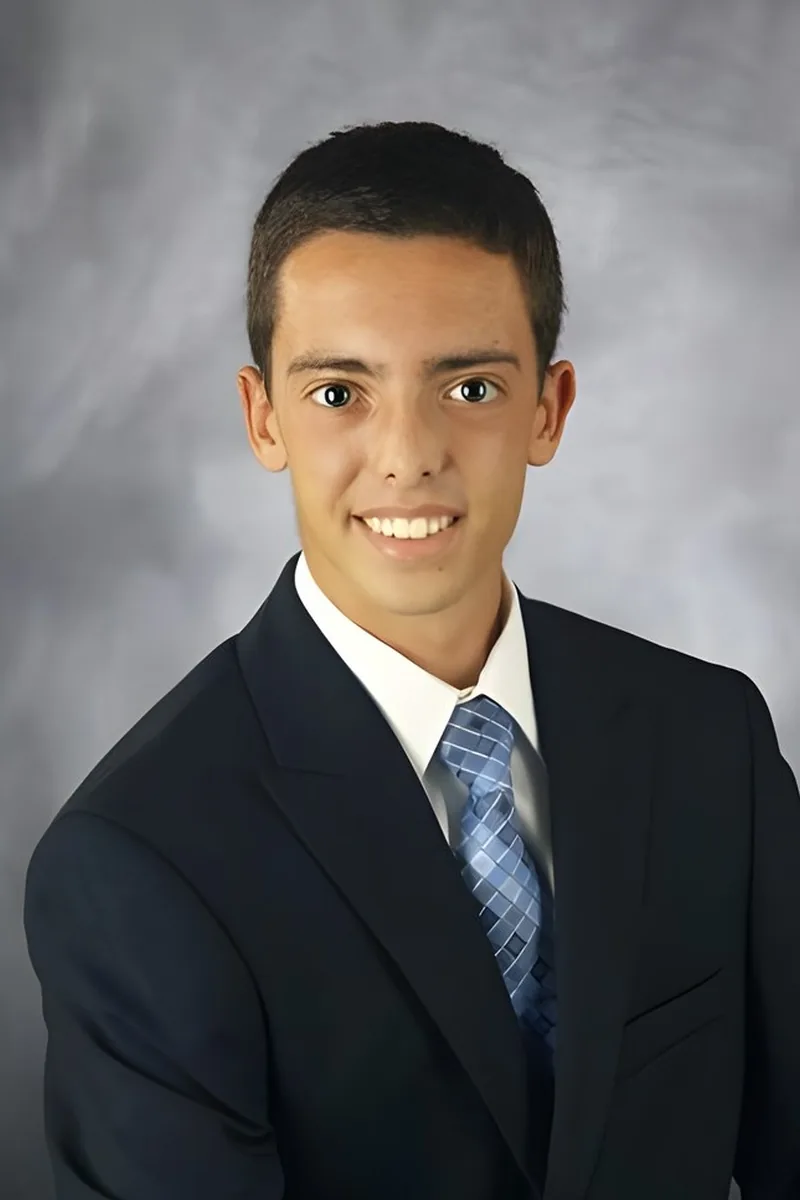
Neuroscience at Vanderbilt meant Benjamin couldn't avoid math — his coursework leaned heavily on statistical analysis, data interpretation, and the kind of quantitative reasoning that connects directly to algebra, pre-calc, and calculus concepts students encounter in high school. He scored a 34 on the ACT and tutors math by tracing each procedure back to the underlying logic, so students can reconstruct a method when memory alone fails them.
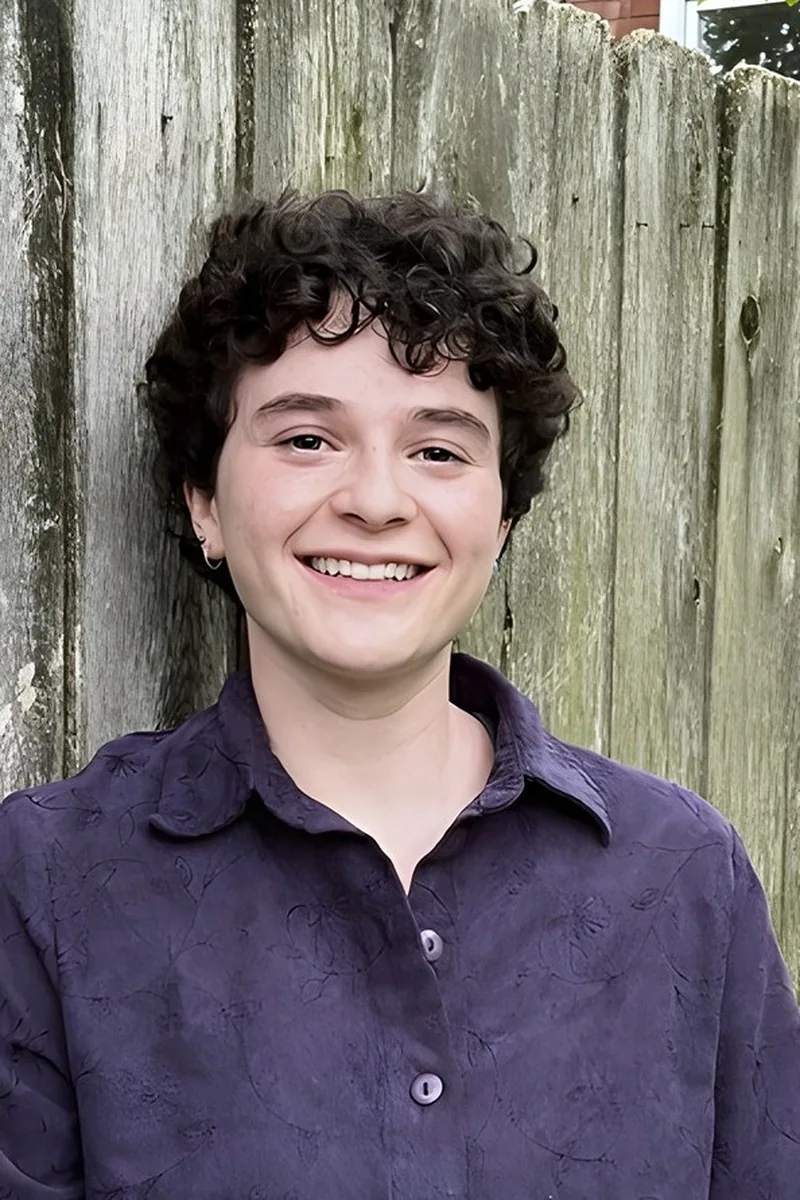
Emma teaches math from elementary arithmetic through calculus and statistics, which means she understands how gaps at one level create confusion at the next. When a student struggles with, say, setting up equations, she traces the problem back to the specific conceptual step they missed — whether that's number sense, order of operations, or variable reasoning — and rebuilds from there.
From pre-algebra fundamentals through calculus, Hyerin teaches math by connecting each new concept to the reasoning behind it — why you flip and multiply when dividing fractions, or what a derivative actually measures. Her economics and pre-med coursework kept her applying math in real contexts, so she's comfortable translating between abstract formulas and practical problem-solving. A 35 ACT and 1470 SAT back up her quantitative chops.
From fraction operations in middle school to function analysis in high school, Patrick's math degree gives him the full picture of how each concept feeds into the next. He's especially good at catching the specific gap — maybe it's integer rules, maybe it's order of operations with exponents — that's quietly causing problems downstream.
Teaching college-level chemistry requires constant fluency in algebra, unit analysis, and applied calculus — skills Jennifer uses daily as a general chemistry instructor. She breaks down math problems by connecting abstract operations to tangible quantities, which is especially effective for students who struggle with fractions, proportions, or word problems that feel disconnected from anything real.
Elena's approach to math leans on her test-prep background, where she learned that most students don't struggle with the concepts themselves — they struggle with translating word problems into equations or recognizing which technique a question is really asking for. She teaches pattern recognition and strategic problem-solving across arithmetic, pre-algebra, and foundational algebra, turning vague confusion into a clear decision tree. Her style is quirky and joke-filled, which tends to lower the anxiety that makes math feel harder than it is.
Not every math tutor comes from a pure math background, and that's actually Lauren's advantage — she learned to break down concepts like linear equations and function behavior through persistence and structured problem-solving rather than intuition. Her approach zeroes in on where a student's reasoning goes off track, then rebuilds that specific step until the logic clicks.
A perfect 36 on the ACT means Emily is comfortable across the full math spectrum, from fraction operations and proportional reasoning up through functions and basic trigonometry. She connects each concept to the reasoning behind it so students can solve unfamiliar problems, not just repeat practiced ones.
Amy's strength in math comes from an unexpected place — her English major at Penn trained her to find structure in complexity, which is exactly what untangling a dense algebra problem or parsing a multi-step calculus question demands. Her 1560 SAT confirms she's no stranger to quantitative reasoning under pressure, and her experience across subjects from Latin to science means she's practiced at switching between logical frameworks to find the explanation that actually lands for a given student.
Place value, regrouping, early fractions — these concepts trip up elementary students when they're taught as disconnected procedures instead of connected ideas. Arielle's child development background from Yale gives her insight into how young minds build number sense, and her three years of classroom teaching mean she's seen (and solved) the specific spots where kids lose confidence in math.
Holding dual bachelor's degrees — one in mathematics-economics from UCLA — Vinay covers math from basic operations through calculus with genuine fluency. He pinpoints exactly where a concept breaks down for a student, whether that's fraction division in fifth grade or chain rule applications in college, and rebuilds understanding from that specific gap. Rated 5.0 by students across a decade of tutoring.
From simplifying fractions in pre-algebra to integration techniques in Calculus 2, Christine's biomedical engineering coursework at Johns Hopkins kept her immersed in math at every level. She breaks multi-step problems into smaller decisions so students can identify exactly where their reasoning breaks down instead of restarting from scratch.
From pre-algebra fundamentals to calculus concepts, Sarah covers a wide swath of math and knows where the common stumbling blocks sit — fractions turning into anxiety, variables feeling abstract, word problems seeming impossible to set up. She earned a 1530 SAT with strong math performance and walks students through problems step by step until the logic clicks. Her approach emphasizes understanding the 'why' behind each operation, not just memorizing procedures.
While Emma's primary expertise is in English and education, her subject range extends into math through pre-algebra and foundational concepts like fractions, ratios, and word problems. She approaches math the way she approaches writing: by slowing down to make sure a student understands the reasoning behind each step before moving on.
From pre-algebra through multivariable calculus, Rahul covers the full math pipeline and understands exactly where each concept feeds into the next. His engineering training at Cornell means he can show students why a technique matters — connecting abstract procedures to real problem-solving rather than leaving them wondering when they'll ever use it. Rated 4.9 by students.
Biomedical engineering at Vanderbilt means Christian tackles math daily — from algebraic modeling to calculus-heavy coursework — and he knows which foundational skills actually matter for each level. He breaks down concepts like proportional reasoning, linear systems, and function behavior by connecting them to real problems rather than abstract drills. His 34 ACT composite speaks to the kind of quantitative fluency he brings to every session.
Yusef's path through a political science degree and a Cambridge MPhil in Development Studies required more quantitative work than most people expect — economic modeling, interpreting development indicators, and building data-driven policy arguments all demand comfort with algebra, functions, and statistical reasoning. That background means he teaches math as something that actually powers real analysis, connecting concepts like rates of change or systems of equations to the kind of applied problem-solving he's done in his own academic work.
From fraction operations in pre-algebra to derivatives in calculus, Nathan has tutored across the full math spectrum and knows where students tend to lose the thread — usually at the jump from arithmetic to abstract reasoning. His 1520 SAT score reflects genuine comfort with quantitative thinking, and he's especially good at connecting new concepts back to ones a student already understands so the logic builds instead of resets each chapter.
A biology degree involves more math than most people expect — statistics, calculus, quantitative data analysis — and Emma completed all of it at Duke. She's comfortable across a wide range of math topics, from fractions and ratios through algebraic problem-solving, and she's especially good at connecting abstract math concepts to concrete, real-world examples that make them click.
A math major at Vanderbilt with a 1570 SAT, Priya teaches everything from pre-algebra through calculus — but her real strength is demystifying the jump between arithmetic thinking and algebraic thinking, the transition where many students lose their footing. She unpacks the logic behind each new abstraction so that a concept like variable manipulation feels like a natural extension of what a student already knows, not a foreign language.
Peter's journalism degree trained him to organize information logically under pressure — outlining an article's structure isn't far from mapping out a multi-step algebra or calculus problem where sequence and clarity determine whether you reach the right answer. His Master's in Education means he's studied how students actually learn mathematical concepts, not just how to perform them, so he builds explanations around the specific step where understanding breaks down. Rated 4.7 by clients.
A chemistry and toxicology background means Amy uses math constantly — from balancing stoichiometric equations to modeling dose-response curves. She tackles everything from fractions and proportional reasoning through algebra and introductory calculus, always connecting procedures to the logic behind them so students understand *why* a method works.
As a high school math teacher with an engineering background, Dillon constantly connects abstract math concepts to tangible problems — calculating material loads, estimating costs, interpreting data. Whether a student is struggling with fractions or pushing into more advanced topics, he pinpoints exactly where the reasoning breaks down and rebuilds from that point. His 32 ACT composite reflects the kind of cross-disciplinary math fluency he brings to every session.
Cynthia's tutoring roots go back to teaching elementary and middle school math at Kumon, where she learned how to break arithmetic, fractions, and early algebra into incremental steps that build real number sense. A 1560 SAT and 35 ACT confirm she carried that foundation through advanced math herself — and she knows how to make each concept click before moving to the next.
Jera's economics degree required heavy quantitative coursework, so she approaches math tutoring through the lens of applied problem-solving rather than abstract drills. She's particularly effective at breaking down word problems — translating real-world scenarios into equations — which is often the exact skill that separates students who understand procedures from those who can actually use them.
Whether a student is stuck on fraction operations or wrestling with polynomial long division, Eshita pinpoints the exact conceptual gap causing the confusion rather than just re-explaining the procedure. Her subject range spans pre-algebra through calculus, so she understands how earlier topics connect to later ones — and makes sure the foundation is solid before moving forward. Rated 5.0 by students.
Thinking computationally turns out to be a powerful way to approach math. Michael applies the same logical, step-by-step reasoning from his computer science training to topics like algebra and pre-calculus, showing students how to decompose word problems and build toward solutions systematically. Rated 4.9 by students.
Vishank's favorite thing to tutor is math — and that enthusiasm shows across a range from pre-algebra fundamentals through calculus and linear algebra. His data analytics studies at Ohio State mean he's constantly applying mathematical thinking to real datasets, so he can show students why concepts like proportional reasoning, equation solving, and graphing actually matter beyond the textbook. Rated 4.9 by students.
From fraction operations in middle school to derivatives in calculus, John covers a wide range of math and adapts his explanations to wherever a student is struggling. His 35 ACT composite reflects deep comfort with quantitative reasoning, and he emphasizes understanding the logic behind each step so that new problem types don't feel like starting from scratch.
I am an upbeat and patient tutor. I like to make learning as fun as possible, and I'm constantly learning new things.
Whether it's fractions tripping up a middle schooler or function notation confusing a high schooler, Carly pinpoints exactly where a concept stopped making sense and rebuilds from there. Her STEM coursework at Vanderbilt keeps her comfortable across arithmetic, pre-algebra, and algebraic reasoning, and her 36 ACT composite confirms she can handle the problem-solving side, not just the theory.
From simplifying fractions to solving for x, early math success comes down to understanding *why* a method works, not just memorizing steps. Lilian covers arithmetic through pre-algebra and algebra concepts, emphasizing number sense and logical reasoning so students can tackle unfamiliar problems with confidence rather than panic.
Not every strong math tutor comes from an engineering background. Curtis tutors math up through high school level topics like algebraic equations, functions, and basic calculus, and his 36 ACT composite — including the math section — demonstrates real fluency with the material. He's especially effective at translating word problems into equations, a skill his literary training makes second nature.
As a math major at the University of Pennsylvania, Bryan lives in this subject daily — from arithmetic fundamentals through algebra and into calculus. He's especially sharp at identifying the exact step where a student's understanding breaks down and rebuilding the logic from that point, whether the topic is fractions, linear equations, or rate-of-change problems. Rated 4.9 by students.
Legal training sharpens a very specific kind of thinking — reading a dense problem, identifying what's actually being asked, and working through it in logical sequence — which is exactly what Trace brings to math tutoring. His summa cum laude undergraduate work built strong analytical habits, and his experience teaching K-4 students French and Spanish means he knows how to break down unfamiliar concepts into steps that feel intuitive. He's especially effective with word problems, where his instinct for parsing complex language gives students a clear path into the math.
Kevin's subject list spans pre-algebra through calculus 2, which means he understands how each math concept scaffolds into the next — why fraction fluency matters for algebra, why algebra matters for trig. He diagnoses exactly where a gap formed and rebuilds from that point, rather than re-teaching an entire course. His 5.0 student rating backs that up.
Thirty years as a controller and CFO means Alan has done math under real financial pressure — budgets, cost analyses, forecasting models — where getting the numbers wrong has actual consequences. That applied experience gives him a practical vocabulary for explaining concepts like ratios, percentages, and algebraic problem-solving in terms students can connect to something concrete. He holds a 4.9 rating from clients.
From fractions and proportions through pre-algebra and beyond, Edith pinpoints exactly where a student's understanding breaks down and rebuilds from that spot. She emphasizes number sense and estimation alongside computation, so students develop the kind of mathematical reasoning that transfers across grade levels.
From pre-algebra fundamentals through calculus, Delaney covers a wide range of math and tailors her explanations to wherever a student is getting stuck. She's especially skilled at translating word problems into equations — that critical step where many students freeze — and building the number sense that makes more advanced topics accessible.
While English and writing are Amanda's primary strengths, she also tutors foundational math concepts for students who need support with arithmetic, pre-algebra, and basic problem-solving strategies. Her education background — including two master's degrees focused on how students learn — means she's skilled at identifying exactly where a concept breaks down and rebuilding understanding from that point.
Testimonials
Because the right Math tutor makes all the difference.
Average Session Rating – Based on 3.4M Learner Ratings
Practice Math
Free practice tests, flashcards, and AI tutoring for Math
Other Toledo Tutors
Related Math Tutors in Toledo
Frequently Asked Questions
The first session is focused on understanding your learning style and identifying specific challenges. Your tutor will review the math concepts you're working on, assess your current understanding, and discuss areas where you'd like to improve—whether that's building confidence with word problems, mastering multi-step equations, or strengthening foundational skills. This helps create a personalized plan tailored to your needs.
Expert tutors focus on helping you understand the 'why' behind math concepts, not just the 'how.' By working through problems step-by-step and exploring different approaches, you'll start to see patterns and connections between topics. This deeper understanding makes it easier to tackle new problems and apply what you've learned to different situations, rather than relying on memorized procedures.
Absolutely. Math anxiety is common, and personalized 1-on-1 instruction in a low-pressure environment can make a real difference. Working with a tutor allows you to ask questions without judgment, go at your own pace, and build confidence through small wins. As you develop a stronger understanding of concepts and see improvement, your anxiety typically decreases and your confidence grows.
Word problems require you to translate real-world situations into mathematical equations—a skill that's different from solving equations directly. Tutors help by breaking down the problem-solving process: identifying what you know, what you're looking for, and which strategies apply. With practice and guidance, you'll develop a systematic approach that makes word problems feel less overwhelming.
Showing work demonstrates your problem-solving process and helps teachers identify where misunderstandings occur. It's also essential for earning partial credit and developing strong math habits. Tutors emphasize clear, organized work from the start, teaching you how to structure solutions logically so that your thinking is easy to follow—a skill that strengthens both understanding and test performance.
Varsity Tutors connects you with tutors who are familiar with various math curricula and textbooks used in Toledo schools. During your first session, you can share your specific textbook, course materials, or curriculum approach, and your tutor will align instruction with what you're learning in class. This ensures that tutoring reinforces and extends what you're already studying.
Topics like graphing and geometric proofs require both conceptual understanding and practice with specific techniques. Tutors break these down into manageable steps, help you visualize concepts, and guide you through multiple examples until patterns become clear. Regular practice with feedback helps you develop the problem-solving strategies needed to approach these topics independently.
Progress shows up in multiple ways: improved test and quiz scores, greater confidence tackling new problems, and a deeper understanding of concepts. Your tutor will track which topics you've mastered and which need more work, adjusting the focus accordingly. Many students also notice they're asking better questions in class and spending less time feeling stuck on homework.
Let’s find your perfect tutor
Answer a few quick questions. We’ll recommend the right plan and match you with a top 5% tutor.