Award-Winning AP Calculus BC Tutors
serving Toledo, OH
AP Calculus BC
Tutors in Toledo
Private 1-on-1 tutoring, weekly live classes for academic support, test prep & enrichment, practice tests and diagnostics, and more to elevate grades and test scores.
Based on 3.4M Learner Ratings
UniversitiesSchools & Universities
DeliveredHours Delivered
ProficiencyGrowth in Proficiency
Who needs tutoring?
No obligation. Takes ~1 minute.
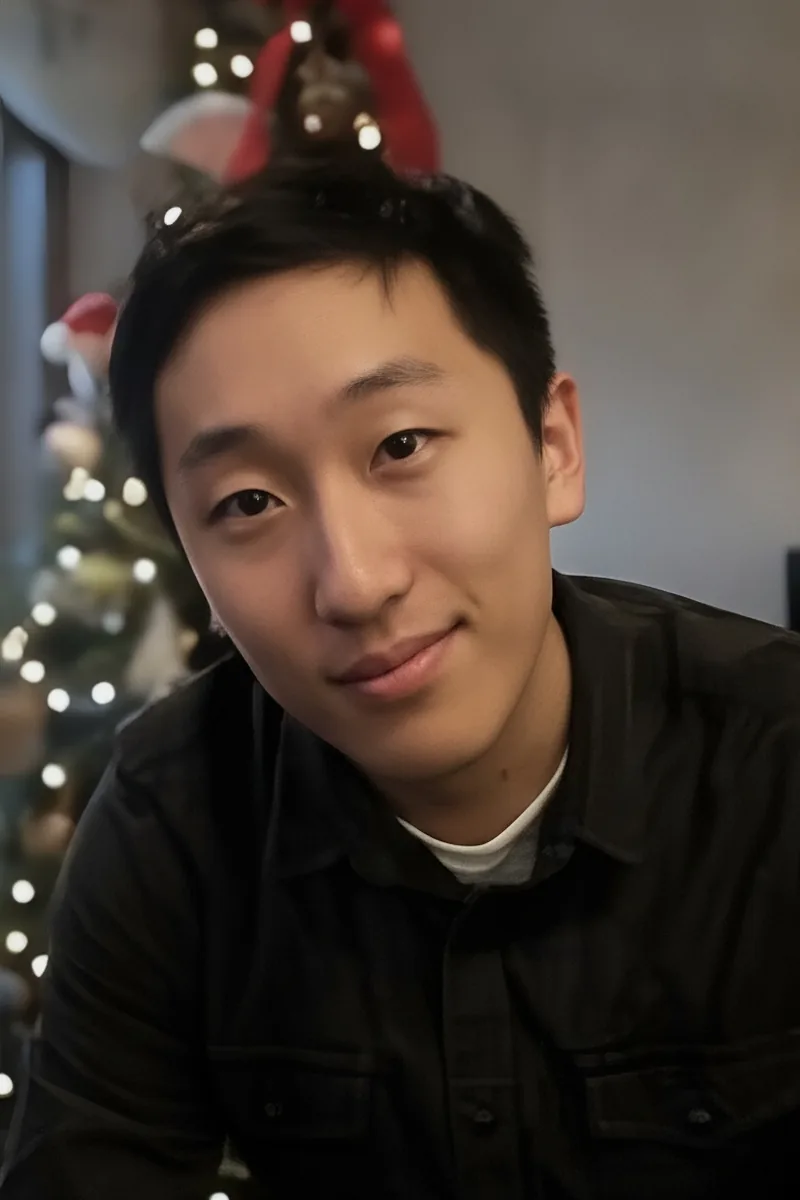
Series convergence tests, parametric equations, and polar curves make BC the course where strong calculus students suddenly feel lost. Kevin tackles these topics by connecting them back to the AB foundations students already know, building each new idea as a logical extension rather than a disconnected formula. His engineering coursework at Case Western means he's still using BC-level calculus regularly.
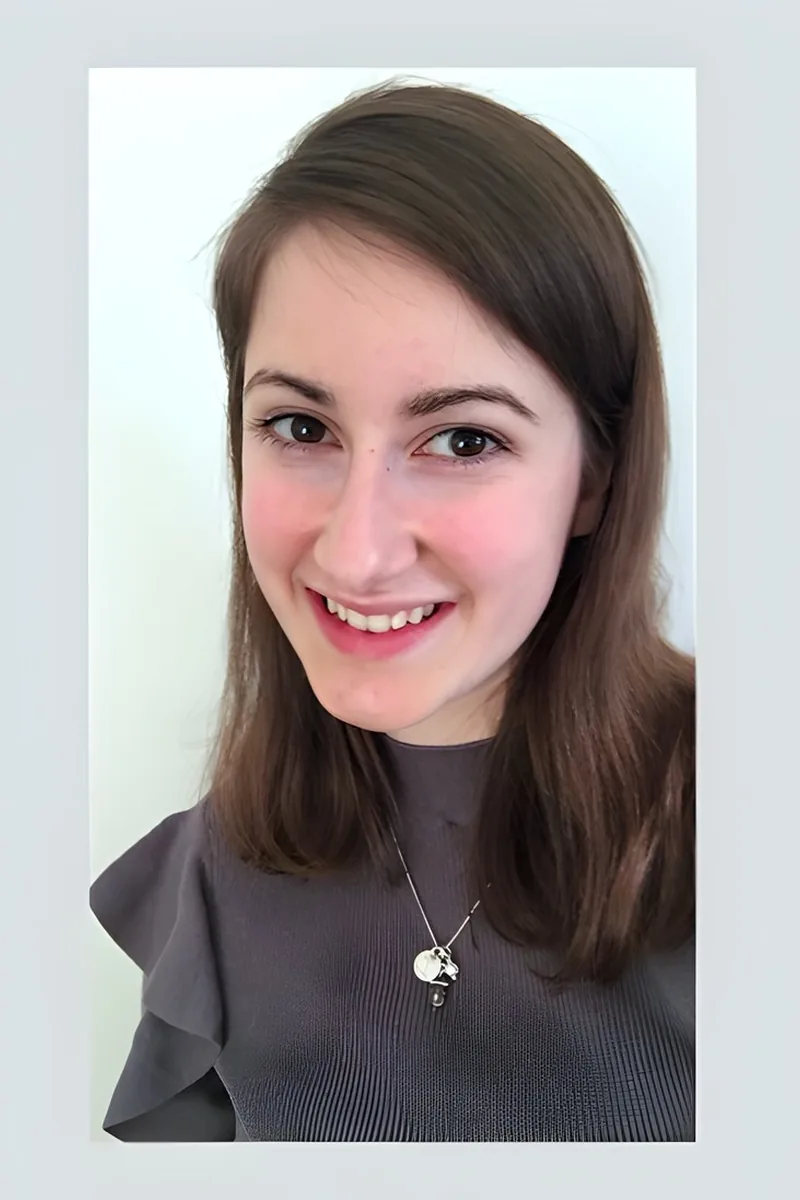
Convergence tests, Taylor series, and parametric equations all demand a level of mathematical fluency that builds on everything from AB and beyond. Lillian breaks these BC-specific topics into logical sequences, connecting each new technique back to the core calculus reasoning students already have so the jumps feel manageable rather than overwhelming.
BC Calculus layers on convergence tests, parametric equations, and polar curves at a pace that loses a lot of students mid-semester. Jie tackles these topics by tying them back to the AB foundations students already know, so series and integration techniques feel like natural extensions rather than entirely new material. His computer engineering coursework at Michigan keeps him working with these concepts regularly.
Maxwell's dual degree in mathematics and physics means he didn't just pass through BC Calculus — he kept using its tools in upper-level coursework like differential equations, multivariable calculus, and quantum mechanics, where sloppy series reasoning or weak integration technique falls apart fast. That ongoing fluency makes him especially sharp at teaching the logic behind convergence tests and polar area setups, not just the steps. Holds a 5.0 rating.
BC Calculus layers series convergence, parametric equations, and polar coordinates on top of an already demanding AB curriculum, so students need a tutor who can connect those threads clearly. Ricardo's chemistry coursework at Ohio State means he regularly applies Taylor series and differential equations in real problem-solving contexts, giving him a practical fluency that translates directly to AP exam preparation.
Series convergence tests, parametric equations, and polar curves are where BC diverges from AB — and where most students start feeling lost. Ella breaks these topics into manageable pieces, connecting new BC concepts back to the AB foundations students already understand. Her economics background also means she's comfortable with the applied integration and differential equation problems that frequently appear on the exam.
A Ph.D. in Applied Mathematics means Dr has spent years working with the exact machinery underneath BC Calculus — not just computing Taylor series or evaluating convergence tests, but understanding the theoretical scaffolding that makes them rigorous. That depth lets him pinpoint whether a student struggling with, say, the Lagrange error bound actually has a gap in polynomial approximation reasoning or just needs a clearer framework for bounding remainders. Rated 4.9 by students.
Chemical engineering Ph.D. work means Alexander spent years where series approximations and integration techniques weren't exam problems — they were how he modeled reaction kinetics and heat transfer systems daily. That depth shows up when he teaches BC-specific topics like convergence tests or improper integrals, because he can trace exactly where a student's reasoning breaks down rather than just re-demonstrating the procedure. Rated 4.9 by students.
Physical chemistry PhD work at Ohio State means Emily lives in the calculus that most BC students only see on exams — series approximations for modeling molecular behavior, integration techniques in thermodynamic derivations, differential equations describing reaction kinetics. She teaches topics like Taylor polynomial construction and convergence tests by grounding them in the physical intuition her chemistry training built, which makes abstract procedures feel like they're actually describing something. Rated 5.0 by students.
Series convergence tests, parametric equations, polar curves — AP Calculus BC piles on topics fast, and falling behind on even one unit can snowball. Brian's approach is straightforward: work through problems until the patterns click, whether that's integration by parts or Taylor series approximations. His strong math foundation from studying computer science at Case Western Reserve keeps sessions grounded in real understanding rather than formula sheets.
Mechanical engineering put Steven through the full calculus sequence with real stakes — designing load-bearing structures and modeling dynamic systems means integration techniques, series approximations, and differential equations had to actually work, not just produce correct exam answers. He's particularly effective at breaking down the transition from AB to BC, where topics like convergence tests and Taylor polynomials can feel sudden if the underlying logic isn't made explicit. Rated 4.9 by students.
BC Calculus throws students into territory where AB concepts aren't enough anymore — Taylor series, parametric equations, and convergence tests each demand a different kind of reasoning. Samuel's math minor at Ohio State means he's studied these ideas well past the AP level, so he can explain not just how to set up a polar area integral but why the formula works. His 4.6 rating speaks to how well that deeper approach clicks with students.
Most tutors on this page come from engineering or applied math — Nora's path is different, but her 4.8 rating across a wide spread of math subjects (through BC Calculus) shows she knows how to make dense material land. She's especially deliberate about the AB-to-BC transition, breaking down how new ideas like series convergence and parametric derivatives grow out of limits and integration students have already internalized. Her engineering lab work keeps her comfortable with the applied side, so she can ground abstract convergence tests in concrete reasoning.
BC Calculus piles on convergence tests, parametric equations, and polar coordinates on top of an already demanding AB curriculum. As an actuarial science major who uses series and integration techniques in probability modeling, John connects these topics to their practical applications. He walks through each convergence test with clear decision frameworks so students aren't guessing which one to apply.
Most BC students don't struggle because the material is impossibly hard — they struggle because a shaky concept from weeks ago quietly compounds until Taylor series or convergence tests feel overwhelming. Viola spots those buried gaps early, tracing a student's confusion on something like the ratio test back to the specific limit or sequence reasoning that didn't fully click. Her computer science studies at NYU Tandon keep her immersed in the kind of algorithmic, step-by-step thinking that makes BC's layered problems manageable.
Jacob's MA in Mathematics means he's worked through the proofs and theory that sit beneath every BC topic — so when a student hits a wall on, say, the Lagrange error bound or a tricky ratio test, he can trace the confusion back to the underlying reasoning rather than just re-demonstrating the procedure. He's especially sharp at the transition points where AB intuition needs to stretch into new territory, like moving from basic integration to handling improper integrals or building Taylor series from scratch. His 1540 SAT speaks to the same precision he brings to walking through convergence logic step by step.
The jump from AB to BC is where most students lose their footing — suddenly convergence tests, Taylor polynomials, and parametric derivatives all land at once with no breathing room. Christopher's background in physics and physical chemistry means he learned these tools by necessity, using series expansions to model real systems and integration techniques to solve problems that don't have neat closed-form answers. That applied instinct lets him teach BC topics as connected ideas rather than a checklist of procedures to survive.
Scoring a perfect 1600 on the SAT while studying computer science at MIT suggests Brice isn't just comfortable with calculus — he's fluent in it, and BC's extension into series, parametric equations, and advanced integration techniques sits squarely in his daily coursework. He breaks down topics like convergence tests by tracing each one back to the limit reasoning students already built in AB, turning what feels like a grab bag of rules into a coherent decision-making process. Rated 4.9 by students.
BC Calculus throws students into deep water fast — Taylor and Maclaurin series, parametric equations, and convergence tests all pile up in a single semester. Rahi's applied mathematics engineering background means he can unpack these topics by connecting them to the real-world modeling problems they were designed to solve. He builds each concept from its AB foundation so students see how the BC extensions actually work.
BC Calculus piles on series convergence, parametric equations, and polar coordinates on top of an already demanding AB curriculum. Julie's Princeton training in statistics and machine learning means she regularly uses advanced calculus as a tool, giving her an intuitive sense for which techniques apply where. She tackles integration strategies and Taylor series by connecting each method back to the core idea it extends.
Two years teaching math at every level at Mathnasium gave Amy an unusual skill for BC Calculus: she can trace a student's confusion with, say, a convergence test or polar area setup back to the specific algebraic or AB-level gap causing the problem. Her biochemistry coursework at Notre Dame also means she's used series approximations and integration techniques in applied contexts like enzyme kinetics and thermodynamics. A 1570 SAT and 35 ACT speak to the across-the-board precision she brings to the trickiest parts of the BC curriculum.
Molecular biology at Yale means Maxwell lives in calculus-heavy territory — modeling gene expression rates, quantifying cell growth curves, analyzing reaction kinetics — so BC topics like differential equations and series approximations aren't abstract exercises for him but tools he actually reaches for in research. He's especially good at walking through the logic of integration techniques and parametric problems by grounding them in the AB concepts students already trust. Holds a 5.0 rating.
Chemical and biomolecular engineering at Johns Hopkins means Joshitha is actively using series approximations and integration techniques in thermodynamics and transport courses — so when she teaches Taylor polynomial construction or walks through convergence test logic, it comes from current, hands-on application rather than distant memory. Her 1580 SAT and 5.0 tutoring rating back up an approach that prioritizes building problem-solving intuition over drilling formulas.
Teaching discrete math at Penn while finishing a CS master's means Keenan lives in the world of rigorous mathematical argument — the same mindset that separates students who survive BC from those who actually understand it, especially when series convergence proofs and error bound reasoning demand more than mechanical computation. His philosophy undergraduate training adds an unusual edge: he treats each BC concept like a logical claim that needs justification, which makes topics like the Lagrange remainder or comparison tests feel structured rather than arbitrary. Rated 5.0 by students.
Series convergence, parametric equations, and polar curves make BC the course where strong calculus students finally have to slow down and think carefully. Anthony earned his BS in physics and math from Yale, where these concepts weren't just exercises — they were the language of electromagnetism and classical mechanics. He teaches BC topics by connecting each technique to why it exists and when it matters.
Environmental engineering graduate work is essentially applied calculus — Kate's thesis work required series approximations for modeling fluid dynamics and integration techniques for analyzing pollutant transport, so BC topics like Taylor polynomials and improper integrals are tools she's used professionally, not just academically. She's particularly good at showing how convergence tests follow a logical decision tree rather than feeling like a random grab bag of techniques. Rated 4.9 by students.
Electrical engineering at Duke means Brooke is actively using series expansions to analyze circuits and integration techniques to model signal behavior — so when she teaches convergence tests or Taylor polynomial construction, she knows exactly which conceptual gaps trip students up because she's recently closed those gaps herself. Her 1550 SAT and 5.0 tutoring rating back up what her coursework suggests: she can break down the leap from AB to BC in precise, concrete terms that make parametric curves and polar integrals feel like logical next steps rather than foreign territory.
Scoring a 36 on the ACT while majoring in chemistry at MIT means Nicholas lives in the overlap where rigorous math meets scientific application — and BC Calculus sits right at that intersection. He's especially good at breaking down series convergence and integration techniques by grounding them in the kind of approximation problems he encounters in physical chemistry coursework, so the logic behind a ratio test or a Taylor expansion feels earned rather than arbitrary. Rated 5.0 by students.
Scoring a 36 on the ACT while studying economics at Vanderbilt means Kerr lives comfortably in the quantitative reasoning that BC Calculus demands — and his computer science focus sharpens the algorithmic thinking behind recursive sequences and series convergence. He teaches BC's trickiest leaps, like moving from basic integration to constructing Taylor polynomials, by grounding each new idea in the conceptual logic rather than just the procedural steps. Rated 4.9 by students.
Testimonials
Because the right AP Calculus BC tutor makes all the difference.
Average Session Rating – Based on 3.4M Learner Ratings
Practice AP Calculus BC
Free practice tests, flashcards, and AI tutoring for AP Calculus BC
Other Toledo Tutors
Related Math Tutors in Toledo
Frequently Asked Questions
AP Calculus BC covers all of AP Calculus AB content plus additional advanced topics. You'll study limits, derivatives, integrals, differential equations, sequences, series, parametric equations, and polar coordinates. The course emphasizes both computational skills and conceptual understanding, with about 40% of the exam focused on multiple-choice questions and 60% on free-response problems that require detailed work and justification.
The impact depends on your starting point and consistency. Students who work with a tutor typically see improvements by clarifying misconceptions, mastering problem-solving strategies, and building confidence with challenging topics. Most students benefit from identifying their specific weak areas—whether that's related rates, integration techniques, or series convergence—and focusing practice there. Regular tutoring combined with consistent practice over several months tends to yield the most meaningful score gains.
Students for students in Toledo often struggle with integration techniques (u-substitution, integration by parts, partial fractions), series convergence tests, and applications involving parametric and polar coordinates. The jump from AB to BC content can feel steep because these topics require both computational fluency and deeper conceptual understanding. A tutor can break down these topics into manageable pieces and help you recognize which technique applies to different problem types.
The exam gives you 105 minutes for multiple-choice (45 questions) and 90 minutes for free-response (6 problems). A smart approach is spending roughly 1-1.5 minutes per multiple-choice question, which leaves time to review. For free-response, prioritize showing your work clearly since partial credit is awarded—sometimes a well-explained approach earns more points than a rushed correct answer. Tutors can help you practice full-length exams under timed conditions so pacing becomes automatic on test day.
Most students benefit from taking 4-6 full-length practice tests over their preparation period, starting 2-3 months before the exam. The first test helps identify weak areas, middle tests let you practice targeted strategies, and final tests build stamina and confidence. Between practice tests, focus on drilling the specific topics where you made mistakes. A tutor can review your practice test results with you, pinpoint patterns in your errors, and adjust your study plan accordingly.
Test anxiety often stems from feeling unprepared or uncertain about problem-solving approaches. Building genuine confidence through consistent practice with difficult problems—not just easy ones—is the most effective antidote. Tutors can help you develop reliable strategies for each problem type, teach you how to recognize when you're stuck and move forward productively, and practice self-talk techniques. Knowing you've successfully solved similar problems before makes test day feel much more manageable.
Varsity Tutors connects you with expert tutors who specialize in AP Calculus BC and understand the specific topics that challenge Toledo students. When you get matched with a tutor, you can discuss your current level, target score, and timeline so they can customize their approach. Many tutors are experienced with AP exam formats and can provide strategies tailored to your learning style, whether you need help with conceptual understanding, problem-solving techniques, or exam pacing.
Your first session is typically diagnostic and collaborative. The tutor will assess your current understanding of key topics, ask about your target score and timeline, and learn how you learn best. You might work through a few problems together to identify specific gaps—whether that's in foundational concepts, problem-solving strategies, or test-taking skills. This session sets the foundation for a personalized plan that focuses on your biggest opportunities for improvement.
Let’s find your perfect tutor
Answer a few quick questions. We’ll recommend the right plan and match you with a top 5% tutor.