Award-Winning Math Tutors
serving Cincinnati, OH
Math
Tutors in Cincinnati
Private 1-on-1 tutoring, weekly live classes for academic support, test prep & enrichment, practice tests and diagnostics, and more to elevate grades and test scores.
Based on 3.4M Learner Ratings
UniversitiesSchools & Universities
DeliveredHours Delivered
ProficiencyGrowth in Proficiency
Who needs tutoring?
No obligation. Takes ~1 minute.

From pre-algebra fundamentals to calculus concepts, Sarah covers a wide swath of math and knows where the common stumbling blocks sit — fractions turning into anxiety, variables feeling abstract, word problems seeming impossible to set up. She earned a 1530 SAT with strong math performance and walks students through problems step by step until the logic clicks. Her approach emphasizes understanding the 'why' behind each operation, not just memorizing procedures.
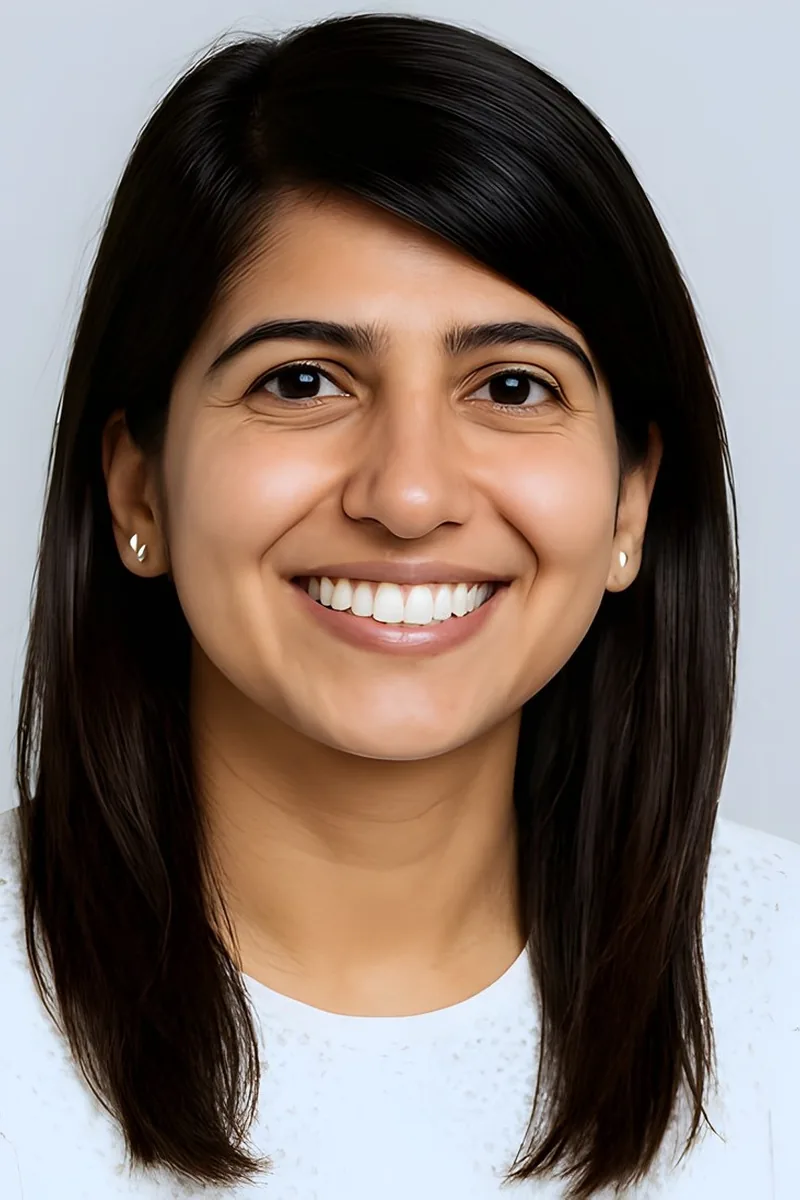
Whether a student is stuck on fraction operations or wrestling with polynomial long division, Eshita pinpoints the exact conceptual gap causing the confusion rather than just re-explaining the procedure. Her subject range spans pre-algebra through calculus, so she understands how earlier topics connect to later ones — and makes sure the foundation is solid before moving forward. Rated 5.0 by students.
From pre-algebra fundamentals through calculus, Reed covers a wide range of math and understands how gaps in earlier concepts create confusion later. He pinpoints exactly where a student's understanding breaks down — whether it's fraction operations, function notation, or the logic behind solving equations — and rebuilds from that specific point forward. Rated 4.8 by students.
Neuroscience PhD work is quietly math-heavy — statistical modeling of neural data, quantifying behavioral outcomes, interpreting complex graphs — and Josh built that quantitative fluency on top of a 1520 SAT and a liberal arts education that required him to connect ideas across disciplines. He's particularly sharp at showing students how a concept like slope or rate of change isn't just an abstract exercise but something that describes real phenomena, from population growth to reaction speeds. That science-trained instinct for asking "what does this number actually mean?" makes his approach to algebra and beyond feel grounded rather than mechanical.
From arithmetic foundations through algebra and into calculus-level problem solving, Lyndsey adjusts her approach based on exactly where a student's understanding breaks down. Her science background means she naturally connects math concepts to real applications — showing, for instance, how rate-of-change problems mirror what happens in a chemistry reaction or a physics scenario.
Crystal's tutoring roster spans algebra through calculus, and her approach leans on making word problems and abstract concepts feel less intimidating by connecting them to patterns students already recognize. As a Title I instructor experienced in differentiating lessons for all skill levels, she's comfortable meeting a student who's struggling with fractions and one tackling derivatives in the same week.
Whether it's fractions tripping up a middle schooler or a precalculus student wrestling with function transformations, William breaks math problems into smaller logical steps that build confidence. His psychology training gives him a sharp eye for where a student's reasoning goes off track, so he can target the specific gap instead of re-teaching an entire chapter.
An electrical engineering background means Judith doesn't just teach math procedures — she knows how ratios, unit conversions, and proportional reasoning actually get used in the real world. She breaks problems into smaller logical steps so students build confidence tackling multi-step questions on their own. Rated 5.0 by students.
From fraction operations in elementary school to derivatives in calculus, Lillian has tutored math across nearly every level. She zeroes in on the specific step where a student's understanding breaks down — whether that's setting up word problems, manipulating exponents, or graphing transformations — and rebuilds confidence from that exact point.
Whether a student is working on long division or linear algebra, Henry connects each new concept to something they already understand — fractions become visual models, variables become puzzles with missing pieces. His mathematics studies and a 34 ACT give him range across every level, but his real strength is figuring out where a student's understanding breaks down and rebuilding from that exact point.
Elana scored a 1550 on the SAT, demonstrating strong quantitative reasoning she now applies to tutoring math concepts from fractions and proportions through algebraic problem-solving. She emphasizes understanding the logic behind each step so students can adapt their approach to unfamiliar problems rather than relying on memorized shortcuts.
Samuel's science background required serious math fluency — from the algebra underpinning chemistry stoichiometry to the calculus used in biological modeling. He's especially good at translating word problems into equations, a skill that trips up students who understand procedures but freeze when the numbers are buried in context. His approach always comes back to asking "why does this step work?" so the logic sticks.
Currently taking Calculus alongside his pre-med coursework, Robert covers math from foundational arithmetic and algebra through functions, graphing, and introductory calculus concepts. He's especially good at connecting abstract math operations to real scenarios — explaining why you'd use a particular equation rather than just drilling procedures. Students who feel lost when a problem doesn't look exactly like the textbook example tend to benefit from his approach.
A chemistry master's degree requires serious mathematical fluency — from differential equations in kinetics to linear algebra in quantum mechanics — and Chad brings that applied math perspective to every level from basic arithmetic through pre-calculus. He's especially effective at showing students how abstract math concepts connect to real quantitative problems, making the 'when will I ever use this?' question easy to answer.
While Trudy's primary training is in English and art history, her analytical background translates well to the kind of structured problem-solving math requires. She's especially effective with students who struggle to interpret word problems or organize multi-step solutions, since she approaches math as a language that needs to be read carefully before it can be solved. Her teaching style emphasizes understanding the logic behind each step rather than racing through procedures.
A lot of math trouble comes down to one skipped step that makes everything after it feel impossible. Albert's economics training is heavy on applied mathematics — working with functions, slopes, rates of change, and graphical interpretation daily — so he knows how to trace a problem back to the exact concept that needs reinforcing.
From arithmetic through calculus, Craig's approach to math centers on understanding why a method works before drilling the how. His background spans algebra, calculus, and the quantitative reasoning tested on the ACT, so he can pinpoint exactly where a concept broke down and rebuild the logic from that point forward.
Lauren's math background runs deep: her neuroscience and physiology degrees required everything from statistics and linear algebra to differential equations, so she's comfortable across the full K-12 math sequence. She's especially good at identifying the specific conceptual gap causing a student's confusion — often it's one missing piece from a previous year that's quietly undermining everything built on top of it. Rated by students who appreciate her patience with the "I just don't get it" moments.
Covering everything from fraction operations to introductory calculus, Troy approaches math by identifying exactly where a student's understanding breaks down and rebuilding from that point. His finance and operations coursework keeps him fluent in applied math daily — percentages, ratios, algebraic modeling — so he connects abstract procedures to problems that actually make sense.
McKenna's Middle Childhood Education degree means she trained specifically to teach math concepts at the stage where students transition from arithmetic to algebraic thinking — fractions, ratios, order of operations, and early equation solving. She breaks problems into visual, step-by-step sequences that make abstract ideas click before students move on to higher-level coursework.
From arithmetic fundamentals through algebra and into calculus, Manuel covers a wide range of math and knows where students tend to get stuck at each level. His approach to problem-solving emphasizes understanding what a question is actually asking before jumping to procedures — a habit he built during years of quantitative coursework in his premedical studies at Miami University.
From simplifying algebraic expressions to interpreting statistical distributions, Aaron connects math concepts back to the real-world applications he encountered throughout his chemistry coursework. That science-trained perspective gives him a knack for explaining why a formula works — not just how to use it — which tends to make ideas stick longer.
I have been an early childhood educator for 25 years, with a degree in early childhood education and development. I am also just personally a good test taker. I would love to help your child prepare for kindergarten with personalized lessons based on their goals and interests. I can also help your elementary school student with homework.
Every child one at a time, one step at a time; can develop the skills to read, write, and grow with confidence in their literacy. I graduated from Manchester College with a Bachelor of Science degree in Biology. While obtaining my undergraduate education, I volunteered with the Family Tree Child Development Center, where I enjoyed reading to the children and working with the teachers. I also volunteered in the Mother Baby Unit, helping the nurses and new moms! Upon completing my Biology degree, I interned at a hospital in the Microbiology lab. My classroom experience includes elementary substitute teaching and being an Instructional Assistant. I've worked with children who are advanced or struggling in small groups to reach academic standards. Following IEPs, and working with teachers, staff and parents to help students achieve goals, have been the most motivating to me.
Elena's approach to math leans on her test-prep background, where she learned that most students don't struggle with the concepts themselves — they struggle with translating word problems into equations or recognizing which technique a question is really asking for. She teaches pattern recognition and strategic problem-solving across arithmetic, pre-algebra, and foundational algebra, turning vague confusion into a clear decision tree. Her style is quirky and joke-filled, which tends to lower the anxiety that makes math feel harder than it is.
A perfect 36 on the ACT means Emily is comfortable across the full math spectrum, from fraction operations and proportional reasoning up through functions and basic trigonometry. She connects each concept to the reasoning behind it so students can solve unfamiliar problems, not just repeat practiced ones.
Not every math tutor comes from a pure math background, and that's actually Lauren's advantage — she learned to break down concepts like linear equations and function behavior through persistence and structured problem-solving rather than intuition. Her approach zeroes in on where a student's reasoning goes off track, then rebuilds that specific step until the logic clicks.
Place value, regrouping, early fractions — these concepts trip up elementary students when they're taught as disconnected procedures instead of connected ideas. Arielle's child development background from Yale gives her insight into how young minds build number sense, and her three years of classroom teaching mean she's seen (and solved) the specific spots where kids lose confidence in math.
Holding dual bachelor's degrees — one in mathematics-economics from UCLA — Vinay covers math from basic operations through calculus with genuine fluency. He pinpoints exactly where a concept breaks down for a student, whether that's fraction division in fifth grade or chain rule applications in college, and rebuilds understanding from that specific gap. Rated 5.0 by students across a decade of tutoring.
Amy's strength in math comes from an unexpected place — her English major at Penn trained her to find structure in complexity, which is exactly what untangling a dense algebra problem or parsing a multi-step calculus question demands. Her 1560 SAT confirms she's no stranger to quantitative reasoning under pressure, and her experience across subjects from Latin to science means she's practiced at switching between logical frameworks to find the explanation that actually lands for a given student.
From pre-algebra through multivariable calculus, Rahul covers the full math pipeline and understands exactly where each concept feeds into the next. His engineering training at Cornell means he can show students why a technique matters — connecting abstract procedures to real problem-solving rather than leaving them wondering when they'll ever use it. Rated 4.9 by students.
While Emma's primary expertise is in English and education, her subject range extends into math through pre-algebra and foundational concepts like fractions, ratios, and word problems. She approaches math the way she approaches writing: by slowing down to make sure a student understands the reasoning behind each step before moving on.
From simplifying fractions in pre-algebra to integration techniques in Calculus 2, Christine's biomedical engineering coursework at Johns Hopkins kept her immersed in math at every level. She breaks multi-step problems into smaller decisions so students can identify exactly where their reasoning breaks down instead of restarting from scratch.
Yusef's path through a political science degree and a Cambridge MPhil in Development Studies required more quantitative work than most people expect — economic modeling, interpreting development indicators, and building data-driven policy arguments all demand comfort with algebra, functions, and statistical reasoning. That background means he teaches math as something that actually powers real analysis, connecting concepts like rates of change or systems of equations to the kind of applied problem-solving he's done in his own academic work.
A biology degree involves more math than most people expect — statistics, calculus, quantitative data analysis — and Emma completed all of it at Duke. She's comfortable across a wide range of math topics, from fractions and ratios through algebraic problem-solving, and she's especially good at connecting abstract math concepts to concrete, real-world examples that make them click.
A math major at Vanderbilt with a 1570 SAT, Priya teaches everything from pre-algebra through calculus — but her real strength is demystifying the jump between arithmetic thinking and algebraic thinking, the transition where many students lose their footing. She unpacks the logic behind each new abstraction so that a concept like variable manipulation feels like a natural extension of what a student already knows, not a foreign language.
Neuroscience at Vanderbilt meant Benjamin couldn't avoid math — his coursework leaned heavily on statistical analysis, data interpretation, and the kind of quantitative reasoning that connects directly to algebra, pre-calc, and calculus concepts students encounter in high school. He scored a 34 on the ACT and tutors math by tracing each procedure back to the underlying logic, so students can reconstruct a method when memory alone fails them.
Biomedical engineering at Vanderbilt means Christian tackles math daily — from algebraic modeling to calculus-heavy coursework — and he knows which foundational skills actually matter for each level. He breaks down concepts like proportional reasoning, linear systems, and function behavior by connecting them to real problems rather than abstract drills. His 34 ACT composite speaks to the kind of quantitative fluency he brings to every session.
From fraction operations in pre-algebra to derivatives in calculus, Nathan has tutored across the full math spectrum and knows where students tend to lose the thread — usually at the jump from arithmetic to abstract reasoning. His 1520 SAT score reflects genuine comfort with quantitative thinking, and he's especially good at connecting new concepts back to ones a student already understands so the logic builds instead of resets each chapter.
As a high school math teacher with an engineering background, Dillon constantly connects abstract math concepts to tangible problems — calculating material loads, estimating costs, interpreting data. Whether a student is struggling with fractions or pushing into more advanced topics, he pinpoints exactly where the reasoning breaks down and rebuilds from that point. His 32 ACT composite reflects the kind of cross-disciplinary math fluency he brings to every session.
Testimonials
Because the right Math tutor makes all the difference.
Average Session Rating – Based on 3.4M Learner Ratings
Practice Math
Free practice tests, flashcards, and AI tutoring for Math
Other Cincinnati Tutors
Related Math Tutors in Cincinnati
Frequently Asked Questions
Math anxiety often stems from feeling rushed or not understanding the "why" behind concepts. Personalized 1-on-1 instruction allows tutors to slow down, answer questions without judgment, and help students understand the reasoning behind each step—not just memorize procedures. When students see how concepts connect and experience success at their own pace, confidence naturally builds.
Word problems require translating language into mathematical thinking, which is a skill separate from computation. Expert tutors help students break problems into manageable steps: identifying what's given, what's being asked, and which operations apply. With guided practice and strategic problem-solving techniques, students learn to see word problems as puzzles to solve rather than obstacles to avoid.
Showing work reveals thinking and helps identify where mistakes happen—it's not just busywork. Tutors guide students to organize their work clearly, explain their reasoning at each step, and develop habits that make problem-solving transparent. This skill also prepares students for standardized tests and higher-level math where partial credit depends on demonstrating understanding.
Yes. Cincinnati's 44 school districts use various approaches, from traditional to inquiry-based programs. Varsity Tutors connects you with tutors who understand multiple curriculum styles and can align instruction with what your student is learning in class—whether that's Saxon, Eureka Math, IXL, or other programs—ensuring consistency between tutoring and schoolwork.
Memorizing gets students through one problem; understanding lets them solve countless variations. Conceptual understanding means seeing why a formula works, how operations relate, and recognizing patterns. Tutors help students move beyond "plug and chug" by asking guiding questions, using visual models, and connecting new ideas to what students already know—building deeper, lasting understanding.
Multi-step equations require holding several operations in mind and maintaining balance—a common frustration point. Tutors break the process into clear, sequential steps, teach students to verify their work, and help them recognize patterns across different equation types. With practice and strategic scaffolding, students develop confidence navigating complex problems.
The first session is about building rapport and understanding your student's specific challenges. A tutor will assess current skill level, identify gaps, learn about learning preferences, and discuss goals—whether that's catching up, getting ahead, or building confidence. This foundation helps create a personalized plan that addresses your student's unique needs.
Many students show improved confidence and understanding within 4-6 weeks of consistent tutoring, though the timeline depends on the specific challenge and frequency of sessions. Research shows that personalized 1-on-1 instruction significantly accelerates learning compared to classroom-only instruction. Regular sessions combined with practice between appointments yield the best results.
Let’s find your perfect tutor
Answer a few quick questions. We’ll recommend the right plan and match you with a top 5% tutor.