Award-Winning Pre-Calculus Tutors
serving Cincinnati, OH
Pre-Calculus
Tutors in Cincinnati
Private 1-on-1 tutoring, weekly live classes for academic support, test prep & enrichment, practice tests and diagnostics, and more to elevate grades and test scores.
Based on 3.4M Learner Ratings
UniversitiesSchools & Universities
DeliveredHours Delivered
ProficiencyGrowth in Proficiency
Who needs tutoring?
No obligation. Takes ~1 minute.
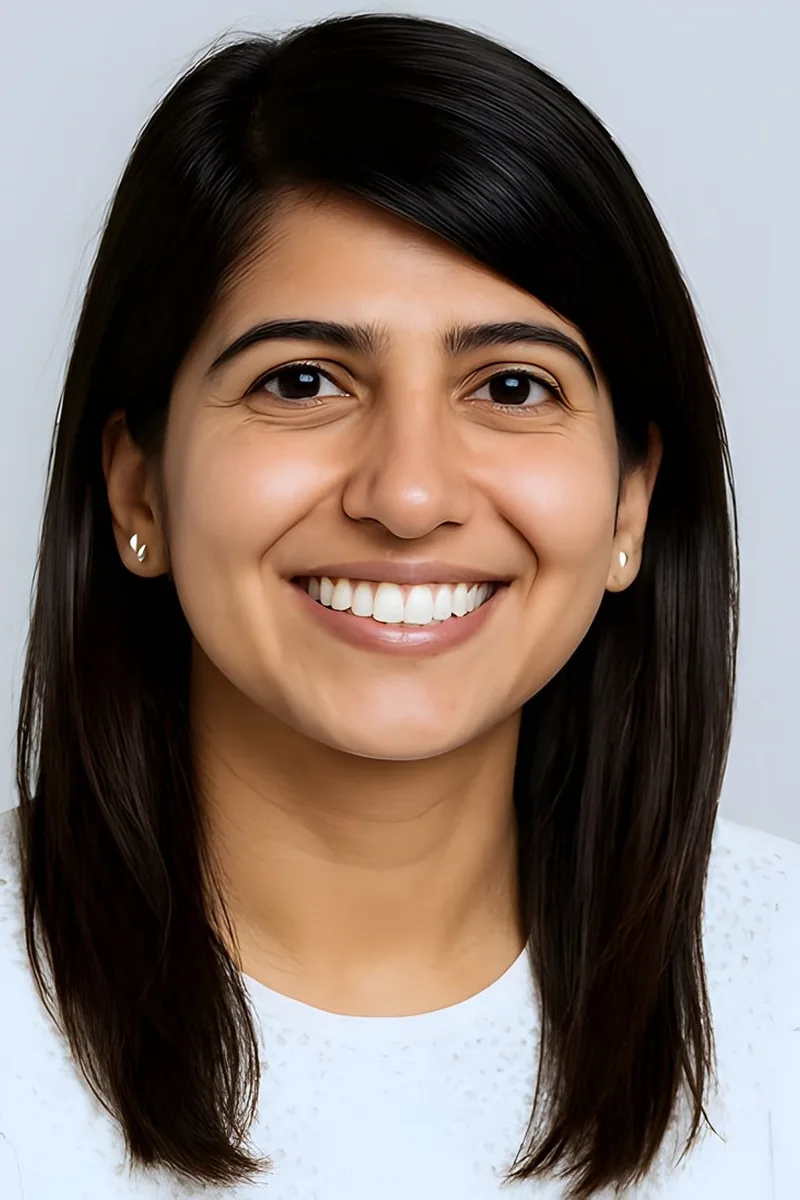
A neuroscience degree means Eshita has worked extensively with the mathematical models pre-calculus introduces — sigmoid curves for dose-response relationships, logarithmic transformations for sensory data, and periodic functions for neural oscillation patterns. She teaches these function families by connecting them back to the algebra students already have down, building each new concept as a logical next step rather than a disconnected topic. Her 35 ACT and 5.0 rating from students back up that approach.
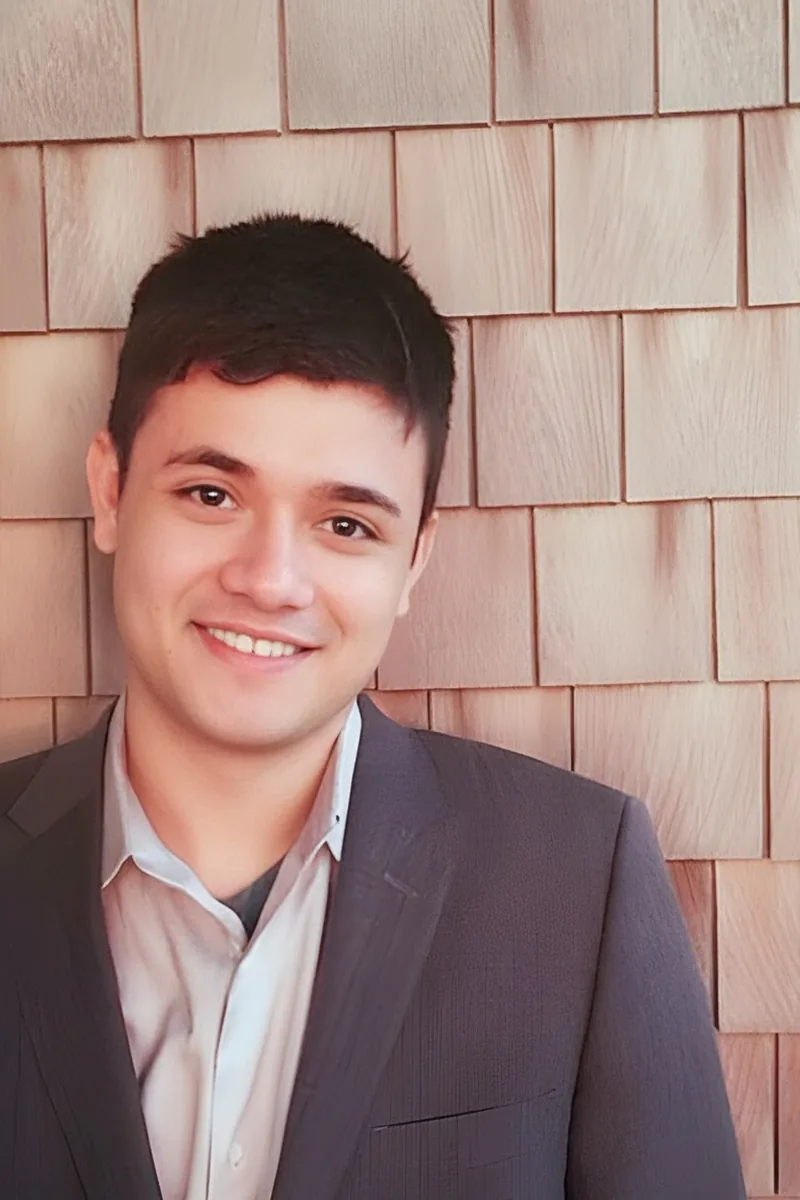
Four years of tutoring math at every level from elementary through calculus gives Henry an unusually clear picture of where pre-calc students get stuck — usually at the jump from manipulating expressions to reasoning about function behavior, especially with rational functions and trigonometric graphs. As a math major at Vassar, he's currently immersed in the abstract thinking that pre-calculus is building toward, so he teaches each concept with a sense of where it's actually going. Rated 4.9 by students.
The jump to Pre-Calculus is where trigonometric identities, polar coordinates, and limit intuition start demanding a new kind of mathematical thinking. Chad breaks these concepts into manageable pieces, connecting each one back to the algebra skills students already have so the transition feels logical rather than overwhelming. Rated 4.8 by students.
The jump to pre-calculus trips up a lot of students because it's the first time they need to think about functions as objects — transforming them, composing them, analyzing their behavior. Christine's engineering coursework at Johns Hopkins required fluency with trigonometric identities, polar coordinates, and limits, so she teaches these topics with the confidence of someone who uses them daily.
A Cornell chemical engineering degree means Rahul spent years working with exponential decay, logarithmic scales, and trigonometric models before most students even encounter them in a textbook. He teaches pre-calculus by emphasizing the conceptual reasoning behind each topic — why a logarithm undoes an exponential, how the unit circle generates every trig value — so the mechanics actually make sense. Rated 4.9 by students, with a 36 ACT to back up the quantitative chops.
Neuroscience at Vanderbilt meant Benjamin spent semesters immersed in the mathematical models that pre-calculus introduces — exponential decay in synaptic signaling, logarithmic dose-response curves, sinusoidal patterns in EEG data. He teaches these function families by connecting them to the biological phenomena that made them intuitive for him, turning abstract transformations and compositions into something students can visualize. His 34 ACT confirms the quantitative grounding behind that approach.
Two engineering degrees gave Dillon years of hands-on work with the exact pre-calculus concepts students struggle with most — vector decomposition, conic sections, and the trigonometric relationships that underpin structural analysis. Now a high school math teacher, he brings that applied engineering perspective directly into his lessons, showing students why function behavior and transformations matter before they ever set foot in a calculus classroom. His 32 ACT confirms the quantitative foundation behind his teaching.
The jump into Pre-Calculus is where trigonometric identities, polar coordinates, and limit intuition start demanding a different kind of mathematical thinking. Vishank approaches the course as a bridge — connecting the algebraic manipulation students already know to the function analysis they'll need in calculus. Studying Data Analytics at Ohio State keeps him fluent in exactly the kind of quantitative reasoning Pre-Calc is designed to develop.
I am an upbeat and patient tutor. I like to make learning as fun as possible, and I'm constantly learning new things.
Kevin's biomedical engineering background means he hit pre-calculus concepts like sinusoidal modeling, exponential decay, and function composition long before most students realize those tools matter — they're baked into everything from cardiac rhythm analysis to pharmacokinetic curves. He zeroes in on the algebraic reasoning underneath each topic, making sure students can trace a transformation or identity back to something they already understand rather than treating it as a new rule to memorize. Holds a 5.0 rating from students.
I am a recent graduate with a master's in electrical engineering from Case Western Reserve University. I won the Bill and Melinda Gates Millennium Scholarship which covers full tuition up to Ph.D. I was on the Dean's List for three consecutive years. Additionally, I won the OZY Media Genius Award in 2015 to work on high-temperature superconductors. I currently work as a Technology Analyst at Accenture. I am also seriously considering whether I should go for a Ph.D. or not.
Mechanical engineering at Case Western Reserve means Kevin hits pre-calculus material from the applied side every week — parametric motion, trigonometric force decomposition, and the polynomial curve fits that show up in design analysis. His 36 ACT and 1550 SAT confirm the quantitative depth behind that engineering lens, and he teaches the bridge between algebra and calculus by emphasizing how each new function type behaves rather than just how to manipulate it.
Ishaan's science preprofessional track — spanning physics, chemistry, and MCAT prep — means he's constantly applying the polynomial, trigonometric, and rational function tools that pre-calculus introduces, especially when modeling physical systems and interpreting graphical behavior. He tackles the course by connecting each new concept back to the algebra students already have down, building toward calculus readiness without skipping the "why" behind identities and transformations. His 1510 SAT and 5.0 rating round out a tutor who's actively using this math, not just teaching it from memory.
With dual degrees in mathematics and physics, Maxwell has spent years watching the same pre-calculus toolkit — trigonometric functions, parametric curves, polar coordinates — show up in both pure math proofs and real physical systems like projectile motion and wave interference. That crossover perspective lets him teach topics like function transformations and conic sections by revealing the deeper structure connecting them, not just drilling isolated procedures. He holds a 5.0 rating and a 1520 SAT.
The jump to Pre-Calculus trips students up when trigonometric identities and complex function behavior start demanding both visual intuition and algebraic precision at the same time. Sunny tackles this by teaching students to sketch and interpret graphs before diving into manipulation, so concepts like polar coordinates, sequences, and limits feel grounded. His 1550 SAT and 35 ACT speak to the depth of his own mathematical fluency.
The jump into pre-calculus — limits, trigonometric identities, rational functions — demands that every earlier algebra and geometry concept be rock-solid. Jane's certified math teaching background means she can quickly diagnose which upstream gaps are causing confusion and address them while still moving forward through new material.
I'm entering my senior year at Case Western Reserve University. I'm happy to provide tutoring services for those interested in improving their academic performance or exam preparation. The subjects which I am most proficient include SAT Math, Algebra 1 , Algebra 2, Middle School Math, Pre-Algebra, Pre-Calculus, and Trigonometry.
Computer engineering at Michigan means Jie hits polynomial long division, complex number arithmetic, and matrix operations in nearly every course — the same topics that trip up most pre-calculus students when they first appear. He tackles each one by connecting it to the algebra students already feel comfortable with, then layering in the abstraction gradually so nothing feels like a sudden jump. His 34 ACT confirms the quantitative instincts behind that approach.
The jump into trigonometric identities, polar coordinates, and limit previews makes pre-calculus the course where many students decide whether they're "math people." Ricardo approaches it by unpacking each identity or transformation step by step, connecting the algebra to graphical behavior so the logic sticks. Rated 4.6 by students.
A PhD in chemical engineering means Alexander has spent years solving systems where polynomial, exponential, and trigonometric functions aren't textbook exercises — they're the tools describing reaction kinetics, heat flow, and fluid behavior. He teaches pre-calculus by pulling from that applied fluency, breaking down topics like function transformations and logarithmic properties by showing the physical intuition underneath the algebra. Rated 4.9 by students.
The jump to Pre-Calculus is where many students first encounter the unit circle, and Omar teaches it as a visual, intuitive system rather than a table to memorize. His engineering coursework at Ohio State required deep fluency with trigonometric identities, parametric equations, and limits — all topics he now unpacks for students preparing to enter calculus.
Samuel's PhD in applied mathematics means he's spent years working at the level where pre-calculus concepts — function behavior, trigonometric structures, complex number operations — serve as daily tools rather than abstract exercises. He teaches the connective tissue between algebra and calculus, unpacking why rational functions behave the way they do or how a sequence of transformations reshapes a graph from the inside out. Rated 5.0 by students.
Pre-Calculus is where polynomial behavior, rational functions, and limits start converging, and students who don't see the connections often hit a wall in calculus. Sunay unpacks each function family with an eye toward what's coming next, so concepts like end behavior and asymptotes feel purposeful rather than abstract. His 4.9 rating speaks to how well that approach lands.
A PhD in applied mathematics might sound like overkill for pre-calculus, but Dr's deep command of the subject means he can trace every topic — rational functions, sequences, polar coordinates — back to the intuitive idea driving it, not just the formula. He teaches the course as the critical bridge it actually is, making sure students leave with the algebraic fluency and functional reasoning that calculus will demand from day one. Rated 4.9 by students.
Tutoring math from elementary through AP Calculus BC gives Nora a clear map of exactly which algebraic skills need to be rock-solid before pre-calculus concepts like rational functions and trigonometric identities will stick. She zeroes in on those prerequisite gaps first, then builds each new topic — whether it's the unit circle or logarithmic properties — by connecting it to the algebra students already understand. Rated 4.8 by students.
As a dedicated Biology major at The Ohio State University, I am passionate about guiding students through the intricacies of science and mathematics. With over 2 years of tutoring experience, I specialize in AP Biology, AP Chemistry, and various levels of calculus, fostering a deep understanding of these subjects. My teaching philosophy emphasizes interactive learning and effective study habits, ensuring students not only grasp concepts but can also apply them to solve problems independently. I believe in the potential of every student to succeed, and I strive to create a supportive environment where they can thrive. Outside of academics, I enjoy sports, solving Rubik's cubes, and immersing myself in music, which keeps my approach to tutoring dynamic and engaging. I am committed to helping the next generation of learners achieve their fullest potential.
Mechanical engineering at the undergraduate level means Steven spent semesters grinding through the exact pre-calculus toolkit — trigonometric identities for force resolution, parametric curves for motion analysis, and rational functions for system modeling — before calculus ever entered the picture. He zeroes in on building that bridge between algebra and calculus-level thinking, especially when it comes to understanding how transformations and function behavior actually work rather than just pattern-matching homework problems. Rated 4.9 by students.
The jump from algebra to calculus hinges on pre-calc concepts like limits, trigonometric identities, and the behavior of polynomial and rational functions. Joseph's biomedical engineering degree required fluency in all of these, and he approaches each topic by connecting it to the calculus concept it's preparing students for. That forward-looking perspective gives students motivation alongside mastery.
Everything in pre-calculus — unit circle trigonometry, limits at a conceptual level, conic sections, sequences — exists to prepare students for calculus, but most courses don't make that connection obvious. Samuel teaches each topic with an eye toward where it's headed, so when a student later encounters derivatives or integrals, the groundwork is already solid. His dual background in math and computer science at Ohio State keeps his explanations precise and structured.
The jump into pre-calculus often overwhelms students because it layers so many tools at once — trigonometric identities, polar coordinates, limits as a preview of calculus, and function transformations all competing for attention. Yashas breaks these topics into manageable pieces, drawing on the analytical rigor he developed through his bioinformatics training at UCLA. His 5.0 client rating speaks to how clearly he communicates even the densest material.
Chemical engineering coursework is essentially pre-calculus on repeat — Kevin spent years manipulating rational functions for reaction kinetics, using logarithmic models for pH equilibria, and applying trigonometric relationships in heat transfer analysis. His PhD in environmental engineering deepened that fluency further, so when he teaches topics like polynomial behavior or composite functions, he's drawing on thousands of hours of actually solving with these tools. That applied instinct makes the jump from algebraic thinking to functional reasoning feel less like a leap and more like a natural next step.
A medical school student with an economics undergrad and a 35 ACT, Hyerin has moved through the full calculus sequence and beyond — which means she knows exactly which pre-calculus skills actually matter when the stakes get higher, especially around rational functions and the behavior of exponential and logarithmic models. She zeroes in on building that bridge between algebraic mechanics and the functional thinking calculus demands, catching the conceptual gaps that tend to snowball later. Rated 4.9 by students.
Patrick's math degree means he didn't just pass through pre-calculus — he studied the theory underneath it, from the formal definitions of limits that give sequences and asymptotic behavior their meaning to the algebraic structures that make trigonometric identities provable rather than just memorizable. He teaches the course as a bridge, connecting the algebraic manipulation students are comfortable with to the functional reasoning calculus will demand. His 1540 SAT confirms the quantitative depth behind that perspective.
The jump into Pre-Calculus can feel overwhelming when trigonometric identities, limits, and complex functions all land at once. As a biochemistry major at Case Western Reserve who uses these tools regularly in upper-level coursework, Timothy teaches students to see the logic behind each concept rather than treating formulas as things to memorize.
Biomedical engineering at Ohio State throws Sunnia into the deep end of the math that pre-calculus is quietly preparing students for — signal analysis, modeling biological systems, working with complex functions that demand real comfort with trig, logarithms, and function composition. She zeroes in on building the algebraic intuition behind each topic so the jump to calculus feels like a natural next step, not a cliff. Rated 5.0 by students.
Hello! My name is AJ Eustace. I have five years of private tutoring experience working with students from middle school through college. I graduated from the University of Virginia with a double major in Statistics and Economics, and I'm currently enrolled in a Master of Social Work program at Ohio State. I specialize in helping students succeed in their math courses, particularly in algebra, geometry, and pre-calculus.
Economics at Kent State means Morgan spends her days building and interpreting the polynomial and exponential models that pre-calculus students are just starting to wrestle with — demand curves, growth projections, optimization setups that all hinge on understanding function behavior. She zeroes in on the algebraic scaffolding underneath each new concept, making sure students can connect what they already know from algebra to the more abstract territory of rational functions and composite expressions. Her 31 ACT and ongoing graduate work in economic analysis keep those quantitative skills sharp.
I am always willing to help and I will try my best to help students who desire further understanding of the subject at hand.
Having earned a master's in mathematics, Jacob digs into pre-calculus topics like polynomial end behavior and rational function asymptotes with the rigor of someone who's studied their theoretical underpinnings — not just their rules. He connects each concept back to its algebraic roots while previewing how it'll resurface in calculus, giving students a clear sense of trajectory through what can feel like a scattered course. His 1540 SAT reflects that same quantitative depth.
Sid's engineering coursework at Cleveland State runs on the pre-calculus toolkit — trigonometric functions for signal analysis, complex number operations for circuit modeling, and polynomial behavior for system dynamics — so he teaches these topics as someone actively using them, not remembering them from a textbook. His math minor means he also knows the theoretical side, which lets him explain why an identity works or how a transformation changes a graph's shape at a structural level. Holds a 5.0 rating from students.
Testimonials
Because the right Pre-Calculus tutor makes all the difference.
Average Session Rating – Based on 3.4M Learner Ratings
Practice Pre-Calculus
Free practice tests, flashcards, and AI tutoring for Pre-Calculus
Other Cincinnati Tutors
Related Math Tutors in Cincinnati
Frequently Asked Questions
Pre-Calculus shifts from memorizing procedures to understanding why those procedures work. You'll move beyond "plug in the formula" to analyzing functions deeply—understanding their behavior, transformations, and real-world applications. This conceptual jump is where many students struggle, but personalized 1-on-1 instruction helps you build those connections before Calculus demands them.
Most students find trigonometry, logarithms, and complex numbers challenging because they require thinking about familiar concepts in new ways. Word problems that combine multiple topics also trip up many learners. A tutor can break these down into smaller, manageable pieces and help you see how each piece connects to the bigger picture—building confidence as you progress.
Graphing is visual reasoning, and many students learn better by seeing patterns rather than memorizing rules. Expert tutors use interactive approaches to show you how changing a coefficient shifts or stretches a graph, helping you develop intuition instead of relying on formulas. This understanding becomes essential for Calculus, where you'll analyze function behavior constantly.
Math anxiety often stems from feeling lost or falling behind, but personalized instruction removes that pressure by working at your pace. A tutor creates a judgment-free space to ask questions, revisit concepts, and build confidence through small wins. Many students find that understanding the "why" behind Pre-Calculus concepts transforms their relationship with math entirely.
Yes—Cincinnati's 44 school districts use different textbooks and approaches, and Varsity Tutors connects you with tutors experienced across multiple curricula. Whether your school uses traditional textbooks, online platforms, or hybrid approaches, a tutor can align instruction with your specific course materials and pacing.
Word problems require translating English into mathematical language—a skill that improves with guided practice and feedback. Tutors teach you problem-solving strategies like identifying what you're solving for, sketching diagrams, and breaking multi-step problems into stages. With consistent practice and real-time guidance, you'll develop the confidence to tackle unfamiliar scenarios.
Your tutor will assess your current understanding, identify specific gaps, and learn your learning style—whether you're visual, need lots of examples, or prefer working through problems step-by-step. They'll then create a personalized plan targeting your weak areas while building on your strengths, so every session moves you closer to mastery.
If you're struggling now, starting immediately prevents gaps from compounding—Pre-Calculus builds heavily on Algebra skills. If you're doing okay but want to strengthen your foundation before Calculus, tutoring 2-3 months before the course ends gives you time to deepen conceptual understanding. Either way, early intervention is more effective than cramming before exams.
Let’s find your perfect tutor
Answer a few quick questions. We’ll recommend the right plan and match you with a top 5% tutor.