Award-Winning ACT Reading Tutors
serving Cincinnati, OH
ACT Reading
Tutors in Cincinnati
Private 1-on-1 tutoring, weekly live classes for academic support, test prep & enrichment, practice tests and diagnostics, and more to elevate grades and test scores.
Based on 3.4M Learner Ratings
UniversitiesSchools & Universities
DeliveredHours Delivered
ProficiencyGrowth in Proficiency
Who needs tutoring?
No obligation. Takes ~1 minute.

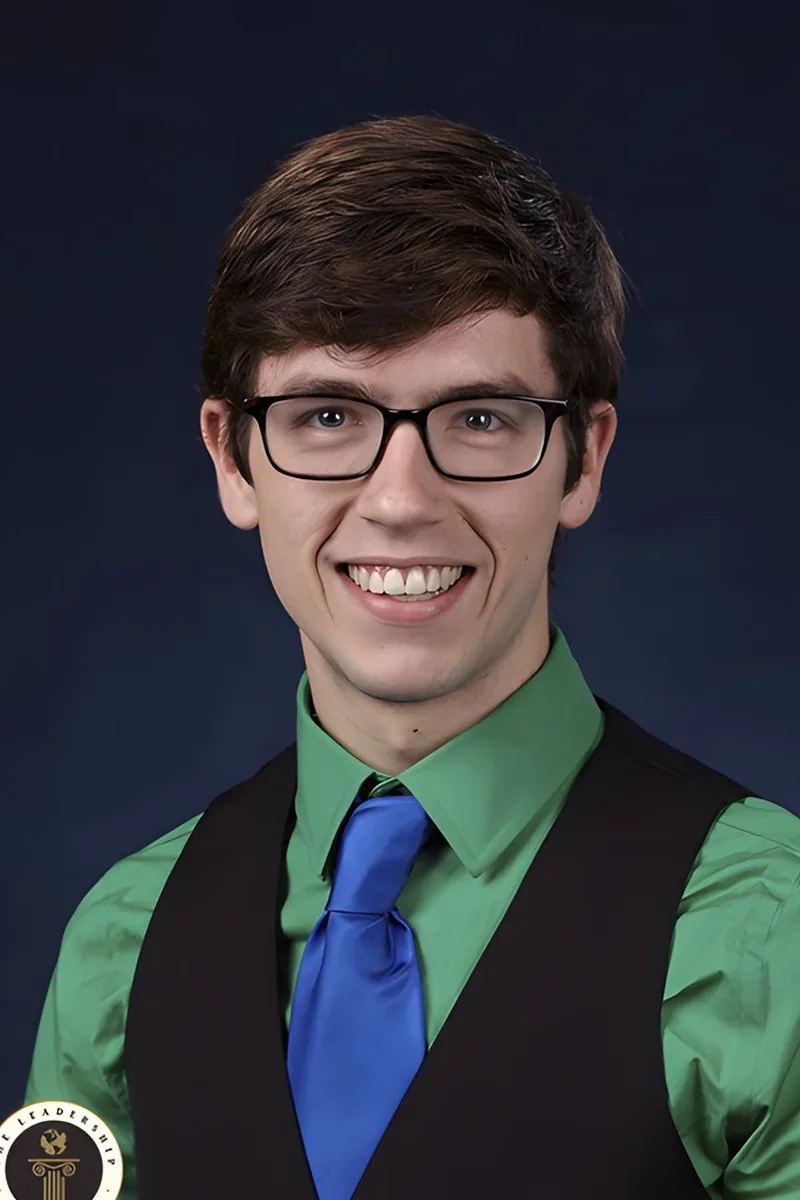
Speed is the real challenge on ACT Reading — four passages in 35 minutes leaves almost no room for re-reading. William, who earned a 34 ACT composite, teaches an active-reading method where students annotate for argument structure and tone as they go, so they can answer inference and main-idea questions without hunting back through the text.
I am currently a P1 pharmacy student. I have had numerous opportunities to tutor students of various ages primarily in subjects that pertain to my program of study, especially chemistry. Throughout my years of study, I have come to the realization that only after meticulous examination of all the possible scenarios and exceptions of a particular phenomenon can we recognize patterns that may have facilitated our initial attempt to understand it in the first place. As a tutor, I hope to serve as a guide that aids students in discerning such patterns and integrating concepts to achieve a thorough and holistic understanding of the subject being studied. Besides tutoring, I enjoy playing the piano and cello, biking, and reading.
The ACT Reading section rewards a specific kind of speed — not skimming, but knowing what to look for before you read the passage. Reed's philosophy background trained him to dissect arguments and identify main claims quickly, skills he applies directly to the prose fiction, social science, and natural science passages. His 34 composite and 4.8 rating speak to how well that approach translates.
The ACT Reading section punishes students who read passages the same way they'd read a textbook. Eshita teaches an active-reading method that targets how the test actually asks about tone, inference, and author purpose — so students spend less time re-reading and more time answering confidently. Her 35 ACT composite backs up the approach.
I am recent graduate of Sewanee: The University of the South, where I earned a B.A. in English and minors in biology and chemistry. Unsurprisingly, these subjects are where my interests lie, and I also love to help with preparation for standardized tests, especially the critical reading portions of them. I have experience tutoring molecular and cell biology and coordinating a tutoring program for pre-health students at my alma mater. When tutoring, I want to help students do what my past tutors and professors helped me to do: go further than learning discrete facts and instead learn to learn. I want to help you develop your ability to think critically, apply previous knowledge to new material, and break down complex ideas. As a result, you can expect me often to ask the question, "Why?" Overall, my goal is to help you get to the point that you no longer need me! And that's okay, because my unemployment will indicate your success.
Four years of tutoring across reading, literature, and essay work gave Henry a sharp eye for how authors build arguments — the kind of structural awareness that pays off on ACT inference and author-purpose questions, where wrong answers often twist one key detail. His 34 ACT composite and 4.9 student rating come from an approach grounded in adapting to how each student actually processes passages, whether that means slowing down on prose fiction or speeding up on natural science. As a math-and-economics student at Vassar, he brings an analytical lens that cuts through the subjective feel of reading comprehension and turns it into something systematic.
Most ACT Reading mistakes come from spending too long on the passages and not enough time actually answering questions with evidence. Craig, who earned a 34 composite, teaches a passage-mapping technique that lets students locate key arguments and details quickly across prose fiction, social science, humanities, and natural science texts. Rated 4.9 by students.
I am currently a first year medical student interested in Pediatrics. Prior to medical school, I obtained a bachelor's degree in Neuroscience from The Ohio State University (Go Buckeyes!) and a master's degree in Physiology. I have some experience tutoring elementary school children in person but am looking forward to reaching out to more students virtually. I am passionate about math and science, particularly health sciences. When I am not working or studying, I love to take my dog on walks, head to the dog park, or crack open a good book. I look forward to passing along my passion for learning!
I am a Yale graduate with over 8 years experience tutoring students from a variety of backgrounds. I recently graduated from the Yale School of Public Health with a MPH concentrating in Epidemiology and Global Health. I also received my B.S. from Yale with a double major in Molecular, Cellular, and Developmental Biology and French. I have experience both leading group classes and working with students one on one. I will respond to a student's strengths, weaknesses, and learning style in order to help them succeed and make the most of our time together. I earned a perfect score of 36 on the ACT, 2280 on the SAT, and qualified as a National Merit Scholar on the PSAT. I look forward to working with you!
I am a recent graduate of Cornell University, where I received a B.S. in Chemical Engineering and graduated Magna Cum Laude. Over the past several years, I have worked with students from diverse backgrounds and experiences tutoring thermodynamics (my personal favorite), chemistry, and math. I have also tutored in the past for ACT/SAT and other subjects such as history, but I am deeply passionate about science and engineering. I tend to push my students to understand conceptual topics, as opposed to rote or algorithmic learning. In my free time, I love to bake sourdough, learn about history, garden, and recently started biking again.
I'm a recent college graduate with degrees in Biological Sciences and Russian from Ohio University. During my time there, I tutored students in a variety of subjects, including biology, chemistry, and Spanish. In addition, I worked as both a peer advisor and teaching assistant, which gives me insight into the learning strategies and study skills that students need to succeed. As a tutor, I like to focus on doing actual problems with students because it is the most effective way to immediately identify their strengths and weaknesses and to address them. In my free time, I like to lift weights, read books, and spend time with my friends.
I am a rising sophomore at Case Western Reserve University studying engineering. I have taken most high-school level standardized tests, and have scored consistently above the 95th percentile. I have tutored small groups of students throughout high school, and also have experience as a private tutor. Outside of the classroom, I enjoy playing Ultimate Frisbee with my college club team.
Speed is the real enemy on ACT Reading: four passages, 40 questions, 35 minutes. Vinay teaches a passage-prioritization strategy where students identify which passage type — literary narrative, social science, humanities, or natural science — to tackle first based on their personal strengths, then apply targeted skimming techniques for the rest. It's a structured approach that consistently turns time-crunched panic into manageable pacing.
The ACT Reading section isn't about loving books — it's about extracting answers from dense passages in under nine minutes each. Adam, who scored a 35 composite, treats each passage type (prose fiction, social science, humanities, natural science) as its own mini-strategy, teaching students exactly where to look for main ideas versus supporting details.
The ACT Reading section isn't about being a strong reader — it's about extracting answers from dense passages in under nine minutes each. Yashas earned a 36 composite by treating every question as a scavenger hunt, teaching students to locate textual evidence quickly rather than re-reading entire passages. His 5.0 rating speaks to how well that approach clicks.
I am currently in my second year of medical school. Because of my diverse academic background, I am able to tutor in a wide range of topics, from Economics and math to Russian and ACT prep.
I'm currently working as a Research Associate during my gap year before medical school. During my free time, I enjoy staying active, playing golf, swimming, running, and playing tennis. I love exploring new activities and neighborhoods in the NYC area.
I am currently in the University Honors program at The Ohio State University studying computer science engineering with a math minor. STEM education was very important to me in my own schooling and I believe every student should try to study STEM subjects. In teaching algebra, calculus, and physics, I like to go in depth with the material to ensure students really understand why the material works. There is a certain beauty in science and math and I encourage students to discover this for themselves.
I am a current sophomore at Vanderbilt University! I am double majoring in Public Policy and Human & Organizational Development with a minor in Spanish. I first started tutoring in high school, when I started working at Kumon Learning Center and began teaching elementary and middle school students reading and mathematics. I also volunteered my tutoring services through my high school's National Merit Society, through which I helped my peers in advanced subjects such as AP testing, ACT, SAT, and PSAT prep.
Susie's biochemistry background means she's spent years parsing dense scientific literature — a skill that directly applies to the natural science and social science passages that often slow students down on ACT Reading. She teaches students to identify how answer choices distort the original text through subtle paraphrasing and scope changes, turning a comprehension exercise into a pattern-recognition one. Her 35 ACT composite and 5.0 student rating back that up.
I'm currently an undergraduate at Yale University pursuing a Bachelor of Arts in English. While I am most passionate about English Literature, I tutor a wide range of subjects, including SAT and ACT Prep, High School Level Math, and French Language.
Scoring a 36 ACT composite means Carly knows how to navigate the Reading section's tight pacing — identifying main ideas, tracking comparative passages, and eliminating answer choices efficiently under time pressure. She breaks down each passage type (prose fiction, social science, humanities, natural science) so students develop a consistent strategy instead of reading aimlessly and hoping for the best. Rated 5.0 by students.
I am a graduate of Westlake High School and a student at the University of Michigan who is pursuing an accelerated master's program in computer engineering. Throughout my high school career, I tutored numerous students ranging from freshmen who are taking core classes to seniors who are taking AP classes. Due to this, it allowed me to communicate and learn various methods of teaching that can be understandable to all ages. While I do tutor a diverse set of subjects, I primarily focus on STEM-based ones. I am also passionate about improving standardized test scores like the ACT. The thrill of hearing a student hitting his or her goal is what motivates me to become a better tutor. I truly believe that education is the catalyst to innovation. Whether that innovation is improving life, facilitating jobs, or just making our everyday world a bit better, my contribution to tutoring to benefit our future is what drives me to be part of the education system.
The ACT Reading section rewards a specific kind of speed — not skimming, but knowing how to locate evidence in a passage without rereading entire paragraphs. Ella breaks each passage type (prose fiction, social science, humanities, natural science) into its own mini-strategy so students learn to adjust their approach on the fly. Her 34 ACT composite and 5.0 rating speak to how well this translates to real score gains.
Speed is the real enemy on ACT Reading — four passages in 35 minutes leaves almost no room for re-reading. Emma, rated on both the ACT (34 composite) and the SAT, teaches a passage-mapping technique that captures the argument structure on a first read so students can answer detail and inference questions without scrambling back through the text.
The ACT Reading section throws four dense passages at students in 35 minutes, which means raw reading speed matters less than knowing how to attack each passage type. Katherine approaches the science and social studies passages differently from the prose fiction one — teaching students to adjust their annotation strategy based on whether they're tracking an argument or following a narrative. Her 33 ACT composite came partly from mastering exactly that kind of adaptive reading.
I'm from a small town in southeast Michigan, where I went to high school before moving to Nashville for university. I just graduated from Vanderbilt University with a Bachelor's degree in neuroscience and Russian. During my time in high school and college, I tutored in a volunteer capacity on a wide range of subjects, from English and essay editing to calculus to ACT prep. I am hoping to spend the next year traveling (I am currently living in Bucharest, Romania!) before applying to medical school. Aside from tutoring, I would be happy to commiserate with you about the stresses of applying to higher education.
I am currently an undergraduate student at the University of Pennsylvania majoring in Math and Economics.
Most ACT Reading mistakes happen not because students misunderstand the passage but because they run out of time and start guessing on the last two. John's approach treats pacing as a skill to practice deliberately — he walks through passage-ordering strategies and question-type prioritization that turned his own prep into a 35 composite score.
Most ACT Reading mistakes happen not because students misunderstand a passage but because they misread what the question is actually asking. Karen teaches a annotation method that tags purpose, tone shifts, and key claims during the initial read, cutting down on frantic re-scanning when the clock is running. Her literature degree means she's especially sharp on the prose fiction and humanities passages that many students find trickiest.
The ACT Reading section punishes students who re-read entire passages looking for answers. Maria teaches a targeted approach: identify the question type first, then locate evidence in the text, then eliminate distractors — a method she refined while earning her own 34 composite. Students learn to move through all four passages with time to spare.
I am currently a student at Otterbein University, working towards my teaching certificate for high school science. I've tutored over 40 students in General and AP Chemistry. I love tutoring because it gives me the chance to provide individualized attention and support to students.
I'm going to fail, might as well not do it alone." I started working on homework with her and started to realize that I learned best when I taught others! Soon, I started "tutoring" many of my other pre-med friends in the same class and aced Chemistry! Since then, I've found a growing love for teaching others all sorts of subjects- especially all pre-medical sciences and the bible and it was my ticket into medical school! Still, medical school always hung on a string of doubt in my heart as I feel in love with teaching/ tutoring through teaching science and the bible so I eventually gave up medical school and started working at a school as a teaching aide with no idea if teaching was the path I should be on or not. Lo and behold near the end of the year, my school offered me a position and opportunity to become a certified teacher and here I am today working towards that and hoping to teach abroad someday!
I am a senior at Miami University. I am studying Early Childhood Education and Spanish. I also spent two years studying biology. I can't wait to work with you!
I am a rising junior at Vanderbilt University studying biomedical engineering, computer science, and engineering management. I currently plan on furthering my education in law school, specifically within intellectual property law. During the week, I work in the Center for Technology Transfer and Commercialization where I work with Vanderbilt researchers to take their inventions to industry. I also work in the Vanderbilt Office of Admissions. The pursuit of knowledge is my passion, and I look forward to working with you to help you in your academic endeavors!
I am very familiar with the preparation that goes into taking standardized tests and completing pre-college curriculum, and I try to teach these subject in ways that are applicable throughout a student's education down the road.
I am currently a student at Case Western Reserve University for computer science. In high school, I was a member of the Peer Tutoring and Mentoring Club and enjoy working with students, primarily in math and science. My favorite subject is physics because it combines science with math and is actually applicable to real life. My learning philosophy is to just do practice problems. The more practice, the easier each problem will be. Somebody can spend all day just studying notes, but he or she will learn best by just doing practice problems. Outside of school, I own a website design business and I enjoy to do anything outdoors. I love snow skiing, water skiing, boating, hiking, and fishing.
I am a Third Year Actuarial Science and Finance Student at the Ohio State University (Go Bucks!).
I am currently a senior at Johns Hopkins studying Biomedical Engineering. I have a lot of experience tutoring in math, physics, chemistry, and thermodynamics. I have also proof-read essays for college applications and english classes as well. Outside of school I like to cook, play basketball, and listen to music.
Testimonials
Because the right ACT Reading tutor makes all the difference.
Average Session Rating – Based on 3.4M Learner Ratings
Practice ACT Reading
Free practice tests, flashcards, and AI tutoring for ACT Reading
Other Cincinnati Tutors
Related Test Prep Tutors in Cincinnati
Frequently Asked Questions
Score improvement depends on your starting point and commitment level, but most students see meaningful gains within 8-12 weeks of focused preparation. Students who work with a tutor on reading comprehension strategies, time management, and question-type analysis often improve by 2-4 points on the ACT Reading section. The key is identifying your specific weaknesses—whether that's vocabulary, inference questions, or pacing—and targeting those areas systematically.
The ACT Reading section gives you 35 minutes to read 4 passages and answer 40 questions, which is challenging for many students. Expert tutors help you develop a personalized pacing strategy—some students benefit from skimming passages first, others from reading questions before the passage, and some from a hybrid approach. The right strategy depends on your reading speed and comprehension style, which a tutor can assess and refine through practice tests.
Cincinnati students typically struggle with three main areas: finishing all four passages within the time limit, distinguishing between similar answer choices, and identifying main ideas versus supporting details. Many students also find vocabulary-in-context questions tricky because they require understanding how word meaning shifts based on context. A tutor can help you recognize question patterns, develop elimination strategies, and build the confidence to move through passages efficiently.
ACT Reading features about 40 questions across four categories: detail questions (what does the passage say?), inference questions (what does it imply?), vocabulary-in-context questions, and big-picture questions about main idea or author's purpose. Each question type requires a slightly different approach—detail questions reward careful rereading, while inference questions demand critical thinking. Understanding how to tackle each type strategically can significantly boost your accuracy and speed.
Consistent practice is more valuable than cramming—aim for 3-4 focused practice sessions per week, each lasting 45-60 minutes. This might include timed passage practice, untimed deep-dive analysis of difficult passages, and full practice tests every 1-2 weeks to track progress. A tutor can help you structure your study schedule, identify which passages or question types need extra attention, and adjust your plan based on your improvement trajectory.
Test anxiety often stems from feeling rushed or uncertain about your approach—both things a tutor can address through targeted practice and confidence building. By working through timed passages repeatedly and developing a reliable strategy you trust, you'll feel more in control during the actual test. Tutors also teach breathing techniques and mental strategies to help you stay calm when you encounter a difficult passage or unfamiliar topic.
Look for tutors who understand ACT Reading's specific format and question types, have experience helping students improve their scores, and can diagnose your individual weaknesses quickly. The best tutors combine test expertise with strong teaching skills—they can explain why an answer is correct, help you understand your mistakes, and adapt their approach to match your learning style. Varsity Tutors connects you with expert tutors in Cincinnati who specialize in ACT prep and can create a personalized study plan for your needs.
Your first session typically starts with a diagnostic assessment—either a practice test section or a conversation about your reading habits, test-taking strategies, and previous scores. This helps your tutor understand your strengths, identify specific areas for improvement, and set realistic goals. From there, you'll develop a customized study plan that targets your weaknesses, whether that's pacing, vocabulary, inference skills, or managing test anxiety.
Let’s find your perfect tutor
Answer a few quick questions. We’ll recommend the right plan and match you with a top 5% tutor.