Award-Winning High School Chemistry Tutors
serving Cincinnati, OH
High School Chemistry
Tutors in Cincinnati
Private 1-on-1 tutoring, weekly live classes for academic support, test prep & enrichment, practice tests and diagnostics, and more to elevate grades and test scores.
Based on 3.4M Learner Ratings
UniversitiesSchools & Universities
DeliveredHours Delivered
ProficiencyGrowth in Proficiency
Who needs tutoring?
No obligation. Takes ~1 minute.

Stoichiometry and gas laws tend to click faster when the person explaining them uses those concepts regularly — and Lyndsey's biochemistry degree means she's been applying ideas like reaction stoichiometry, equilibrium, and solution chemistry to biological problems since undergrad. She teaches the quantitative side of chemistry by connecting each calculation back to what's physically happening at the molecular level, which turns abstract math into something students can actually picture. Holds a 5.0 rating.
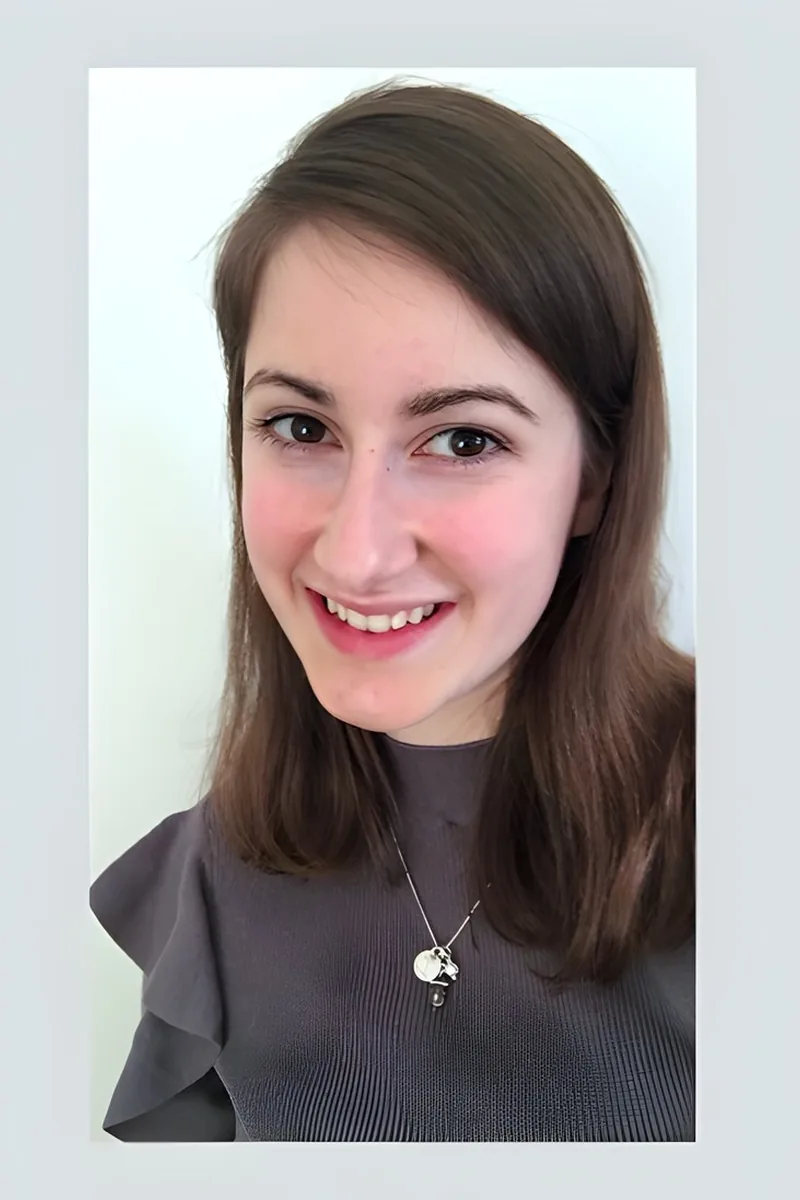
Pharmacy school puts stoichiometry, solution chemistry, and acid-base reactions to work every single day — calculating drug concentrations, predicting solubility, understanding how a molecule's structure determines its behavior in the body. Lillian draws on that daily immersion to teach high school chemistry topics as interconnected ideas rather than isolated chapters, showing students how mole calculations and chemical equations feed directly into real pharmaceutical problems. Rated 4.9 by students.
Balancing equations, stoichiometry, and periodic trends click faster when a student sees the logic behind them instead of treating each as a separate formula to memorize. William studied AP Chemistry alongside his psychology degree at Loyola, and he connects chemical concepts to real-world examples — like why ice floats or how batteries work — to make the reasoning stick.
Balancing equations, stoichiometry, and the mole concept are where most high school chemistry students hit a wall. Henry's strong math instincts — he's a mathematics student at Vassar — give him an edge in teaching the quantitative side of chemistry, breaking dimensional analysis and unit conversions into clear, repeatable steps.
Currently working through biochemistry coursework and medical school applications, Robert is actively using concepts like reaction energetics, solution chemistry, and molecular structure in ways that keep high school-level material sharp. He teaches gas laws and stoichiometry by connecting the math to the biological and physical systems where those calculations actually come up, which gives the problem-solving a purpose beyond the worksheet.
With both a bachelor's and master's degree in chemistry, Chad has spent years inside the discipline — not just passing through it on the way to something else. That depth shows up when he teaches topics like electron orbitals, equilibrium, or nomenclature, because he can trace each concept back to the underlying principles and explain why the rules exist in the first place. Rated 4.8 by students.
When high school chemistry students hit a wall with mole conversions or balancing redox reactions, the issue is almost always conceptual, not computational. Rahul digs into the 'why' behind each step — why coefficients matter, how electron transfer actually works — drawing on his Cornell chemical engineering background to make the logic visible. He holds a 4.9 rating from students.
Priya's math degree at Vanderbilt gives her a real advantage when chemistry turns quantitative — dimensional analysis, molarity calculations, and stoichiometry all come down to setting up ratios correctly, which is exactly how a mathematician thinks. She teaches students to treat these problems as structured logic puzzles rather than chemistry-specific hurdles, so the math never becomes the reason a student falls behind in the course.
The jump from middle school science to high school chemistry catches many students off guard, especially when mole conversions and balancing redox reactions enter the picture. Amy has guided over 40 students through exactly this transition, and her bachelor's in chemistry gives her the depth to explain not just how to solve a problem but why the underlying concept works.
That first encounter with the periodic table, electron configurations, and Lewis structures sets the tone for every chemistry course that follows. Vishank approaches high school chemistry by anchoring each new topic to a concrete example — like explaining why ice floats using intermolecular forces — so students build intuition alongside the formulas. His background in biomedical data analytics also lets him show where chemistry connects to real-world health science.
I am an upbeat and patient tutor. I like to make learning as fun as possible, and I'm constantly learning new things.
The jump from middle school science to high school chemistry trips up a lot of students right around mole conversions and balancing redox reactions. Kevin starts by watching a student work through problems out loud, which lets him pinpoint exactly where the reasoning breaks down. His 5.0 rating speaks to how well that diagnostic approach pays off.
Stoichiometry and equilibrium problems often trip students up not because the math is hard, but because the underlying chemistry isn't clear yet. Sanjul earned a chemistry minor alongside his biology degree and uses molecular-level visuals to show what's actually happening during a reaction — making concepts like limiting reagents and Le Chatelier's principle far more concrete.
Stoichiometry and gas laws tend to click faster when the tutor can connect them to something beyond the textbook — Sunny's biology research background means she regularly ties concepts like reaction yields and solution chemistry back to the lab work where they actually show up. Her 5.0 rating speaks to an approach that grounds the math-heavy parts of chemistry in concrete reasoning, so students understand why mole ratios and dimensional analysis work rather than just following steps.
Stoichiometry, equilibrium, and acid-base reactions each have their own logic, and Nikolas digs into the reasoning behind each one so students can solve problems they haven't seen before. His pre-med science background at Ohio State required strong chemistry fundamentals, and he applies that same structured, step-by-step approach to high school-level material.
Five years tutoring chemistry at Ohio State — while actively pursuing his own chemistry degree — means Ricardo has watched hundreds of students hit the same stumbling points in topics like stoichiometry, Lewis structures, and thermochemistry. He tackles those recurring trouble spots by building up from the atomic-level logic, so students can predict what should happen in a problem before they even start calculating. Rated 4.6 by students.
A PhD in chemical engineering means Alexander didn't just learn chemistry — he lived inside it for years, working through reaction kinetics, thermodynamics, and mass transfer at a level where stoichiometry and gas laws become second nature. He unpacks the quantitative backbone of high school chemistry by connecting concepts like mole calculations and equilibrium to the industrial-scale processes where they play out in practice. Rated 4.9 by students.
When students struggle in high school chemistry, it's usually at a specific bottleneck — maybe it's electron configurations, maybe it's equilibrium calculations, maybe it's naming organic compounds. Sunay diagnoses where the confusion starts and rebuilds understanding from that point forward, rather than re-teaching everything from scratch. His 4.9 rating speaks to an approach that's efficient and tailored to each student's gaps.
As a physical chemistry PhD student at Ohio State, Emily lives in the space where abstract chemical principles meet real-world behavior — thermodynamics, reaction kinetics, molecular structure. She breaks down high school chemistry topics like stoichiometry, equilibrium, and periodic trends using the same intuitive reasoning she relies on in her own research. Rated 5.0 by students.
Susie's biochemistry major at Swarthmore meant she didn't just take chemistry — she lived in it, from reaction kinetics and thermodynamics through the organic and analytical courses that build on every high school concept. That depth shows when she teaches something like electron configuration or stoichiometry: she knows exactly where each idea leads, which makes her explanations purposeful rather than abstract. Rated 5.0 by students.
Having taught introductory general chemistry as a college TA while pursuing her medical degree, Maria knows exactly which high school concepts — like naming compounds, solution concentration, and calorimetry — students need to genuinely understand rather than just survive. She approaches each topic by challenging students to identify what a problem is actually asking before touching any formulas, which builds the kind of chemical reasoning that holds up on exams and in future coursework. Rated 5.0 by students.
As a dedicated Biology major at The Ohio State University, I am passionate about guiding students through the intricacies of science and mathematics. With over 2 years of tutoring experience, I specialize in AP Biology, AP Chemistry, and various levels of calculus, fostering a deep understanding of these subjects. My teaching philosophy emphasizes interactive learning and effective study habits, ensuring students not only grasp concepts but can also apply them to solve problems independently. I believe in the potential of every student to succeed, and I strive to create a supportive environment where they can thrive. Outside of academics, I enjoy sports, solving Rubik's cubes, and immersing myself in music, which keeps my approach to tutoring dynamic and engaging. I am committed to helping the next generation of learners achieve their fullest potential.
Stoichiometry, equilibrium constants, redox reactions — high school chemistry is full of topics that look like pure memorization until someone shows you the logic underneath. Kevin's chemical engineering degree required him to live inside these concepts daily, and he breaks down reaction mechanisms and unit conversions in a way that builds intuition rather than reliance on formula sheets.
Balancing equations, stoichiometry, and electron configurations clicked for Joseph during his biomedical engineering coursework, where chemistry wasn't just a prerequisite — it was the backbone of understanding how materials interact with the human body. He breaks down tricky concepts like molarity and gas laws by connecting them to real applications, making the logic behind the math easier to remember. Rated 4.9 by students.
Ryan taught general chemistry to undergraduates before starting his Master's in Medical Physiology at Case Western Reserve, so he's seen firsthand which high school chemistry concepts — stoichiometry, electron configurations, equilibrium — tend to cause the most confusion. He approaches each topic by building the logic behind it, so balancing redox reactions or predicting molecular geometry becomes a reasoning exercise rather than a memorization task.
Chemistry demands a kind of close reading — balancing equations, interpreting the periodic table, tracking atoms through a reaction — that Beth's history training actually prepared her for surprisingly well. She teaches students to slow down and decode each piece of a problem, from stoichiometry calculations to naming compounds, instead of rushing to an answer.
Teaching general chemistry at the college level daily means Jennifer sees exactly where high school gaps in topics like equilibrium, stoichiometry, and gas behavior cause problems later — and she knows how to close them before they compound. Her research collaborations across chemistry, biology, pharmacy, and medicine give her a deep well of real-world context for explaining why, say, Le Chatelier's principle or reaction energetics actually matter beyond the textbook. Rated 4.9 by students.
I am always willing to help and I will try my best to help students who desire further understanding of the subject at hand.
Mechanical engineering at the University of Dayton means Nicholas works with chemistry principles — gas behavior, thermodynamics, energy transfer — as practical tools in his coursework, not abstract ideas from a textbook chapter. He zeroes in on the quantitative side of high school chemistry, especially dimensional analysis and stoichiometry, by having students talk through their reasoning at each step so he can pinpoint exactly where the logic breaks down.
Stoichiometry and gas laws tend to click faster when the tutor genuinely likes the subject — and chemistry is Adam's favorite science, the one he chose to dig deepest into alongside his Exercise Physiology coursework at Ohio University. His biological science background means he naturally connects reactions and molecular behavior to how the body actually works, which gives topics like energy changes and solution chemistry a concrete hook. He walks through the quantitative setup of problems step by step, building the reasoning skills that make unfamiliar questions feel approachable.
Balancing equations, stoichiometry, and the mole concept click faster when a student understands the physics behind atomic behavior — and that's exactly where Heather's physics background gives her an edge in chemistry. She teaches high school chemistry by connecting abstract ideas like electron configurations and periodic trends to tangible, observable reactions. Rated 5.0 by students.
Pre-med microbiology coursework means Sashwat has pushed well past introductory chemistry — organic reaction mechanisms, biochemical pathways, and lab techniques all built on the foundational concepts high schoolers are tackling for the first time. He uses that deeper context to explain why something like electronegativity or periodic trends actually matters when you get to bonding and molecular shape, turning what feels like arbitrary memorization into a coherent story.
Studying neuroscience and chemistry at Emory means Maria uses concepts like electron orbitals, molecular polarity, and reaction energetics as the building blocks for understanding how neurons fire and drugs bind to receptors — so when she teaches these topics in high school chemistry, she can show students where the ideas actually lead. Her time as a learning assistant for introductory science courses sharpened her ability to spot exactly where someone's understanding breaks down and rebuild it on the spot. Rated 5.0 by students.
I am a recent graduate from Grand Valley State University, with a Bachelor's of Science in Microbiology and a minor in Spanish. I will be attending medical school at Western Michigan University Homer Stryker MD. School of Medicine starting this summer. I have been a tutor for the past six years, and have worked with students from a diverse array of backgrounds. I started out as a volunteer K-5 English and Math tutor at a center for underprivileged youth in rural Ohio. After graduating high school and starting college, I began working as a college biology and Spanish tutor at the university success center. I was designated the top tutor of 2021, having conducted 250 sessions in one semester. Upon noticing a lack of affordable MCAT prep options, I began offering MCAT prep classes online during the height of the COVID19 pandemic. I have worked with veterans, adult learners, and people with disabilities. I am passionate about providing all students, regardless of age or situation, with personalized tutor sessions that help them achieve their full potential. In my free time, I enjoy volunteering at my church, running, and discovering new cuisines.
Ariel's sociology degree means chemistry isn't her primary lane, but she's tutored science subjects for years and knows how to make intimidating topics like nomenclature and stoichiometry feel approachable — especially for students who don't consider themselves "science people." She leans on clear, structured explanations and checks understanding at each step, which works particularly well for the formula-heavy units where students tend to lose the thread.
As a tutor for 20+ years, I bring ample experience and knowledge. I specialize in standardized testing (MCAT, SAT, ACT, GRE, & more), medical school and pre-med courses, and undergraduate STEM subjects. A former medical school student and Master of Public Health, I opted for what truly brings me joy: tutoring, teaching, and guiding students to lifelong academic success.
That moment in high school chemistry when moles, stoichiometry, and gas laws all land at once can feel overwhelming — James breaks each concept into manageable pieces and shows how they connect. With a Doctorate in Bioengineering from the University of Maryland, he's used these foundational chemistry principles daily in research and brings concrete examples into every session. He's especially effective at demystifying electron configurations, acid-base reactions, and lab calculations.
Running a middle school science department in Philadelphia meant John taught chemistry fundamentals daily — building up from atomic structure and the periodic table to chemical reactions and basic stoichiometry — and his role as curriculum chair forced him to think carefully about the sequence in which those ideas need to land. That classroom experience shows when he explains topics like balancing equations or classifying reaction types, because he's already mapped out where students typically get lost. Rated 5.0 by students.
Balancing equations and stoichiometry trip up most high school chemistry students because the logic feels invisible at first. Garrett teaches the mole concept by tying it to tangible quantities — grams on a scale, liters of gas — so the math stops feeling arbitrary. His background in biology and physical chemistry also lets him show students where these reactions actually matter in living systems.
Premed neuroscience coursework at Rice put Aditi through rigorous chemistry sequences where concepts like equilibrium, stoichiometry, and thermodynamics weren't electives — they were prerequisites for everything that followed. She zeroes in on the periodic table as a predictive tool, teaching students to use trends in electronegativity and atomic radius to reason through bonding and reactivity questions rather than memorize isolated facts. Rated 4.8 by students.
Testimonials
Because the right High School Chemistry tutor makes all the difference.
Average Session Rating – Based on 3.4M Learner Ratings
Other Cincinnati Tutors
Related Science Tutors in Cincinnati
Frequently Asked Questions
During your first session, a tutor will assess your current understanding of chemistry concepts, identify specific areas where you're struggling (whether it's balancing equations, stoichiometry, or lab work), and learn about your learning style. This helps create a personalized plan tailored to your needs and goals, whether you're preparing for an exam, improving your grade, or building foundational skills.
Balancing equations is one of the most common chemistry challenges because it requires understanding both the rules and the reasoning behind them. Tutors break down the process step-by-step, help you see the patterns, and give you targeted practice so you develop real understanding rather than just memorizing steps. With personalized 1-on-1 instruction, you can ask questions immediately and get clarification on exactly where you're getting stuck.
Yes. Tutors help you understand the scientific method, interpret experimental results, and connect what you're observing in the lab to the theoretical concepts you're learning in class. They can also help you prepare lab reports, troubleshoot experimental challenges, and develop the scientific reasoning skills that make lab work meaningful rather than just following steps.
Chemistry involves many invisible processes—molecular structures, bonding, reaction mechanisms—that are hard to picture. Expert tutors use diagrams, models, analogies, and real-world examples to make these concepts concrete and visual. They help you build mental models so you truly understand what's happening at the molecular level, which makes solving problems and answering conceptual questions much easier.
Unit conversions require both mathematical skill and conceptual understanding of what you're actually converting. Tutors help you see the logic behind dimensional analysis, practice with real chemistry problems, and build confidence so conversions feel systematic rather than confusing. This skill is foundational for stoichiometry and many other chemistry topics, so mastering it early pays off throughout the course.
Ideally, starting 3-4 weeks before a major exam gives you time to identify gaps, practice problem-solving, and build real understanding rather than cramming. However, tutors can also help with shorter-term prep if you need it. The key is consistent, focused practice with personalized feedback—which is exactly what 1-on-1 tutoring provides—rather than passive review.
Chemistry isn't just abstract—it's everywhere: in cooking, medicine, environmental science, manufacturing, and technology. Tutors help you see these connections, which makes the material more interesting and memorable. Understanding why chemistry matters helps you retain concepts better and see how the theories you're learning actually solve real problems.
Varsity Tutors connects you with expert tutors who have strong chemistry backgrounds—whether through advanced degrees, teaching experience, or demonstrated expertise in the subject. When you get matched with a tutor, you'll learn about their specific experience and qualifications so you can feel confident they understand high school chemistry and how to teach it effectively.
Let’s find your perfect tutor
Answer a few quick questions. We’ll recommend the right plan and match you with a top 5% tutor.